
To choose the right productivity book first, you must identify your most immediate professional bottleneck: a lack of sustained focus, a struggle with daily consistency, or a desire to restructure your entire career model. If you find yourself constantly distracted by notifications and unable to produce high-value work, Cal Newport’s Deep Work is your starting point. If you struggle to maintain daily routines or break bad habits, James Clear’s Atomic Habits offers the most practical foundation. If you are looking to automate your business, delegate tasks, and escape the traditional office structure, Tim Ferriss’s The 4-Hour Workweek provides the blueprint.
Selecting the wrong methodology first can lead to frustration. Attempting to automate a business before you have the discipline to manage your daily habits often results in chaotic systems. Conversely, trying to build micro-habits when your primary issue is a fundamentally flawed business model will not yield the career freedom you desire. By understanding the core philosophy of each book, you can align your reading choice with your current professional challenges.
Core Philosophies and Target Audiences
The three books represent distinct paradigms of personal development: cognitive focus, behavioral systems, and lifestyle design. Each addresses a different layer of productivity, requiring a unique mindset shift and offering a different implementation timeline.
Products mentioned in this guide
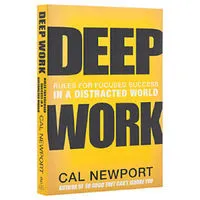
![EBOOK Deep Work by Cal Newport [Full Version]](https://img.lazcdn.com/g/p/f8595c8563026fdd8fa27173305903ae.jpg_400x400q80.jpg_.webp)

Prices are valid at publication and may change. Please refer to the product page for the latest price.
Deep Work operates on the premise that the ability to concentrate without distraction is a rare and increasingly valuable skill in our modern economy. Cal Newport argues that high-value cognitive work requires uninterrupted blocks of time, which are constantly threatened by modern communication tools. The mindset shift here is moving away from busyness as a proxy for productivity and focusing instead on deep, high-impact output.
Atomic Habits shifts the focus to behavioral systems. James Clear posits that you do not rise to the level of your goals, but rather fall to the level of your systems. The core philosophy is that tiny, incremental improvements—just one percent better each day—compound into massive long-term results. This approach requires you to focus on identity-based habits rather than immediate outcomes.
The 4-Hour Workweek is a radical guide to lifestyle design and leverage. Tim Ferriss challenges the traditional deferred-life plan of working until retirement, advocating instead for mini-retirements and automated income streams. The mindset shift involves redefining wealth not as a static bank balance, but as the combination of time, mobility, and financial freedom.
Deep Work: Reclaiming Focus for High-Value Output
Cal Newport’s framework is designed for knowledge workers, researchers, programmers, writers, and anyone whose primary value is generated through complex problem-solving. If your professional success depends on mastering difficult skills or producing high-quality output that is hard to replicate, this book provides the necessary strategies.

The core actionable strategies in Deep Work center on scheduling philosophies and digital minimalism. Newport outlines four depth philosophies: monastic (complete isolation), bimodal (dividing time between deep and shallow tasks), rhythmic (establishing a daily routine), and journalistic (fitting deep work in whenever possible). He also advocates for strict boundaries on communication tools, suggesting that you treat your attention as a finite, sacred resource.
However, the framework has clear limitations for certain professional roles. If your job requires constant communication, rapid response times, or highly reactive tasks—such as customer support, public relations, or real-time operations—implementing strict deep work blocks can be incredibly challenging. Without organizational support or a restructuring of your team’s communication expectations, the strategies may feel impractical.
Atomic Habits: Engineering Behavior for Long-Term Consistency
James Clear’s system-building approach is ideal for individuals who struggle with consistency, those wanting to break persistent bad habits, and leaders looking to foster a productive team culture. If you find yourself setting ambitious goals every year only to abandon them a few weeks later, this book offers a practical, step-by-step guide to sustainable change.
The actionable strategies in Atomic Habits are built around the Four Laws of Behavior Change: make it obvious, make it attractive, make it easy, and make it satisfying. Clear introduces practical tools such as habit stacking, where you pair a new habit with an established daily routine, and environment design, which involves altering your physical surroundings to make positive cues highly visible and negative cues invisible.
The primary limitation of Atomic Habits is its reliance on incremental, compounding gains. If you are facing an immediate career crisis, a major business pivot, or need a rapid, structural overhaul of your lifestyle, the slow compounding of tiny habits may not deliver the immediate results you require. It is a long-term strategy that requires patience and trust in the system.
The 4-Hour Workweek: Escaping the 9-to-5 Through Automation
Tim Ferriss’s lifestyle design principles are tailored for entrepreneurs, freelancers, remote workers, and corporate employees seeking operational leverage and geographic freedom. If your goal is to decouple your income from your physical presence and time, this book provides a provocative blueprint for doing so.
The core of the book is the DEAL framework: Definition, Elimination, Automation, and Liberation. Actionable strategies include outsourcing low-value tasks to virtual assistants, eliminating non-essential communication, and creating automated business models that generate passive income. Ferriss emphasizes the importance of the Pareto Principle, focusing on the 20 percent of activities that yield 80 percent of the results.
Despite its popularity, The 4-Hour Workweek has significant limitations for corporate professionals working within rigid organizational structures. Many of the automation and delegation strategies require upfront capital or a business model that supports outsourcing. Additionally, those who thrive in collaborative, structured office environments or who are uncomfortable with aggressive delegation may find the tactics stressful or incompatible with their personal working style.
Side-by-Side Comparison Matrix
To help you quickly evaluate which book aligns with your current needs, the following matrix compares their primary focus, core mechanisms, and ideal scenarios.
| Book | Primary Focus | Core Mechanism | Expected Timeline | Best Suited For |
|---|---|---|---|---|
| Deep Work | Cognitive depth and focus | Distraction-free blocks | Weeks to months | Knowledge workers, researchers, and creators |
| Atomic Habits | Behavioral systems | Incremental daily routines | Months to years | Anyone struggling with consistency and routine |
| The 4-Hour Workweek | Lifestyle design and leverage | Automation and delegation | Months to years | Entrepreneurs, freelancers, and remote workers |
This comparison highlights that while all three books aim to improve your productivity, they target entirely different stages of your professional development and daily workflow.
Decision Framework: Which Book Should You Read First?
To determine your starting point, evaluate your current daily workflow and long-term career objectives. You can use the following conditional pathways to guide your choice.
Choose Atomic Habits first if your primary struggle is daily discipline, consistency, or maintaining basic routines. If you find it difficult to stick to a workout routine, maintain a clean workspace, or manage your daily schedule, building a foundation of reliable habits is essential before you attempt to master complex focus or business automation.
Choose Deep Work first if you already have decent daily discipline but struggle to make progress on high-value, cognitively demanding projects. If your day is consumed by constant emails, meetings, and minor tasks, leaving you with no time for the actual work that advances your career, Newport’s strategies will help you reclaim your attention.
Choose The 4-Hour Workweek first if you are comfortable with your daily habits and focus, but feel trapped by a traditional business model or office structure. If you want to transition into entrepreneurship, automate an existing business, or negotiate a remote work arrangement that allows for geographic flexibility, Ferriss’s framework is the most relevant.
If you plan to read all three, a logical order is to start with Atomic Habits to build foundational discipline. Once you have control over your daily routines, read Deep Work to master the high-value skills required to excel in your field. Finally, read The 4-Hour Workweek to learn how to scale, automate, and delegate those skills to achieve lifestyle freedom. You can easily combine these concepts by using atomic habits to protect your dedicated deep work blocks.
Pre-Purchase Checks: Formats, Editions, and Accessibility
Before purchasing any of these titles, it is important to select the format and edition that best matches your learning style and device compatibility. When budgeting for these books, expect to spend around S$20 to S$35 per paperback at local bookstores in Singapore, or slightly less for digital editions.
Physical books are excellent for active reading, allowing you to highlight key passages and take notes in the margins, which is particularly useful for the highly structured frameworks in Deep Work and Atomic Habits. E-books offer portability and searchability, making them ideal for quick reference on your e-reader or tablet. Audiobooks are a great option for busy professionals who want to consume content during their daily commute, though you may want to keep a digital notebook handy to jot down actionable steps.
Be sure to check for updated or revised editions, especially for The 4-Hour Workweek. Because it was written before many modern digital tools were developed, some of the specific software and outsourcing platforms mentioned in older editions are obsolete. Look for the expanded and updated editions to ensure the case studies and tools remain relevant, or focus strictly on the underlying principles of automation and delegation rather than the specific software recommendations.
Finally, verify language availability and regional digital rights management (DRM) restrictions. If you are purchasing audiobooks or e-books from digital platforms operating in Singapore, ensure your devices are compatible with the platform’s file formats to avoid any accessibility issues after purchase.
Frequently Asked Questions (FAQ)
Can I apply concepts from all three books simultaneously?
Yes, you can integrate these frameworks, but you should avoid attempting a complete lifestyle overhaul all at once. A practical approach is to use the system-building techniques from Atomic Habits to establish a daily routine of protecting uninterrupted focus blocks, which is the core recommendation of Deep Work. Once you have mastered the ability to focus and produce high-value output consistently, you can then apply the automation and delegation principles from The 4-Hour Workweek to scale your efforts. Trying to implement aggressive business automation while simultaneously struggling to maintain basic daily habits will likely lead to operational chaos.
Which book is best for a university student or recent graduate?
For university students and recent graduates, Atomic Habits generally offers the highest immediate return on investment. Building reliable daily routines, study habits, and personal discipline early in your academic or professional career creates a foundation that supports all future endeavors. Deep Work is also highly valuable for students who need to master complex academic subjects and prepare for exams without distraction. While The 4-Hour Workweek offers inspiring concepts regarding lifestyle design, its strategies are often more difficult to apply without the professional experience, capital, or leverage that typically comes later in one’s career.
Community discussion
Share your experience or ask a question. Comments are reviewed before publication.