
The choice between Cal Newport’s Deep Work and James Clear’s Atomic Habits depends entirely on your immediate productivity bottleneck. If your primary struggle is maintaining focus, resisting digital distractions, and producing high-value cognitive output, you should read Deep Work first. Conversely, if your main challenge is inconsistent execution, procrastination, or a lack of structured daily routines, Atomic Habits is the better starting point. Both books offer transformative frameworks, but they target different layers of personal development—one refines the intensity of your focus, while the other automates the consistency of your actions.
Core Philosophies: Cognitive Depth vs. Behavioral Systems
Cal Newport’s Deep Work operates on the premise that the ability to perform deep work is becoming increasingly rare at the exact same time that it is becoming increasingly valuable in our economy. Newport defines deep work as professional activities performed in a state of distraction-free concentration that push your cognitive capabilities to their limit. These efforts create new value, improve your skill, and are hard to replicate. In contrast, shallow work consists of non-cognitively demanding, logistical-style tasks, often performed while distracted. In a fast-paced professional landscape where instant messaging and constant emails dominate the workday, those who cultivate the rare capacity for deep focus can master complex skills quickly and produce elite-level results.
James Clear’s Atomic Habits shifts the focus from intense cognitive output to the compounding power of tiny, daily behaviors. Clear argues that goals are highly overrated; instead, your outcomes are a lagging measure of your systems. An atomic habit is a regular practice or routine that is not only small and easy to do but is also the source of incredible power—a component of the system of compounding growth. Rather than relying on fleeting motivation or sheer willpower, Clear advocates for building systems of behavior change that focus on identity. True behavior change is not about what you want to achieve, but about who you wish to become, allowing positive habits to automate over time.
Products mentioned in this guide
![EBOOK Deep Work by Cal Newport [Full Version]](https://img.lazcdn.com/g/p/f8595c8563026fdd8fa27173305903ae.jpg_400x400q80.jpg_.webp)
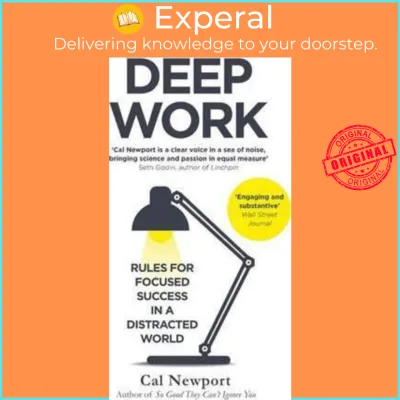
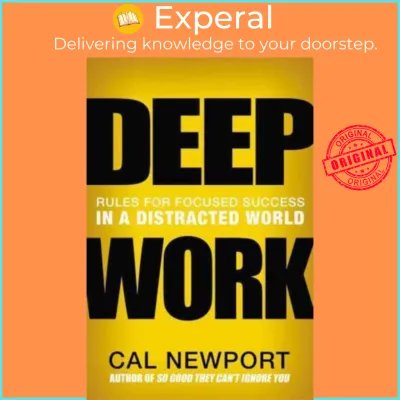
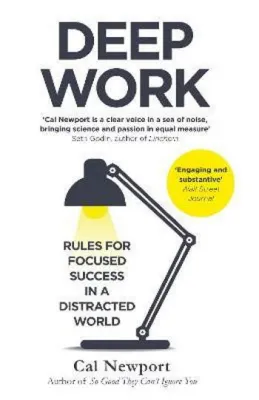
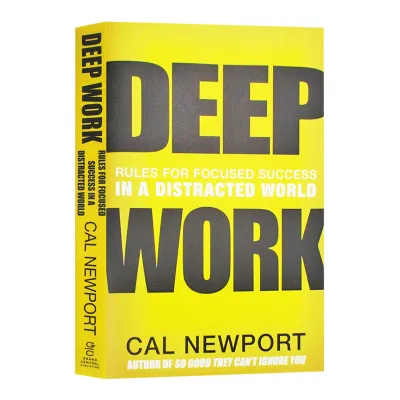

Prices are valid at publication and may change. Please refer to the product page for the latest price.
The primary difference between these two philosophies lies in their operational scale. Deep Work targets the quality and intensity of your focus during specific, high-stakes time blocks, aiming to maximize the output of your cognitive engine. Atomic Habits targets the frequency and automation of your daily actions, ensuring that your baseline behaviors align with your long-term goals without draining your mental energy.
When to Choose Deep Work First
You should prioritize Deep Work if you are a knowledge worker, programmer, writer, researcher, or student who faces constant interruptions and struggles to complete complex, high-value tasks. If you find yourself sitting at your desk for an entire day, busy with emails, meetings, and messaging apps, yet feel like you have accomplished nothing of substance by evening, your bottleneck is cognitive depth. Your attention is fragmented by “attention residue”—the mental lag that occurs when you switch from a primary task to check a quick notification and then try to switch back.

The expected outcome of reading Deep Work is a complete restructuring of how you view and protect your attention. You will learn to schedule structured deep work blocks, establish rituals to minimize digital clutter, and train your brain to embrace boredom rather than constantly seeking novel stimuli. Newport provides concrete strategies to build a professional life that prioritizes deep, uninterrupted focus, allowing you to produce work that is difficult for others to replicate.
However, implementing Newport’s strategies requires a baseline level of daily stability and control over your calendar. If your schedule is entirely reactive, or if your job requires you to respond to client demands within minutes, carving out uninterrupted 90-to-120-minute blocks will require deliberate boundary-setting. You will need to negotiate communication expectations with colleagues or family members to protect your deep work windows.
When to Choose Atomic Habits First
You should start with Atomic Habits if your primary struggle is inconsistent execution, procrastination, or a lack of structured daily routines. If you know exactly what you need to do—such as exercising, studying, or working on a side project—but find yourself failing to maintain these routines past a few days, your bottleneck is behavioral consistency. Relying on fleeting motivation is a recipe for failure; Atomic Habits provides the blueprint to build habits that stick regardless of your emotional state.
The expected outcome of reading Clear’s book is a practical mastery of the four laws of behavior change: make it obvious, make it attractive, make it easy, and make it satisfying. By applying these laws, you will learn how to design your physical and digital environments to naturally encourage positive behaviors while introducing friction to break unproductive habits. You will gain tools to automate the boring but necessary parts of your day, freeing up mental bandwidth for other pursuits.
A major advantage of Atomic Habits is its high accessibility. It is ideal for beginners or individuals with chaotic, unpredictable schedules because it focuses on micro-habits. Clear introduces the “Two-Minute Rule,” which dictates that any new habit should take less than two minutes to start. This low barrier to entry allows you to build momentum and establish the identity of someone who shows up, even when your day is highly disrupted.
Concept and Reading Experience Comparison
The reading experience of these two books reflects the professional backgrounds of their authors. Deep Work is written by an academic computer science professor, and it reads like a well-researched, persuasive argument. Newport divides the book into two distinct parts: the first half establishes the theoretical “Why” behind the value of deep work, while the second half provides the practical “How” through four distinct rules. It is analytical, philosophical, and relies heavily on historical anecdotes of famous thinkers and creators.
In contrast, Atomic Habits is written by a popular self-improvement writer and reads like a highly tactical, step-by-step manual. Clear synthesizes decades of cognitive science and behavioral psychology into clear, actionable templates. The book is highly structured, featuring summary boxes, diagrams, and clear action steps at the end of every chapter, making it feel like a workbook designed for immediate real-world application.
Their core frameworks also target different aspects of productivity. Newport introduces four “Deep Work Scheduling Philosophies”—Monastic, Bimodal, Rhythmic, and Journalistic—allowing readers to choose a style of focus that fits their specific lifestyle. Clear introduces tools like the “Habit Scorecard” to audit daily routines, “Habit Stacking” to anchor new habits to existing ones, and the “Goldilocks Rule” to maintain motivation by working on tasks of just the right difficulty.
| Feature | Deep Work by Cal Newport | Atomic Habits by James Clear |
|---|---|---|
| Core Focus | Maximizing cognitive depth and focus intensity | Automating daily routines and behavioral systems |
| Primary Target Audience | Knowledge workers, creatives, and students | Anyone struggling with consistency or procrastination |
| Key Framework | Four Scheduling Philosophies & Attention Residue | Four Laws of Behavior Change & Habit Stacking |
| Ideal Reading Order | Read second to optimize your focused work hours | Read first to build the routine of showing up |
Decision Framework: Building Your Productivity Stack
To make your final decision, perform a quick self-diagnosis of your current workflow failures. If you have a stable schedule but find that your actual output lacks quality, depth, or complexity because you are constantly distracted by messaging apps during your MRT commute or office hours, choose Deep Work. If you struggle to even sit down at your desk, find yourself procrastinating on basic tasks, or want to establish foundational lifestyle habits like regular exercise or reading, choose Atomic Habits.
For the ultimate productivity stack, the most effective sequential path is to read Atomic Habits first, followed by Deep Work. Before you can optimize the cognitive depth of your work, you must first establish the consistent habit of showing up to do the work. Once Clear’s frameworks have helped you automate your daily routines and clear away the friction of starting, you can apply Newport’s strategies to maximize the value, focus, and output of those dedicated hours.
When purchasing either book, consider your preferred learning style and how you plan to implement the frameworks. Atomic Habits contains numerous visual diagrams, habit trackers, and summary tables, making a physical copy or a high-quality e-book highly beneficial for quick reference and note-taking. Deep Work translates exceptionally well to the audiobook format, as its narrative-driven case studies are engaging to listen to during a daily commute, though you may still want to keep a digital notepad handy to record your scheduling rules. Whether you are investing around S$20 to S$30 on a physical copy or choosing a digital format, always verify the edition, language, and authorized source before purchase to ensure you receive the complete, unabridged content.
Frequently Asked Questions (FAQ)
Can I read both books at the same time?
Reading both books simultaneously is generally not recommended, as it can lead to framework overload and dilute your practical implementation. Both authors advocate for deliberate, focused action; trying to implement Newport’s deep scheduling rules while simultaneously restructuring your entire daily routine using Clear’s four laws can create unnecessary mental friction. It is far more effective to finish one book, spend a few weeks testing and integrating its core concepts into your daily life, and then move on to the other.
Which book is better for students preparing for exams?
Both books offer immense value for students, but they serve different phases of exam preparation. Deep Work is highly effective for the actual study sessions, helping students master complex, dense academic material, retain information, and avoid the cognitive fatigue caused by multitasking. Atomic Habits, however, is essential for establishing the study schedule in the first place. If a student struggles to start studying or cannot maintain a consistent daily revision routine, they should read Atomic Habits first to overcome procrastination. If they can sit down to study but find themselves easily distracted by their phones, Deep Work is the priority.

Community discussion
Share your experience or ask a question. Comments are reviewed before publication.