
Finding the right music book stand is essential for maintaining good posture, protecting your sheet music, and ensuring a productive practice session. The ideal choice depends on where you practice, how often you travel, and the weight of your music books or digital devices. By evaluating your physical space and performance habits, you can select a stand that supports your musical journey without cluttering your home.
Quick Diagnostic: Identifying Your Ideal Music Book Stand
To quickly narrow down your options, start by looking at your daily practice environment. If you primarily practice at a fixed desk or keyboard setup in a compact room, a desk stand that sits directly on a tabletop is often the most space-efficient choice. For musicians who practice standing up or use heavy, multi-page binders, a heavy-duty orchestral stand provides the necessary stability and height adjustment.
Your instrument also dictates your physical posture and sightline. Wind and brass players, as well as violinists, typically require a stand that can reach eye level while standing, which demands a sturdy vertical shaft. Conversely, cellists and classical guitarists practice seated, meaning they need a stand that can adjust to a much lower height range.
Products mentioned in this guide
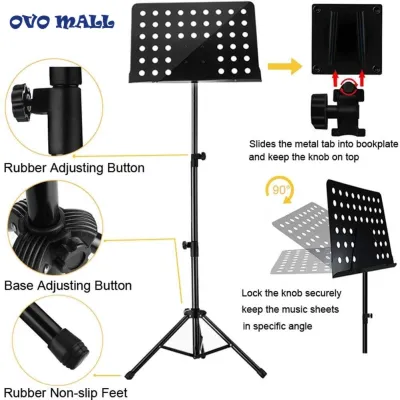
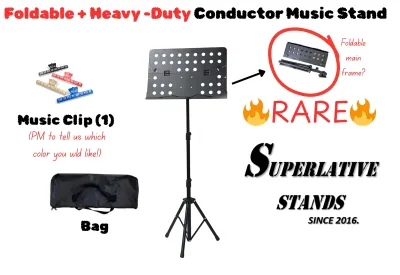
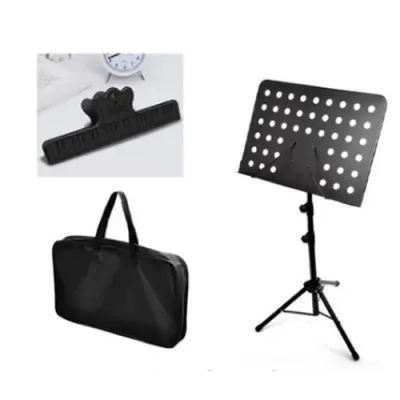
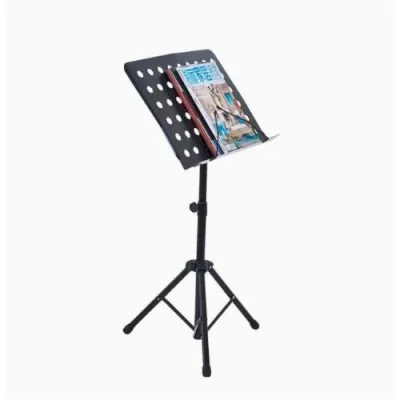
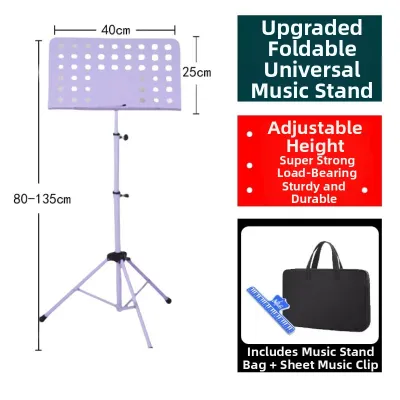
Prices are valid at publication and may change. Please refer to the product page for the latest price.
Immediate dealbreakers can quickly rule out certain categories. For instance, if you live in a cozy apartment with limited floor space, a wide-legged orchestral stand might block walkways and create a tripping hazard. On the other hand, if you rely on a heavy tablet or a thick anthology book, a flimsy wire folding stand will likely tip over, risking damage to your expensive gear.
Assessing Your Practice Space and Mobility Needs
When planning your practice setup, physical space is often the primary constraint. In typical urban homes, such as high-rise apartments, every square meter counts. Before purchasing a stand, measure the footprint of the base when fully extended. Tripod bases with flat legs require a wider radius to remain stable, whereas heavy dome or flat-plate bases take up less floor area but are much heavier to move.

Mobility is another critical factor that influences your choice of materials and design. If you regularly travel for lessons or ensemble practices, consider how you will transport the stand. Carrying a bulky metal stand on buses or the MRT during peak hours can be highly inconvenient. For active commuters, a collapsible stand made of lightweight aluminum that folds down to under 50 centimeters is highly desirable.
If your stand will remain in a dedicated music room or studio, weight becomes an advantage rather than a drawback. Heavier stands are far less likely to wobble when you turn pages quickly. Additionally, consider the flooring in your practice space; hard surfaces like parquet or polished tile can easily scratch, so look for stands equipped with thick rubber feet to protect your floors and prevent slipping.
Matching the Stand to Your Instrument and Sheet Music
Your physical comfort during long practice sessions depends heavily on the alignment of your stand, your instrument, and your eyes. To prevent neck strain and back fatigue, the music book stand must be adjustable to a height that allows you to read comfortably while maintaining proper playing posture. For example, flute players need the music positioned high enough to keep their airways open, while pianists using a portable keyboard require a stand that can sit directly behind the keys.
The physical format of your music also dictates the structural strength required. Heavy bound scores, thick fake books, and multi-page binders exert significant downward and forward pressure on the stand’s desk. A solid wood or heavy-gauge steel desk is necessary to support this weight without bending or slipping. Conversely, if you primarily practice using loose-leaf sheets, a simpler wire frame will suffice, provided it has reliable page holders.
Modern musicians also need to accommodate various accessories during practice. If you use a physical metronome, a clip-on tuner, or keep pencils handy, look for stands that offer accessory shelves or have a wide enough lip to hold these items securely. Some orchestral stands feature a double lip or a small utility tray below the main music shelf, which keeps your essential tools within arm’s reach without cluttering your sheet music.
Desk, Orchestral, or Folding: Comparing the Main Stand Types
Understanding the distinct characteristics of each stand type allows you to make an informed decision based on your specific practice habits.
Desk Stands
Desk stands are designed to sit directly on flat surfaces like tables, desks, or pianos. They are incredibly compact, making them the perfect solution for keyboard players whose instruments lack a built-in music rest, or for acoustic guitarists who practice at a desk. Because they do not have a vertical shaft or floor legs, they take up virtually no floor space and can be easily tucked away in a drawer when not in use. However, their height is entirely dependent on the surface they sit on, making them unsuitable for standing practice.
Orchestral Stands
Orchestral stands are the gold standard for stability and durability. Featuring a solid, non-porous desk made of wood, plastic, or heavy metal, these stands can support the heaviest music books and digital tablets without flexing. The vertical shaft is typically constructed from thick steel tubing with robust tension collars or friction-lock mechanisms that prevent the stand from slowly sinking under weight. While they offer the best stability and professional appearance, they are bulky, heavy, and do not fold down easily, making them best suited for permanent home studios or dedicated rehearsal spaces.
Folding Portable Stands
Folding portable stands are engineered for maximum convenience and transportability. These stands feature a collapsible tripod base and a folding wire desk that can be packed down into a compact, cylindrical shape. They are incredibly lightweight, often constructed from aluminum or thin steel alloys, and usually come with a carrying bag. The primary trade-off is stability; because of their lightweight construction and jointed design, they are prone to wobbling in drafty rooms and cannot safely support heavy binders or large tablets. They are best reserved for musicians on the move who use lightweight sheet music.
Final Verification Checklist Before You Choose
Before finalizing your purchase, run through these practical checks to ensure the stand fits your daily routine:
- Height Range: Measure your eye level while sitting and standing with your instrument. Verify that the stand's maximum and minimum height specifications accommodate both positions comfortably.
- Lip Depth: Check the thickness of your heaviest music book. The shelf or lip of the stand must be deep enough (typically at least 5 centimeters for thick books) to hold the pages open without them spilling over the edge.
- Tilt Mechanism: Ensure the desk angle can be adjusted and locked securely. A weak tilt joint will cause the desk to flop forward when loaded with a heavy book.
- Page Retention: Look for built-in spring arms or wire page holders if you frequently practice in rooms with fans or open windows, as these prevent pages from turning unexpectedly.
- Folded Dimensions: If you plan to travel, measure your gig bag or backpack to confirm the folded stand will fit inside comfortably.
Frequently Asked Questions (FAQ)
Can I use a standard folding stand for a heavy tablet or digital songbook?
Using a standard wire folding stand for a heavy tablet is generally not recommended. Tablets are top-heavy and can easily cause a lightweight, narrow-base folding stand to tip over, risking expensive damage. If you must use a portable stand with a tablet, look for a heavy-duty travel stand with a reinforced tripod base, or choose an orchestral stand with a solid desk that can safely support the concentrated weight of a digital device.
Do I need a special attachment for my metronome or tuner?
You do not necessarily need a special attachment, but having a stand with a wide lip or a dedicated accessory tray is highly beneficial. Many musicians use clip-on tuners that can attach directly to the edge of the music desk. For larger metronomes or smartphones running tuner apps, an orchestral stand with a double-lipped shelf provides a secure, flat surface to keep your devices visible and safe from falling.
Community discussion
Share your experience or ask a question. Comments are reviewed before publication.