
Deciding whether to invest in bass traps can be a challenging turning point when setting up a home studio, listening room, or home theater. You do not always need to rush out and buy expensive acoustic treatments the moment you notice a bit of muddy sound. Whether you actually require dedicated low-frequency absorption depends on your room’s physical dimensions, your primary audio activities, and the specific acoustic anomalies you are experiencing. By systematically diagnosing your space, you can avoid unnecessary expenses and choose the most effective path to clear, accurate sound.
Low-frequency sound waves are notoriously difficult to manage because of their physical size. Unlike high-frequency treble waves, which are short and easily blocked by thin materials, bass waves can be several meters long. These massive waves travel through walls, bounce off hard surfaces, and fold back on themselves, creating complex patterns of interference. Understanding how these physical waves interact with your specific room is the first step toward determining if specialized treatment is necessary.
Signs Your Room Has Low-Frequency Acoustic Issues
One of the most common indicators of low-frequency trouble is a phenomenon known as “boominess” or muddy bass. When you play music, you might notice that certain bass notes sound disproportionately louder than others, or that the low-end seems to linger in the air long after the note should have stopped. This lingering energy masks mid-range details, making vocals and instruments sound cluttered and indistinct.
Products mentioned in this guide
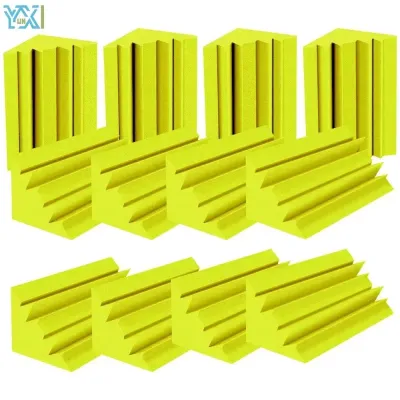
Prices are valid at publication and may change. Please refer to the product page for the latest price.
Conversely, you might experience “nulls” or dead spots where low frequencies seem to disappear entirely. If you lean forward in your chair or take a step back and suddenly feel like the bass has been completely sucked out of the room, you are standing in an acoustic null. These dead zones occur when reflected bass waves collide with direct waves from your speakers and cancel each other out.
For creators, the ultimate sign of a problematic room is inconsistent low-end translation. If a mix sounds perfectly balanced on your studio monitors but turns into a muddy mess in your car or sounds thin on a friend’s headphones, your room is lying to you. You are likely compensating for your room’s acoustic peaks and valleys by over-adjusting the EQ, leading to mixes that do not translate to the outside world.
Physical room characteristics heavily dictate these low-frequency behaviors. In Singapore, many residential spaces feature dense concrete walls, tiled floors, and compact, square layouts typical of modern apartments and HDB flats. These rigid, parallel boundaries are highly reflective and trap low-frequency energy, creating severe standing waves that make acoustic issues almost inevitable without intervention.
When Bass Traps Are the Right Solution
Dedicated bass traps become essential when you are working in critical listening environments where accurate sound reproduction is mandatory. If you are mixing, mastering, or tracking live instruments, you cannot make informed decisions if your room is distorting the low-end. In these scenarios, investing in high-quality low-frequency absorption is just as important as buying accurate monitors.

Home theater enthusiasts also benefit significantly from targeted bass trapping. Modern movie soundtracks feature intense low-frequency effects designed to deliver physical impact. Without proper treatment, this energy can turn into an uncontrolled rumble that shakes the walls and muddies the dialogue, whereas bass traps help deliver tight, punchy, and articulate low-end effects.
Small to medium-sized rectangular rooms are prime candidates for bass traps because their physical dimensions naturally trigger severe room modes. In these spaces, the distances between walls correspond directly to the wavelengths of common bass frequencies. This alignment creates predictable areas of high pressure in the corners, making them the perfect strategic locations for absorbing excess energy.
Furthermore, bass traps are the logical next step when your mid and high frequencies are already well-controlled, but the low-end remains unmanageable. If you have already installed thin acoustic panels or soft furnishings, you might find that your room sounds dead in the highs but still boomy in the lows. Adding thick, dense bass traps balances the overall decay time across the entire frequency spectrum.
When You Might Not Need Bass Traps
You might not need to invest in bass traps if your space is primarily a casual listening environment. If you use your room for everyday music playback, gaming, or watching casual television, absolute acoustic accuracy is rarely a priority. A minor amount of bass coloration or room resonance can actually sound pleasing to the untrained ear, making expensive treatments unnecessary.
Very large, open-plan, or irregularly shaped rooms also naturally mitigate many low-frequency issues. When a room has high ceilings, angled walls, or opens up into adjacent hallways and dining areas, low-frequency waves have more space to disperse. This natural dispersion prevents the severe standing waves and concentrated pressure build-ups commonly found in small, closed boxes.
Before buying treatment, consider that significant acoustic improvements can often be achieved through simple physical adjustments. Optimizing your speaker placement and moving your listening position even a few centimeters can dramatically alter how you perceive bass. Rearranging heavy furniture, such as placing a dense fabric sofa against a back wall, can also act as a functional, low-cost bass absorber.
Additionally, modern technology offers digital alternatives for managing minor low-frequency peaks. Utilizing digital room correction software, digital signal processing (DSP), or subwoofer equalization can effectively flatten out peaks in your frequency response. While DSP cannot fix deep acoustic nulls, it is an excellent, non-intrusive solution for taming minor resonances without cluttering your walls.
How to Test Your Room Before Buying
Before spending hundreds of S$ on acoustic treatments, you should perform a manual sine wave sweep to locate your room’s specific problem areas. You can find free online tone generators and play a slow sweep from 20 Hz to 200 Hz through your speakers. As the frequency changes, walk around your room and listen for dramatic changes in volume; you will easily identify where the bass peaks and where it drops off.
For a more precise diagnostic, you can use free room acoustic measurement software paired with a calibrated measurement microphone. This setup allows you to capture a visual representation of your room’s frequency response and decay times. By analyzing these graphs, you can pinpoint the exact frequencies causing trouble and determine if they require narrow-band or broadband treatment.
While a basic hand-clap test or playing broadband pink noise is excellent for assessing high-frequency flutter echo, keep in mind its limitations for deep bass. Human ears cannot easily evaluate low-frequency decay times through simple listening tests alone. Relying on visual software data ensures you are treating actual physical problems rather than guessing.
Finally, always review the manufacturer specifications and absorption coefficients of any acoustic products you are considering. True bass traps must have high absorption ratings at low frequencies, typically below 120 Hz. If a product’s technical sheet only shows high absorption ratings for mid and high frequencies, it will not solve your low-end issues, regardless of how it is marketed.
Next Steps: Adjust, Treat, or Upgrade
If your diagnostic tests reveal mild issues, your first step should always be to adjust your physical setup. Try moving your studio monitors away from the front wall and repositioning your listening seat so it is not sitting directly in the center of the room or against the back wall. These simple, free adjustments can significantly reduce immediate boundary interference and flatten your bass response.
If the low-frequency issues are minor but still noticeable, you can treat the room lightly using everyday household items. Adding thick rugs to hard floors, hanging heavy floor-to-ceiling curtains, or placing dense, fabric-covered bookshelves in key areas can help manage mid-frequency reflections. While this will not absorb deep sub-bass, it helps balance the overall acoustic energy in the room.
When measurements confirm severe low-frequency modal ringing and persistent peaks, it is time to treat heavily with dedicated bass traps. Focus on placing thick, dense absorption material strategically in the vertical corners of the room, as this is where low-frequency pressure is highest. Treating the tri-corners where the walls meet the ceiling or floor will yield the most significant acoustic improvement.
If your room has complex structural challenges or if your DIY measurement data remains confusing, consider seeking professional help. Consulting an acoustic designer can save you time and money by preventing you from purchasing the wrong materials. A professional can provide a targeted treatment plan tailored specifically to your room’s unique architecture and your specific listening goals.
Frequently Asked Questions (FAQ)
Can regular acoustic foam replace bass traps?
No, standard thin acoustic foam cannot replace dedicated bass traps. Thin foam panels are designed to absorb high and mid-range frequencies, typically starting around 500 Hz and above. Because low-frequency sound waves are physically long and carry immense energy, they pass straight through thin foam and bounce off the wall behind it. Effectively absorbing low frequencies requires significant material thickness, high density (such as dense fiberglass or rockwool), or specialized resonant designs that standard foam simply cannot provide.
Where is the most effective place to put bass traps?
The most effective locations for bass traps are the corners of your room, where low-frequency sound pressure naturally accumulates. Vertical corners where two walls meet are the primary targets, followed closely by tri-corners where two walls meet either the ceiling or the floor. Placing traps in these high-pressure zones allows them to absorb the maximum amount of low-frequency energy. If corner space is limited, the rear wall directly behind your listening position is another critical area for taming reflections that cause phase cancellation.
Community discussion
Share your experience or ask a question. Comments are reviewed before publication.