
Deciding whether to swap your ukulele’s standard high G string for a low G string is one of the first major musical crossroads you will encounter as a player. While the standard setup delivers the classic, breezy chime most people associate with the instrument, a low G string completely transforms its character, turning it into a warmer, more resonant instrument with an expanded lower range. For beginners, making this choice depends entirely on the style of music you want to play, your preferred learning resources, and your willingness to make minor physical adjustments to your instrument.
Understanding the structural and tonal differences between these two setups will help you decide which path fits your musical goals. Whether you want to play traditional Hawaiian melodies, strum along to popular radio hits, or explore complex fingerstyle arrangements, choosing the right tuning is the key to unlocking your instrument’s full potential.
What Is the Difference Between High G and Low G Tuning?
To understand the difference, you must first look at how the strings are pitched relative to one another. Standard ukulele tuning (gCEA) uses what is known as re-entrant tuning. In this setup, the fourth string (the G string closest to your face) is tuned to a high pitch—higher than both the C and E strings that sit next to it. This break in ascending pitch order gives the ukulele its signature “jumping” sound, where chords sound tightly clustered, bright, and incredibly cheerful.
Products mentioned in this guide

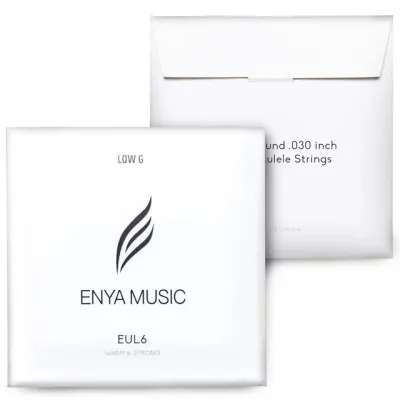
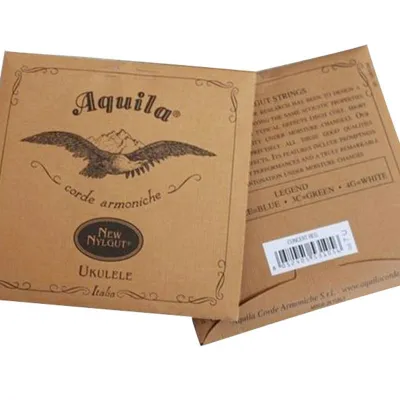

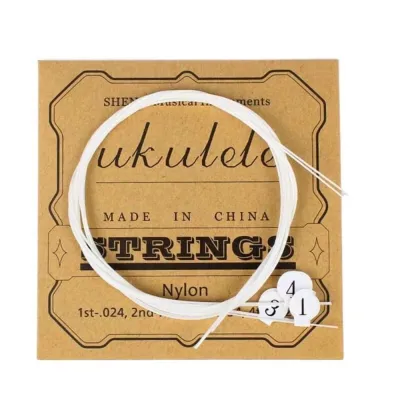
Prices are valid at publication and may change. Please refer to the product page for the latest price.
Low G tuning (GCEA) is a linear tuning system. Instead of jumping back up to a high pitch, the fourth string is tuned an octave lower, creating a continuous, ascending sequence of notes from the lowest string to the highest. This linear progression mirrors the bottom four strings of a standard acoustic guitar, giving you a much wider, uninterrupted pitch range.
Achieving this lower pitch requires a physically different string. Because a standard high G string is thin, tuning it down an octave would leave it completely loose, floppy, and unplayable. To vibrate at a lower frequency while maintaining proper playing tension, a low G string must be significantly thicker or made of a denser material, such as metal-wound nylon or heavy fluorocarbon.
Signs You Might Benefit from a Low G String
If you find yourself drawn to instrumental solo arrangements, classical pieces, or fingerpicking, a low G string can open up a new world of musical possibilities. The linear layout allows you to play continuous scales smoothly across the fretboard without encountering the sudden pitch jump of a re-entrant string. This makes it much easier to translate piano or guitar sheet music directly to the ukulele.

Another sign you might prefer a low G is a desire for a deeper, warmer, and more resonant tone. When you strum chords with a low G, the overall voicing sounds fuller and more balanced, with a rich bass foundation that supports the higher notes. This added depth is highly beneficial for genres like jazz, blues, and contemporary pop, where a standard ukulele might sound a bit too bright or thin.
Finally, if you often play solo and want your instrument to sound self-contained, the low G provides a natural bassline. When fingerpicking, you can use your thumb to strike the low G string on the downbeats, creating a convincing illusion of a bass player accompanying your melody lines. This added low-end presence helps fill the room, which is especially satisfying if you practice in quiet spaces or perform without a backing band.
When to Stick with the Standard High G String
Despite the benefits of a lower range, the traditional high G string remains the standard for several excellent reasons. If your primary goal is to play classic, bright, and cheerful traditional Hawaiian music, the high G is indispensable. The unique re-entrant tuning is what gives the ukulele its historic voice; without it, the instrument loses that characteristic “island” chime and begins to sound like a miniature classical guitar.
For rhythm players who primarily strum chords while singing, the high G string is often the superior choice. Because the high G lacks heavy bass frequencies, the instrument’s sound sits neatly in a higher register. This separation allows your singing voice to occupy the middle and lower frequencies without competing against the instrument, ensuring your vocals cut through the mix clearly.
Additionally, beginners who rely heavily on online tutorials, chord charts, and standard method books will find the high G much easier to navigate. The vast majority of beginner instructional material is written with re-entrant tuning in mind. Certain advanced techniques, such as the “campanella” style of fingerpicking—where notes of a melody are split across different strings to ring out like bells—rely entirely on the high G string to function correctly.
How to Decide: A Self-Diagnosis Checklist for Your Playing Style
To help you make the final decision, take a moment to evaluate your current playing habits and musical preferences. Ask yourself the following questions to determine which setup aligns with your goals:
- What is your primary playing technique? If you spend 90% of your time strumming basic chord shapes to accompany your singing, stick with the high G. If you are eager to learn fingerstyle solos, classical arrangements, or intricate flatpicking, the low G is highly recommended.
- What genres of music do you listen to and want to play? Traditional folk, reggae, and classic Hawaiian tunes thrive on the high G. Modern pop, jazz standards, classical transcriptions, and rock ballads generally sound better with the warmth of a low G.
- Are you comfortable adapting your learning materials? While basic chord shapes remain identical in both tunings, the actual sound of the chord inversions will change. If you are easily confused when your ukulele sounds an octave lower than the instructor's instrument in a video, it is best to stick with the standard high G until you gain more confidence.
- Do you own more than one ukulele? If you own multiple instruments, dedicating one to standard high G and another to low G is the ultimate solution. This allows you to choose the perfect tool for every song without the hassle of constantly changing strings.
What to Check Before Buying and Installing a Low G String
Before you purchase a low G string, you must perform a few quick compatibility checks on your instrument to ensure a successful installation. Because a low G string is physically thicker than a standard high G, it may not fit cleanly into the existing slot on your ukulele’s nut (the slotted piece of plastic or bone near the headstock). If the slot is too narrow, the thick string will sit on top of the nut rather than resting inside it, leading to high action, poor intonation, and severe string buzzing. You may need to gently widen the slot using a small file, a task that is irreversible and best handled by a professional technician if you are unsure.
When shopping on online marketplaces or at local music shops, you will encounter two main types of low G strings: wound and unwound. Wound strings feature a thin metal wire wrapped around a nylon or composite core, producing a bright, loud, and highly resonant bass tone. However, wound strings can produce a squeaking sound when your fingers slide over them, and they tend to wear down faster in humid climates. Unwound strings, typically made of thick fluorocarbon or specialized nylon, offer a warmer, mellower tone with a smooth physical feel and excellent durability against humidity.
Finally, always ensure you buy a string set specifically packaged for your ukulele’s scale length. Soprano, concert, and tenor ukuleles all require different string tensions and lengths. Installing a tenor-sized low G string on a tiny soprano ukulele can result in a floppy, unplayable string, while forcing a soprano string onto a tenor instrument can cause the string to snap under excessive tension.
Frequently Asked Questions (FAQ)
Can I just tune my standard high G string down to a low G?
No, you cannot tune a standard high G string down an octave. Because standard strings are thin, dropping the pitch by a full octave will drastically reduce the tension, leaving the string incredibly loose and floppy. It will rattle against the frets, fail to hold its pitch, and produce almost no audible volume. To achieve a proper low G sound, you must purchase a dedicated low G string designed with the correct thickness and mass to maintain playable tension at the lower frequency.
Will a low G string fit on any ukulele size?
While low G strings are available for soprano, concert, and tenor ukuleles, they are most commonly used on concert and tenor models. The longer scale length of these larger instruments provides better tension and resonance for lower notes. Soprano ukuleles have very short necks, which can make a low G string feel slightly muddy or loose. Baritone ukuleles are exempt from this choice, as they are much larger and traditionally use a completely different linear tuning (DGBE) similar to the top four strings of a guitar.
Community discussion
Share your experience or ask a question. Comments are reviewed before publication.