
A metronome watch offers a unique advantage for musicians: silent, tactile rhythm feedback directly on your wrist. However, whether it is the right tool for you depends entirely on your instrument, practice environment, and performance needs. Before investing in a dedicated wearable device, it is essential to diagnose your current timing challenges and compare how watches, clip-on devices, and mobile apps solve them.
Signs You Might Need a Wearable Metronome Watch
For many musicians, the traditional audible click of a standard metronome can become more of a hindrance than a help. If you play a naturally loud instrument, such as a drum kit, brass, or an amplified electric guitar, you have likely experienced auditory masking. This occurs when the sound of your instrument drowns out the metronome, forcing you to turn up headphone volumes to uncomfortable levels. A wearable metronome watch bypasses this auditory struggle entirely by translating the tempo into physical pulses against your skin.
Even when you can hear the click, prolonged exposure to repetitive, high-pitched sounds during long practice sessions can lead to mental fatigue. Your brain must constantly process two competing streams of auditory information: the music you are creating and the mechanical pulse guiding you. Shifting the timekeeping duty to your sense of touch allows your ears to focus solely on tone, dynamics, and intonation, making your practice sessions feel less draining.
Products mentioned in this guide
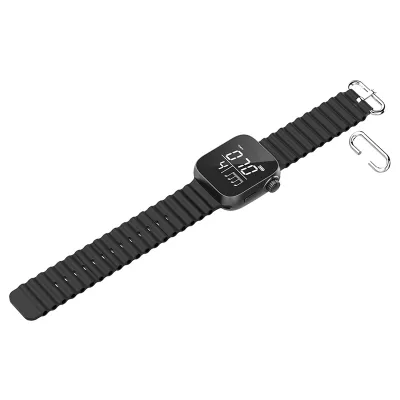
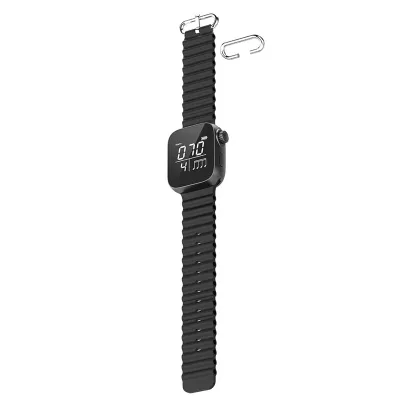
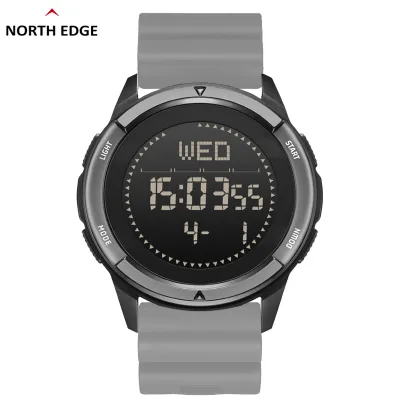
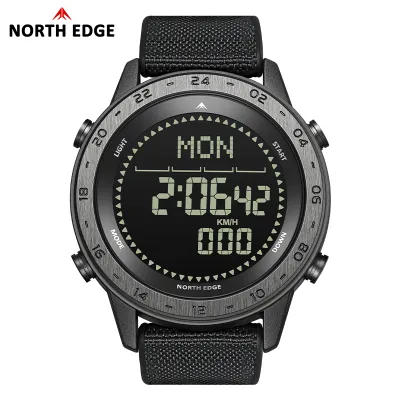
Prices are valid at publication and may change. Please refer to the product page for the latest price.
Live performance introduces a completely different set of challenges where audible clicks are simply not an option. If you perform in an ensemble, a theater pit, or a solo acoustic setting, keeping a consistent tempo is vital, but a loud click track bleeding into sensitive microphones can ruin a recording or distract the audience. A wearable device provides a discreet, silent reference that keeps you locked into the tempo without anyone else in the room realizing you are using a timing aid.
Another common driver for switching to a dedicated wearable is the desire to escape digital distractions. While smartphone metronome apps are incredibly convenient, they reside on devices designed to capture your attention with notifications, messages, and social media alerts. Every time you look at your phone to adjust the tempo, you risk breaking your creative flow. A dedicated wrist-worn metronome keeps your focus entirely on your instrument, establishing a clear boundary between your practice time and your digital life.
Comparing Form Factors: Watch vs. Clip-On vs. Phone App
Choosing the right metronome format requires balancing convenience, functionality, and physical comfort. Smartphone apps are the most accessible option for most musicians, offering highly visual interfaces, complex subdivision settings, and virtually zero initial cost. They are excellent for visual learners who benefit from flashing screens or moving pendulums. However, apps rely heavily on audio output, meaning you often need external speakers or headphones in louder environments, and the constant screen glare can be tiring during long sessions.

Clip-on metronomes offer a middle ground by attaching directly to your instrument, such as the headstock of an acoustic guitar or the scroll of a violin. These devices work by transferring physical vibrations directly through the wood of the instrument, allowing you to feel the beat resonance in your hands. While highly effective for acoustic string players, clip-on units are less versatile for instruments that do not vibrate intensely, such as keyboards, or for performers who move around a stage. They can also be awkward to position on certain instrument shapes.
Metronome watches are designed specifically for hands-free, consistent tactile feedback regardless of how much you move. Because the device is strapped securely to your wrist, the vibration travels directly into your arm, making it highly effective for drummers, keyboardists, and conductors. The primary trade-offs are the smaller physical displays, which can make complex time signatures harder to program on the fly, and the necessity of wearing a dedicated device on your wrist, which some musicians find slightly restrictive during fast, technical passages.
To help you evaluate these options side by side, the following matrix compares the primary characteristics of each form factor:
| Form Factor | Primary Feedback Type | Best Suited Instruments | Common Limitations |
|---|---|---|---|
| Phone App | Audio and Visual | Piano, acoustic woodwinds, quiet practice | Screen distractions, requires external speakers in loud rooms |
| Clip-On Metronome | Localized Vibration | Acoustic guitars, violins, ukuleles | Limited placement options, ineffective on non-vibrating instruments |
| Metronome Watch | Wrist-Based Tactile Pulse | Drums, keyboards, brass, live vocals | Smaller screen interface, requires wearing a device on the wrist |
Key Specifications to Check Before Buying a Metronome Watch
If you decide that a wearable metronome is the right choice for your musical journey, you should carefully evaluate several technical specifications before making a purchase. The most critical factor is the vibration intensity and the customization of the pulse patterns. Unlike standard smartwatch notifications, which are often soft and easily missed, a dedicated metronome needs a powerful haptic motor. Look for devices that allow you to adjust the pulse strength and customize the accent patterns so you can easily distinguish the downbeat from the rest of the measure.
The user interface and control scheme are equally important, especially if you need to make adjustments mid-performance. Some wearable metronomes feature physical wheels or rotating bezels that let you dial in a new BPM quickly without looking at the screen. Others rely on touchscreens or tap-tempo features where you tap the face of the watch to set the speed. Consider whether you can easily operate these controls with sweaty hands or while holding your instrument’s bow or drumsticks.
Power management is another practical consideration that affects your daily routine. Wearable metronomes generally use either rechargeable lithium-ion batteries or replaceable coin-cell batteries. Rechargeable models are highly convenient for daily users but require regular access to a charging cable, so you must check the manufacturer’s stated runtime per charge to ensure it can survive a full day of rehearsals. If you choose a model with replaceable batteries, verify how easy it is to swap them out and keep spares in your instrument case.
Finally, pay close attention to the durability and comfort of the strap and casing. Musicians often sweat during intense practice sessions or under hot stage lights, making sweat-resistant strap materials like silicone or high-grade nylon essential. Check the product documentation for water and dust resistance ratings to ensure the internal electronics are protected from moisture. A comfortable, secure fit is necessary not only for wearability but also to ensure the haptic motor maintains consistent contact with your skin for clear pulse transmission.
When to Stick with Your Current Setup
While the technology behind wearable metronomes is impressive, they are not a universal necessity for every musician. If your current practice setup already works well, there is little reason to spend money on a new device. For instance, if you primarily practice in a quiet room with a phone app paired with a comfortable pair of wired earphones or a small Bluetooth speaker, you already have a highly functional, clear, and accurate timing source.
Quiet practice environments also diminish the need for tactile feedback. If you play classical guitar, flute, or solo piano in an isolated space, the gentle click of a traditional mechanical metronome or a simple digital desktop unit is more than adequate. In these scenarios, the physical sensation of a vibrating wrist strap can actually feel distracting or unnatural, pulling your attention away from the subtle nuances of your instrument’s natural resonance.
Before investing in a dedicated watch, you can also test the concept of tactile feedback using tools you already own. Try downloading a metronome app on your smartphone, setting it to vibrate on every beat, and placing the phone in your front pocket or strapping it to your arm with a running band. While this setup is bulkier than a dedicated watch, it provides a free way to experience tactile timekeeping and helps you decide if you genuinely prefer physical pulses over auditory clicks before making a financial commitment.
Frequently Asked Questions (FAQ)
Can a standard smartwatch replace a dedicated metronome watch?
While you can download third-party metronome apps on most standard smartwatches, they rarely perform as well as dedicated musical wearables. Standard smartwatches are designed for general notifications, meaning their haptic motors are optimized for brief, gentle alerts rather than continuous, high-intensity pulsing. Running a metronome app on a standard smartwatch can quickly drain its battery and may suffer from slight latency issues, where the vibration does not perfectly align with the actual tempo.
Are clip-on metronomes better for acoustic guitars than watches?
For acoustic guitarists, a clip-on metronome is often highly effective because it transfers physical vibrations directly through the wood of the headstock. This allows you to feel the beat resonate through the entire neck of the instrument and directly into your fretting hand, creating a very natural connection to the rhythm. A metronome watch, by contrast, delivers the pulse to your wrist, which some players find feels slightly disconnected from the physical body of the guitar.
How do I maintain and clean a wearable metronome?
To keep your wearable metronome in good condition, wipe the casing and the strap with a dry or slightly damp microfiber cloth after every practice session to remove sweat and skin oils. Avoid using harsh chemical solvents, alcohol wipes, or submerging the device in water unless the manufacturer’s manual explicitly states it is fully waterproof. Always check the charging port for dust or lint, and ensure the contacts are completely dry before connecting the charging cable.
Community discussion
Share your experience or ask a question. Comments are reviewed before publication.