
Deciding whether to use a violin shoulder rest is a highly personal choice. There is no universal rule that dictates every violinist must use one, nor is there a badge of honor for playing without support. The decision ultimately depends on your unique physical anatomy, your playing style, and how you manage physical tension while holding the instrument.
Historically, the shoulder rest is a relatively modern invention. For centuries, violinists played without mechanical support, relying instead on a combination of collarbone placement, jaw pressure, and left-hand support. Today, while most classical players use some form of shoulder rest to bridge the gap between the shoulder and the chin, a dedicated group of players continues to perform without one to achieve greater freedom of movement or a different tonal response.
To determine which path is right for you, it is essential to evaluate how your body interacts with the violin. By analyzing your physical comfort, observing your posture, and testing your left-hand mobility, you can make an informed decision that protects your physical health and enhances your musical performance.
Products mentioned in this guide
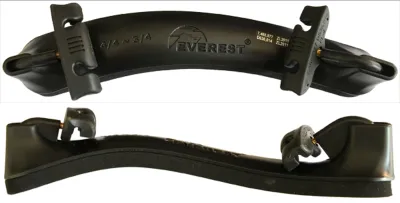
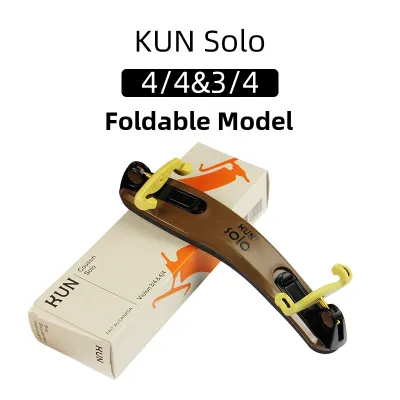
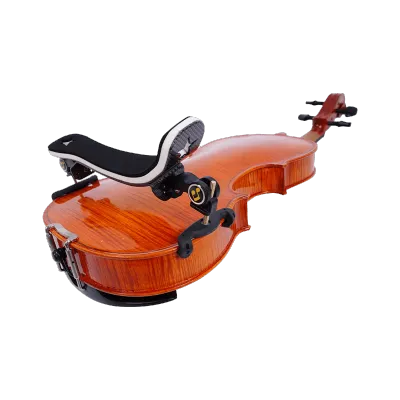
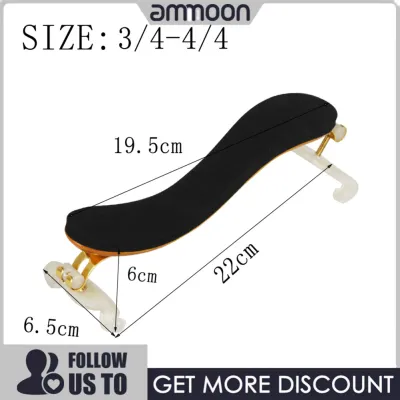
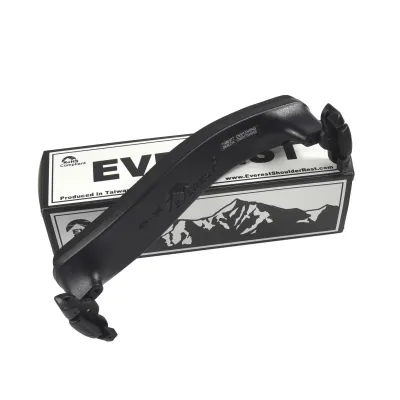
![[ssb mall]Violin Shoulder Rest Adjustable Style Violin Support Holder for 3/4 4/4 Violin Musical Instrument Parts Accessorie](https://img.lazcdn.com/g/p/4a14b9ad5ef157828e64aa72a2d74067.jpg_400x400q80.jpg_.webp)
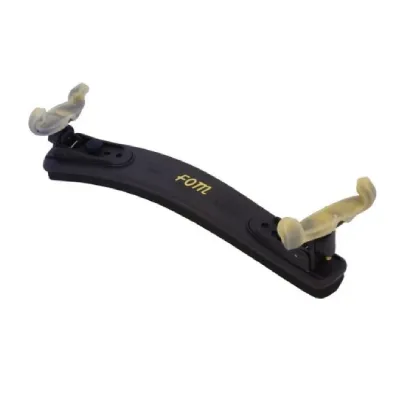

Prices are valid at publication and may change. Please refer to the product page for the latest price.
Signs You Might Need a Violin Shoulder Rest
If you currently play without a shoulder rest, or if you are a beginner establishing your setup, your body will quickly signal whether your approach is working. The most immediate indicator is physical discomfort. Persistent neck stiffness, shoulder tension, or upper back pain during or after a practice session suggests that your body is working too hard to keep the instrument in place.
When the gap between your collarbone and your jaw is wider than the depth of the violin, your body naturally tries to close this space. This often manifests as a subconscious raising of the left shoulder or an excessive downward tilt of the head. Over time, holding this tense, elevated position can lead to muscle strain and long-term repetitive strain injuries.
Another clear sign that you may need a shoulder rest is instability during active playing. If you feel the violin constantly slipping downward or shifting out of position when you take your left hand away, you are likely compensating by gripping the neck of the instrument too tightly. This constant gripping severely limits your technical development.
Left-hand mobility is highly dependent on a secure instrument hold. If your left hand is busy supporting the physical weight of the violin, your thumb and fingers lose the freedom required for smooth shifting between positions. You may find that sliding up to higher positions feels clunky, or that your hand feels locked in place, preventing a relaxed and fluid vibrato.
Finally, pay attention to how much effort it takes to keep the violin horizontal. If the scroll of the violin repeatedly droops toward the floor, a shoulder rest can provide the necessary leverage to keep the instrument stable without requiring constant muscular correction.
When Playing Without a Shoulder Rest Works
Playing without a shoulder rest is highly successful for many violinists, particularly those with specific physical builds. Individuals with shorter necks, broader collarbones, or less sloped shoulders naturally have a smaller physical gap to bridge between the jaw and the collarbone. For these players, the violin can rest directly on the collarbone while the chin rests comfortably on the chinrest, requiring very little vertical compensation.

For players with sloped shoulders or longer necks, playing without a rest requires a different mechanical approach. Instead of clamping the instrument down with the head, these players often allow the violin to rest more dynamically on the collarbone, using the left hand as a supportive guide rather than a rigid anchor.
Historical performance practice also heavily influences this decision. Baroque violinists, for example, play on instruments without chinrests or shoulder rests, holding the violin lower on the collarbone or chest. This technique relies on a completely different set of mechanics, where the left hand plays a much more active role in supporting the instrument.
Many modern players who choose not to use a rigid shoulder rest still utilize soft alternatives to assist with friction and comfort. A simple piece of chamois leather, a thin cosmetic sponge, or a folded microfiber cloth can be secured to the back of the violin with a rubber band. These minimal solutions provide slip resistance against clothing and a small amount of cushioning without adding the height or rigidity of a mechanical rest.
How to Test Your Current Violin Hold
To determine whether your current setup is serving your playing, you can perform a series of simple self-assessments. The first is the “hands-off” stability test. Place your violin in your customary playing position, resting your chin on the chinrest. Gently release your left hand’s grip on the neck, letting your arm drop to your side.
The violin should remain relatively stable and horizontal for a few seconds without requiring you to clamp down aggressively with your jaw or raise your shoulder. If the violin immediately drops, tilts severely, or feels as though it will fall, your current setup lacks the necessary balance, and a shoulder rest may be required to stabilize it.
Next, stand in front of a full-length mirror and observe your posture while playing a simple scale. Your shoulders should remain relaxed and level, mimicking your natural standing posture. If you see your left shoulder creeping upward to meet the violin, you are introducing chronic tension into your shoulder girdle.
While looking in the mirror, examine the angle of your head. Your neck should remain relatively straight, with your head resting naturally on the chinrest. If you must tilt your head severely to the left or twist your neck to secure the instrument, you are placing unequal pressure on your cervical spine.
Finally, evaluate your freedom of movement during active technical exercises. Play a passage that requires shifting between first and third or fifth positions, or practice a sustained vibrato. If you feel your collarbone acting as a rigid, restrictive anchor that you must squeeze against to shift, your hold is too tense. A shoulder rest can help distribute the holding duties, freeing your left hand to move along the fingerboard.
Choosing the Right Path Forward
If your self-diagnosis reveals tension, instability, or restricted movement, it is time to adjust your setup. If you decide to transition to a shoulder rest, look for an adjustable model. A good shoulder rest should allow you to customize the height, angle, and width to match your collarbone’s contour. Models made of wood, carbon fiber, or high-density plastics offer different levels of flexibility and acoustic resonance.
When selecting a rest, prioritize physical comfort over brand popularity. The curve of the rest should match the slope of your shoulder without digging into your collarbone. Adjust the feet of the rest so that the violin sits at an angle that allows your left arm to reach the lower strings comfortably without overextending your wrist.
If you prefer to continue playing without a shoulder rest but want to eliminate tension, seek the guidance of an experienced violin teacher. A teacher can help you adjust your holding mechanics, showing you how to balance the violin dynamically between your collarbone, left hand, and jaw. They can also help you select an appropriate chinrest, as the height and shape of the chinrest are critical when playing without a shoulder rest.
If you experience persistent, sharp, or radiating pain in your neck, shoulder, or arm, stop playing immediately and consult a medical professional or a physical therapist specializing in performing artists. Muscle soreness from adjusting to a new setup is normal, but nerve pain, numbness, or joint inflammation should never be ignored.
Whether you choose to use a shoulder rest, a minimal sponge, or no support at all, remember that finding the perfect setup is a process of trial and error. Give yourself several weeks to adapt to any adjustment, practicing in short, focused sessions to build muscle memory without inducing fatigue.
Frequently Asked Questions (FAQ)
Can using a shoulder rest damage my violin?
A shoulder rest can potentially damage your violin if it is poorly maintained or improperly fitted. The feet of most shoulder rests are covered in soft rubber or latex tubing to grip the edges of the instrument. Over time, this rubber can wear down, dry out, or split, exposing the hard plastic or metal underneath, which can scratch the varnish or dent the wood.
To prevent damage, regularly inspect the condition of the rubber padding on the feet and replace them as soon as they show signs of wear. Additionally, avoid over-tightening the width of the shoulder rest. Applying excessive lateral pressure to the ribs of the violin can cause structural damage or warp the wood. The rest should fit snugly enough to stay in place without squeezing the instrument’s body.
Is it harder to learn the violin without a shoulder rest?
Learning the violin without a shoulder rest generally presents a steeper initial learning curve for beginners. Without the mechanical support of a rest, a beginner must learn to balance the instrument dynamically, which requires coordinating the left hand’s support with the collarbone and jaw. This extra physical effort can make early lessons feel more physically demanding.
This added complexity can temporarily slow down progress in developing early shifting techniques and overall posture stability. Beginners often find it easier to start with an adjustable shoulder rest to establish a stable, tension-free hold. Once the basic posture and left-hand techniques are secure, players can choose to experiment with removing the rest if they wish to explore alternative holding methods.
Community discussion
Share your experience or ask a question. Comments are reviewed before publication.