
When playing an electronic drum kit, the quality of your sound is only as good as the speaker system delivering it. Unlike other instruments that occupy a narrow frequency band, a drum kit demands a highly versatile sound system that can simultaneously rattle the floor with a sub-bass kick and deliver the piercing, high-frequency shimmer of a cymbal. A dedicated drum amp is engineered specifically to handle these extreme acoustic demands, ensuring that every strike of your stick is reproduced with absolute clarity and power.
Choosing the right drum amp requires a clear understanding of three core specifications: wattage, speaker configuration, and input options. Balancing these technical features against your personal playing environment—whether practicing quietly in a compact HDB flat in Singapore or performing live on stage—is the key to finding a monitor that matches your musical needs.
Why Drum Amps Require Specialized Specifications
Electronic drum kits produce one of the most challenging signals for any audio amplifier to reproduce. A typical drum performance spans almost the entire spectrum of human hearing, requiring an amplifier that can handle deep, low-frequency thumps from the bass drum (often dipping below 50 Hz) while simultaneously delivering the bright, crisp high frequencies of cymbals and hi-hats (which can exceed 15 kHz). Standard instrument amplifiers, such as those designed for electric guitars, are voiced for a much narrower midrange and lack the hardware to reproduce this massive frequency spread.
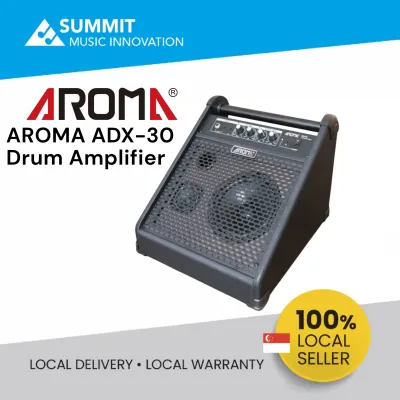
Products mentioned in this guide
![Roland PM-100 Electronic Drum 80W Monitor Speaker PM100 Music Instrument Amplifier [LIMITED STOCK]](https://img.lazcdn.com/g/p/1430dbaa5a9c5b0c69ba3c6d36f19fab.jpg_400x400q80.jpg_.webp)
![Roland PM-200 Electronic Drum 180W Monitor Speaker Musical Instrument Amplifier [PREORDER]](https://img.lazcdn.com/g/p/b295ee4ea8c2fd1e995ea11d489490bf.jpg_400x400q80.jpg_.webp)
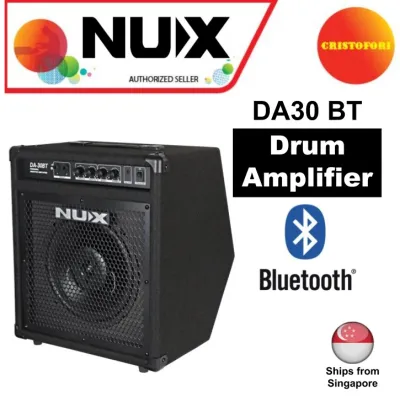
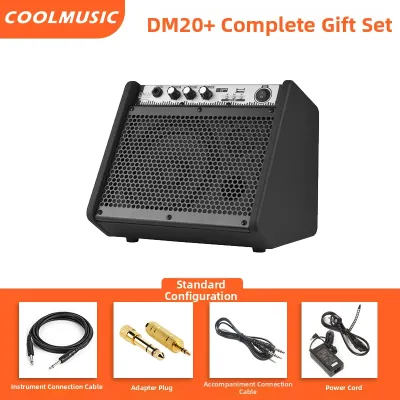
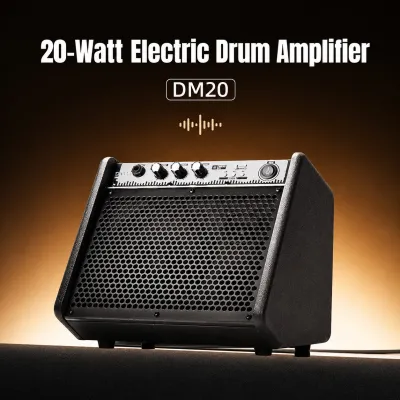
Prices are valid at publication and may change. Please refer to the product page for the latest price.
Beyond frequency range, electronic drums demand exceptional transient response. A transient is the sudden, high-energy spike in volume that occurs the exact millisecond a drumstick strikes a pad. These instantaneous peaks require an amplifier to deliver a massive burst of power in a fraction of a second. If an amplifier cannot respond quickly enough, the sound becomes compressed, muddy, and lifeless.
Attempting to run electronic drums through a standard guitar amplifier is a recipe for poor sound quality and potential hardware failure. Guitar speakers are built with stiff paper cones designed to accentuate midrange frequencies and cannot handle the intense, low-frequency excursions of a kick drum. Pushing these speakers with heavy bass transients can easily overextend the cone, leading to permanent voice coil damage or a blown speaker. Before connecting any new equipment, always check your drum module’s user manual and the amplifier’s manufacturer instructions to ensure complete compatibility and prevent damage to your gear.
Wattage: Matching Drum Amp Power to Your Playing Environment
When evaluating a drum amp, focus on Root Mean Square (RMS) wattage rather than Peak power. RMS represents the continuous power an amplifier can cleanly deliver over time, making it the reliable metric for real-world performance. Peak wattage only refers to the absolute maximum power output in brief, millisecond bursts, which does not reflect sustained usage.

For home practice, a lower wattage range of 20W to 50W RMS is generally sufficient. In compact spaces or shared residential apartments where sound transmission is a concern, you do not need extreme volume. Instead, you require an amplifier that delivers a balanced, full-range sound at lower, neighbor-friendly levels, allowing you to monitor your playing nuances clearly.
For band rehearsals or small live gigs, you will need at least 100W RMS to compete with electric guitars, bass rigs, and acoustic instruments. A high-wattage amplifier ensures your drums cut through the collective noise of the band.
Crucially, higher wattage provides cleaner headroom—the safety margin before a signal distorts. Ample headroom allows the amp to effortlessly reproduce sudden, explosive transients from drum strikes without clipping, resulting in a punchy, dynamic sound even at higher volumes.
Speaker Size and Configuration: Reproducing the Full Kit
To accurately reproduce a drum kit’s full frequency range, most high-quality drum monitors utilize a two-way speaker system. This configuration consists of a large woofer for low and lower-mid frequencies, and a smaller tweeter or high-frequency driver for cymbals and snare crispness.
The woofer’s size directly impacts the physical thump of your kick drum and floor toms, typically ranging from 8 to 12 inches. While an 8-inch woofer is highly portable and suitable for compact rooms, a 10-inch or 12-inch woofer moves significantly more air. This larger surface area provides the deep, authentic low-end response needed to make an electronic kit feel like an acoustic setup.
A dedicated tweeter is essential to capture the high-end snap and shimmer. Without it, cymbals sound dull and muffled. Quality drum amps often feature a coaxial design—where the tweeter is mounted in the center of the woofer—or a separate compression driver with a crossover network to route frequencies accurately.
You must also choose between mono and stereo configurations. A single-speaker mono amplifier is adequate for basic monitoring, but modern electronic drum modules often output panned stereo sounds. A stereo drum amp, featuring dual angled speakers, preserves this spatial imaging to deliver a far more immersive and realistic playing experience.
Input Options and Connectivity: Integrating with Your Gear
An amplifier’s connectivity options determine how seamlessly it integrates with your gear. The primary inputs are typically 1/4-inch instrument jacks. While a single mono input works for basic setups, dedicated Left and Right (stereo) 1/4-inch inputs are preferred. Stereo inputs capture the full panning and spatial effects programmed into modern drum modules, ensuring a realistic soundstage.
Auxiliary connectivity is vital for practice. Look for amplifiers offering a 3.5mm auxiliary input or integrated Bluetooth. This allows you to connect a smartphone or laptop directly to the amp, making it simple to play along with backing tracks, metronomes, or instructional videos without needing an external mixer.
For silent practice, a dedicated headphone output is indispensable. Plugging headphones directly into the drum amp allows you to utilize the amplifier’s internal EQ and processing while keeping your sessions quiet. This is especially useful for late-night practice in high-density housing environments.
For gigging, advanced outputs like a balanced XLR direct output (DI out) are highly valuable. A DI output sends a clean, balanced signal directly to a venue’s mixing console or a recording interface. This eliminates the need to mic the amplifier, ensuring a pristine signal transfer to the main PA system while allowing you to use the amp on stage as a personal monitor.
Prioritizing Specs Based on Your Drum Amp Setup
To select the right drum amp, match these specifications to your primary playing scenario. Beginners and home players should prioritize convenience and connectivity. A compact monitor with 20W to 50W RMS, an 8-inch or 10-inch woofer, and Bluetooth or auxiliary inputs provides a highly functional, easy-to-store practice tool that delivers excellent sound at sensible volumes.
If you rehearse with a band or perform live, your priorities shift to power, durability, and routing. Look for an amplifier with at least 100W RMS, a 12-inch woofer for maximum low-end punch, and dedicated XLR outputs for PA integration. Pay close attention to physical build quality, checking for heavy-duty corner protectors, a rugged metal grille, and ergonomic handles for frequent transport.
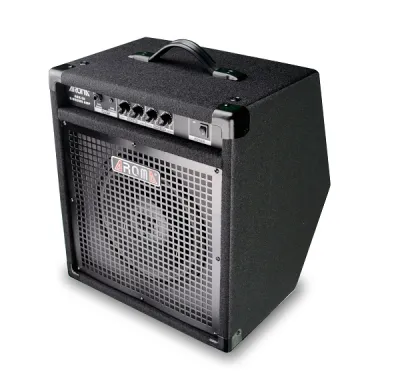
Finally, consider the physical footprint. In urban environments like Singapore, where residential space is often at a premium, a drum amp with an angled wedge design is highly advantageous. These cabinets sit flat on the floor and tilt upward toward your ears, allowing you to monitor your sound perfectly at lower volumes while keeping your practice setup compact.
Frequently Asked Questions (FAQ)
Can I use a guitar or bass amp for my electronic drums?
Standard guitar amplifiers are not designed to handle the wide frequency range or the intense low-frequency transients of an electronic drum kit. Guitar speakers focus heavily on midrange frequencies and lack the high-frequency tweeters needed to make cymbals sound crisp, and their cones can easily be damaged or blown out by the physical impact of a kick drum signal. Bass amplifiers are built to handle low frequencies safely, but they generally lack the high-end clarity required for cymbals and snares. For accurate sound reproduction and to protect your gear, it is always best to use a dedicated drum amp or a full-range flat-response (FRFR) active PA monitor.
Do I need a stereo drum amp for my electronic kit?
While a mono drum amp is perfectly fine for basic practice and monitoring, a stereo drum amp provides a significantly more realistic and immersive playing experience. Modern electronic drum modules are programmed with stereo soundscapes, panning cymbals and toms across the stereo field to mimic the physical layout of an acoustic kit. A stereo amplifier preserves this spatial panning, making you feel as though you are sitting behind a real acoustic drum kit, whereas a mono amplifier collapses all of these spatial details into a single, centered sound source.
Community discussion
Share your experience or ask a question. Comments are reviewed before publication.