
Finding the right drum set for a child involves balancing physical development, coordination, and the practical realities of home practice. A kit that is too large can cause physical strain and frustration, while a simple toy might fail to engage an older child’s musical potential. By matching the instrument to your child’s specific age group and physical size, you can foster a lifelong love for rhythm while protecting their developing joints and hearing.
Why Age and Physical Size Matter When Choosing a Drum Kit
A child’s physical dimensions directly dictate how comfortably they can interact with a drum kit. If the seat, or throne, is too high, a young player will struggle to reach the bass drum and hi-hat pedals, leading to poor posture and muscle fatigue. Conversely, a kit that is too small forces the drummer to hunch over, putting unnecessary strain on their lower back and neck.
The reach of a child’s arms also determines their ability to strike the cymbals and outer tom-toms without overextending. When setting up a kit, the snare drum should sit at about waist height when the child is seated, allowing their thighs to remain parallel to the floor or angled slightly downward. This ergonomic alignment ensures that the ankles and knees can move freely to operate the pedals.
Products mentioned in this guide

Prices are valid at publication and may change. Please refer to the product page for the latest price.
Stick selection is another critical factor that is often overlooked. Standard adult drumsticks, such as 5A or 2B models, are typically too heavy and thick for small hands, which can strain developing wrists and fingers. Opting for lighter, thinner sticks designed specifically for children, such as 7A or specialized junior models, allows for better control and reduces the risk of repetitive strain injuries.
Cognitive and motor skill development also play a major role in determining the right setup. Coordinating all four limbs to play independent rhythms requires a level of neurological maturity that typically begins to develop around age five. For younger children, simplified setups allow them to focus on basic hand-eye coordination and steady pulse keeping without the cognitive overload of managing foot pedals.
Ensuring a proper physical fit not only prevents injury but also keeps the learning process fun and engaging. When a child can easily reach every part of their instrument, they are much more likely to practice consistently and experience rapid progress. Taking the time to measure your child’s height and reach before shopping will help you select a kit that supports their physical well-being.
Toddlers and Preschoolers (Ages 2–4): Rhythm Toys and Junior Percussion
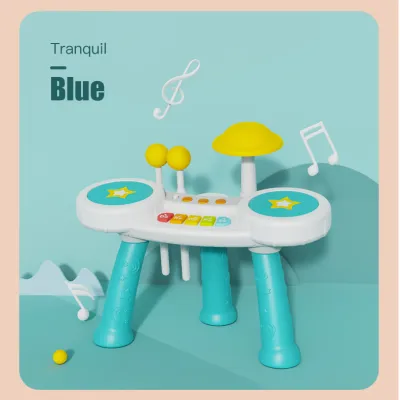
For toddlers and preschoolers, the primary goal of musical play is sensory exploration and basic rhythm development. At this stage, children are still refining their gross motor skills and benefit most from simple percussion instruments rather than complex, multi-piece drum kits. True junior percussion instruments, such as hand drums, bongos, shakers, and small cajons, are far more appropriate than miniature acoustic drum sets.

These instruments allow young children to explore cause and effect through sound without the frustration of complex physical setups. Unlike toys that merely play pre-recorded music at the press of a button, real junior percussion instruments respond directly to the force and technique of the child’s hands. This direct tactile feedback is essential for developing an early sense of dynamics and tempo.
Safety is the most critical consideration when selecting instruments for this age group. Parents should carefully inspect all items for non-toxic finishes, rounded edges, and robust construction that can withstand enthusiastic play. Avoid any instruments with small, detachable parts, such as loose metal jingles or poorly secured mallet heads, which can present serious choking hazards.
Heavy metal hardware, tension rods, and complex pedal mechanisms should be completely avoided for toddlers. These components are not only difficult for small limbs to operate, but they also pose risks of pinched fingers and stubbed toes. Lightweight, soft-sided percussion instruments provide a safe, engaging environment where young children can explore rhythm freely.
Introducing rhythm at this early stage should be an interactive, play-based experience. Simple call-and-response games, where you clap or drum a simple pattern and have your child repeat it, can build foundational listening skills. By keeping the focus on fun and exploration, you lay a positive foundation for more structured musical learning in the future.
Early Elementary (Ages 5–8): Compact Acoustic Sets and Entry-Level E-Drums
As children enter early elementary school, their physical coordination and attention spans increase, making them ready for their first actual drum kits. This age group is ideal for scaled-down acoustic kits or compact electronic drum pads. These instruments are designed to bridge the gap between early rhythm toys and full-sized adult setups.
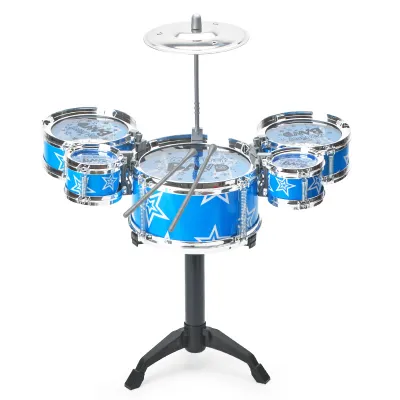
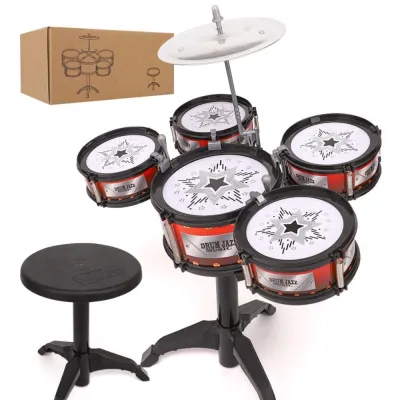
When looking at acoustic options, shell dimensions should be scaled to the child’s height. A suitable configuration typically features a 10-inch or 12-inch snare drum, small rack toms, and a compact bass drum, usually around 16 inches in diameter. This smaller footprint allows the entire kit to be positioned low enough for a child to reach every surface comfortably.
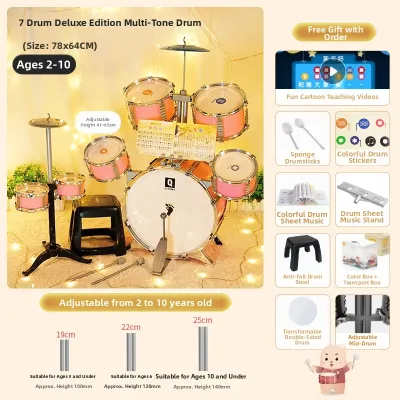
Adjustability is key during these rapid growth years. The drum throne must have a wide range of height adjustments, and the cymbal stands should be lightweight and low-profile. Heavy-duty double-braced hardware is unnecessary for this age group and makes the kit difficult to reposition or transport.
For families considering electronic options, entry-level kits with mesh heads are highly recommended over basic rubber pads. Mesh heads offer a more realistic rebound that closely mimics the feel of an acoustic drum, which helps build proper wrist technique. They also generate significantly less physical noise when struck, reducing hand fatigue and joint strain for young players.
Setting up a dedicated practice space that is inviting and comfortable can significantly boost a child’s motivation. Ensure the kit is placed in a well-lit area where the child does not feel isolated from the rest of the family. Having the instrument easily accessible, rather than packed away in a closet, encourages spontaneous practice sessions throughout the week.
Older Kids and Pre-Teens (Ages 9–12): Standard Starter Kits and Advanced E-Drums
By the time a child reaches age nine, they generally possess the physical size and cognitive focus required for standard drum configurations. Players in this bracket can comfortably transition to full-size or slightly compact starter kits. These instruments support heavier playing dynamics and allow for more expressive, nuanced performances.
A standard five-piece acoustic layout is the benchmark for this stage, typically consisting of a 14-inch snare, two rack toms, a floor tom, and a 20-inch or 22-inch bass drum. This configuration matches what students will encounter in school music programs or private lesson studios, ensuring a seamless transition between practice at home and performance elsewhere.
For those choosing electronic kits, look for advanced features that support intermediate skill development. Dual-zone cymbals allow the player to trigger different sounds from the bow and edge of the cymbal, while a dedicated hi-hat controller pedal helps teach realistic foot coordination. The drum module should also offer expandable inputs to accommodate additional pads as the player’s needs grow.
As technique and physical strength improve, upgrading specific components becomes a viable path. Investing in a high-quality bass drum pedal with adjustable spring tension or upgrading to bronze cymbals can dramatically improve the playing experience. These incremental upgrades allow the kit to grow alongside the child’s developing musical abilities.
Encouraging structured practice habits becomes increasingly important at this stage. Introducing a metronome or using the built-in coaching functions on an electronic kit helps young drummers develop a precise sense of time. Playing along with their favorite songs or backing tracks can also keep practice sessions engaging and help them apply their skills in a musical context.
Acoustic vs. Electronic Drums: Managing Noise and Space at Home
Deciding between an acoustic and an electronic drum kit is one of the most common dilemmas for parents. Acoustic drums offer an unmatched organic feel, natural dynamic response, and immediate physical feedback. However, they are inherently loud instruments that can easily disrupt a household or strain relationships with neighbors, especially in high-density housing environments.
Electronic drums provide an excellent solution for volume control, allowing the player to practice silently using headphones. Most electronic modules also include built-in practice tools, such as metronomes, coaching functions, and play-along tracks, which can make practice sessions more engaging. However, parents should note that electronic kits still produce a thumping physical vibration through the floorboards, particularly from the bass drum pedal.
To manage acoustic drum volume in shared-wall environments, several dampening methods can be employed. Replacing standard drumheads with mesh practice heads and using low-volume perforated metal cymbals can reduce ambient noise by up to eighty percent. Additionally, placing the kit on an isolation riser made of dense foam can help decouple the instrument from the floor, preventing low-frequency vibrations from traveling through the building structure.
Physical footprint and portability are also important factors to weigh. Electronic kits are generally more compact and can often be folded down for storage when not in use, making them ideal for smaller rooms. Acoustic kits require a dedicated, permanent space and are much more cumbersome to disassemble and transport if the child needs to take their instrument to rehearsals or performances.
Ultimately, the choice depends on your living situation and your child’s musical goals. If noise is a primary concern, an electronic kit is often the most practical choice to ensure consistent practice without conflict. If you have a dedicated space where volume is not an issue, an acoustic kit offers the most authentic learning experience for an aspiring drummer.
Pre-Purchase Checklist and Safety Guidelines
Before finalizing any drum kit purchase, it is essential to verify exactly what is included in the package. Many starter kits are sold as “shell packs,” which do not include essential hardware such as cymbal stands, pedals, a throne, or even the cymbals themselves. Carefully read the product specifications to ensure you are buying a complete, playable setup to avoid unexpected additional costs.
Stability is a crucial safety factor, particularly for younger players who may climb on or around the instrument. Check the weight limits and base design of the drum throne to ensure it will not tip over during energetic play. The entire kit should feel solid and balanced, with rubber feet on all stands to prevent them from sliding across the floor.
Regular maintenance checks are necessary to keep the instrument safe and functioning properly. Ensure that all tension rods, lugs, and cymbal wing nuts are securely fastened to prevent components from rattling loose or falling during a practice session. Inspect all metal hardware for sharp burrs or rough edges that could cause cuts, and smooth them down or replace the parts if any hazards are found.
For electronic kits, proper cable management is essential to prevent tripping hazards and protect the equipment. Use cable ties to secure all wires along the frame of the drum rack, keeping them clear of the pedals and moving parts. Ensure that the power adapter is plugged into a surge protector and that all electrical connections are kept away from moisture or high-traffic areas.
Frequently Asked Questions (FAQ)
At what age should a child start taking formal drum lessons?
Most drum instructors recommend starting formal lessons around age six to eight. By this stage, children generally have the physical size to reach the pedals, the hand-eye coordination to handle sticks, and the attention span required for a thirty-minute lesson. However, younger children can still benefit from informal, play-based rhythm classes that focus on basic pulse and movement.
Do electronic drum sets require an external amplifier or speaker?
Yes, if you want to hear the drums without headphones, you will need an external amplifier or a dedicated drum monitor. While headphones are perfect for silent practice, a speaker is necessary for sharing performances with family or playing along with others. Ensure any external speaker is designed for electronic drums, as standard home audio speakers may not handle the dynamic low frequencies of a bass drum.
How can I protect my child's hearing while playing acoustic drums?
Hearing protection is mandatory whenever a child plays acoustic drums, as snare drums and cymbals can easily exceed safe decibel levels. Equip your child with high-quality over-ear isolation headphones or high-fidelity earplugs designed for musicians. These protective devices lower the overall volume to safe levels while preserving the clarity of the sound, preventing long-term hearing damage.

Community discussion
Share your experience or ask a question. Comments are reviewed before publication.