
Finding the right drum throne is one of the most critical decisions a drummer can make, yet it is often overlooked in favor of flashier gear like cymbals or snare drums. Your throne is the foundation of your entire playing posture, directly influencing your reach, balance, and physical endurance. A poorly designed seat can lead to chronic lower back pain, muscle fatigue, and restricted leg movement, while a high-quality model allows you to play comfortably for hours. Because comfort is highly subjective and durability depends on construction, comparing brands requires looking closely at specific design elements rather than relying on brand names alone.
No single manufacturer wins universally across every category, as the ideal drum throne depends heavily on your physical build, playing environment, and transport needs. If you are a heavier player or spend long hours in a dedicated studio, you will generally benefit from brands that prioritize heavy-duty hydraulic lifts and wide, contoured saddle seats. Conversely, if you are a gigging musician who frequently packs up gear, you may prefer brands that focus on lightweight, double-braced spindle designs that offer reliable mechanical stability without adding excessive weight to your hardware bag. Before making a purchase, always verify the exact model specifications and weight capacities on the manufacturer’s official spec sheets to ensure a safe and comfortable fit.
Comparing Comfort Features Across Leading Manufacturers
The shape of your drum throne seat plays a fundamental role in how your body distributes weight and how freely your legs can move. Classic round seats are highly versatile and allow you to sit from any angle without needing to align the base, making them a popular choice for quick setups. However, round cushions can sometimes press against the back of your thighs, which may restrict blood flow during long practice sessions. Saddle-style seats, inspired by motorcycle designs, offer dedicated support for the pelvis and cut away at the sides to allow your legs to move completely unimpeded, which is particularly beneficial for double-bass drumming. Contoured seats take ergonomics a step further by incorporating molded channels or recessed areas to relieve pressure on the tailbone and promote better spinal alignment.
Products mentioned in this guide
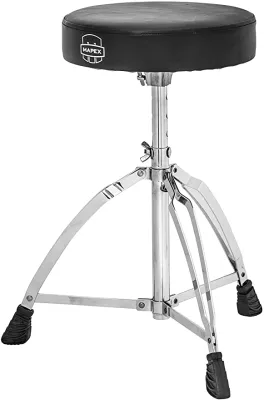
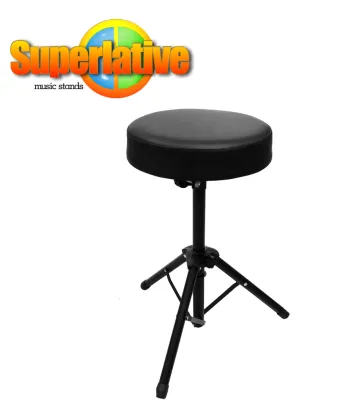
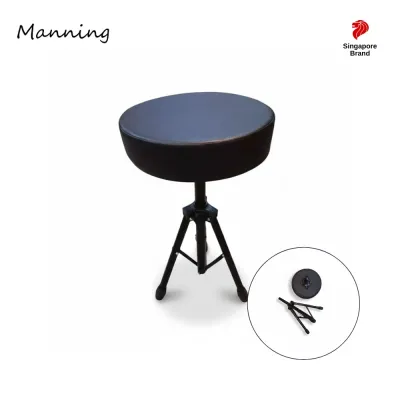
![[AURRAS] Adjustable Drum Throne (45 - 55cm)](https://img.lazcdn.com/g/p/bc82f9967f44f0c5ed7475c5fa208599.jpg_400x400q80.jpg_.webp)
![[ammoon]Drum Throne Round Padded Drum Seat Stool Double-braced Stainless Steel Legs Anti-slip 5 Levels Adajustable Height for Adult Drummers](https://img.lazcdn.com/g/p/cd9785504854691acbcb55e7d3038315.jpg_400x400q80.jpg_.webp)
![[Lovoski2] Drum Throne with Backrest Saddle Drum Seat Drum Chair Motorcycle Style Heavy](https://img.lazcdn.com/g/p/b46a96d63e6bd9f77a15f595f80fe5f9.jpg_400x400q80.jpg_.webp)
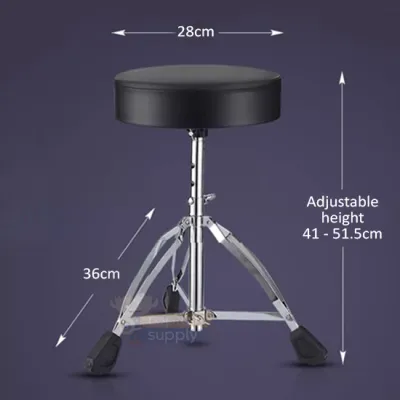
Prices are valid at publication and may change. Please refer to the product page for the latest price.
Cushion materials are equally vital to long-term comfort, with foam density being the most critical factor. High-quality thrones utilize high-density, molded polyurethane foam that feels firm initially but supports your weight consistently over hours of playing. Cheaper, low-density foam may feel soft and plush in a showroom, but it will quickly compress under your weight, leaving you sitting directly on the hard wooden or metal base plate. For the outer cover, vinyl is the industry standard due to its exceptional durability and ease of cleaning, allowing you to wipe away sweat and dirt with a damp cloth. However, vinyl can trap heat and become slippery or sticky during intense performances, which is why some drummers prefer cloth or mesh tops that offer superior breathability, even though they require more careful maintenance to prevent odors and wear.
For drummers seeking extra lumbar support, the availability of a backrest can be a deciding factor when comparing brand lineups. Some premium models come with integrated backrests, while others offer them as optional accessories that can be bolted on later. It is important to note that backrests are rarely cross-compatible between different brands, as they rely on proprietary mounting brackets and specific steel rod shapes. A backrest is highly effective for maintaining proper posture during rests or slow tempos, but it should not be used as a crutch to lean back on while actively playing, as this can disrupt your center of gravity and strain your core muscles.
To further enhance comfort, several manufacturers integrate advanced vibration isolation and shock-absorption technologies into their high-end models. These systems often feature rubber gaskets between the seat mount and the base, or specialized dual-density foam layers that absorb the physical impact of heavy foot technique. Some designs even incorporate a small suspension spring within the shaft to cushion the spine against sudden vertical impacts. When evaluating these features online, look for detailed technical descriptions of the internal foam layering and mounting hardware rather than relying on vague marketing terms like “cloud-like comfort.”
Assessing Durability and Long-Term Reliability
A drum throne must withstand constant lateral movement, rapid foot action, and the full weight of the player, making structural durability a top priority. The foundation of any reliable throne is its tripod base, where you must choose between double-braced and single-braced steel legs. Double-braced legs feature two parallel metal struts on each leg, providing maximum resistance to bending, twisting, and wobbling under heavy loads. While single-braced bases are significantly lighter and easier to carry, they are generally best reserved for lightweight players or low-impact playing styles, as they can develop a noticeable wobble over time under vigorous use.

The mechanism used to adjust and lock the height of the throne is another critical point of comparison. Threaded spindle systems use a solid steel rod with deep threads, allowing you to adjust the height by spinning the seat and then securing it with a locking collar. This mechanical design is incredibly robust, virtually immune to slipping, and requires almost no maintenance over years of heavy use. Hydraulic or pneumatic lift systems, on the other hand, use a gas-filled cylinder to provide instant height adjustments via a hand lever, along with a subtle physical bounce that cushions the spine. However, hydraulic cylinders are prone to gradual wear and can begin to leak or sink over time, requiring complete replacement of the cylinder assembly.
To prevent the seat from spinning or sliding down mid-performance, high-quality thrones rely on heavy-duty memory locks and joint clamps. A memory lock is a metal collar that clamps securely onto the main shaft, remembering your height setting and resting flush against the joint clamp to prevent any downward slippage. When comparing brands, inspect the quality of the wingnuts and clamping collars; robust, oversized metal castings are far more durable than thin metal or plastic-molded clamps, which can easily strip or crack under the high torque required to lock them in place.
The contact points between the throne and the floor are also essential for both stability and safety. Large, heavy-duty rubber feet with deep tread patterns prevent the throne from sliding on slick stage floors or shifting on thick carpeting. High-quality rubber compounds not only grip the floor securely but also absorb low-frequency vibrations, preventing them from transferring into the stage. Additionally, premium rubber feet are designed to be non-marking, ensuring they will not leave unsightly black streaks on hardwood floors or delicate studio surfaces.
Adjustability and Ergonomic Fit
Achieving the correct ergonomic fit requires understanding how a throne’s height range interacts with your physical height and drum kit layout. To find your ideal sitting height, set up your snare drum and pedals, then adjust your seat so that your hips are positioned slightly higher than your knees, creating an angle of approximately 90 to 110 degrees. This position opens up your hip flexors, reduces strain on your lower back, and allows your feet to strike the pedals with maximum power and control. Before purchasing a throne, measure this ideal height from the floor and compare it to the manufacturer’s specified minimum and maximum height limits to ensure the model can accommodate your setup.
The precision of height adjustments varies significantly depending on the lift mechanism you choose. Threaded spindle mechanisms excel at micro-adjustments, allowing you to fine-tune the height down to the millimeter by turning the seat slightly before locking the collar. Hydraulic systems also offer smooth, continuous adjustment, but they can sometimes be more difficult to set to an exact millimeter if the gas cylinder compresses slightly when you sit down. For drummers who share a kit or frequently adjust their height for different playing styles, a hydraulic system offers unmatched speed, while a spindle system is preferred for those who want to set their height once and never touch it again.
Portability is a major consideration for active drummers who must transport their own gear to rehearsals and gigs. Heavy-duty thrones with thick cushions and double-braced bases can weigh upwards of 6 to 8 kilograms, which adds substantial weight to a hardware bag. To make transport easier, look for models where the seat can be quickly detached from the base using a quick-release clamp rather than a traditional wingnut that requires complete unscrewing. Some bases also fold down into a highly compact footprint, allowing them to slide easily alongside cymbal stands in a standard hardware case.
When shopping online, it is easy to be misled by product photos that make a cushion look exceptionally thick or a base look incredibly wide. To avoid disappointment, always download the manufacturer’s official user manual or specification sheet to verify the exact dimensions. Pay close attention to the seat diameter (typically ranging from 13 to 15 inches) and the cushion thickness (usually between 3 and 5 inches), as these measurements will give you a much more accurate representation of how the throne will feel and fit into your drum setup.
Decision Framework: Matching a Drum Throne to Your Setup
To finalize your decision, it is helpful to match the specific features of a drum throne to your primary playing environment and physical requirements.
Choose a heavy-duty hydraulic model if:
- You primarily play in a dedicated home studio or rehearsal space where gear transport is minimal.
- You experience lower back discomfort and want a lift mechanism that provides a slight physical cushion or bounce.
- You require a higher weight capacity and want the convenience of instant, lever-activated height adjustments.
Choose a lightweight spindle model if:
- You are a gigging drummer who needs to minimize the overall weight and bulk of your hardware bag.
- You prefer a completely rigid, mechanical connection with zero vertical play or bounce.
- You want a low-maintenance throne with a locking mechanism that is guaranteed never to slip or sink over time.
Verify first if you are buying online:
- Cross-reference the exact model number on the manufacturer's official website to ensure you are purchasing the correct seat shape and base configuration.
- Check the warranty terms carefully, as some brands offer different coverage periods for the metal hardware versus the hydraulic cylinder.
- Confirm the return policy of the online marketplace or local retailer, as physical comfort is highly subjective and you may need to test the throne in your own home setup before committing.
Pre-purchase checklist:
- [ ] Confirm your seat shape preference (round, saddle, or contoured) based on your leg movement and comfort needs.
- [ ] Verify that the base tripod footprint fits comfortably within your existing pedal and stand layout.
- [ ] Ensure the lift mechanism matches your willingness to perform occasional hardware maintenance.
- [ ] Check that the minimum and maximum height specifications align with your physical height and snare drum position.
Frequently Asked Questions (FAQ)
How often should I check the tightness of my drum throne hardware?
The frequency of your hardware inspections should depend on how often you play and whether your gear is stationary or mobile. If your drum throne remains set up in a home studio, a thorough visual and physical inspection once a month is generally sufficient to ensure all clamps and locks remain secure. However, if you are a gigging drummer who transports and reassembles your gear weekly, you should check the tightness of all wingnuts, memory locks, and seat attachment bolts before every performance. If you notice any stripped threads, persistent wobbling that cannot be tightened, or signs of metal fatigue, stop using the throne immediately and contact the manufacturer for replacement parts to prevent a sudden collapse.
Can I add a backrest to any drum throne brand?
No, backrests are not universally compatible and cannot be added to just any drum throne. Most backrests require a specific mounting bracket that is either pre-installed under the seat or designed to fit a proprietary receiver on the throne’s base plate. Before purchasing a backrest, you must consult the manufacturer’s official accessory compatibility list to ensure it is designed to fit your exact throne model. Additionally, adding a backrest shifts your center of gravity backward when you lean against it; therefore, it is highly recommended to only use a backrest on a heavy-duty, double-braced tripod base with a wide footprint to prevent the throne from tipping over.
Community discussion
Share your experience or ask a question. Comments are reviewed before publication.