
A good drum throne is the foundation of your entire setup, directly impacting your posture, endurance, and playing technique. When you’re ready to buy one, the key specifications to focus on are the seat’s shape and material, the base’s stability and configuration, and the height adjustment mechanism. These features determine how comfortable and secure you’ll feel during long practice sessions or performances, while other details are often just for show.
By understanding what these core specifications mean for you as a player, you can confidently choose a throne that supports your body and playing style without overspending on marketing gimmicks.
Seat Shape and Padding: Round vs. Saddle Designs
The part of the throne you interact with most is the seat, and its shape is a crucial first decision. The two main styles, round and saddle, cater to different preferences and body mechanics.
Products mentioned in this guide
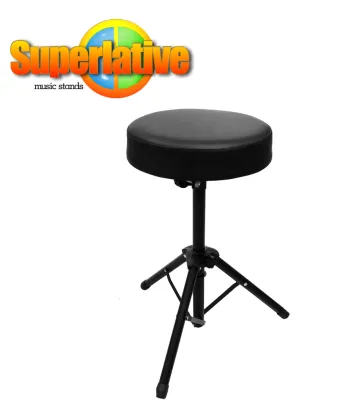
Prices are valid at publication and may change. Please refer to the product page for the latest price.
Round seats are the traditional choice, offering maximum freedom of movement. They allow you to swivel and shift your weight easily, which can be beneficial for dynamic playing styles. If you frequently move your legs or play with a wide stance, a round top won’t restrict you. It’s a classic, versatile option that works for most drummers.
Saddle seats, also called bicycle or motorcycle-style seats, are designed with ergonomics in mind. The contoured shape encourages your legs to fall into a more natural position, which can help align your spine and promote better posture. Many players find that saddle seats reduce pressure on the lower back and tailbone, making them an excellent choice for those who experience discomfort or play for extended periods.
Beyond shape, consider the padding. It might seem like a softer cushion is better, but high-density foam provides superior long-term support. Overly soft padding compresses completely under your weight, a phenomenon known as “bottoming out,” which offers no real support and can become uncomfortable. Firm, high-density foam supports your skeletal structure, preventing fatigue during long sessions. When evaluating a throne, press firmly on the seat; it should feel supportive, not spongy.
Finally, look at the cover material. Vinyl is the most common option due to its durability and how easy it is to wipe clean. However, in a warm, humid climate like Singapore’s, a vinyl seat can feel sticky. Cloth or hybrid material tops offer significantly more breathability, keeping you more comfortable. Regardless of the material, inspect the quality of the stitching, especially around the edges and seams. Strong, even stitching is a sign of a well-made cover that won’t split or fray from the constant motion of drumming.
Base Configurations: 3-Leg vs. 4-Leg and Double Bracing
A throne’s base is all about stability. An unstable throne isn’t just distracting; it’s a safety risk. Your two main choices are a three-leg or a four-leg base, and the right one for you depends on your setup and playing environment.

A three-leg base is the industry standard. Its main advantage is maneuverability. It’s much easier to position a three-legged throne snugly among a complex pedal setup, such as a double-kick pedal and a hi-hat stand. They also tend to be slightly lighter, making them a practical choice for gigging musicians who frequently transport their gear.
A four-leg base offers the ultimate in stability. That extra point of contact with the floor makes it exceptionally solid, which is ideal for heavier players or for anyone who prefers a completely planted feel. While they can be slightly more challenging to position around intricate pedal arrangements, they are an excellent option for a permanent studio setup where rock-solid stability is the top priority.
Within these configurations, look for double-braced legs. The term refers to the two metal struts that support each leg, creating a stronger, more rigid structure than a single-braced alternative. While a single-braced throne is lighter, a double-braced base is far more resistant to wobbling and wear over time, making it a key indicator of durability and professional quality.
Also, pay attention to the feet. Most thrones come with large rubber feet that provide a good grip on hard floors and carpets without causing damage. Before using any throne on delicate flooring like wood or vinyl, confirm the feet are made of a non-marring material. Some specialized thrones may offer interchangeable feet with spikes for extra grip on carpets, but for most home and studio use, standard rubber feet are what you need.
Height Adjustment Mechanisms and Weight Capacity
Setting your throne to the correct height is critical for good ergonomics and efficient playing. Your ideal height is one where your thighs are angled slightly downward, allowing your feet to operate the pedals without lifting your entire leg. This promotes healthy blood flow and prevents strain.
Before buying, always check the throne’s height range (its minimum and maximum height). If you are particularly tall or short, this specification is essential to ensure the throne can accommodate you comfortably. This information is always listed in the product’s specifications.
Thrones use different systems for height adjustment:
- Spindle Adjustment: Often called a threaded rod or motorcycle-style seat, this mechanism allows for precise, continuous height changes. You simply spin the seat to raise or lower it, which lets you dial in the perfect height with no preset increments. This is the most secure and reliable system.
- Pin-Lock or Stepped Adjustment: This system uses a series of holes in a tube and a pin to lock the height in place. While it doesn't offer the same micro-adjustment as a spindle, it's very fast to set up and is great for thrones that will be used by multiple people who need to change heights quickly. A good pin-lock system will often include a memory lock—a clamp that lets you return to your preferred height instantly.
Equally important is the weight capacity. This is a manufacturer’s rating that you should always take seriously. Exceeding the stated weight limit can cause the spindle to bend, the base to splay, or the entire throne to become unstable over time. This is a critical safety and durability specification, so always verify it’s suitable for you.
Marketing Fluff vs. Specs That Actually Matter
When shopping for a throne, it’s easy to get distracted by flashy features and marketing buzzwords. To get the best value, learn to distinguish between genuine quality indicators and cosmetic fluff.
Features you can often ignore include:
- Proprietary Foam Names: Brands often give their foam fancy names, but without a stated density metric, these terms are meaningless. Focus on how the foam feels—it should be firm and supportive, not just soft.
- Excessive Stitching: Complex aesthetic patterns stitched onto the seat cover can sometimes create weak points in the material, making it more prone to splitting than a simple, well-made cover.
- Built-in Backrests: While a backrest can seem like a good idea, for many drumming styles it can restrict torso rotation and discourage the use of core muscles for posture. Unless you have a specific medical need, a backrest may not be beneficial and can add unnecessary cost and bulk.
Instead, focus on these verifiable signs of a quality throne:
- Overall Weight: A heavier throne is often a better throne. Weight typically indicates the use of thicker gauge steel for the base and higher-quality components throughout, leading to greater stability and longevity.
- Warranty: A long and comprehensive warranty is a manufacturer's vote of confidence in their own product. It shows they are willing to stand behind the build quality.
- Replaceable Parts: Check if the manufacturer sells replacement parts, such as the seat top or the rubber feet. The ability to replace a worn-out component instead of the entire throne offers much better long-term value.
When you’re ready to choose, use this simple checklist:
- Seat: Does the shape (round/saddle) fit my playing style and comfort needs?
- Base: Is the base (3-leg/4-leg) stable and does it feature double-braced legs?
- Height: Is the height range appropriate for me, and do I prefer spindle or pin adjustment?
- Capacity: Does the weight capacity safely support me?
- Build: Does it feel heavy and solid, with clean welds and strong stitching?
Frequently Asked Questions (FAQ)
Can I use a regular stool or office chair instead of a drum throne?
It is strongly advised not to use a regular stool or office chair for drumming. Office chairs, with their rolling casters and swiveling gas lifts, are dangerously unstable for the side-to-side and forward-leaning movements of drumming. A simple wooden or plastic stool is also unsuitable; it’s typically set at a fixed, non-ergonomic height, offers no shock absorption, and creates uncomfortable pressure points.
A proper drum throne is designed specifically to provide a stable, secure, and ergonomic base. Investing in one is a foundational step for developing good posture, building endurance, and preventing long-term injury.
Community discussion
Share your experience or ask a question. Comments are reviewed before publication.