
Drumstick sizes like 5A, 7A, and 2B are industry-standard codes that indicate the thickness, weight, and physical characteristics of a stick. Choosing the right pair depends on your hand size, musical genre, and physical comfort. By understanding how these numbers and letters relate to physical dimensions and materials, you can select a stick that enhances your control, reduces fatigue, and produces the exact tone you want from your drums and cymbals.
Decoding Drumstick Sizing: What the Numbers and Letters Mean
Understanding the alphanumeric codes on drumsticks is the first step to finding your ideal pair. The numbering system is generally counterintuitive: the lower the number, the thicker and heavier the stick. For example, a size 2 stick is significantly thicker and heavier than a size 5, which in turn is thicker than a size 7. Most manufacturers adhere to this basic numerical scale, making it easy to gauge physical thickness at a glance.
The letters in the code historically designated the stick’s intended application, though modern manufacturing uses them more as a guide to taper and shoulder thickness. Originally, “A” stood for Orchestra (designed for softer, acoustic playing), “B” stood for Band (built for concert bands and heavier ensemble work), and “S” stood for Street (meant for marching bands and outdoor street playing). Today, “S” sticks are rare in standard drum kit play, while “A” and “B” models remain the industry standards.
Products mentioned in this guide
Prices are valid at publication and may change. Please refer to the product page for the latest price.
To establish a baseline, you can compare the three most common standard models:
- 7A: This is a thin, lightweight stick. It is highly suited for low-volume playing, intricate patterns, and players with smaller hands.
- 5A: This is the universal standard. It features a medium thickness and weight, offering a balanced blend of power, speed, and control across almost any musical genre.
- 2B: This is a thick, heavy stick. It is designed for maximum volume, durability, and heavy-handed playing styles.
Material and Tip Differences: How They Affect Sound and Feel
The physical material of a drumstick dictates how it absorbs shock, how long it lasts, and how it feels in your hands. Wood is the standard material, with three primary varieties dominating the market:

- Hickory: This is the most popular wood choice. It offers excellent shock absorption and reliable durability, providing a balanced feel that suits most playing styles.
- Maple: This is a lightweight and highly flexible wood. It allows you to use a thicker stick diameter without the added weight, though it tends to wear down faster under heavy impact.
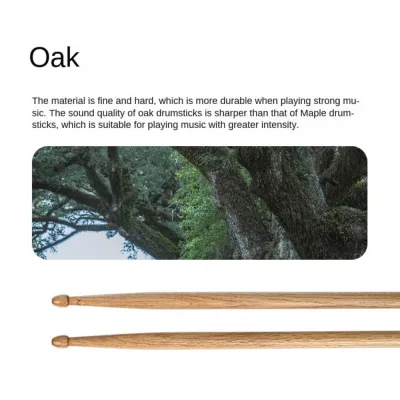
- Oak: This is a dense, heavy, and highly durable wood. It transmits more vibration to your hands but offers exceptional longevity for heavy hitters.
Beyond the wood type, the tip material and shape significantly alter your sound, particularly on cymbals. Tip materials generally fall into two categories:
- Wood tips: These produce a warm, natural, and deep tone. However, they can chip or split over time with heavy use.
- Nylon tips: These deliver a bright, sharp, and highly articulate sound. They are exceptionally durable and do not chip, though they cannot be repaired if the nylon tip detaches.
Tip shapes also play a critical role in sound clarity and contact area:
- Teardrop: This shape offers a broad, warm tone with focused low-end response due to its medium contact area.
- Oval: This provides a balanced, versatile sound with a larger contact surface that changes tone depending on the angle of impact.
- Round: This delivers a bright, highly consistent, and crisp sound regardless of the angle at which the stick strikes the drumhead or cymbal.
Matching Drumsticks to Your Playing Style and Genre
Aligning your drumstick specifications with your musical genre and physical technique ensures optimal performance and comfort. Lighter, thinner models like the 7A are highly favored in jazz, light pop, and acoustic sessions. In smaller acoustic venues or home practice spaces in Singapore, a lighter stick helps manage volume levels while maintaining delicate articulation on cymbals.
Conversely, thicker and heavier models like the 2B or 5B are the preferred choices for rock, metal, and heavy fusion. These sticks provide the physical mass required to project sound through dense mixes and withstand high-impact rimshots. The added weight also assists in generating natural volume without requiring you to over-exert your wrists.
For multi-genre players or beginners, middle-ground options like the 5A serve as the most versatile starting point. Starting with a 5A allows you to develop proper technique on a neutral baseline. As you gain experience, you can easily decide whether you need to transition to a lighter stick for speed and control, or a heavier stick for power and volume.
How to Test and Evaluate Drumstick Comfort
Before purchasing a pair of drumsticks, performing practical checks will ensure they suit your physical mechanics. First, evaluate the balance point by holding the stick at its natural pivot point, which is typically about one-third of the way up from the butt end. A front-heavy stick assists with downward power, while a rear-balanced stick increases swing speed and reduces wrist fatigue during extended playing sessions.
Next, consider the grip area finish, especially keeping your local climate in mind. In warm, humid environments like Singapore, hands can sweat quickly during intense practice. A heavy lacquer finish can become slippery, whereas an unlacquered, natural wood finish or a specialized anti-slip grip coating can help you maintain a secure hold without over-gripping.
Finally, test the actual rebound and shock absorption on a practice pad or drum rather than relying solely on a static grip. Observe how the stick bounces back naturally. The rebound should feel effortless, allowing your fingers and wrists to work with the stick’s natural physics rather than fighting against it.
Frequently Asked Questions (FAQ)
Do heavier drumsticks make you play louder?
Yes, a heavier stick possesses more physical mass, which naturally transfers more kinetic energy to the drumhead or cymbal, resulting in a louder sound. However, volume is ultimately controlled by your physical technique, stroke height, and velocity. You can play quietly with heavy sticks or loudly with light sticks, but heavier models make high-volume playing physically easier.
How often should I replace my drumsticks?
You should replace your drumsticks when you observe structural damage, such as deep splintering along the shoulder, a cracked or flattened tip, or a noticeable warp when rolling the stick on a flat surface. Playing with compromised sticks can damage your drumheads and cymbals, and a warped stick will negatively affect your rebound and technique.
Can I use the same stick for electronic and acoustic kits?
Yes, but with caution. Nylon tips are highly recommended for electronic kits with mesh heads because they are smooth and less likely to splinter or snag the mesh. If you use wood tips on an electronic kit, ensure they are completely free of chips or sharp edges, as splintered wood can easily tear expensive mesh drumheads.
Community discussion
Share your experience or ask a question. Comments are reviewed before publication.