
When setting up a drum kit in a shared living space, managing the volume of your playing is only half the battle. The more persistent challenge is the physical energy transferred directly into the building’s structure. Every strike of the kick pedal sends low-frequency vibrations traveling through floorboards and walls, turning your room into a giant speaker cone for the neighbors below. While many standard drum rugs are marketed as soundproofing solutions, most only serve to keep your hardware from sliding around during a performance.
To find a drum mat that actually works for soundproofing, you must look beyond simple carpeted surfaces and focus on the physics of vibration isolation. True noise reduction requires materials that can absorb, decouple, and dampen physical impacts before they reach the subfloor. By understanding how different materials interact with kinetic energy, you can select or construct a drum mat system that significantly lowers the impact noise transmitted to surrounding rooms, allowing you to practice with greater peace of mind.
Understanding Drum Noise: Airborne vs. Impact Sound
To address drum noise effectively, you must first distinguish between airborne sound and structure-borne impact sound. Airborne sound consists of pressure waves traveling through the air, created by cymbals, drumheads, and shells. While airborne sound is loud, it is relatively easy to block or absorb using standard acoustic treatments like heavy curtains, wall panels, and door seals.
Products mentioned in this guide
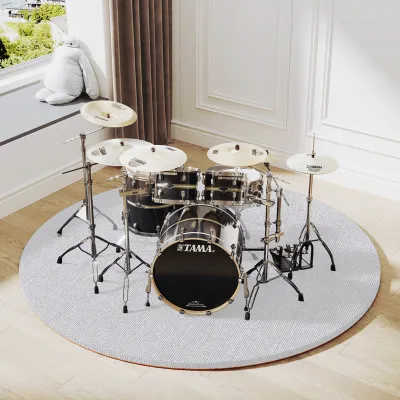
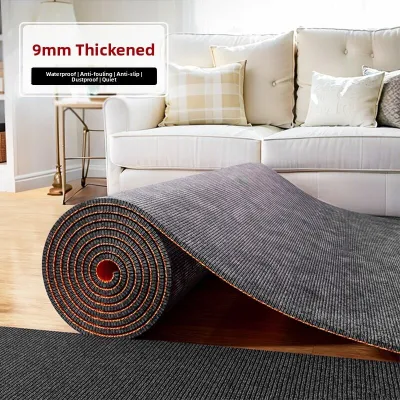
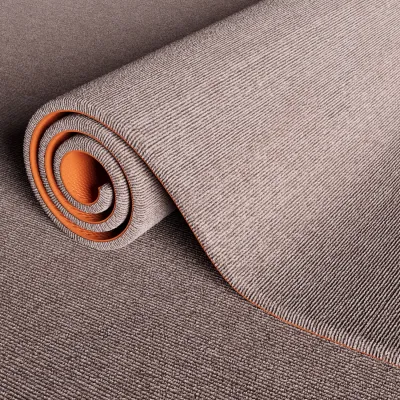
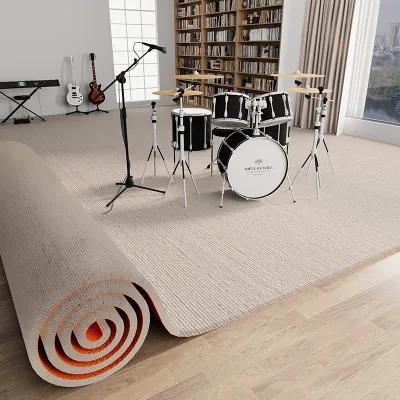
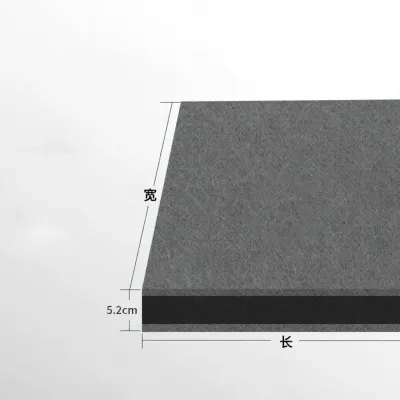
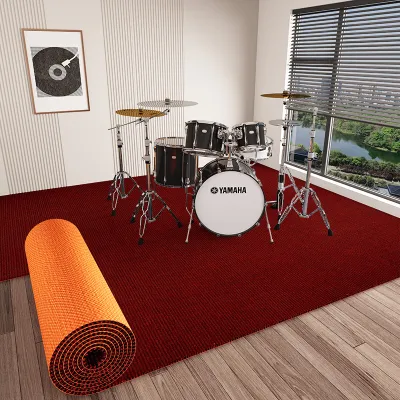
Prices are valid at publication and may change. Please refer to the product page for the latest price.
Impact noise, or structure-borne sound, occurs when your kick pedal or drum stands force kinetic energy downward. This energy enters the floor as physical vibrations that travel efficiently through concrete, wood, and steel. Because low-frequency vibrations travel easily through solid structures, downstairs neighbors are far more likely to complain about the rhythmic thudding of your kick pedal than the high-pitched wash of your cymbals.
A common mistake is expecting a drum mat to solve both types of noise. In reality, a drum mat is designed almost exclusively to mitigate structure-borne impact noise. It acts as a mechanical buffer, absorbing physical shock and preventing it from turning into structural vibrations. It will do very little to quiet airborne sound, so recognizing this distinction helps you set realistic expectations and combine your mat with other acoustic treatments.
Key Features of Effective Soundproof Drum Mats
When evaluating drum mats for noise reduction, look for specific physical properties rather than vague marketing claims. The first is mass and density. According to the acoustic mass law, heavier and denser materials are inherently better at resisting low-frequency energy. A thin carpet or basic yoga mat lacks the physical mass required to block powerful vibrations. Effective mats typically incorporate heavy materials like dense recycled rubber or mass-loaded vinyl to block kinetic energy.

The second key feature is structural decoupling, which creates a physical break in the vibration path. If your drum kit sits directly on the floor, the vibration path is continuous. A high-quality soundproof mat introduces multiple layers of varying densities to interrupt this path. For example, pairing a dense top layer with a soft, open-cell foam bottom layer forces vibrations through different mediums, dissipating the energy before it reaches the subfloor.
Thickness and compression resistance are also vital. While a thicker mat offers more potential for shock absorption, it must not compress completely under your hardware. If a mat bottoms out under your kick pedal or throne, the decoupling effect is lost. Furthermore, an overly soft mat compromises playing stability, causing pedals to wobble and affecting your technique. The ideal mat strikes a balance, offering enough firmness to support your gear while maintaining dampening properties.
Finally, complete coverage is essential. Every point of contact between your drum kit and the floor must be isolated, including the kick drum spurs, hi-hat stand, snare stand, and your drum throne. If your throne sits on the bare floor while the rest of the kit is on a mat, vibrations from your body and pedal movements will still find a direct path into the building’s structure. The mat must be large enough to accommodate your entire setup.
Material and Structural Options for Drum Mats
Several material configurations are available for isolating your kit. High-density rubber mats, often repurposed from industrial or athletic flooring, are a popular starting point. These mats are durable, slip-resistant, and provide excellent baseline mass. While they keep your hardware from sliding, their ability to isolate low-frequency impact noise on their own is limited because they lack the soft, decoupling layers needed to fully absorb heavy pedal strikes.
Multi-layer composite mats represent a significant step up. Engineered specifically for acoustic isolation, they combine a durable, non-slip top surface with a dense core of mass-loaded vinyl and a soft, vibration-dampening foam backing. By combining materials of different densities, these composite mats absorb a wide range of vibration frequencies. They are typically thin enough to maintain playing stability while offering superior impact reduction compared to single-layer rubber or carpet mats.
For maximum isolation, especially in high-density apartments, floating boards and isolator systems are highly effective. These systems involve placing a rigid platform, such as a thick sheet of plywood or medium-density fiberboard (MDF), on top of specialized vibration isolators like acoustic foam blocks, rubber feet, or a grid of tennis balls in a DIY setup. The rigid board distributes the weight of the drum kit evenly, while the isolators underneath physically decouple the platform from the floor, neutralizing low-frequency thuds.
Acoustic underlayments offer another customizable solution. These are rolls or sheets of sound-dampening material, such as cork, felt, or recycled rubber-foam blends, designed to be installed beneath a standard decorative drum rug. Layering a high-quality acoustic underlayment under your existing rug boosts its soundproofing capabilities without sacrificing the aesthetic or grip of your preferred playing surface, allowing you to scale the level of isolation to match your goals.
How to Evaluate and Select the Right Mat for Your Space
Selecting the right drum mat requires assessing your living environment and playing habits. If you live in a high-density apartment building with neighbors directly below, your primary concern is mitigating low-frequency vibrations from your kick pedal. In this scenario, a basic rubber mat is usually insufficient, making a multi-layer composite mat or a dedicated floating riser system necessary. Conversely, if you live in a landed property where your main concern is reducing the overall volume of your practice room to avoid disturbing family members on the same floor, a high-density rubber mat paired with a standard rug may provide adequate isolation.
Budget is another important consideration, with clear trade-offs between commercial products and DIY solutions. Premium, pre-fabricated multi-layer acoustic mats offer a sleek, professional appearance and are ready to use right out of the box, but they can represent a significant financial investment, sometimes costing upwards of S$200 to S$400. If you are on a tight budget, building your own isolation platform using plywood and acoustic foam blocks or tennis balls can deliver comparable vibration isolation at a fraction of the cost, though it requires manual labor and a larger physical footprint.
Before making a purchase, verify the technical specifications of the product. Look for detailed information regarding the mat’s material composition, total weight, and thickness. A reputable manufacturer of acoustic products will often provide data on the material’s density or its impact insulation class (IIC) rating. Avoid products that make vague claims of absolute soundproofing without providing concrete details about their construction. Additionally, check if the mat features reinforced zones or non-slip textures designed to handle the high-friction areas beneath your kick pedal and hi-hat stands.
Finally, measure your drum kit’s footprint carefully before choosing a mat size. Set up your kit exactly as you prefer to play, and measure the outermost points of your stands, pedals, and throne. It is always better to choose a mat that is slightly too large than one that is too small, as any component spilling over the edge and contacting the bare floor will create an acoustic bridge, bypassing your isolation efforts entirely. If you have a large or non-standard setup, consider modular or interlocking tile solutions that allow you to customize the shape and size of your isolated area.
Maximizing Noise Reduction Beyond the Mat
While a high-quality drum mat is a crucial foundation for vibration isolation, achieving true quiet in a shared living space often requires a multi-faceted approach. One effective strategy is to implement independent pedal and throne isolation. Because the kick pedal and hi-hat stand are the primary sources of impact noise, placing dedicated acoustic isolation pads directly under these components provides an extra layer of defense. Similarly, using a separate vibration-dampening pad under your drum throne prevents physical movement from transmitting down through the throne’s legs and into the floor.
Managing airborne sound is also essential if you are playing acoustic drums or if the physical click of your electronic drum pads is too loud for your household. Installing heavy acoustic curtains over windows and doors helps prevent sound from escaping the room, while strategically placing wall-mounted absorption panels reduces flutter echoes and lowers the overall volume level inside the space. For acoustic drummers, swapping out traditional drumheads for mesh heads and replacing standard cymbals with low-volume perforated metal cymbals can reduce airborne noise significantly, making your soundproofing efforts far more manageable.
Finally, optimizing your room layout yields noticeable improvements in noise reduction without any additional cost. Avoid placing your drum kit directly against shared walls, as physical contact or close proximity causes the wall to resonate and transmit sound to adjacent rooms. Position your kit in a corner only if you have adequate bass traps installed, as corners naturally accumulate and amplify low-frequency energy. Placing your setup on an interior wall, away from windows and shared structural columns, helps minimize the amount of sound and vibration that escapes your practice area.
Frequently Asked Questions (FAQ)
Can a drum mat completely soundproof my room?
No, a drum mat cannot completely soundproof a room. Drum mats are designed specifically to address structure-borne impact noise, such as the physical vibrations generated by kick pedals and drum strikes. They do not block airborne sound, which includes the high-frequency noise of cymbals, snare drums, or the acoustic click of electronic pads. To achieve complete soundproofing, you would need to implement comprehensive room-level acoustic treatments, including sealed doors, double-pane windows, and wall insulation.
Do I need a special mat for my kick drum pedal?
While a standard drum mat provides general isolation, the kick drum pedal is the single largest source of low-frequency impact noise and often requires extra attention. If you find that your main mat is not fully absorbing the heavy thuds of your kick pedal, you can use a dedicated pedal isolation board or a small, high-density rubber pad directly under the pedal assembly. This targeted approach helps isolate the most problematic source of vibration without requiring you to replace your entire drum mat setup.
Is a thicker drum mat always better for soundproofing?
Not necessarily. While thickness plays a role in shock absorption, the density and composition of the material are far more important. A very thick but soft foam mat will compress completely under the weight of your drum kit, causing the hardware to bottom out and transfer vibrations directly to the floor. It can also make your kit unstable and difficult to play. A thinner, high-density composite mat containing layers of rubber and mass-loaded vinyl provides significantly better vibration isolation and playing stability than a thick, low-density foam alternative.
Community discussion
Share your experience or ask a question. Comments are reviewed before publication.