
An electric guitar pickup translates string vibrations into an electrical signal, fundamentally shaping your instrument’s voice. While amplifiers and effects pedals play a massive role in your final sound, the pickup is the origin point of your tone. Understanding the structural and electrical differences between the three primary pickup designs—single-coil, humbucker, and P90—helps you decode manufacturer specifications and choose the right configuration for your playing style.
Every pickup operates on the same basic principle: copper wire wrapped around a magnet creates a magnetic field. When the steel strings of your guitar vibrate within this field, they disturb it, inducing a small electrical current in the coil. This current travels through your guitar’s volume and tone controls, out the jack, and into your amplifier. However, the physical layout of these magnets and coils varies dramatically across designs, creating the distinct tonal profiles that define different musical genres.
Single-Coil Pickups: Bright, Clear, and Articulate Tones
Single-coil pickups are the oldest and simplest electric guitar pickup design. They consist of a single coil of wire wrapped around individual magnetic pole pieces or a single bar magnet. This narrow, focused magnetic field captures a highly precise snapshot of the string’s vibration, resulting in a bright, clear, and articulate tone. Single-coils are celebrated for their glassy high-end response, snappy bass, and exceptional dynamic sensitivity, allowing every nuance of your picking technique to shine through.
Products mentioned in this guide

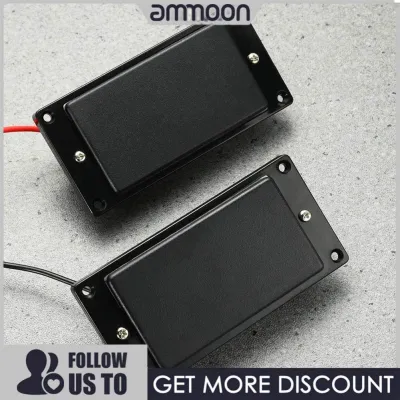
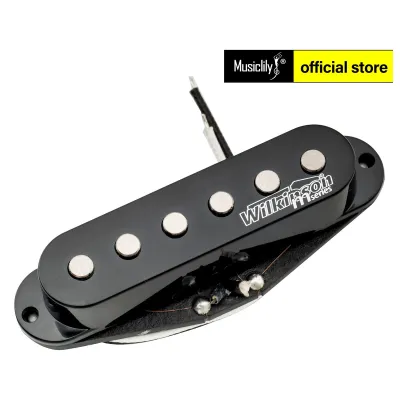
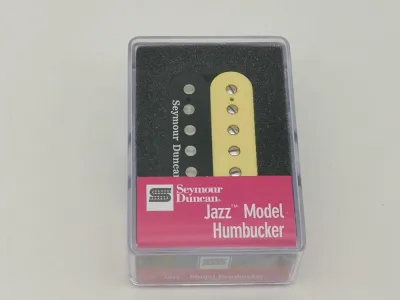
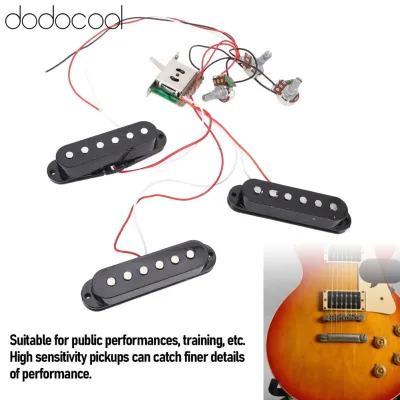
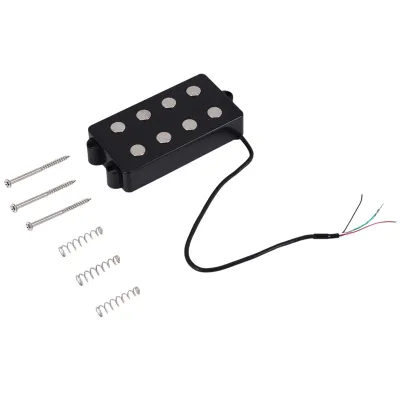
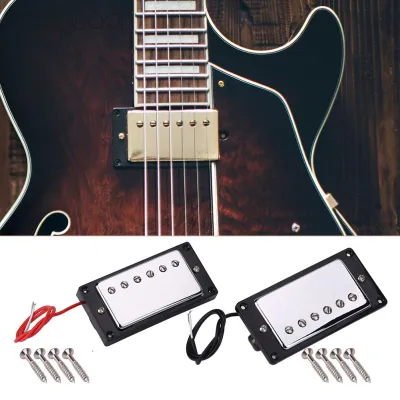

Prices are valid at publication and may change. Please refer to the product page for the latest price.
The primary drawback of this elegant design is its natural susceptibility to electromagnetic interference, commonly known as 60-cycle hum. Because the single coil acts as an antenna, it easily picks up stray electromagnetic fields from household appliances, fluorescent lighting, and computer monitors. This hum can become particularly noticeable in high-gain settings or when playing in venues with older electrical wiring.
If you love the single-coil sound but want to avoid the noise, you can look for modern noise-reduction technologies. Many manufacturers offer noiseless single-coils, which are actually stacked designs featuring a second, dummy coil underneath the main coil to cancel hum without significantly altering the bright tonal character. Checking manufacturer specifications for these stacked or hum-canceling single-coils is a smart step if you frequently play in high-interference environments.
Humbucker Pickups: Thick, Warm, and Noise-Free Output
Humbucker pickups were specifically engineered to solve the interference issues of single-coils. A humbucker features two coils placed side-by-side, wired in series and out of phase with each other, with the magnetic poles of the second coil reversed. This clever configuration causes external electromagnetic noise to cancel itself out—effectively bucking the hum—while keeping the guitar signal intact.

Beyond eliminating noise, this dual-coil construction fundamentally alters the pickup’s tone. Because a humbucker senses the vibrating string at two different points along its length, it cancels out certain high-frequency overtones. This results in a thicker, warmer, and darker sound with a pronounced mid-range and a smoother high-end response. Humbuckers also generate a stronger electrical signal, providing higher output that easily pushes amplifiers into natural overdrive and increases sustain.
For players who want the best of both worlds, many modern humbuckers feature multi-conductor wiring that allows for coil-splitting or coil-tapping. Coil-splitting disables one of the two coils, turning the humbucker into a true single-coil, while coil-tapping reduces the output of the coils to mimic a vintage voice. Verifying these wiring options in the product specifications can greatly expand your guitar’s tonal versatility.
P90 Pickups: Gritty, Mid-Range Focused Versatility
The P90 pickup occupies a unique middle ground between the single-coil and the humbucker. Although it is technically a single-coil pickup, its physical construction is vastly different from a traditional single-coil. A P90 features a wider, flatter coil wound around two bar magnets placed underneath the bobbin, rather than individual magnetic pole pieces.
This wider coil structure creates a broader magnetic window, capturing a larger portion of the string’s vibration. The resulting tone is gritty, raw, and heavily focused on the mid-range. P90s offer a higher output and a more aggressive bite than standard single-coils, yet they retain a level of note definition, clarity, and treble response that humbuckers often lose. They are highly responsive to your guitar’s volume control, cleaning up beautifully when rolled back and snarling when turned up.
When choosing a P90, you must pay close attention to the physical mounting style. P90s generally come in two distinct housing designs: soapbar mounts, which feature mounting screws running directly through the pickup body between the pole pieces, and dog-ear mounts, which have triangular mounting tabs extending from the sides. Because these mounts require different routing shapes, you must verify your guitar’s body cavity dimensions to ensure a proper fit.
Matching Pickup Types to Your Musical Genre
While any pickup can technically play any style of music, matching their inherent tonal profiles to your preferred genres can make achieving your desired sound much easier. The bright, snappy articulation of single-coils makes them a staple for funk, country, surf rock, and indie music, where clean note separation is essential. Conversely, the high output, warm sustain, and noise-free performance of humbuckers make them the standard choice for hard rock, heavy metal, and jazz.
P90 pickups excel in genres that thrive on a bit of grit and attitude, such as blues, classic rock, alternative rock, and punk. Their mid-range punch cuts through a band mix effortlessly without becoming overly muddy or harsh. However, it is vital to remember that these are not rigid rules; your playing technique, amplifier settings, and effects pedals will heavily influence your final sound.
Before committing to a specific pickup type, consider testing different configurations at a local music store or researching the gear setups of your favorite artists. Hearing how these pickups interact with different amplifiers and pedal chains in real-world scenarios will give you a much clearer picture of how they will perform in your own rig.
Essential Specifications to Check Before Upgrading
If you decide to upgrade your guitar’s pickups, verifying physical and electrical compatibility is crucial to avoid installation headaches. Start by checking the physical routing dimensions of your guitar’s body cavity and the string spacing at the bridge. Guitars equipped with tremolo bridges often require wider string spacing, commonly referred to as F-spaced or trembucker spacing, to ensure the strings align perfectly over the pickup’s magnetic pole pieces.
Next, review the electrical specifications provided by the manufacturer. DC resistance (measured in kilohms) and inductance (measured in henries) are helpful indicators of a pickup’s output level and frequency response. Generally, higher resistance and inductance point to a hotter pickup with more mid-range and less high-end clarity. However, these metrics are relative, so compare them within the same manufacturer’s product line rather than treating them as absolute performance values.
Finally, ensure you match your new pickups with the correct potentiometer values. Single-coil pickups typically pair best with 250k-ohm potentiometers to help tame harsh high frequencies, while humbuckers and P90s generally require 500k-ohm potentiometers to keep their warmer tones from sounding muddy. Prioritizing these physical dimensions and basic electrical matches over minor specification tolerances will ensure a successful and rewarding upgrade.
Frequently Asked Questions (FAQ)
Can I mix single-coil and humbucker pickups in the same guitar?
Yes, mixing pickup types is highly common and offers incredible tonal versatility. Popular configurations like HSS (Humbucker-Single-Single) or HS (Humbucker-Single) combine the warm, high-output bridge tone of a humbucker with the clear, articulate neck tones of single-coils. When mixing types, check that your guitar’s body cavity is pre-routed to accommodate the larger humbucker footprint, and consider using balanced output models so one pickup does not drastically overpower the others.
Do active pickups require a battery or external power?
Yes, active pickups require an onboard power source, typically a 9V battery, to power their built-in preamplifier circuit. This active preamp allows the pickups to use fewer wire wraps, resulting in an incredibly low-noise, high-output signal with consistent tone regardless of cable length. The main trade-off is the necessity of replacing the battery periodically and ensuring you unplug your guitar cable when not playing to prevent draining the power.
How do I verify if a specific pickup will fit my guitar?
To verify compatibility, measure your guitar’s current pickup cavity depth, width, and length, as well as the string spacing from the center of the high E string to the center of the low E string over the pickup. Compare these measurements directly with the dimensional diagrams provided on the pickup manufacturer’s website. If your guitar has non-standard routing, you may need to purchase a compatible replacement pickguard or consult a professional guitar technician for minor body modifications.

Community discussion
Share your experience or ask a question. Comments are reviewed before publication.