
Beginners should generally start with a light string gauge, typically a “9-42” (extra-light) or “10-46” (light) set. These sizes provide a balanced level of tension that is gentle on uncalloused fingers while maintaining excellent tuning stability on most standard electric guitars. Starting with these standard gauges also minimizes the need for immediate, complex adjustments to the guitar’s neck setup.
When you first pick up the electric guitar, building finger strength and developing calluses are your primary physical hurdles. Choosing the correct string thickness ensures that you can practice comfortably for longer periods without experiencing excessive hand fatigue. It also helps you focus on fundamental techniques like fretting chords and bending notes without fighting the instrument.
Understanding Electric Guitar String Gauges
String gauge refers to the physical thickness of a guitar string, which manufacturers measure in thousandths of an inch. When you look at a packet of electric guitar strings, you will see a range of numbers, such as .009 to .042 or .010 to .046. These numbers represent the diameter of the thinnest string (the high E) and the thickest string (the low E), respectively.
Products mentioned in this guide






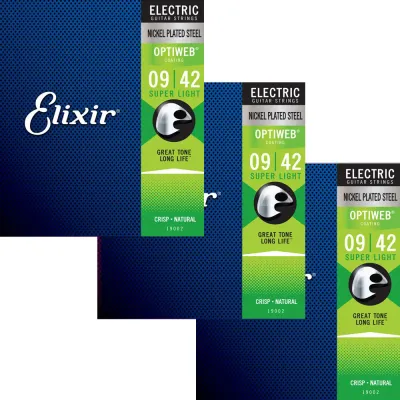
Prices are valid at publication and may change. Please refer to the product page for the latest price.
Guitarists typically refer to these sets by the size of the thinnest string. For example, a set that starts with a .009-inch string is commonly called a set of “9s,” while a set starting with .010 is referred to as “10s.”
Standard electric guitar string sets are categorized into general weight classes. Extra-light sets (9s) and light sets (10s) are the most common configurations found on new instruments. Regular or medium sets (typically 11s) and heavy sets (12s or higher) feature much thicker wires designed for specific playing styles or lower tuning configurations.
How String Thickness Affects Playability and Tone
The thickness of your strings directly dictates the amount of physical tension required to bring them up to pitch. Lighter gauges, such as 9s, require significantly less tension to reach standard tuning. This lower tension makes the strings feel softer and easier to press down against the frets, which is highly beneficial for players who are still developing hand strength.

Lighter strings also make bending notes much easier. When you attempt to push a string upward to change its pitch, a lighter gauge yields to your fingers with minimal resistance. This responsiveness allows you to practice expressive techniques early on without straining your hand muscles.
In contrast, heavier string gauges require much higher tension to reach the same pitch. While this extra tension can produce a slightly fuller tone, increased sustain, and better resistance to accidental detuning when strumming hard, it demands significantly more finger pressure. For a beginner, the minor tonal benefits of heavier strings are rarely worth the physical discomfort and potential frustration of fighting stiff strings.
Choosing the Right Starting Gauge for Beginners
For most beginners, starting with a set of 9s or 10s is the most practical choice. If your guitar has a shorter scale length (the distance between the nut and the bridge), such as those found on single-cutaway style guitars, 10s will feel relatively comfortable because the shorter scale naturally reduces string tension. For longer scale guitars, such as double-cutaway styles, a set of 9s is often the sweet spot for effortless playability.
Before purchasing a replacement set, it is helpful to inspect your guitar to determine what is currently installed. If you bought the instrument new, you can check the manufacturer’s online specifications for the factory-installed string gauge. If the guitar is used, a local music shop can quickly measure the strings with a digital caliper to identify the gauge.
While browsing for strings, you will also encounter various materials, such as nickel-plated steel, pure nickel, or stainless steel. For a beginner, these material differences are secondary to the physical thickness of the strings. Focus first on finding the right gauge for comfort, and treat material choices as a way to fine-tune your tone once your playing technique is established.
Avoiding Truss Rod and Setup Issues When Changing Strings
An electric guitar neck is under constant tension from the strings, which pull the headstock forward. To prevent the neck from bending, a metal rod called a truss rod runs inside the neck to provide counter-tension. The balance between these two opposing forces determines the straightness of the neck and the height of the strings above the frets.
If you change your strings but stick to the exact same gauge, the tension remains constant, and your guitar’s setup will not change. This is why sticking to the factory-installed gauge is the safest option for beginners. It allows you to change old, worn-out strings without needing to adjust the truss rod or alter the bridge height.
If you decide to switch to a significantly heavier or lighter gauge, the change in tension will alter the neck’s curvature. For example, moving from 9s to 11s increases tension, which can pull the neck forward and raise the string height, making the guitar harder to play. Conversely, dropping to a lighter gauge can cause the neck to bow backward, resulting in severe fret buzz. If you notice these changes after switching gauges, taking your instrument to a professional technician for a proper setup is the best way to restore its playability.
Frequently Asked Questions (FAQ)
Do I need to adjust the truss rod every time I change my strings?
No, you do not need to adjust the truss rod during routine string changes if you are replacing the old strings with a new set of the exact same gauge and brand. The tension on the neck remains identical, meaning the guitar’s setup will stay stable. You only need to consider a truss rod adjustment if you are changing to a thicker or thinner gauge, or if seasonal humidity changes have caused the wood of the neck to shift.
Does string material matter as much as gauge for beginners?
No, string material does not matter as much as gauge when you are first learning to play. The gauge determines the physical tension and playability of the instrument, which directly impacts your comfort and practice duration. While materials like pure nickel offer a warmer tone and coated strings last longer, these features are secondary to the physical ease of pressing down and bending the strings.

Community discussion
Share your experience or ask a question. Comments are reviewed before publication.