
Deciding between an electronic and an acoustic drum kit for home practice in Singapore is rarely just a matter of musical preference. For most aspiring and experienced drummers, this choice is heavily dictated by the physical realities of local housing, noise tolerance, and personal practice goals. While the raw energy and tactile feedback of an acoustic kit remain the gold standard, the compact footprint and near-silent operation of an electronic kit make it an incredibly practical alternative for high-density living. Evaluate your specific spatial and acoustic constraints before committing to either setup.
Assessing Your Living Space and Noise Constraints
HDB flats and condominiums feature shared concrete walls and floors that act as highly efficient conductors for structural vibration. When you strike an acoustic drum, the sound waves bounce off hard walls, while the physical impact of the kick pedal sends low-frequency vibrations directly through the floor slab into the home below. Even if your neighbors are understanding, the sheer volume of an acoustic kit—often exceeding 100 decibels—makes regular daytime practice difficult without extensive, professional-grade soundproofing. Landed properties offer more acoustic isolation from neighbors, but internal noise transfer to other family members remains a significant consideration.
Beyond noise, physical space is a premium commodity. A standard acoustic drum kit requires a dedicated footprint of at least 1.5 meters by 1.5 meters, along with sufficient ceiling height to allow for overhead cymbal strikes without hitting light fixtures. Electronic drum kits are significantly more compact, typically requiring a footprint of about 1.2 meters by 1.2 meters, with many models featuring foldable racks that can be tucked into a corner when not in use.
Products mentioned in this guide
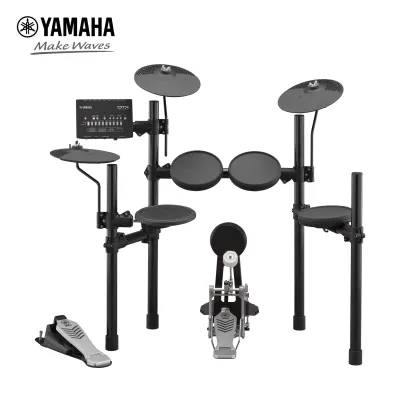
![AROMA TDX-18SC Electronic Drum Kit [AROMA TDX18SC Digital Drum]](https://img.lazcdn.com/g/p/f3eb7bc4d0fcaf4316f92647395675b8.jpg_400x400q80.jpg_.webp)
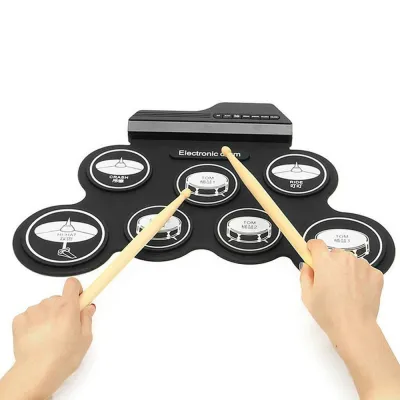
![[SG] Portable Electronic Drum Set USB Roll-Up Silicon Drums Pad w Drumsticks Compact Size Kit Hand Practice With Pedals](https://img.lazcdn.com/g/p/73aace46fc1f8c7268623b73f5d18efb.jpg_400x400q80.jpg_.webp)

Prices are valid at publication and may change. Please refer to the product page for the latest price.
However, even electronic kits are not entirely silent. The physical impact of the sticks on rubber or mesh pads, and especially the downward force of the kick pedal, can still trigger complaints from downstairs neighbors. To mitigate this, many local drummers must factor in the space and height required for a DIY vibration isolation platform, often constructed using tennis balls or specialized acoustic foam mats.
Comparing Practice Experience and Sound Quality
The tactile sensation of playing drums is fundamental to developing proper technique, stick control, and muscle memory. Acoustic drums offer an organic stick rebound, a virtually infinite dynamic range, and the physical sensation of moving air with every stroke. The subtle tonal variations achieved by striking different areas of a ride cymbal or adjusting the pressure on a hi-hat pedal are incredibly complex and challenging to replicate digitally. For students preparing for graded exams or musicians who regularly perform live, practicing on an acoustic kit ensures that the transition to exam halls or stage setups is seamless.

Electronic drum kits bridge this gap using advanced sensor technology and specialized playing surfaces. Rubber pads, commonly found on entry-level models, are highly durable but offer a stiff, unforgiving rebound that can fatigue the wrists during long practice sessions. Mesh heads, which can be tensioned with a standard drum key, provide a much more realistic rebound and are significantly quieter to strike.
Furthermore, electronic kits offer powerful digital advantages that acoustic kits cannot match. Built-in metronomes, coaching modules, and the ability to plug in a phone to play along with backing tracks make practice sessions highly engaging. Most importantly, the ability to route the audio directly to a pair of headphones allows you to practice at midnight without disturbing anyone in your household.
Setup, Maintenance, and Long-Term Usability
Owning an acoustic drum kit is an active, hands-on experience that requires ongoing maintenance. Wood shells are sensitive to changes in humidity and temperature, which can cause the drums to go out of tune frequently. Drummers must learn the art of tuning drumheads to achieve a pleasing tone, and worn-out heads must be replaced periodically to maintain sound quality and stick response. Additionally, the constant vibration of playing means that tension rods, cymbal stands, and pedal linkages must be checked and tightened regularly to prevent mechanical failure.
In contrast, electronic drum kits are largely “set-and-forget” systems. Once the rack is assembled and the cables are neatly routed to the drum module, the kit requires very little day-to-day maintenance. There are no drumheads to tune, and the digital sounds remain perfectly consistent every time you power on the module.
However, electronic kits do introduce their own technical considerations, such as managing cable clutter, ensuring trigger settings are calibrated correctly, and monitoring the longevity of the sensor pads. If a trigger fails or a cable breaks, troubleshooting requires a technical approach rather than a mechanical one. For those who value portability, electronic kits are far easier to dismantle, pack into a car boot, or move to a different room during home reconfigurations.
Budgeting and Value Considerations
When planning your purchase, it is essential to look beyond the initial price tag of the drum kit itself. In Singapore, entry-level electronic drum kits generally range from S$500 to S$1,000, while intermediate models with multi-zone mesh pads and advanced sound modules can cost between S$1,200 and S$3,000. Acoustic kits occupy a similar price spectrum, with entry-level setups starting around S$600 and intermediate kits reaching well over S$2,000. However, the true cost of ownership often diverges when factoring in necessary accessories and environmental modifications.
For an acoustic kit, the hidden costs are primarily associated with sound mitigation. You may need to invest in specialized drum mutes, low-volume mesh heads, and low-volume perforated cymbals, which can easily add several hundred dollars to your budget. For an electronic kit, you must budget for a high-quality drum throne to prevent back strain, a pair of studio-monitor headphones with flat frequency response, and potentially a dedicated drum amplifier if you ever want to play without headphones.
Additionally, consider the long-term value and depreciation. Electronic drum modules, like most digital consumer electronics, tend to depreciate faster as newer sensor technology and sound engines are released. Acoustic drums, being purely mechanical instruments made of wood and metal, tend to hold their value better over time, provided they are kept in a climate-controlled environment free from excessive humidity.
Making Your Final Decision
Your final choice should align with your living situation first, followed by your musical aspirations. If you live in a landed property with a dedicated, acoustically treated room, or if your primary goal is to master the delicate nuances of acoustic dynamics for classical or jazz performance, an acoustic kit is the ideal investment. The physical feedback and acoustic complexity will prepare you thoroughly for any live performance scenario.
If you reside in an HDB flat or condominium and need the flexibility to practice early in the morning or late at night, an electronic kit is the most logical and considerate choice. The compact footprint, silent headphone monitoring, and integrated practice tools will keep you motivated and playing consistently without friction.
Before making a final purchase, consider hybrid alternatives. Many local drummers find success by buying an acoustic shell pack and retrofitting it with mesh heads and low-volume cymbals, or adding electronic triggers to create a hybrid setup that offers the physical presence of an acoustic kit with the volume control of an electronic one.
Frequently Asked Questions (FAQ)
Can I make an acoustic drum kit quiet enough for an HDB flat?
Yes, but it requires a combination of specialized dampening tools and structural isolation. Replacing standard drumheads with mesh heads and swapping traditional bronze cymbals for perforated low-volume cymbals will drastically reduce the airborne noise of your kit. However, the physical impact of your feet on the bass drum and hi-hat pedals will still send low-frequency vibrations directly through the concrete floor. To prevent these vibrations from traveling to the flat below, you must build or purchase a floating isolation platform, often constructed using sturdy wooden boards separated by tennis balls or high-density acoustic foam. Without this structural isolation, even a dampened acoustic kit is likely to cause noise issues for your neighbors.
Do electronic drums feel like real acoustic drums?
While modern electronic drums have made massive technological leaps, they do not feel identical to acoustic drums. Rubber pads offer a very stiff rebound that can feel unnatural and cause wrist fatigue over long sessions. Mesh heads provide a much more realistic, adjustable tension that closely mimics the feel of a real drumhead, though they can sometimes feel slightly springier than acoustic drums. The biggest difference lies in the hi-hat and cymbal response; budget electronic kits use simple foot pedals and static pads, whereas high-tier electronic kits utilize physical hi-hat stands and multi-zone cymbals that swing naturally. For the most realistic feel, look for electronic kits that feature multi-layered mesh heads and physical, stand-mounted hi-hats.

Community discussion
Share your experience or ask a question. Comments are reviewed before publication.