
Selecting the right guitar strings is one of the most direct ways to influence both the playability and the voice of your instrument. For players looking to extend string lifespan, Elixir has long been a prominent option due to its specialized polymer coating technology. The brand offers three distinct coating options: Nanoweb, Polyweb, and Optiweb. Each of these designs is engineered to balance the longevity of the string with specific tonal characteristics and tactile feedback. Nanoweb provides a bright tone with a smooth feel, Polyweb delivers a warmer tone with an ultra-smooth feel that minimizes finger noise, and Optiweb offers a crisp, uncoated-like tone with a standard textured grip. Choosing the right string depends entirely on whether you prioritize high-end clarity, recording-friendly noise reduction, or the traditional friction of raw strings. By understanding how these coatings differ physically and sonically, you can make an informed decision that complements your playing style, instrument setup, and local environmental conditions.
How Elixir Coatings Affect Tone and Playability
To understand the differences between these three options, it is essential to look at how polymer coatings function on a physical level. When you play, sweat, skin oils, dirt, and ambient moisture accumulate in the microscopic gaps between the windings of your strings. In highly humid climates, such as Singapore, this exposure accelerates oxidation and corrosion, causing strings to lose their brightness and elasticity rapidly. Elixir strings address this by wrapping the string in a thin polymer barrier that prevents debris from reaching the core wire and the winding crevices, thereby extending the functional lifespan of the string.
However, applying a physical barrier to a vibrating string introduces a mechanical trade-off. The thickness of the polymer coating directly influences how the string vibrates. Thicker coatings tend to dampen high-frequency harmonic overtones, resulting in a mellower, more rounded sound. Conversely, thinner coatings allow the string to vibrate more freely, preserving the bright, sharp high-end frequencies associated with fresh, uncoated strings.
Products mentioned in this guide
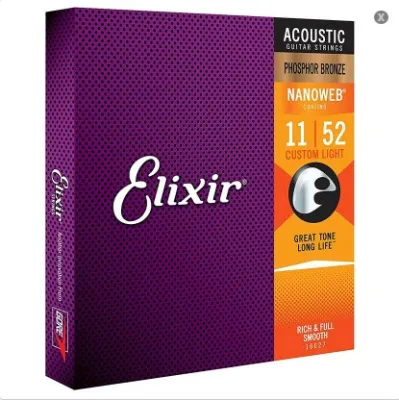
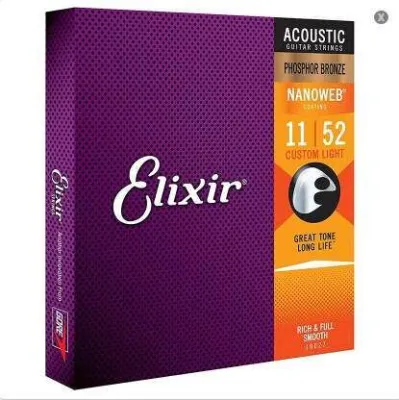
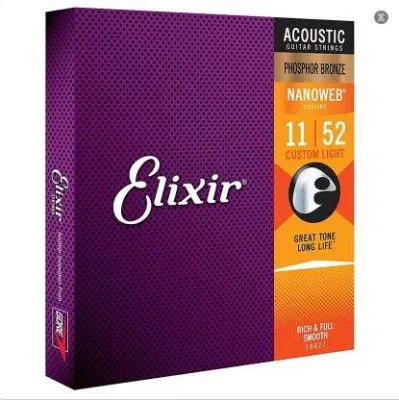
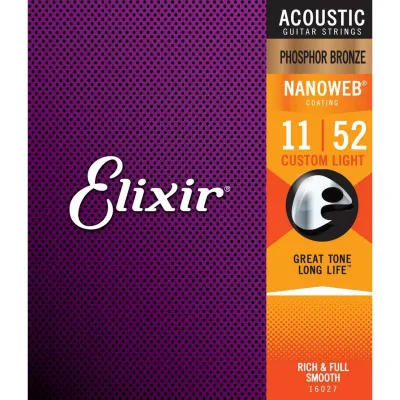
Prices are valid at publication and may change. Please refer to the product page for the latest price.
While the coating determines the longevity and surface texture, the underlying core wire material remains the primary driver of your guitar’s foundational tone. When selecting strings, it is critical to check the manufacturer’s packaging for the core and wrap wire specifications. For acoustic guitars, options like 80/20 Bronze and Phosphor Bronze offer distinct tonal baselines, while electric guitars typically utilize Nickel Plated Steel. The coating modifies this baseline, but it does not replace it; therefore, verifying the core material is just as important as choosing the right coating thickness.
Comparing Nanoweb, Polyweb, and Optiweb
The choice between Nanoweb, Polyweb, and Optiweb ultimately comes down to a personal balance of three factors: coating thickness, high-frequency response, and surface friction. Each coating represents a different point on this spectrum, catering to different tactile preferences and musical genres. Below, we break down the specific characteristics of each coating line to help you identify which profile aligns with your performance needs and physical comfort.

Nanoweb: Bright Tone and Smooth Feel
The Nanoweb coating is designed as a middle-ground option that offers a bright, articulate tone while still providing a noticeably smooth feel. Physically, the Nanoweb coating is incredibly thin, allowing the string to retain a high degree of its natural vibrational freedom. Sonically, this translates to a bright and lively tone that closely mimics the high-end sparkle of traditional, uncoated strings. It preserves the crisp attack and detailed harmonics that fingerstyle players and lead guitarists rely on to cut through a mix.
In terms of playability, Nanoweb strings feel smooth to the touch, reducing the rough, abrasive texture of raw metal. However, the coating is thin enough that you can still feel the physical ridges of the wrap wire. This balance provides a familiar grip, giving your fingertips enough traction to execute precise string bends, wide vibrato, and controlled fretting without feeling like your fingers are slipping.
This option is best checked against players who want robust corrosion protection and an extended lifespan but are unwilling to sacrifice high-frequency clarity. If you love the sound of brand-new, uncoated strings but dislike how quickly they go dead, Nanoweb provides a highly effective solution that maintains that fresh-out-of-the-box brightness for a significantly longer period.
Polyweb: Warm Tone and Ultra-Smooth Feel
Polyweb is the thickest of the three coatings, engineered specifically for players who prioritize physical comfort and a mellower, more vintage-oriented sound. Because the polymer layer is thicker, it has a more pronounced dampening effect on the string’s high-frequency overtones. This results in a warm, rich, and smooth tone that lacks the sharp bite of newer strings, offering instead a “played-in” character right from the first strum.
The primary appeal of Polyweb lies in its unique tactile experience. The thick coating completely covers the ridges of the wrap wire, resulting in an ultra-smooth, almost slick surface. This design significantly reduces finger friction, allowing your hand to glide effortlessly up and down the fretboard. A major secondary benefit of this smooth surface is the near-total elimination of finger squeak and sliding noise during position shifts.
This profile is best checked against studio recording scenarios where microphone sensitivity makes finger noise a major distraction. It is also highly suitable for jazz players, traditional rhythm guitarists, and players with sensitive fingertips who experience physical fatigue or discomfort when practicing on raw, uncoated metal strings.
Optiweb: Crisp Tone and Natural Feel
Optiweb is the thinnest coating offered by the brand, developed specifically to satisfy players who demand the exact physical feel and response of traditional uncoated strings. The coating is so thin that it is virtually imperceptible to the touch, allowing the natural texture of the metal wrap wire to remain fully exposed. Sonically, Optiweb delivers a crisp, clear, and highly resonant tone, allowing the natural acoustic characteristics of the core wire and your instrument’s wood to dominate.
The tactile feel of Optiweb is indistinguishable from a standard uncoated string. It provides the familiar, slightly rough grip and natural friction that many players rely on for physical feedback. This texture is particularly important for aggressive playing styles, fast runs, and heavy bending, where a slick string might cause your fingers to overshoot or lose control.
Optiweb is best checked against traditionalists and purists who have historically avoided coated strings due to their slick texture. If you rely on raw string friction for your playing technique but are tired of replacing your strings every week due to sweat-induced corrosion, Optiweb offers the protective benefits of a modern polymer barrier without altering the physical connection between your fingers and the fretboard.
Decision Framework: Matching Coatings to Your Playing Style
To choose the right string, you must evaluate your playing style, your instrument, and your typical performance environment.
You should choose Nanoweb if you play modern acoustic pop, intricate fingerstyle arrangements, or lead electric guitar parts that require sharp articulation and a bright, cutting presence in a live or recorded mix. The thin coating preserves the essential high-end detail needed for complex chord voicings and fast, articulate runs, while still offering a smooth, comfortable surface that resists sweat and humidity.
You should choose Polyweb if you prefer a warm, vintage-style tone, or if you perform heavy strumming in a band context where high-end “fizz” needs to be naturally tamed. Polyweb is also the ideal choice if you are tracking acoustic tracks in a quiet studio and need to eliminate distracting finger squeaks, or if you simply prefer an ultra-smooth, low-friction fretboard feel that is gentle on your fingertips.
You should choose Optiweb if your playing technique relies heavily on the tactile grip and natural resistance of uncoated strings for aggressive bending, vibrato, and fast fretting, but you want to avoid the rapid degradation caused by sweat and humidity. Optiweb gives you the exact physical feedback of a standard string while providing a reliable barrier against corrosion.
Before making your final selection, verify if your instrument’s physical setup is optimized for the specific gauge and coating thickness you choose. While the differences in thickness are measured in microns, switching between a thick Polyweb string and a thin Optiweb string can slightly alter the physical dimensions and seating of the string in the nut slots or bridge pins. For high-precision setups, even minor changes in string tension and thickness can affect intonation and action, so a quick check of your guitar’s setup during installation is always recommended.
Verifying String Specifications and Instrument Compatibility
Selecting the right coating is only half the battle; you must also ensure that the physical specifications of the strings match your instrument and tonal goals.
First, cross-reference the core and wrap wire materials listed on the packaging. For acoustic guitars, Phosphor Bronze wrap wire generally delivers a warmer, richer tone with complex overtones, while 80/20 Bronze (composed of copper and zinc) provides a much brighter, crisper sound. For electric guitars, Nickel Plated Steel is the standard, offering a balanced magnetic response and bright output. Ensuring the core material aligns with your tonal goals prevents disappointment, as a warm coating on an inherently bright core wire may not produce the exact sound you expect.
Second, confirm that the string gauge matches your instrument’s current setup. If you switch to a heavier or lighter gauge than what is currently installed, the change in physical tension on the neck will likely require adjustments to the truss rod, string action, and bridge intonation. Keeping the gauge consistent ensures a seamless transition without requiring a trip to a professional guitar technician.
Finally, always check the packaging for the correct instrument category. Strings are specifically engineered for Acoustic, Electric, or Bass guitars. Applying acoustic bronze strings to an electric guitar with magnetic pickups will result in severe volume loss and uneven string-to-string balance, as bronze is not highly magnetic. Always verify that the product matches your specific instrument type before purchasing.
Frequently Asked Questions (FAQ)
Do coated strings completely eliminate finger squeak?
While coated strings can significantly reduce unwanted noise, they do not completely eliminate finger squeak. The thicker Polyweb coating is highly effective at minimizing squeak because its thicker polymer layer physically fills the gaps between the wrap wire windings, creating a flatter, smoother surface for your fingers to slide across. However, your playing technique, hand pressure, and natural skin moisture still play a role in noise generation. Thinner coatings like Nanoweb and Optiweb reduce squeak to a lesser degree because their thinner profiles leave more of the natural, ridged topography of the wound string exposed to your fingertips.
Can I use acoustic coated strings on an electric guitar?
You should avoid using standard acoustic coated strings on an electric guitar. Always check the core and wrap wire materials before purchasing. Standard acoustic strings are typically wound with 80/20 Bronze or Phosphor Bronze, materials that lack the magnetic properties required to interact efficiently with an electric guitar’s magnetic pickups. If you install bronze strings on an electric guitar, the pickups will produce a very weak, thin, and quiet signal, with highly unbalanced volume between the wound and unwound strings. For electric guitars, always select strings specifically labeled for electric use, which typically feature Nickel Plated Steel wrap wires designed to interact properly with magnetic pickups.
Community discussion
Share your experience or ask a question. Comments are reviewed before publication.