
Selecting the right guitar strings is one of the most direct ways to influence your instrument’s voice and playability. For guitarists navigating Singapore’s tropical, high-humidity climate, string longevity is a constant battle, as moisture and sweat rapidly accelerate oxidation and rust. Elixir Strings addresses this challenge by utilizing a specialized polymer coating designed to shield the metal core and windings from environmental damage. However, choosing between their three primary coating variants—Nanoweb, Polyweb, and Optiweb—requires understanding how each option alters the physical feel under your fingertips and the overall tonal output of your guitar.
The ideal variant for your setup depends on whether you prioritize a bright, crisp attack, a warm and mellow tone, or a completely natural, uncoated feel. While all three options offer extended protection against corrosion compared to traditional uncoated strings, they achieve this through different coating thicknesses and application methods. By matching these characteristics to your specific playing style, musical genre, and instrument type, you can optimize both your playing comfort and your guitar’s acoustic or electric performance.
Understanding Elixir's Coating Technology
To make an informed decision, it is essential to understand how Elixir’s proprietary coating technology functions. Unlike traditional strings that leave the metal windings exposed to sweat, skin oils, and atmospheric moisture, these strings feature a thin polymer barrier. This micro-thin tube of protective material wraps around the entire outer surface of the string, preventing debris from settling in the microscopic gaps between the winding wire wraps. By keeping these valleys clean, the coating preserves the string’s ability to vibrate freely over a longer period, maintaining a consistent tone far past the lifespan of standard strings.
Products mentioned in this guide

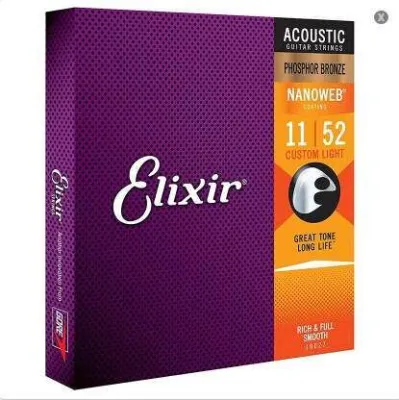
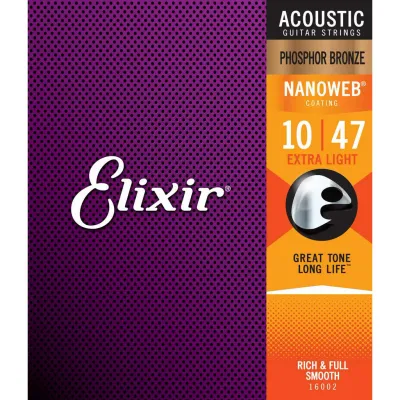
Prices are valid at publication and may change. Please refer to the product page for the latest price.
This protective barrier introduces a distinct tactile and acoustic trade-off. Because there is a physical layer between your fingers and the metal wire, coated strings generally feel smoother and produce less finger squeak than uncoated alternatives. However, this dampening effect can slightly alter the initial break-in time and the immediate high-frequency response. Some players find that coated strings require a brief period of playing to settle into their optimal tension and tone, while others appreciate the immediate stability they provide out of the package.
When evaluating these coatings, you must also consider the underlying string construction, as the polymer layer does not work in isolation. For acoustic guitarists, the choice of core and winding material—such as 80/20 Bronze or Phosphor Bronze—remains a critical factor in determining the baseline tone. Phosphor Bronze typically offers a warmer, richer mid-range, whereas 80/20 Bronze delivers a brighter, more scooped acoustic profile. Ensuring you select the correct gauge and alloy in combination with your preferred coating is vital to achieving your desired sound.
Nanoweb: Bright Tone and Smooth Feel
Nanoweb is Elixir’s middle-ground coating option, designed to offer a balance between robust environmental protection and a traditional playing experience. The Nanoweb coating is an ultra-thin layer applied to the wound strings, engineered to protect the metal without significantly dampening the high-frequency vibrations. This results in a tonal profile that closely mimics the bright, lively presence and crisp attack of fresh, uncoated strings, making it a highly popular choice for players who prefer a modern, clear acoustic or electric sound.

In terms of tactile feedback, Nanoweb strings feel noticeably smooth to the touch, yet they retain enough of the natural metal winding texture to provide a familiar grip. This texture is crucial for guitarists who rely on precise bending control, vibrato, and tactile reference points across the fretboard. The slight friction allows your fingertips to anchor securely during complex chord shapes or fast lead passages, preventing your fingers from slipping unexpectedly during aggressive performances.
This variant is particularly well-suited for players who need their guitar to cut through a dense live mix or a multi-instrument recording. Acoustic strummers who use dynamic, heavy-handed techniques will appreciate the bright high-end definition that prevents chords from sounding muddy. However, before purchasing a set of Nanoweb strings, it is wise to perform a quick pre-purchase check of your instrument’s natural voice. If your guitar is constructed from inherently bright tonewoods, such as maple or ash, pairing it with the bright response of Nanoweb strings might result in an overly harsh or piercing treble response that requires adjustment at your amplifier or soundboard.
Polyweb: Warm Tone and Ultra-Smooth Feel
Polyweb represents Elixir’s original coating formulation, featuring a thicker polymer layer that prioritizes a warm, balanced tone and an exceptionally slick playing surface. This thicker barrier acts as a mild acoustic dampener, filtering out the harsh, metallic high frequencies that often characterize brand-new strings. The result is a mellow, “played-in” tonal profile right out of the packaging, offering a smooth and consistent sound that remains stable throughout the entire lifespan of the string.
The defining characteristic of Polyweb strings is their ultra-smooth, almost frictionless feel. The thick coating fills the gaps between the windings to a greater degree than other variants, significantly reducing the physical friction between your fingertips and the strings. This design dramatically minimizes finger squeak and sliding noise, which is a common distraction during quiet acoustic performances or sensitive microphone setups. Guitarists who perform frequent position shifts, slides, and sweeping motions will find that this slick surface facilitates faster, more fluid hand movements.
These attributes make Polyweb strings highly advantageous for fingerstyle guitarists, jazz players, and studio recording artists who require a pristine, noise-free signal. The warm, rounded bass and smooth treble response complement intimate acoustic arrangements beautifully. Nevertheless, a critical pre-purchase check is necessary: players who rely on aggressive strumming, heavy flatpicking, or precise tactile resistance for fast fretting should consider whether the exceptionally slick, thick feel might reduce the physical feedback they need to play accurately.
Optiweb: Natural Tone and Crisp Feel
Optiweb is Elixir’s thinnest coating option, developed specifically for electric guitarists who demand the exact feel and performance of an uncoated string but still require long-lasting protection against sweat and humidity. The Optiweb coating is so thin that it is virtually imperceptible to the touch, allowing the natural texture of the nickel-plated steel wrap wire to come through fully. This ensures that the strings deliver the crisp, biting tone, rapid attack, and long sustain that electric players expect from premium traditional strings.
The tactile experience of Optiweb strings is characterized by a natural, crisp grip and familiar bending resistance. Because the coating does not smooth out the winding gaps to the extent of Nanoweb or Polyweb, you retain maximum control over your bends, wide vibratos, and aggressive pick attacks. This makes it easier to execute advanced electric guitar techniques, such as pinch harmonics and rapid alternate picking, where the physical interaction between the pick, fingers, and metal is highly sensitive.
This variant is ideal for electric guitarists who have previously avoided coated strings due to a dislike of slippery or plastic-like textures. It provides a reliable defense against the corrosive effects of heavy sweating during intense stage performances or long practice sessions in warm environments. When shopping, always perform a pre-purchase check to ensure you are selecting the correct Optiweb packaging, as this specific coating line is engineered exclusively for electric guitars and is not available for acoustic instruments.
How to Choose the Right Variant for Your Setup
Selecting the perfect Elixir variant involves evaluating your primary playing style, your instrument’s natural characteristics, and your physical environment. To simplify this decision, you can map your primary techniques to the most compatible coating. For instance, if your playing consists of heavy acoustic strumming, flatpicking, or modern pop-rock rhythm work, the bright attack and moderate grip of Nanoweb strings will likely serve you best. Conversely, if you focus on delicate fingerstyle arrangements, classical-adjacent acoustic pieces, or jazz, the warm tone and quiet, slick surface of Polyweb strings are highly beneficial. Electric guitarists focused on rock, blues, metal, or fusion will generally find the natural grip and crisp response of Optiweb to be the most seamless transition from uncoated strings.
Your guitar’s tonewood profile should also guide your choice. A mahogany-bodied acoustic guitar, known for its warm and woody midrange, can be brightened up and given more definition with a set of Nanoweb strings. On the other hand, a bright spruce-and-maple acoustic might benefit from the mellowing effect of Polyweb strings to round off any harsh high-end frequencies. For electric guitars, consider how your pickups and amplifier interact with the strings; high-output pickups paired with Optiweb strings will preserve the raw, biting treble response needed for high-gain articulation.
Before committing to purchasing strings in bulk, it is highly recommended to test a single set of your top candidate on your primary instrument. This trial period allows you to verify how your fingers react to the specific coating thickness, how the string tension feels during bends, and how the tone settles over a week of regular playing. Personal comfort is highly subjective, and a hands-on test is the most reliable way to confirm your preference.
When you are ready to purchase, it is crucial to source your strings from authorized music retailers and established physical or official online brand stores in Singapore. Due to the popularity of coated strings, counterfeit products are common on unregulated online marketplaces. Buying from reputable local dealers ensures that you receive authentic strings that have been stored in climate-controlled environments, preserving the integrity of the polymer coating and preventing premature oxidation before the strings even reach your guitar.
Frequently Asked Questions (FAQ)
Do I need to clean coated strings differently than uncoated ones?
Yes, maintaining coated strings requires a gentle approach to avoid damaging the protective polymer layer. After every playing session, simply wipe down the strings thoroughly with a clean, dry microfiber cloth to remove surface sweat and finger oils. Avoid using liquid string cleaners, fast-fret lubricants, household solvents, rubbing alcohol, or abrasive cleaning pads. These chemical substances and rough textures can prematurely degrade, dissolve, or strip away the micro-thin polymer coating, exposing the underlying metal to rapid corrosion and defeating the purpose of using coated strings.
Will the coating peel off over time?
Over extended periods of heavy use, it is normal to observe minor peeling or fraying of the polymer coating, particularly in the area where your pick or fingernails make contact with the strings. This localized wear is a natural result of physical friction and does not mean the strings are defective. However, if you notice widespread peeling along the fretboard or if the strings begin to lose their tuning stability, brightness, and smooth feel, it indicates that the structural integrity of the metal core and the coating has been compromised. At this stage, it is time to replace the set rather than attempting to clean or restore them.
Community discussion
Share your experience or ask a question. Comments are reviewed before publication.