
Homer’s Odyssey stands as a foundational pillar of Western literature, capturing the ten-year journey of Odysseus as he struggles to return home to Ithaca after the fall of Troy. For English-speaking readers, the experience of this ancient Greek epic is entirely shaped by the translator’s pen. Deciding which translation to read can feel as daunting as navigating the wine-dark sea, especially with several highly acclaimed versions competing for your attention.
The landmark publication of the odyssey emily wilson translation in 2017 marked a historic shift, as she became the first woman to publish a complete English translation of the epic. Her version challenged decades of translation orthodoxy, offering a stark contrast to the dominant mid-to-late 20th-century editions by Robert Fagles, Robert Fitzgerald, and Richmond Lattimore.
To choose the right edition, you must weigh what you value most in your reading experience: a swift, modern narrative rhythm, cinematic drama, lyrical poetry, or strict academic accuracy. Each of these four major translations excels in a different arena, transforming Homer’s ancient dactylic hexameter into distinct styles of English verse.
Products mentioned in this guide
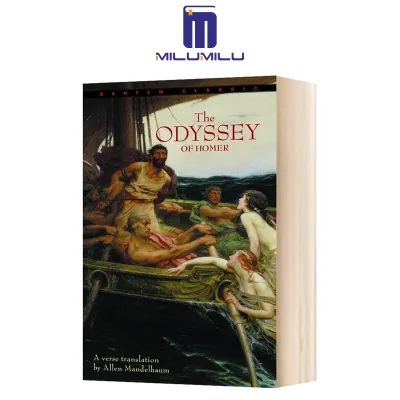
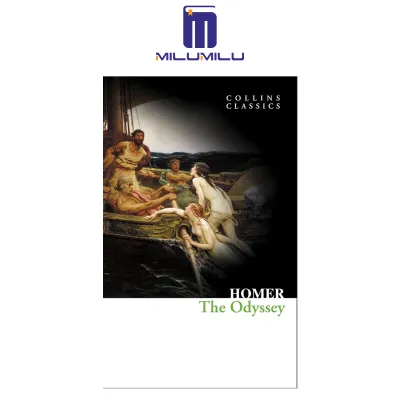
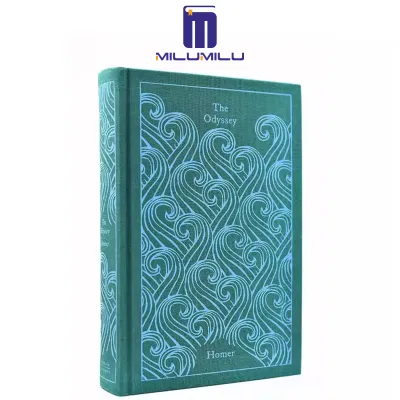
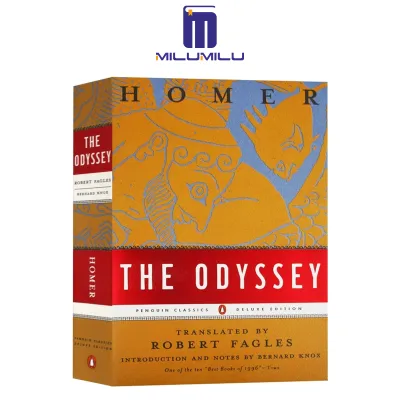
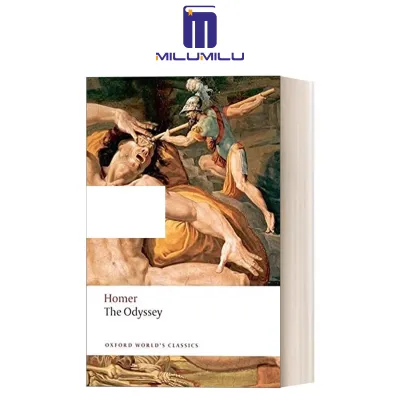
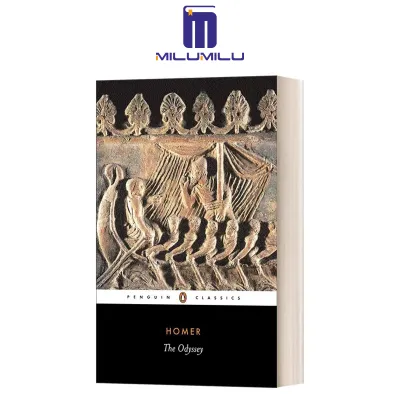
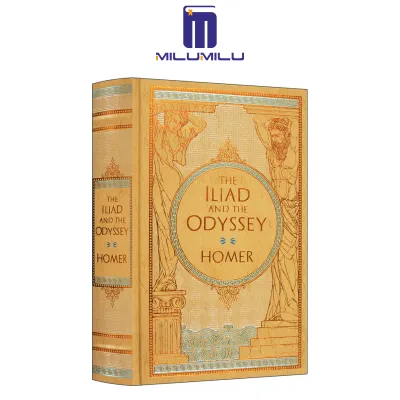
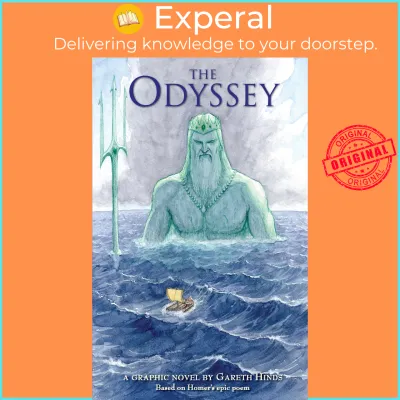
Prices are valid at publication and may change. Please refer to the product page for the latest price.
Quick Answer: Which Odyssey Translation is Right for You?
There is no single “best” translation of the Odyssey; the right choice depends on whether you prioritize modern readability, poetic meter, dramatic pacing, or academic fidelity. Each translator brings a unique philosophy to the text, shaping how the story’s action, emotion, and cultural context are delivered to the reader.
Emily Wilson is ideal for readers wanting a fast-paced, metrically consistent, and thoroughly modern read. Her version strips away archaic language to deliver a direct, clear narrative that moves with incredible speed.
Robert Fagles suits those who want a cinematic, action-driven epic. His translation captures the grand, sweeping scale of a theatrical blockbuster, making the battles and divine interventions feel incredibly vivid and exciting.
Robert Fitzgerald appeals to lovers of classic, lyrical poetry. His blank verse offers an elevated, musical cadence that balances readability with a profound sense of antiquity and mythic grandeur.
Richmond Lattimore is the gold standard for academic study. His line-by-line fidelity to the original Greek syntax and structure makes it the best choice for students and scholars who want to understand how Homer actually constructed his sentences.
Core Translation Philosophies: What Makes Wilson Different?
To fully appreciate the odyssey emily wilson translation, one must understand the radical stylistic and structural choices she made to strip away centuries of accumulated translation habits. Most modern English translators have opted for free verse, which often results in irregular line lengths and an unpredictable narrative pace. Wilson took a different path, choosing to translate the poem into strict iambic pentameter—the classic meter of Shakespeare and Milton—which naturally fits the rhythm of spoken English.

Furthermore, Wilson imposed a strict constraint on her work: her translation matches the original Greek text line-for-line. Because the Odyssey consists of exactly 12,110 lines in the original Greek, Wilson’s translation also consists of exactly 12,110 lines. This prevents the narrative expansion common in other translations, where translators often add extra lines to explain complex Greek concepts or to pad out their own poetic phrasing. The result is a lean, driving text that forces the reader forward, mimicking the propulsive energy of the original oral performance.
In terms of vocabulary, Wilson consciously avoids “translator-ese”—the elevated, slightly archaic, or faux-medieval language that many readers associate with classical epics. Where previous translators used words like “lordly,” “peerless,” or “wondrous,” Wilson chooses plain, direct, and active English. This stylistic choice makes the characters feel like real people speaking to one another, rather than remote statues reciting formal speeches.
Perhaps the most discussed aspect of Wilson’s translation is her approach to gender, power dynamics, and social class. Ancient Greek society was deeply hierarchical, relying on slavery and strict gender roles, and Wilson argues that earlier translations often imported later Victorian or mid-century biases into the text. For example, the famous opening word of the epic, polytropos, has been translated by others as “of many devices” (Lattimore) or “the man of twists and turns” (Fagles). Wilson translates this simply as “a complicated man,” capturing both his intelligence and his moral flaws without romanticizing him.
Similarly, when dealing with the enslaved women in Odysseus’s household who are executed near the end of the epic, older translations frequently referred to them as “sluts,” “whores,” or “creatures.” Wilson points out that these women were dmōiai—enslaved domestic workers who lacked the agency to refuse the suitors. By translating their descriptions accurately as “slaves” or “girls,” Wilson strips away the moralizing, misogynistic language of the 20th century, forcing modern readers to confront the harsh reality of ancient slavery and violence as Homer wrote it.
Comparing the Major English Editions
Emily Wilson (2017)
Wilson’s translation is a masterclass in narrative economy and rhythmic precision. By stripping away the heavy, ornate prose that has characterized translations since the Victorian era, she delivers a text that feels remarkably fresh and immediate. The characters speak with a natural, conversational cadence that never sacrifices the underlying poetic structure. This makes her version incredibly engaging for modern readers who might otherwise find classical epics intimidating or dry.
When purchasing this edition, readers should pay close attention to the format. The standard paperback is widely available, but the Norton Critical Edition is highly recommended for those who want a deeper dive. It includes an extensive introduction by Wilson, detailed maps of Odysseus’s journey, explanatory footnotes, and a collection of critical essays that explore the poem’s themes, historical context, and translation history.
Additionally, the audiobook version of Wilson’s translation, narrated by award-winning actress Claire Danes, has received immense critical acclaim. Danes’s performance perfectly highlights the oral, bardic roots of the epic, utilizing Wilson’s regular iambic pentameter to create a mesmerizing, musical listening experience. Before purchasing, readers in Singapore should verify that their digital audiobook provider or local library app (such as Libby, connected to the National Library Board of Singapore) offers this specific narrated edition, as regional licensing restrictions can occasionally affect availability.
Robert Fagles (1996)
Robert Fagles’s translation is perhaps the most widely read version in contemporary classrooms and book clubs. Published in 1996, Fagles’s work is characterized by its grand, dramatic, and highly cinematic scale. He uses a flexible, non-metrical line that expands and contracts to match the emotional intensity of the scene. This gives his translation a sweeping, blockbuster-like energy that makes the battles, monsters, and divine interventions feel incredibly vivid and exciting.
Fagles excels at capturing the heroic ethos and the raw, visceral qualities of the epic. His language is muscular and emotionally charged, making it easy for readers to lose themselves in the story. However, this cinematic sweep comes with a trade-off: Fagles is less concerned with literal, line-by-line accuracy. He frequently expands on the original Greek syntax, adding descriptive adjectives and explanatory phrases to heighten the drama or clarify the narrative flow for modern readers.
For general readers who want an engaging, highly entertaining story that feels epic in every sense of the word, Fagles remains an exceptional choice. The Penguin Classics edition of his translation also features a brilliant, comprehensive introduction by classicist Bernard Knox, which provides invaluable historical and literary context.
Robert Fitzgerald (1961)
For those who appreciate the formal beauty of traditional English poetry, Robert Fitzgerald’s 1961 translation is a timeless masterpiece. Fitzgerald, an accomplished poet in his own right, crafted a translation in blank verse that is widely celebrated for its lyricism, musicality, and elegance. His lines possess a graceful, sea-washed quality that beautifully evokes the Mediterranean setting of Odysseus’s wanderings.
Fitzgerald balances a high literary style with clear, readable English, avoiding the dense archaisms of older Victorian translations while still retaining a profound sense of antiquity and mythic grandeur. His translation feels like a carefully crafted work of art, where every word and line break has been weighed for its poetic resonance.
The trade-off with Fitzgerald’s version is that its pacing can feel somewhat slower and more formal compared to the rapid-fire delivery of Wilson or the high-octane drama of Fagles. It is a translation to be savored slowly, making it ideal for lovers of classic poetry and those who want to experience the Odyssey as a sublime literary monument rather than a fast-paced adventure novel.
Richmond Lattimore (1965)
Richmond Lattimore’s 1965 translation occupies a unique and highly respected position in classical scholarship. Unlike Fagles, Fitzgerald, or Wilson, who all adapt the text to fit various English poetic traditions, Lattimore prioritized absolute fidelity to the original Greek syntax, word order, and sentence structure. He chose to translate the poem into a loose, six-beat free verse line that closely mirrors the rhythm and length of Homer’s original dactylic hexameter.
Lattimore’s approach is highly literal, making his translation an invaluable tool for students and scholars who are learning ancient Greek or who want to understand exactly how Homer constructed his sentences. He retains the formulaic epithets and repetitive phrases of the oral tradition with minimal variation, providing a raw, unvarnished look at the epic’s original texture.
However, this uncompromising commitment to literal accuracy means that Lattimore’s English can often feel foreign, dense, and grammatically awkward. The lines do not flow as naturally to the modern ear, and the narrative pacing can feel clunky to casual readers. It is a demanding translation that requires close, active reading, but it offers the closest possible approximation of the Greek text available in English.
How to Choose the Best Edition for Your Reading Goals
Selecting the perfect edition of the Odyssey requires aligning the translator’s philosophy with your personal reading objectives. To help you make an informed decision, consider the following structured framework:
Choose Emily Wilson if:
- You want a fast-paced, highly readable, and modern translation.
- You prefer a clear, unembellished style that focuses on narrative momentum.
- You plan to experience the epic primarily as an audiobook (the Claire Danes narration is superb).
- You are interested in a translation that carefully examines ancient gender and power dynamics without modern romanticism.
Choose Robert Fagles if:
- You want a dramatic, emotionally intense, and highly cinematic storytelling experience.
- You enjoy sweeping, muscular verse that highlights the action and heroic grandeur of the epic.
- You are a casual reader looking for an engaging, highly accessible introduction to Homer.
Choose Robert Fitzgerald if:
- You prioritize lyrical beauty, musicality, and traditional poetic craftsmanship.
- You want a translation that feels elegant, artistic, and deeply literary.
- You enjoy a slightly more formal, timeless tone that evokes a sense of ancient myth.
Choose Richmond Lattimore if:
- You are studying the text academically or comparing it directly with the original Greek.
- You want to understand the exact syntax, line structure, and formulaic repetitions of Homer's original poem.
- You do not mind a denser, more challenging read in exchange for unmatched literal accuracy.
Before making your final purchase, it is highly recommended to verify the specific edition’s details. Standard paperbacks are excellent for casual reading, but if you are buying for a class or deep study, ensure the book includes necessary supplementary materials. Look for editions that explicitly list maps, character glossaries, explanatory footnotes, and introductory essays. For instance, the W. W. Norton editions of Wilson’s translation or the Penguin Classics editions of Fagles’s translation are renowned for their comprehensive educational resources.
In Singapore, these editions are widely available through major physical book retailers like Books Kinokuniya, as well as various online book marketplaces. Prices typically range from S$15 to S$30 for standard trade paperbacks, while deluxe hardcovers or annotated critical editions can range from S$35 to S$55. When buying digital or audio formats, always double-check the publisher and narrator details to ensure you are getting the exact translation and performance you desire, as regional licensing can sometimes lead to multiple versions being listed on the same platform.
Frequently Asked Questions (FAQ)
Is Emily Wilson’s Odyssey translation in prose or verse?
Emily Wilson’s translation of the Odyssey is written in verse, specifically using strict iambic pentameter. This structural choice is highly significant because it matches the natural rhythm of spoken English while maintaining a steady, poetic beat. Additionally, Wilson’s translation is a line-for-line match with the original Greek text, consisting of exactly 12,110 lines. This prevents the narrative expansion common in other translations and preserves the swift, driving pace of the original epic.
Which Odyssey translation is best for high school or college students?
For general literature, humanities, or introductory college courses, the translations by Emily Wilson and Robert Fagles are highly recommended due to their modern readability, engaging pacing, and accessible language. They allow students to grasp the plot, character dynamics, and major themes quickly. For advanced classical studies, translation theory courses, or classes requiring close analysis of Greek syntax, Richmond Lattimore’s highly literal translation or the Norton Critical Edition of Emily Wilson’s translation (which includes extensive academic essays and notes) are the preferred choices.
Does the audiobook of Emily Wilson’s Odyssey match the print version?
Yes, the audiobook of Emily Wilson’s Odyssey matches the print version exactly, word-for-word. The audiobook is narrated by actress Claire Danes, whose performance has been widely praised for capturing the oral, performative nature of the ancient epic. Because Wilson translated the poem into regular iambic pentameter, the text is exceptionally well-suited to being read aloud, making the audiobook an outstanding medium for experiencing this classic story.
Community discussion
Share your experience or ask a question. Comments are reviewed before publication.