
Selecting your first guitar is an exciting milestone, but the sheer variety of sizes, shapes, and materials can quickly feel overwhelming. For beginners, a travel-sized guitar is often an ideal starting point because its compact dimensions make it physically easier to handle, hold, and practice with consistently. The Enya Nova Go has emerged as a highly popular modern option due to its composite construction, but deciding whether it fits your needs requires comparing its unique design against traditional wood and laminate alternatives.
To make an informed choice, you must weigh factors like physical comfort, durability under local climate conditions, and overall playability. While traditional wood guitars offer a classic acoustic warmth, they demand meticulous maintenance that can be challenging for a beginner. Composite instruments like the Enya Nova Go trade some of that traditional resonance for near-indestructible durability and low maintenance, making them highly practical for everyday practice and travel.
What Defines a Good Travel Guitar for Beginners?
Before comparing specific models, it is essential to understand what makes a travel-sized guitar suitable for a beginner. A travel guitar is not simply a toy; it is a scaled-down instrument designed to offer comfortable playability while remaining highly portable. For beginners, the physical relationship between your body and the instrument directly impacts how quickly you build muscle memory and finger strength.
Products mentioned in this guide

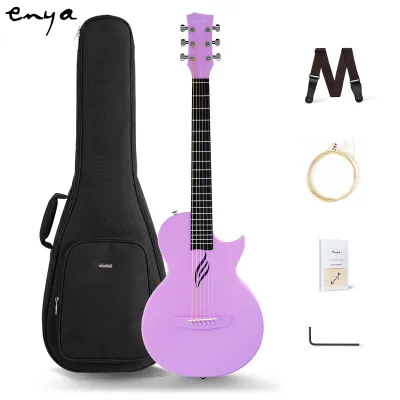




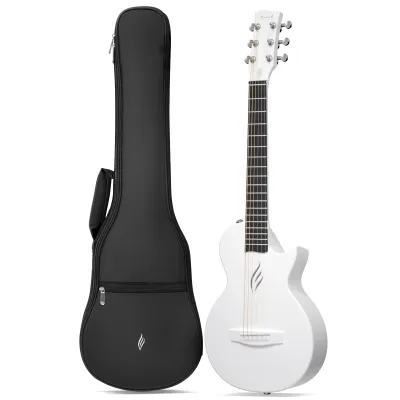
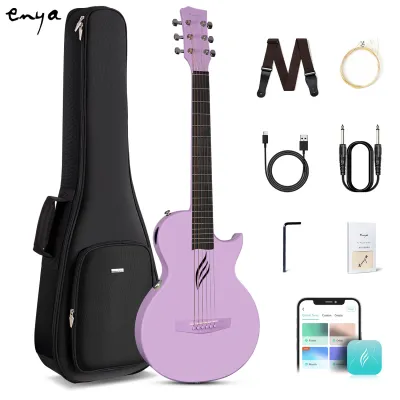
Prices are valid at publication and may change. Please refer to the product page for the latest price.
Scale length—the distance between the nut and the saddle—is a critical dimension to check. Standard guitars typically feature a scale length of 25.5 inches, which can feel like a stretch for beginners. Travel guitars usually reduce this to between 22.75 and 24 inches. This shorter scale places the frets closer together, reducing the finger span required to fret chords and lowering the overall string tension, which makes pressing down on the strings much easier on uncalloused fingertips.
Body depth and neck profile also play major roles in comfort. A shallower body depth allows you to wrap your right arm over the instrument comfortably without straining your shoulder, which is especially helpful when practicing in tight spaces or sitting on a couch. Meanwhile, a slim neck profile ensures that smaller hands can easily reach around the fretboard to execute clean chord shapes.
Material composition determines how much effort you must dedicate to maintaining the instrument. Traditional guitars use solid wood or wood laminates, which are highly sensitive to temperature and humidity fluctuations. Synthetic materials, such as High-Pressure Laminate (HPL) and carbon fiber composites, offer exceptional structural stability, meaning they will not warp or crack when exposed to changing environments.
Finally, portability factors like weight and case dimensions dictate how easy the guitar is to transport. A good travel guitar should weigh under two kilograms and come with a protective, lightweight gig bag. If an instrument is too heavy or cumbersome to pack, it defeats the purpose of owning a travel-friendly model.
Enya Nova Go: Core Specifications and Beginner Appeal
The Enya Nova Go is designed specifically to address the common pain points of both traveling musicians and beginners. Built primarily from a carbon fiber composite material, this instrument departs significantly from traditional acoustic guitar design. This composite blend allows the top, back, and sides to be molded as a single continuous piece, eliminating the internal bracing and glue joints found in traditional wooden guitars.

In terms of physical dimensions, the Nova Go features a 1/2-size body with a scale length of approximately 23 inches. This compact footprint makes it highly manageable for younger players, students, or anyone with a smaller frame. The neck features a comfortable contour and includes a zero-fret design, which helps maintain a consistently low action (string height) near the nut, making open chords exceptionally easy to press down.
One of the primary appeals for beginners is the out-of-the-box completeness of the package. The guitar typically ships as a comprehensive starter kit that includes a custom-fitted gig bag, a strap, a cleaning cloth, and spare strings. This bundle reduces the initial friction of starting your musical journey, as you do not need to spend extra time and money sourcing compatible accessories separately.
The target user profile for the Nova Go is a beginner who values convenience, modern aesthetics, and worry-free ownership. Because the carbon fiber composite is entirely unaffected by weather, it is an excellent match for players who want an instrument they can leave on a stand in any room, throw into the back of a car, or take to outdoor gatherings without worrying about structural damage.
Key Comparison Dimensions: Enya Nova Go vs. Alternatives
When evaluating the Enya Nova Go against other travel guitars on the market, you should avoid relying on subjective online sound demonstrations. Instead, focus on comparing verifiable specifications, material properties, and structural designs. This systematic approach allows you to match the instrument’s physical attributes to your specific living environment and playing goals.
To begin your comparison, gather the official manufacturer specification sheets for the models you are considering. Pay close attention to the listed materials, nut width, overall length, and weight. These hard numbers will give you a clear picture of how each guitar will feel in your hands and how it will perform over time.
Build Materials and Durability
The choice of build materials is the most significant differentiator between the Enya Nova Go and traditional travel guitars. Traditional models, such as the Baby Taylor or Martin LX1, often utilize solid wood tops paired with laminate or HPL back and sides. Fully laminate guitars use layers of compressed wood, while solid wood instruments consist entirely of natural timber.
In highly humid environments, such as Singapore’s tropical climate, natural wood constantly absorbs and releases moisture. This cycle causes the wood to swell and shrink, which can lead to warped necks, lifting bridges, sharp fret ends, and even structural cracks. To prevent this, wooden guitars must be stored in cases with specialized humidity-control packs or kept in dehumidified rooms, adding to your ongoing maintenance routine.
In contrast, the carbon fiber composite of the Enya Nova Go is completely impervious to humidity and temperature shifts. It will not warp, crack, or lose its setup when transitioned from an air-conditioned bedroom to a humid outdoor park. This environmental resistance makes it incredibly low-maintenance, allowing you to focus entirely on practicing rather than climate control.
From a tonal perspective, these material differences create distinct acoustic profiles. Natural wood offers an organic, warm, and resonant tone that matures and improves as the wood ages. Carbon fiber composites produce a brighter, highly consistent, and slightly compressed sound. While the Nova Go delivers impressive projection for its size, players seeking a traditional, woody acoustic resonance may find the composite tone a bit modern or sterile, making personal testing highly recommended.
Neck Profile and Playability
Playability is the cornerstone of beginner progress; if a guitar is painful or difficult to play, you are far more likely to give up. When comparing neck specifications, look closely at the nut width. The Enya Nova Go features a nut width of roughly 42mm, which is slightly narrower than the standard 43mm found on many full-sized acoustic guitars. This narrower spacing makes it easier for smaller hands to form clean chords without accidentally muting adjacent strings.
Action height—the gap between the strings and the fretboard—is another critical factor. High action requires significant finger pressure to fret notes, leading to rapid hand fatigue. The Nova Go utilizes a zero-fret design, which naturally keeps the action low and consistent at the first fret. Additionally, it features a built-in metal truss rod, allowing you to adjust the neck relief if you decide to change string gauges or adjust the action height later on.
When researching alternative travel guitars, verify whether they include an adjustable truss rod. Some ultra-portable or budget travel models omit this feature entirely, meaning you cannot adjust the neck if it bows over time. Always check the manufacturer’s documentation to confirm that the neck is fully adjustable to ensure long-term playability.
Because hand sizes and finger shapes vary wildly, the best way to assess playability is to try the instruments in person at a local music retailer. If buying online, prioritize sellers that offer a clear, hassle-free return policy. This allows you to test the neck profile and string spacing in your own hands before making a final commitment.
Portability and Out-of-the-Box Readiness
Travel guitars are designed to move, but “portable” can mean different things depending on the design. The Enya Nova Go features a highly streamlined, thin-body profile that slips easily into tight spaces. Its overall length is roughly 35 inches, making it significantly shorter than a standard 41-inch dreadnought. It fits comfortably in overhead airplane compartments, car trunks, or public transit spaces.
When comparing portability, look at the quality of the included gig bag. The Nova Go comes with a custom-molded, semi-rigid case that provides excellent impact resistance while remaining incredibly lightweight. Some alternative travel guitars only include a thin, unpadded dust cover, which forces you to spend an additional S$40 to S$80 on a protective aftermarket case to prevent damage during transit.
Out-of-the-box readiness is another area where starter bundles vary. The Nova Go bundle typically includes a strap, cleaning cloth, and extra strings, allowing you to start playing immediately. If you choose an alternative guitar that does not offer a bundle, you will need to budget extra funds for these essential accessories. For a beginner, an all-in-one package offers excellent convenience and cost savings.
Decision Framework: Which Guitar Fits Your Needs?
To choose the right travel guitar, you must align your personal priorities, living environment, and budget with the strengths of each instrument type. Use the following conditional framework to guide your final decision:
- Choose the Enya Nova Go if: You prioritize maximum durability, live in a highly humid or variable climate, want a zero-maintenance instrument that can be left out on a stand, and prefer a complete, cost-effective starter bundle with a highly protective case.
- Choose a traditional wood travel guitar if: You are highly focused on achieving a classic, warm acoustic tone, prefer the traditional look and feel of natural timber, and are willing to invest the time and effort into humidity control and regular maintenance.
- Choose a 3/4-size or parlor guitar if: Standard travel guitars feel a bit too small or quiet for your liking, but you still want a slightly shorter scale length and a more compact body than a full-sized acoustic guitar.
- Verify first if: You are unsure about how a shorter scale length or a narrower nut width will feel in your hands. Visiting a local showroom to hold both composite and wooden models side-by-side is the most reliable way to confirm your physical comfort.
What to Verify Before You Buy
Once you have decided on the right style of travel guitar, there are several critical details you must verify before completing your purchase. First, confirm the exact model version you are buying. The Enya Nova Go is available in several configurations, including a standard acoustic version and an upgraded version featuring built-in effects (often labeled as the “AI” or “Effects” model). Ensure the listing matches your desired specifications and budget.
Next, verify the seller’s authorization status. Purchasing from an authorized local dealer ensures that you receive a genuine product and access to the manufacturer’s regional warranty. This is particularly important for composite guitars, as any manufacturing defects or structural issues should be covered by a reliable local warranty service.
Finally, perform a thorough inspection immediately upon delivery. Check the body for any shipping damage, inspect the neck to ensure it is straight, and play every fret to check for unwanted string buzzing. Verify that all bundled accessories—such as the gig bag, strap, and adjustment tools—are present in the box. If you notice any issues, contact the seller immediately to arrange a replacement or adjustment under their return policy.
Frequently Asked Questions (FAQ)
Can a beginner play a travel guitar as their main instrument?
Yes, a beginner can absolutely use a travel guitar as their primary practice instrument. The shorter scale length and smaller body size can make the initial learning curve much more comfortable, helping you build finger strength and dexterity without physical strain. However, keep in mind that transitioning to a full-sized guitar later on will require a brief adjustment period as your hands adapt to the wider fret spacing and higher string tension of a standard instrument.
Additionally, travel guitars naturally have smaller sound chambers, which limits their overall volume and bass projection. While they are excellent for personal practice, quiet home playing, and small gatherings, they may struggle to compete in volume when playing alongside larger instruments in an ensemble or unplugged band setting.
Do composite travel guitars require humidity control?
No, composite travel guitars made from carbon fiber or High-Pressure Laminate (HPL) do not require humidity control. Unlike natural wood, these synthetic materials do not absorb moisture from the air, meaning they will not swell, shrink, warp, or crack in humid or dry conditions. You can safely leave them on a guitar stand in an air-conditioned room or take them outdoors without worrying about climate-induced damage.
However, you should still follow basic care guidelines. Avoid exposing the instrument to extreme heat, such as leaving it inside a locked car trunk on a hot day, as excessive heat can soften the adhesives used in the assembly. Always refer to the manufacturer’s care instructions for specific guidelines on cleaning and long-term storage.

Community discussion
Share your experience or ask a question. Comments are reviewed before publication.