
Choosing your first set of electric guitar strings is a critical step that directly impacts how easy it is to press down on the frets and how your instrument sounds. For beginners navigating the Ernie Ball lineup, the choice generally comes down to three iconic options: Super Slinky, Regular Slinky, and Skinny Top Heavy Bottom. The right choice depends entirely on your current finger strength, your musical goals, and how you want the guitar to feel under your fingertips.
If you are an absolute beginner with low finger strength or smaller hands, starting with Super Slinky strings is highly recommended because their lighter tension makes fretting and bending notes much easier. For those seeking a balanced, standard feel that works well for general practice, chord building, and everyday play, Regular Slinky serves as the ideal baseline. If your musical interests lean heavily toward rhythm-focused rock, metal, or experimenting with drop tunings, Skinny Top Heavy Bottom strings offer a hybrid setup that pairs easy-to-bend high strings with thick, stable low strings. Ultimately, your personal physical comfort and playing style will dictate the best fit, and trying different sets is a natural part of every guitarist’s journey.
Why String Gauge and Tension Matter for New Guitarists
To understand why these three options feel so different, it is essential to understand the concepts of string gauge and tension. String gauge refers to the physical thickness of the string, measured in thousandths of an inch. Thicker strings require more physical force to press down against the fretboard, which can quickly fatigue a beginner’s untrained fingers. Lighter strings, on the other hand, require minimal pressure, making them highly forgiving during long practice sessions.
Products mentioned in this guide

Prices are valid at publication and may change. Please refer to the product page for the latest price.
Tension is the pulling force exerted by the strings when tuned to pitch. Higher tension makes the strings feel stiff and resistant to bending or vibrato, but it also helps maintain stable intonation and prevents the strings from rattling against the frets. Lower tension makes the strings feel loose and highly pliable, allowing for effortless expressive techniques, though it requires a lighter touch to avoid accidentally pushing the notes out of tune.
There is an inherent trade-off between playability and acoustic response. Lighter strings are incredibly comfortable to play, but they produce a slightly thinner acoustic resonance and less natural sustain. Heavier strings offer a bolder, punchier tone with richer sustain, but they demand significantly more finger strength and can cause soreness for players who have not yet developed calluses.
Additionally, transitioning between different string gauges alters the total tension pulling on your guitar’s neck. If you switch from a very light set to a much heavier set, the increased tension can bow the neck forward, resulting in high action. Conversely, moving to lighter strings can cause the neck to straighten or bow backward, leading to fret buzz. It is always wise to check your guitar’s setup and neck relief whenever you make a significant change in gauge.
Regular Slinky: The Balanced Standard for Everyday Playing
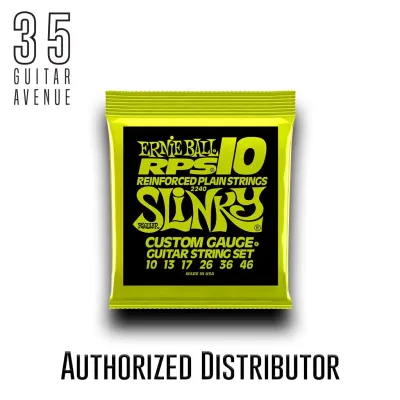
Ernie Ball Regular Slinky strings, typically featuring a gauge profile of .010 to .046 (often referred to simply as “tens”), represent the industry standard for electric guitars. This set is designed to offer a middle-ground experience, providing a balanced amount of tension across the entire fretboard. Because they are neither too stiff nor too loose, they serve as an excellent baseline for beginners who are still discovering their personal playing preferences.

This balanced tension makes Regular Slinkys incredibly versatile. They perform exceptionally well in standard tuning and are suited for almost any musical genre, from pop and indie to blues and classic rock. The medium tension provides enough resistance to help you develop clean picking habits and precise fretting hand placement without feeling overly punishing.
For a beginner, starting with Regular Slinkys involves a moderate learning curve. You will need to dedicate time to building finger calluses and developing the hand strength required for clean chord transitions, particularly when pressing down on full barre chords. However, this physical conditioning is highly beneficial in the long run, as it prepares your hands for a wide variety of guitar setups.
There are scenarios where a beginner might find this set slightly too stiff. If you are focusing heavily on lead guitar techniques, such as wide string bends and rapid vibrato, the tension of the high strings in a Regular Slinky pack can feel stiff and discouraging during your first few weeks of playing. If physical discomfort is holding back your practice consistency, a lighter alternative may be more appropriate.
Super Slinky: Lighter Tension for Easier Bending and Comfort
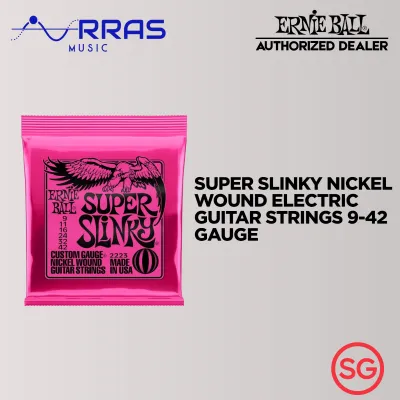
Ernie Ball Super Slinky strings, characterized by a lighter gauge profile of .009 to .042 (commonly called “nines”), are engineered to maximize physical comfort and ease of play. By reducing the thickness of each string, this set significantly lowers the amount of tension required to bring the guitar up to standard pitch. The result is a highly pliable feel that responds to the lightest touch.
The primary advantage of Super Slinkys is the dramatic reduction in fretting pressure. Beginners with smaller hands, younger players, or anyone struggling with finger fatigue will find that these strings make practicing much more enjoyable. Expressive techniques like string bending and fast legato runs become instantly more accessible, allowing you to focus on pitch accuracy and timing rather than fighting the physical resistance of the instrument.
However, these benefits come with specific trade-offs. The lighter physical mass of the strings can result in a slightly thinner, less robust tone, particularly when playing clean rhythm parts. Additionally, because the strings are thinner and under less tension, they are more susceptible to breaking if you use an aggressive picking style. If your guitar’s action is set very low, the loose vibration of lighter strings can also lead to unwanted fret buzz.
Despite these potential drawbacks, Super Slinkys remain a top recommendation for beginners who find standard strings painful or discouraging. Minimizing physical barriers during the early stages of learning is crucial for maintaining motivation, and this set provides the gentle introduction many new players need to build confidence.
Skinny Top Heavy Bottom: Hybrid Tension for Rhythm and Drop Tunings
Ernie Ball Skinny Top Heavy Bottom strings combine the best of both worlds by utilizing a hybrid gauge design, typically running from .010 to .052. This configuration pairs the lighter treble strings of a standard set (the “skinny top”) with the much thicker bass strings of a heavy set (the “heavy bottom”). It is a specialized layout designed to solve a very specific problem for modern guitarists.
The hybrid concept is highly beneficial for players who want to explore heavier genres like modern rock, metal, or alternative music. The heavy bottom strings provide excellent stability, tight low-end clarity, and a punchy response when playing heavy rhythm riffs or power chords. Meanwhile, the lighter top strings ensure that soloing, bending, and lead work remain comfortable and expressive.
This set is particularly well-suited for drop tunings, such as Drop D. When you tune your lowest string down a full step, standard strings can become floppy and lose their pitch stability. The heavier bass strings of the Skinny Top Heavy Bottom set maintain their tension even when detuned, preventing muddy notes and keeping your rhythm playing sharp and articulate.
The main challenge for a beginner using this hybrid set is the uneven tension feel across the fretboard. Moving your picking hand from the highly flexible high strings to the incredibly stiff low strings requires a brief adjustment period to maintain consistent picking dynamics. Furthermore, if you are an absolute beginner focusing strictly on learning standard open chords in standard tuning, the extra stiffness of the heavy bottom strings can make clean fretting unnecessarily difficult.
Evaluating the Slinky Series at a Glance
To help you quickly compare these three popular options, the following matrix outlines their key characteristics, ideal use cases, and what to expect regarding physical feedback and instrument maintenance.
| Series Name | Gauge Profile | Tension Feel | Best Suited For | Potential Drawbacks | Setup Adjustments Needed |
|---|---|---|---|---|---|
| Super Slinky | Lighter (typically .009–.042) | Very soft and highly pliable | Beginners seeking maximum comfort, lead playing, and easy bending | Thinner tone; higher risk of breakage under heavy picking | May require raising the action slightly to prevent fret buzz |
| Regular Slinky | Medium (typically .010–.046) | Balanced and moderate resistance | General practice, versatile genres, and building fundamental hand strength | Can feel stiff for beginners during wide string bends | Minimal adjustments needed on most standard factory setups |
| Skinny Top Heavy Bottom | Hybrid (typically .010–.052) | Uneven (stiff bass strings, flexible treble strings) | Heavy rock, metal, drop tunings, and tight rhythm playing | Stiff low strings can make standard open chords harder to fret | Often requires widening nut slots and adjusting intonation/truss rod |
Note: Always verify the exact gauge numbers printed on the product packaging before purchasing, as manufacturers may offer variations within each series.
How to Make Your Final Decision and Next Steps
To choose the right set of strings, start by evaluating your current playing style and musical goals. If you find yourself constantly struggling with finger pain or find it impossible to bend strings, do not hesitate to try a lighter set like Super Slinky. If you want a reliable, all-around experience that prepares you for any genre, stick with Regular Slinky. If you are certain that your future lies in heavy metal riffs and drop-tuned rock, the Skinny Top Heavy Bottom set is your logical starting point.
Before installing your new strings, take a moment to check your guitar’s current setup. Look at the height of the strings above the fretboard (the action) and inspect the slots in the nut at the top of the neck. If you are moving to a significantly heavier gauge, such as the Skinny Top Heavy Bottom, the thicker strings may not sit properly in the existing nut slots, which can cause tuning instability.
When purchasing, it is highly recommended to buy a single pack to test the physical feel before committing to bulk purchases or subscription boxes. A single pack of strings is a relatively low-cost investment, often priced under S$15 at local music shops, making experimentation highly accessible. String preference is deeply personal, and what works perfectly for one player might feel uncomfortable to another. Trying different gauges over your first few months of playing is the best way to discover your unique preference.
Once you have selected your pack and are ready to restring, remember that new strings require a brief break-in period. After tuning them to pitch, gently stretch each string along its entire length, then tune up again. Repeating this process three or four times will stabilize the tension, prevent the strings from slipping, and ensure your guitar stays in tune during your practice sessions.
Frequently Asked Questions (FAQ)
How often should a beginner change their Ernie Ball strings?
As a general rule, beginners should aim to change their strings every six to eight weeks, or sooner if they practice daily. You can easily identify worn-out strings by looking for physical signs of degradation, such as dark discoloration, rust spots, a rough texture under your fingers, or a noticeable loss of tonal brightness. Over time, strings also lose their elasticity, leading to persistent tuning instability.
Environmental factors play a massive role in string lifespan. In warm, highly humid climates like Singapore, moisture and sweat accelerate the oxidation process, causing standard metal strings to corrode much faster. To maximize the longevity of your strings, establish a simple maintenance routine: always wash your hands before playing, and use a clean, dry microfiber cloth to thoroughly wipe down each string after every practice session.
Will changing string gauges damage my guitar?
Changing string gauges within standard electric guitar ranges will not cause any permanent damage to your instrument. Modern electric guitars are robustly constructed and designed to handle varying levels of tension. However, switching to a significantly different gauge will alter the physical forces acting on the neck, which can temporarily affect the guitar’s playability.
If you experience persistent fret buzzing, high action, or poor intonation after changing gauges, your guitar likely requires a basic setup adjustment. This may involve adjusting the truss rod to correct neck relief, raising or lowering the bridge saddles, or adjusting the intonation screws. If you feel unsure about performing these mechanical adjustments yourself, take your instrument to a qualified guitar technician at a local music shop to ensure it is set up safely and correctly.
Do standard Ernie Ball strings have a coating to prevent rust?
Standard Ernie Ball Slinky strings, including the classic Regular, Super, and Skinny Top Heavy Bottom packs, are made of nickel-plated steel wrapped around a hex-shaped steel core and do not feature a protective micro-thin coating. These standard strings rely on regular cleaning and proper maintenance to prevent rust and maintain their bright, punchy tone.
Because uncoated strings react directly to moisture, sweat, and humidity, they will naturally oxidize over time. If you live in a humid environment or have particularly acidic sweat, you may want to check the product packaging for specialized coated or treated variants offered by the brand, which are specifically designed to resist corrosion and extend tonal life. However, for most beginners, standard uncoated Slinkys offer an excellent, cost-effective way to experience the natural feel and classic tone of electric guitar strings.
Community discussion
Share your experience or ask a question. Comments are reviewed before publication.