
Choosing your first ukulele bag is just as important as selecting the instrument itself. A reliable bag serves as your instrument’s primary shield against physical damage, dust, and environmental changes. For a beginner, navigating the vast array of options can be overwhelming, with prices and features varying wildly across online marketplaces and local music shops.
To make the right choice, you must prioritize three essential elements: adequate padding thickness, a secure fit tailored to your ukulele’s specific scale, and durable construction. While aesthetic designs and extra pockets are appealing, they should never come at the expense of structural protection. By focusing on these core features, you can find a bag that keeps your instrument safe without overstretching your budget.
Understanding Protection Levels: Gig Bags vs. Hard Cases
When shopping for your first ukulele bag, the first major decision is choosing between a soft gig bag and a rigid hard case. These two options offer vastly different levels of structural protection, impact resistance, and portability. Understanding how you plan to transport and store your instrument will help you decide which style fits your lifestyle.
Products mentioned in this guide
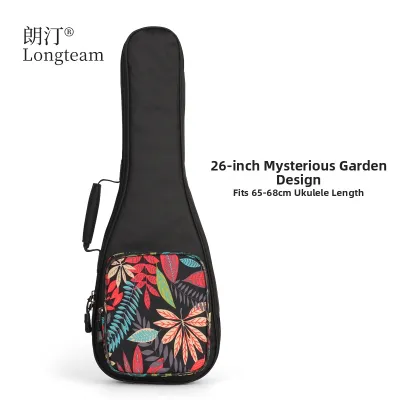
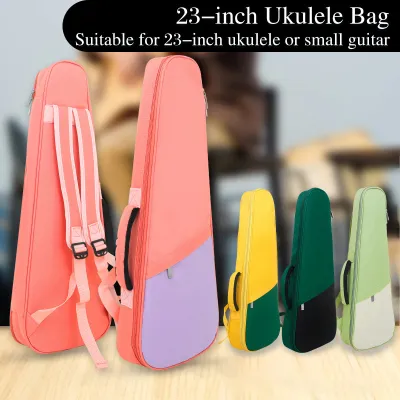
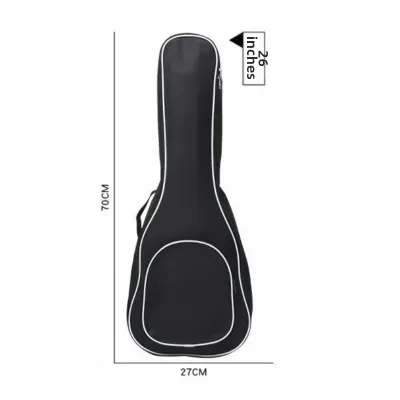
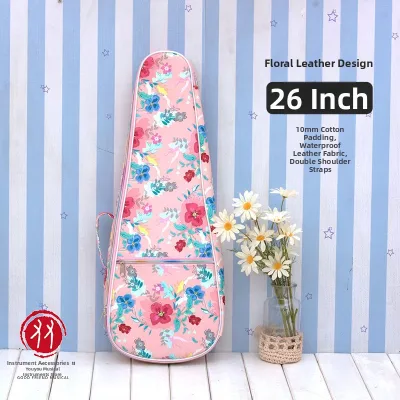
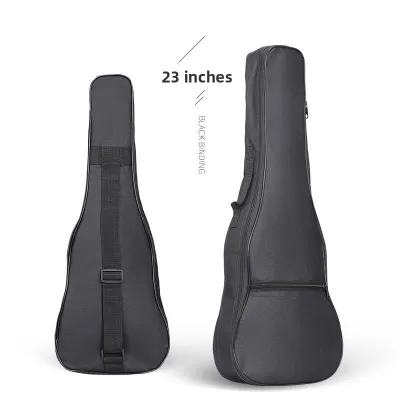
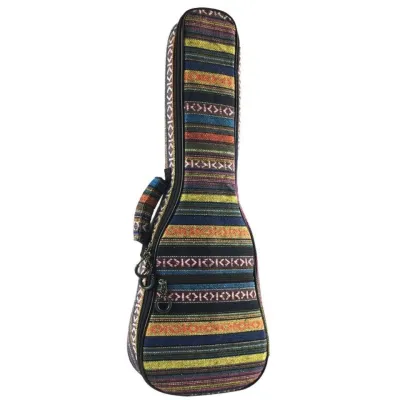
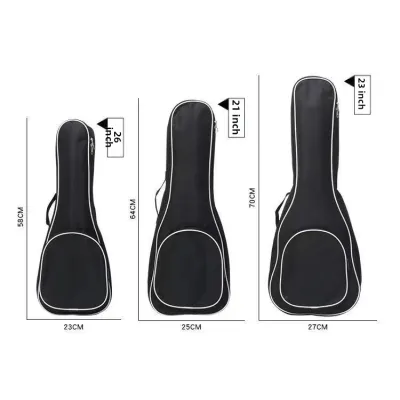
Prices are valid at publication and may change. Please refer to the product page for the latest price.
Hard cases, typically constructed from wood, fiberglass, or heavy-duty ABS plastic, provide the ultimate level of crush protection. If your instrument is accidentally stepped on, dropped from a height, or packed under heavy luggage in a car boot, a hard case will absorb the impact and prevent structural damage. However, this maximum protection comes with significant trade-offs in weight and portability. Hard cases are heavy, bulky, and usually only feature a single carrying handle, making them cumbersome for long walks or daily commutes.
Soft gig bags, on the other hand, are made from woven synthetic fabrics like nylon or polyester and lined with foam padding. They are incredibly lightweight and designed for easy transport, often featuring adjustable backpack straps that keep your hands free. While they do not offer the same crush resistance as a hard case, a high-quality gig bag provides excellent scratch protection and sufficient shock absorption for daily activities.
For most beginners, a well-padded gig bag is the most practical and cost-effective choice. If you are primarily walking to local lessons, commuting on public transit, or storing your instrument at home, a gig bag offers the perfect balance of convenience and safety. A hard case is generally only necessary if you own an expensive solid-wood instrument, travel frequently by air, or need to transport your ukulele alongside heavy stage equipment.
Key Physical Features to Evaluate in a Padded Gig Bag
If you decide that a soft gig bag fits your needs, you must evaluate its physical construction to ensure it offers genuine protection. Many cheap, unpadded bags are little more than dust covers, offering zero shock absorption if the bag is bumped or dropped. To ensure your instrument’s safety, look closely at the padding, interior support, and hardware quality.

The thickness and density of the foam padding are the most critical factors in shock absorption. Look for a bag with at least 10mm of high-density foam padding, though 15mm or 20mm is highly recommended for better protection. When testing a bag, pinch the padding between your fingers; if it compresses easily to a paper-thin layer, it will not provide adequate cushioning during an impact.
Interior neck support is another essential feature that prevents the instrument from shifting and protects the delicate neck joint. High-quality gig bags often include a padded neck cradle with a velcro strap to secure the ukulele in place. Additionally, check for protective interior patches made of durable polyester or vinyl near the headstock and bridge areas. These patches prevent the sharp ends of the nylon strings and metal tuning posts from tearing the inner lining over time.
Zippers are the most common failure point on any instrument bag, so inspecting them is crucial. Look for heavy-duty, dual metal zippers that glide smoothly around the corners of the bag without catching. The stitching around the zipper tracks, carry handles, and strap attachments should be dense and neat. Look for reinforced cross-stitching, such as a box-X pattern, at these high-stress points to ensure the straps do not tear away while you are carrying the bag.
Finally, assess the comfort and placement of the carrying straps and handles. The backpack straps should be wide, adjustable, and padded to prevent them from digging into your shoulders during longer walks. The side carry handle should also feature comfortable padding and be positioned so that the bag balances evenly when lifted, preventing the headstock from tilting dangerously downward.
Assessing Storage and Accessory Pockets
A good ukulele bag should do more than just hold your instrument; it should also accommodate the essential accessories you need for practice and performance. However, it is important to balance your storage needs against the overall bulk and safety of the bag.
As a beginner, your accessory kit will likely include a clip-on digital tuner, a spare set of strings, a few felt picks, a capo, and perhaps a cleaning cloth or a small chord booklet. Before purchasing a bag, ensure the exterior pockets are large enough to hold these items comfortably. A pocket that is too small will force you to cram items inside, which can put pressure on the instrument.
Pay close attention to the placement and design of the accessory pockets. If a pocket is completely flat and sits directly over the soundboard of the ukulele, zipping hard items like a metal capo or a plastic tuner inside can press them directly against the delicate wooden top of the instrument. This pressure can cause scratches, dents, or even structural cracks over time. Look for “3D” or gusseted pockets that have their own depth, allowing them to expand outward away from the instrument.
While multi-compartment organizational pockets are convenient, they can add unnecessary weight and cost to your bag. For most beginners, a single, spacious front pocket with a reliable zipper is more than sufficient. Avoid bags with excessive, bulky pockets that make the bag front-heavy and difficult to balance when carried.
Sizing and Fit: Matching the Bag to Your Ukulele Scale
One of the most common mistakes beginners make is purchasing a bag without verifying the exact dimensions of their ukulele. Ukuleles are not uniform in size; they are built to specific scales, each requiring a matching bag size to ensure safety.
The four primary ukulele sizes are soprano, concert, tenor, and baritone. A soprano ukulele, being the smallest, will slide around loosely inside a larger tenor or baritone bag. This movement allows the instrument to shift during transport, risking damage to the neck, bridge, and tuning pegs. Conversely, attempting to force a larger concert or tenor ukulele into a soprano bag will stretch the fabric, strain the zippers, and put dangerous pressure on the headstock.
To find the perfect fit, do not rely solely on the general size label, as different brands can have slightly different body shapes and headstock lengths. Use a tape measure to find your instrument’s total length, the width of the lower bout, and the overall body depth.
Always compare these measurements against the interior dimensions specified by the bag manufacturer, rather than the exterior dimensions. A good fit means the ukulele slides into the bag easily and rests snugly against the padding without any tight spots. There should be about 1 to 2 centimeters of clearance around the edges, allowing you to zip the bag closed smoothly without compressing the instrument.
Building Your Shortlist: Balancing Budget and Beginner Needs
When you are ready to make a purchase, it is important to balance your budget against your actual protection needs. It is easy to get distracted by premium features, but as a beginner, you should focus on practical value.
Many high-end bags feature specialized additions like built-in TSA-approved locks, genuine leather accents, waterproof ballistic nylon, or integrated USB charging ports. While these features are appealing, they are largely unnecessary for a first-time player and significantly inflate the price. Your primary focus should remain on robust padding, durable zippers, and a secure fit.
For an entry-level ukulele costing between S$50 and S$150, a sensible budget for a high-quality padded gig bag is around S$20 to S$40. Spending more than S$50 on a bag for a basic instrument is rarely necessary, unless you plan to upgrade to a premium ukulele in the near future and want a bag that will accommodate your next instrument.
Before finalizing your purchase, whether shopping online or at a local music retailer, use this practical checklist to inspect the bag:
- Press the padding firmly; ensure it feels dense and does not compress completely under light finger pressure.
- Test all zippers multiple times to ensure they glide smoothly without snagging.
- Inspect the stitching at the strap attachments and carry handle for any loose threads or weak points.
- Place your ukulele inside to verify that it fits snugly without stretching the seams or sliding around.
- Confirm that the interior features a neck strap or cradle to keep the instrument stable.
Frequently Asked Questions (FAQ)
Can I use a smaller guitar bag or a generic instrument bag for my ukulele?
Using an oversized or generic instrument bag, such as a 1/2-size acoustic guitar bag, is highly discouraged. The excessive space inside allows the ukulele to shift violently during transport, which can snap the neck, damage the tuning pegs, or scratch the finish. Without a snug fit and proper neck support, the bag fails to provide any real impact protection.
Do I need a dedicated humidifier pocket in my ukulele bag?
In humid tropical climates like Singapore, high humidity is often more of a concern than dryness, though air-conditioned rooms can cause rapid humidity drops. If you own a solid-wood ukulele, maintaining stable humidity is crucial to prevent warping or cracking. While a dedicated humidifier pocket is a nice addition, you can easily place a small, self-regulating humidity control pack directly inside the main compartment near the headstock or soundhole, provided it does not press tightly against the wood.
Is a backpack-style strap better than a single shoulder strap?
For most beginners, dual backpack-style straps are highly recommended. They distribute the weight evenly across both shoulders, which is much more comfortable during longer walks, cycling, or commuting on public transport. A single shoulder strap is convenient for quick trips from the car to a classroom, but it can slip off easily and cause uneven shoulder strain over longer distances.
Community discussion
Share your experience or ask a question. Comments are reviewed before publication.