
When you are first learning to play the guitar, maintaining your instrument can feel intimidating, but you do not need an expensive, professional-grade workstation to change your strings. Beginners only need three basic items to get started: a string winder, a reliable pair of wire cutters, and—if you play a steel-string acoustic guitar—a bridge pin puller. Investing in these three fundamental tools ensures you can change your strings safely, quickly, and without damaging your instrument, while allowing you to skip overpriced specialty gadgets that offer little value to a novice player.
By focusing on these essentials, you protect both your budget and your guitar. High-tension steel strings can be unpredictable and physically demanding to work with, making the right tools a matter of safety as much as convenience. As you build your skills, keeping your maintenance kit simple allows you to focus on what truly matters: playing and enjoying your music.
Essential Guitar String Tools: What You Actually Need
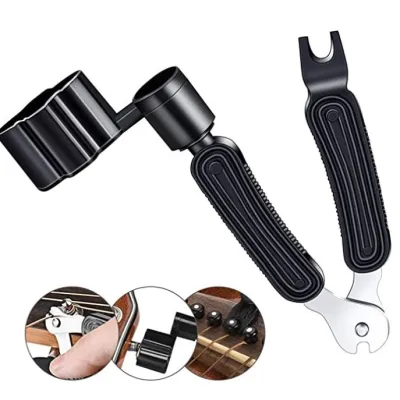
A string winder is the single greatest time-saving tool in any guitarist’s kit. Tuning pegs require multiple full rotations to bring a new string up to pitch or to completely slacken an old one before removal. Doing this manually with your fingers is tedious, physically tiring, and can put unnecessary lateral stress on the tuning peg shafts. A basic manual string winder features a molded plastic cup that fits over the tuning peg button, attached to a rotating handle. This design allows you to spin the peg rapidly and smoothly, reducing a five-minute chore to a matter of seconds. When choosing a winder, look for one with a notched cup that accommodates various peg sizes and a smooth, low-friction rotation mechanism that does not bind during use.
Products mentioned in this guide
![[SG FREE ]3 in 1 Versatile Guitar Winder String Cutter Pin Puller for Acoustic Electric Guitars Bass Mandolins Strings](https://img.lazcdn.com/g/p/669f2c051d8e5e7fa845a98f36d48219.jpg_400x400q80.jpg_.webp)

Prices are valid at publication and may change. Please refer to the product page for the latest price.
Wire cutters are absolutely non-negotiable for safety and neatness. Guitar strings are made of high-tensile steel, brass, or bronze, and once they are threaded through the tuning posts, the excess length must be trimmed. Leaving long, coiled strings dangling from your headstock is not just an aesthetic issue; those sharp metal ends can easily poke your eyes, scratch your face, or puncture your fingers during play or transport. A good pair of wire cutters should have a flush-cutting profile, allowing you to snip the string as close to the tuning post as possible. This eliminates sharp, protruding metal stubs that can snag on your gig bag lining or your clothing. Standard household scissors are completely inadequate for this task, as steel strings will instantly dent the blades and slip, creating a safety hazard.
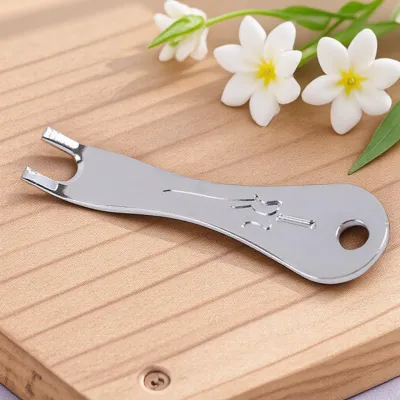
For steel-string acoustic guitarists, a bridge pin puller is an indispensable tool. Bridge pins wedge the ball ends of the strings tightly into the bridge plate inside the guitar body. Over time, string tension and humidity changes can cause these pins to become firmly stuck in their holes. Attempting to pry them out with household pliers, screwdrivers, or coins is a recipe for disaster, often resulting in chipped wooden bridges, gouged finishes, or snapped pin collars. A dedicated bridge pin puller features a curved, smooth notch that slides underneath the collar of the pin, allowing you to lift it straight upward using gentle, controlled leverage. This vertical lifting motion prevents damage to the delicate wooden bridge and ensures your pins remain reusable for years.
Optional Upgrades: What You Can Skip on Your First Purchase
When browsing music stores or online marketplaces, you will encounter a vast array of specialized cleaning solutions, fretboard conditioners, and polishing cloths. While keeping your instrument clean is important, beginners can safely skip these products initially. In humid tropical environments like Singapore, excessive application of oils and conditioners can actually oversaturate the wood of your fretboard, leading to loose frets or a sticky playing surface. For the first six to twelve months of playing, a simple, dry microfiber cloth is entirely sufficient. Wiping down the strings and the fretboard thoroughly after every practice session removes sweat, skin oils, and dust, preventing premature corrosion without the need for chemical additives.

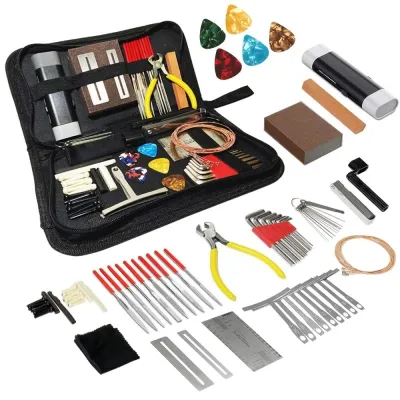
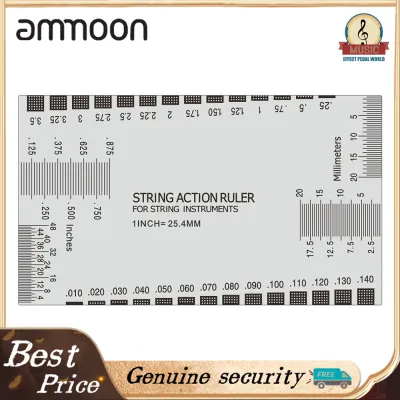
Advanced setup tools, such as string action gauges, under-string radius gauges, and nut files, should also be left off your shopping list. These tools are designed for adjusting the physical playability of the guitar, which involves filing down the nut slots, adjusting the truss rod, and setting the saddle height. Performing these adjustments requires precise measurements down to fractions of a millimeter and a deep understanding of guitar geometry. If a beginner attempts to file their own nut slots or adjust their saddle without experience, they risk permanently ruining the components, resulting in severe fret buzz or poor intonation. If your guitar feels difficult to play, it is far safer and more cost-effective to take it to a professional guitar technician for a proper setup.
Electronic clip-on tuners are highly popular, but you do not necessarily need to buy one immediately if you are on a tight budget. Free smartphone tuning applications are incredibly accurate and more than sufficient for practicing in a quiet room at home. However, if you plan to practice in noisy environments, tune up during group rehearsals, or play live, a dedicated clip-on tuner is a worthy upgrade. Unlike phone apps that rely on a microphone to pick up ambient sound, clip-on tuners detect the physical vibrations of the guitar wood directly through the headstock, allowing you to tune accurately even in a loud room. If you decide to purchase one, look for a simple model with a bright, clear display that is easy to read from a playing position.
Acoustic vs. Electric: Matching Tools to Your Guitar Type
The specific type of guitar you play dictates the exact variations of the tools you will need. If you play a steel-string acoustic guitar, your primary concern is the safe extraction of bridge pins, making a bridge pin puller mandatory. Additionally, some acoustic guitars feature slotted headstocks, where the tuning pegs point backward rather than outward. For these instruments, you must ensure your string winder has a compact cup that can spin freely within the tight confines of the headstock slots without scraping against the wood or adjacent pegs.
Electric guitars present a different set of hardware challenges. Many modern electric guitars feature locking tuners, which clamp the string inside the post and eliminate the need for multiple wraps. If your guitar has locking tuners, a string winder is actually optional, as you only need to pull the string taut, lock it, and tune up with minimal peg rotation. However, electric guitars often require small hex keys (Allen keys) to adjust the saddle heights or to lock the nut on guitars equipped with floating tremolo systems. If your electric guitar has a tremolo arm, you may also need a small wooden block or a specialized wedge to hold the bridge in place while changing strings, preventing the spring tension from pulling the bridge back into the body during the process.
Classical and nylon-string guitars require a completely different approach to maintenance. Nylon strings do not use bridge pins; instead, they are tied directly to the bridge block using specific knots. Consequently, classical players have absolutely no use for a bridge pin puller. Furthermore, the tuning pegs on classical guitars are significantly larger and wider than those on steel-string electric or acoustic guitars. If you play a classical guitar, you must verify that your string winder has an extra-wide cup designed specifically for classical rollers, as a standard steel-string winder will not fit over the large plastic pegs. Cutters are still necessary, but they must be sharp enough to slice cleanly through soft nylon without fraying the ends.
Multi-Tools vs. Dedicated Tools: Which Should You Choose?
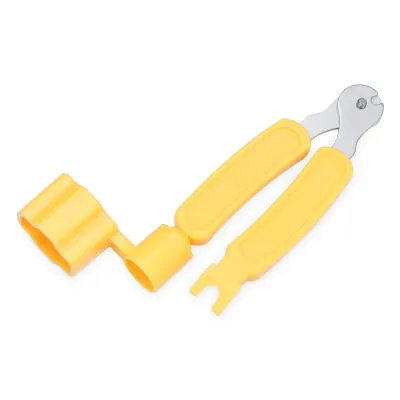
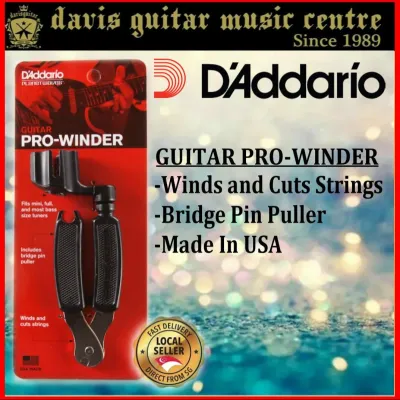
As you shop for your basic kit, you will frequently encounter 3-in-1 multi-tools that combine a string winder, a wire cutter, and a bridge pin puller into a single handheld gadget. These multi-tools are incredibly popular because they are highly portable, convenient, and cost-effective, often retailing for between S$8 and S$15. They fit easily into the accessory pocket of any gig bag, ensuring you have everything you need for an emergency string change at a rehearsal or performance. For beginners who want a clutter-free setup and a low initial investment, a decent multi-tool is an excellent starting point.
However, multi-tools do come with distinct trade-offs in terms of durability and ergonomics. Because they pack three functions into one small plastic frame, the individual components are often compromised. The built-in wire cutters on cheap multi-tools are frequently made of softer metal alloys that can dull or misalign after cutting only a few sets of heavy-gauge steel strings. Additionally, the short handles of a multi-tool do not offer the same physical leverage as a pair of dedicated, full-sized wire cutters, requiring more hand strength to make a clean cut. The plastic pivot joints can also wear out over time, causing the tool to feel loose or unstable during use.
Dedicated, single-purpose tools offer superior longevity, comfort, and performance. A standalone pair of high-quality diagonal cutters from a hardware store will cut through steel strings effortlessly for decades without dulling. A dedicated manual string winder with a solid wooden or heavy-duty plastic handle provides a much smoother spinning action and a more comfortable grip. If you plan to do all your guitar maintenance at a dedicated home desk or workstation, investing in separate, high-quality tools is the better long-term choice. For maximum versatility, many guitarists keep a robust set of dedicated tools at home and toss an inexpensive 3-in-1 multi-tool into their gig bag for travel.
Building a Budget-Friendly String Changing Kit
Building a reliable guitar maintenance kit does not require a large financial investment. In fact, you can easily assemble a highly functional kit for under S$20 by combining smart household repurposing with targeted purchases. Before buying anything, check your household toolbox. You may already own a pair of standard diagonal cutting pliers. As long as the cutting edges are clean, sharp, and free of rust, these pliers are perfectly safe to use for trimming guitar strings. Using tools you already own allows you to allocate your budget toward other essentials, like a high-quality set of replacement strings.
When prioritizing your immediate purchases, buy a basic manual string winder first. It is an incredibly cheap tool—often costing less than S$5—yet it provides the biggest boost in efficiency. If you play a steel-string acoustic, ensure the winder you buy has a integrated bridge pin puller notch molded into the cup. This single purchase covers two of your three essential needs for the price of a cup of coffee. You can easily postpone buying specialized cleaning kits, fretboard oils, or neck cradles for at least six months to a year, as these items are non-essential for basic string replacement.
When evaluating the build quality of budget tools in a shop or online, look for specific physical indicators of durability rather than relying on brand names. For plastic tools, inspect the molded seams; cheap, poorly made winders often have sharp plastic flashing left over from the manufacturing process, which can scratch your guitar’s tuning pegs or headstock finish. For metal tools like cutters, check the alignment of the cutting jaws by holding them up to the light while closed; there should be no visible gaps between the blades. Ensure the pivot joint moves smoothly without grinding, and opt for tools with comfortable rubberized grips to prevent slipping during use.
Frequently Asked Questions (FAQ)
Can I use regular household scissors to cut guitar strings?
No, you should never use regular household scissors to cut guitar strings. Guitar strings are made of hardened high-carbon steel, which is significantly harder than the metal used in standard scissor blades. Attempting to cut a steel string with scissors will instantly dent, dull, or chip the blades, ruining the scissors permanently. Furthermore, because scissors cannot grip the round profile of a high-tension string, the string is highly likely to slip during the cut, which can scratch your guitar’s headstock or cause the sharp metal wire to whip back and cut your fingers. Always use dedicated wire cutters or heavy-duty diagonal pliers designed for cutting metal wire.
Do I need a special tool to change strings on a classical guitar?
No, you do not need specialized tools to change strings on a classical guitar, and your tool requirements are actually simpler than those for a steel-string guitar. Classical guitars use nylon strings that tie directly to the bridge, meaning you have no need for a bridge pin puller. While a string winder is helpful, you must ensure it has an extra-wide cup to fit the larger plastic tuning rollers typical of classical headstocks. Standard wire cutters are still highly recommended to trim the excess nylon and copper-wound strings cleanly at both the headstock and the bridge, preventing loose ends from vibrating against the guitar top and causing unwanted buzzes.

Community discussion
Share your experience or ask a question. Comments are reviewed before publication.