
For a beginner guitarist, the most logical starting point when building a pedalboard is a foundational drive pedal, such as an overdrive or distortion. This allows you to shape your core tone and gain structure before introducing modulation or time-based effects. JOYO offers several highly accessible series, including the classic Vintage series and the modern R Series, which are well-suited for entry-level budgets. When selecting your first pedal, it is essential to match the effect type to your primary musical genre and the characteristics of your existing amplifier.
How to Choose Your First JOYO Pedals
Before purchasing any effects pedal, evaluate the capabilities of your current amplifier. Many modern practice amplifiers feature built-in digital effects, multiple channels, or basic amp modeling. If your amplifier already delivers a high-quality digital reverb or a built-in chorus that you enjoy, you do not need to purchase standalone pedals for those effects immediately. Instead, focus on what your amplifier lacks. For instance, if the built-in distortion sounds harsh or lacks sustain, a dedicated overdrive pedal can bridge that gap and provide a more responsive feel.
Your preferred musical style should dictate your pedalboard priorities. Different genres rely on specific effects to define their signature sounds. If you are drawn to blues, classic rock, or indie, a low-to-medium gain overdrive is indispensable for achieving that warm, slightly gritty edge. For metal or hard rock, a high-gain distortion pedal is a priority to deliver tight, heavy saturation. If you prefer ambient, dream pop, or shoegaze, time-based effects like delay and reverb, combined with a lush chorus, will form the foundation of your sonic palette.
Products mentioned in this guide
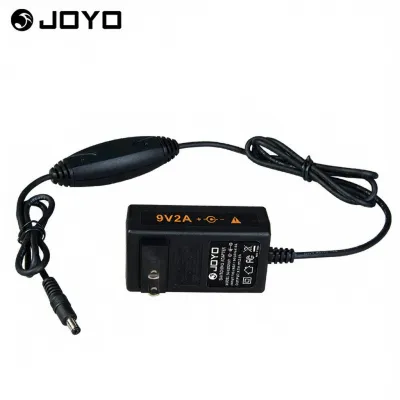
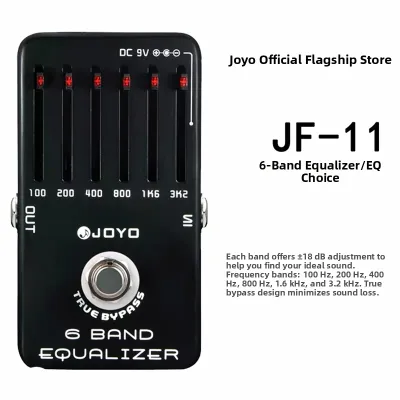
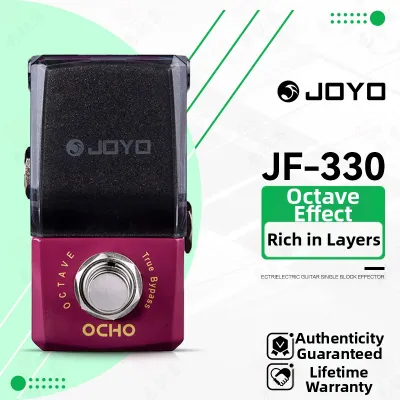
Prices are valid at publication and may change. Please refer to the product page for the latest price.
Physical space and your playing environment are also critical factors in your decision. In compact living spaces, such as typical apartments in Singapore, managing your gear footprint and practicing at lower volumes or through headphones is a common priority. JOYO produces pedals in various form factors, from standard-sized enclosures to ultra-compact mini pedals. If you are building a compact board to fit a small bedroom setup, mini pedals save valuable space. Additionally, local environmental factors like high humidity mean you should look for robust metal enclosures and quality jacks that resist oxidation over time.
Essential Effect Types and JOYO Options for Beginners
Building a versatile pedalboard requires understanding how different effects function and how they interact with your guitar signal. By focusing on the three core categories—drive, modulation, and time-based effects—you can systematically build a board that covers a wide range of musical styles.

Drive Pedals (Overdrive, Distortion, and Fuzz)
Drive pedals are designed to manipulate the gain of your signal, mimicking the natural clipping of a tube amplifier. Overdrive, distortion, and fuzz represent different stages of signal saturation. Overdrive mimics the natural, warm breakup of an amplifier pushed to its limits, responding dynamically to your playing dynamics and volume control. Distortion offers hard clipping, creating a consistent, highly saturated, and aggressive tone regardless of how hard you strike the strings. Fuzz pushes the signal into extreme saturation, resulting in a thick, buzzy, and often unpredictable vintage tone.
When exploring JOYO’s drive options, there are several popular models to investigate as starting points. For classic, mid-focused overdrive that helps your solos cut through a mix, the Vintage Overdrive is a widely used option. If you require a more versatile, high-gain drive with a thicker, more modern distortion profile, the Ultimate Drive is a strong candidate for research. For heavy metal styles requiring intense saturation and tight low-end response, the High Gain Distortion is a dedicated option to look into.
When researching these options, always check the manufacturer’s specifications for bypass type. True bypass pedals preserve your clean signal when the pedal is switched off, but a long chain of true bypass pedals can cause high-frequency signal loss. Buffered bypass pedals help preserve signal strength over long cable runs. Additionally, verify the input and output impedance to ensure compatibility with your guitar’s pickups and your amplifier’s input stage.
Modulation Pedals (Chorus, Phaser, and Flanger)
Modulation effects manipulate the pitch, phase, or timing of your guitar signal to introduce movement, depth, and texture. Chorus splits your signal, detunes one part slightly, and modulates it to create a lush, shimmering ensemble sound. Phasers and flangers use phase cancellation and comb filtering to produce sweeping, jet-like, or swirling textures that add dramatic movement to both clean chords and distorted solos.
For beginners looking to explore modulation, JOYO offers several straightforward categories. The Analog Chorus is a popular starting point for adding subtle warmth and width to clean tones without sounding overly digital. For classic, sweeping phase shifts, the Vintage Phaser is a simple, single-knob option that is exceptionally easy for beginners to dial in and experiment with.
Note that analog-style modulation pedals often have different power draw characteristics and noise sensitivities compared to digital ones. Always check the product label for the exact current draw. Analog pedals are generally sensitive to power supply noise, making clean, regulated power essential for keeping unwanted hum out of your signal chain.
Time-Based Pedals (Delay and Reverb)
Time-based effects create spatial depth and ambiance, preventing your guitar from sounding dry and flat. Delay records your input signal and plays it back after a set period, creating distinct, repeating echoes. Reverb simulates the acoustic reflections of a physical space, such as a room, hall, or spring tank, blending the repeats into a continuous, ambient wash. These effects are particularly useful when practicing in small, carpeted rooms that lack natural acoustic resonance.
When researching JOYO’s digital delay and reverb formats, look for models that offer clear, intuitive controls. The Digital Delay offers clean, precise repeats suitable for modern rhythmic styles. For spatial depth, research their dedicated reverb pedals that offer multiple emulations, such as spring, plate, or hall reverb, allowing you to match the ambiance to your playing style.
As you compare models, check for advanced features that can enhance usability. Tap tempo functionality allows you to set the delay time by tapping a foot switch in time with the music, which is highly beneficial for live playing. Additionally, look for stereo outputs if you plan to run a dual-amplifier setup, and check if the pedal has preset saving capabilities if you need to switch between different ambient settings quickly.
Power, Routing, and Pedalboard Setup Basics
Once you have selected your first few pedals, powering and connecting them correctly is vital for safety, signal clarity, and noise reduction.
Almost all JOYO pedals utilize the industry-standard 9V DC center-negative power configuration. However, never assume compatibility. Using an incorrect voltage, such as 12V or 18V on a pedal designed only for 9V, or using a center-positive adapter, can permanently damage the internal circuitry. Always verify the power requirements printed directly on the pedal’s casing or in the official user manual before plugging it in.
To power multiple pedals, you must choose between a daisy chain cable and an isolated power supply. A daisy chain splits power from a single adapter to multiple pedals. While cost-effective for a simple two-pedal setup, daisy chaining often introduces unwanted hum and digital clock noise, especially when mixing analog drive pedals with digital delay or reverb pedals. Upgrading to an isolated power supply ensures each pedal receives clean, independent power, eliminating ground loops and significantly reducing background noise.
While there are no absolute rules for signal chain order, following the standard convention ensures optimal performance and clarity. Place your guitar first, followed by utility pedals like tuners. Next, place your drive pedals (overdrive, distortion, fuzz), followed by modulation pedals (chorus, phaser, flanger). Finally, place time-based effects (delay, reverb) at the end of the chain. This order ensures that your modulated and delayed signals remain clean and defined, rather than being distorted and muddied by a high-gain drive pedal.
Use high-quality, shielded patch cables to connect your pedals. Keep the cable runs as short as possible to minimize signal degradation and high-frequency loss. Properly securing your cables with cable ties or clips prevents accidental disconnections during practice and keeps your pedalboard neat, reliable, and easy to troubleshoot.
Pre-Purchase Checklist for JOYO Pedals
Before finalizing your purchase, use this checklist to ensure your selected pedals meet your specific hardware and usage requirements:
- Verify the exact model number and series: JOYO frequently updates its product lines, releasing upgraded versions or different series (such as the Ironman, R Series, or classic series) that may feature different circuit designs, enclosure sizes, or control layouts.
- Check physical dimensions: Measure your available pedalboard space. Ensure the physical footprint, including the placement of the input/output jacks (top-mounted versus side-mounted), fits your layout.
- Confirm power draw (mA): Check the manufacturer's label for the exact milliamp draw. Ensure your power supply has a matching outlet that can deliver at least this amount of current.
- Review warranty and return policies: Purchase only from authorized local retailers or reputable online marketplaces to ensure you receive a genuine product covered by a valid manufacturer's warranty.
Frequently Asked Questions (FAQ)
Do JOYO pedals work well with solid-state and modeling amps?
Yes, drive pedals can add excellent character and warmth to solid-state amplifiers. However, the final sound depends heavily on the amplifier’s clean headroom. If a solid-state amp is pushed too hard, its clean channel may clip in an unpleasant, harsh manner. When using modeling amplifiers, digital simulations of tube amps may react differently to external input gain. It is highly recommended to test the pedal with your specific modeling amp model, adjusting the amp’s input sensitivity or gain settings to find the most natural-sounding balance.
What power supply do I need for multiple JOYO pedals?
To determine your power needs, sum the milliamp (mA) draw of every pedal you plan to connect. This information is typically found on the product label or the official specification sheet. Once you have the total, select a power supply with a total mA capacity that is at least 20% to 30% higher than your calculated total. This safety margin ensures stable operation, prevents voltage sags, and accommodates future pedal additions without overloading the power supply.
Community discussion
Share your experience or ask a question. Comments are reviewed before publication.