
Maintaining your first guitar does not require a massive collection of specialized chemicals or expensive workshop tools. As a beginner, your primary goal is to protect your instrument from daily wear, sweat, and environmental changes while keeping it comfortable to play. Focusing on a few essential care products will save you money and prevent you from accidentally damaging your guitar’s delicate surfaces.
By understanding your guitar’s specific materials and establishing a simple, consistent cleaning routine, you can keep your instrument in peak condition. Music Nomad offers a wide range of care products, but only a handful are truly necessary for a beginner. Selecting the right essentials depends entirely on your guitar’s finish, fretboard wood, and how often you practice.
Core Guitar Maintenance Needs for Beginners
Before purchasing any care products, you must identify the materials used to build your guitar. The two most critical areas to inspect are the body finish and the fretboard wood, as using an incompatible product can permanently alter or damage these surfaces. Taking a few minutes to study your instrument’s specifications will guide your purchasing decisions.
Products mentioned in this guide

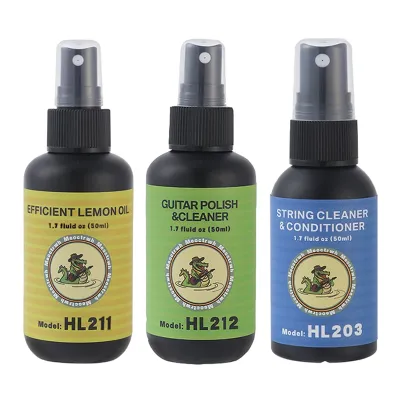
Prices are valid at publication and may change. Please refer to the product page for the latest price.
Most beginner guitars feature either a high-gloss finish, which is shiny and highly reflective, or a matte, satin, or open-pore finish, which has a dull, non-reflective texture. Gloss finishes can handle standard polishes that restore shine, whereas matte finishes require specialized detailers to avoid creating unwanted, uneven shiny patches. Applying a gloss polish to a matte guitar can permanently ruin its flat aesthetic.
Next, look closely at your fretboard wood. Unfinished dark woods like rosewood, ebony, or laurel are porous and require periodic hydration to prevent drying and cracking. In contrast, maple fretboards are usually sealed with a hard, glossy, or satin lacquer that blocks moisture, meaning they do not need deep-penetrating conditioning oils.
Establishing a basic routine early prevents costly repairs down the road. This routine should center on three simple tasks: wiping down the strings after every practice session, cleaning sweat and oils off the body, and hydrating the fretboard during occasional string changes. Keeping these tasks simple ensures you will actually stick to them.
Neglecting these basic steps leads to clear warning signs that dictate immediate product needs. You might notice your strings turning dark, feeling rough, and losing their bright tone, which accelerates fret wear. A dry fretboard will look pale or ash-grey, and in severe cases, the wood may shrink, causing the metal fret ends to stick out and feel sharp to the touch.
Essential Music Nomad Product Categories to Prioritize
When navigating the extensive Music Nomad catalog, beginners should focus on products that address immediate wear and tear. The most vulnerable parts of any guitar are the strings, which constantly interact with the natural oils, sweat, and acids from your fingertips. Protecting these components should be your first priority.

String and Fret Cleaners
A dedicated string cleaner and lubricant is one of the most cost-effective purchases a beginner can make. These products are designed to remove dirt, sweat, and oxidation while leaving a microscopic protective barrier on the metal. This barrier slows down the corrosion process, allowing your strings to sound better and last significantly longer.
Using a string lubricant also reduces finger squeak—the sliding noise made when moving your hand along the fretboard. This makes playing feel smoother and more comfortable, which is highly encouraging for those just starting out. It allows your fingers to glide effortlessly, reducing friction and hand fatigue during long practice sessions.
When selecting a string cleaner, verify that the applicator and formula are safe for your guitar’s hardware and finish. Some formulas can react negatively with specific plating or plastic parts, so reading the manufacturer’s instructions is essential to avoid tarnishing your bridge or pickups. Music Nomad designs its string care products with user-friendly applicators that minimize the risk of messy runs or overspray.
Fretboard Oils and Conditioners
Fretboard maintenance requires a clear understanding of the difference between cleaning and conditioning. Cleaners are formulated to dissolve stubborn grime and finger gunk, while conditioners or oils penetrate the wood fibers to restore lost moisture. For most beginners, a single product that safely conditions the wood is all that is needed.
Music Nomad offers specialized fretboard oils, such as their popular F-ONE oil, which uses natural oils to condition unfinished wood without using harmful petroleum or silicone. Before applying any oil, check the product label to ensure it is compatible with your fretboard material. Unfinished rosewood, ebony, and laurel are ideal candidates for this type of conditioning.
Never apply penetrating oils to finished or lacquered fretboards, such as gloss maple. Because the lacquer seals the wood completely, the oil cannot sink in; instead, it will sit on top of the finish, creating a sticky, slippery mess that attracts dirt and ruins playability. For these necks, a simple wipe with a damp cloth is much safer.
Body Polishes and Detailers
Keeping the guitar body clean is about protecting the finish from sweat, dust, and smudges. For daily maintenance, a simple detailer spray is usually sufficient to lift away fingerprints without leaving a heavy buildup. Detailers are designed for quick cleanups after a practice session and do not require intense buffing.
If your guitar has a standard high-gloss clear coat, you can occasionally use a gentle polish to restore its shine and remove fine haze. However, you must avoid abrasive polishing compounds, which are designed to scratch away fine imperfections but can easily wear down thin modern finishes if used incorrectly. Use polish sparingly—no more than a few times a year.
For matte, satin, or open-pore finishes, standard polishes are highly detrimental. They contain glossing agents that will unevenly polish the matte surface, leaving permanent, unsightly shiny spots. Always choose a dedicated matte detailer for these instruments, as these formulas clean the surface without adding any unwanted shine.
Evaluating All-in-One Kits vs. Individual Bottles
Many beginners are drawn to all-in-one care kits because they seem to offer a complete solution at a lower upfront price. While these bundles can be highly convenient, it is important to evaluate whether you will actually use every item included. Often, kits contain specialized polishes or metal cleaners that do not match your guitar’s specific finish or hardware.
Compare the cost of the kit against the price of buying only the two or three individual bottles you need right away. If a kit includes products you cannot use—such as a gloss polish for a matte-finished guitar—buying individual bottles is often more economical. This approach ensures you only pay for formulas that are safe and effective for your specific instrument.
Additionally, check the physical size of the bottles included in the kits. Some bundles feature miniature or travel-sized containers that run out quickly, whereas purchasing individual full-sized bottles may provide a much better long-term value. Buying full-sized bottles of just the essentials ensures you have a steady supply that lasts for years of routine maintenance.
Music Nomad Tools and Accessories to Delay Buying
As you browse music stores or online marketplaces, you will encounter a wide array of specialized guitar tech tools. While these items look professional, beginners should delay purchasing them until they have mastered basic playing and routine care. Investing in advanced tools too early can lead to unnecessary expenses and potential instrument damage.
Tools such as fret files, crowning files, and nut slotting files are designed for advanced lutherie work. Attempting to adjust your frets or cut your nut slots without professional training carries a high risk of causing irreversible damage to your instrument. A single slip can ruin a fret or cause string buzz, resulting in expensive repair bills at a local workshop.
Similarly, advanced setup tools like specialized radius gauges, precision notched straight edges, and digital neck relief gauges are unnecessary for a beginner. Basic setup adjustments, such as checking your string height or neck relief, can be performed accurately using standard metal rulers and inexpensive automotive feeler gauges. You do not need high-end tech gear to perform basic checks.
Humidification systems are another category where beginners must evaluate their actual environmental needs. In Singapore’s tropical climate, the ambient relative humidity is consistently high, often hovering around 70% to 80% or more indoors. This is significantly higher than the ideal 45% to 55% range recommended for acoustic guitars.
Because of this high humidity, acoustic guitars in Singapore rarely suffer from dry wood issues; instead, they are more susceptible to over-hydration, which can cause wood swelling, high action, and glue failure. Therefore, buying a standard soundhole humidifier designed to add moisture is unnecessary and potentially harmful. Instead, focus on keeping your guitar in a dry, air-conditioned room or using dehumidifying silica packs inside your hard case.
Building a Budget-Friendly Starter Care Routine
To keep your maintenance costs low, you should build a highly targeted starter kit that focuses on prevention rather than restoration. The absolute foundation of this routine is a high-quality, lint-free microfiber cloth. This single tool, used consistently, does more to protect your guitar than any chemical formula.
Begin your routine by prioritizing a microfiber cloth and a reliable string cleaner. Wiping down your strings and the back of the neck immediately after every playing session takes less than a minute but prevents sweat from corroding the metal and grime from building up on the wood. This simple habit can double or triple the lifespan of your strings.
Before applying any liquid product, always read the label carefully to check for material restrictions. Pay close attention to warnings regarding unfinished woods, vintage nitrocellulose finishes, or specific hardware platings like gold, which can be incredibly delicate. Taking thirty seconds to read the bottle prevents costly cosmetic mistakes.
Establish a realistic, low-effort maintenance schedule that fits your lifestyle. For example, make it a habit to wipe your strings after every play, clean the guitar body with a dry cloth once a week, and reserve deep cleaning and fretboard oiling for when you change your strings—typically every three to six months. This structured approach keeps your guitar playing beautifully without taking up too much of your practice time.
Frequently Asked Questions (FAQ)
Can I use Music Nomad fretboard oil on a maple neck?
Most maple necks and fretboards are sealed with a hard gloss or satin lacquer finish. Because this finish acts as a barrier, penetrating fretboard oils like Music Nomad F-ONE cannot soak into the wood and will only leave a greasy, slippery residue on the surface. Always check your guitar’s specifications or product label to confirm if the wood is finished. For finished maple, a simple wipe down with a damp microfiber cloth or a standard body detailer is all that is required to keep it clean.
How often should I apply string lubricant?
For the best results, apply a small amount of string lubricant after every playing session. This helps displace the moisture, sweat, and skin oils left behind by your fingers before they can cause corrosion. Keep in mind that your personal body chemistry and how much your hands sweat will influence how quickly your strings degrade. After applying any lubricant, always use a clean cloth to wipe off any excess liquid to prevent it from pooling on the fretboard wood.
Do I need a separate polish for matte and gloss finishes?
Yes, you must use different products for matte and gloss finishes to avoid ruining the appearance of your guitar. Gloss polishes contain fine abrasives and glossing agents designed to create a high-shine, reflective surface. If you apply these to a matte or satin finish, they will create uneven, shiny patches that ruin the uniform flat look of the instrument. Always verify your guitar’s finish type and select a dedicated matte detailer, or perform a small spot test in an inconspicuous area if you are unsure.

Community discussion
Share your experience or ask a question. Comments are reviewed before publication.