
Starting a career in Singapore is an exciting but demanding milestone. Transitioning from a highly structured academic environment to the dynamic corporate landscape of hubs like the Central Business District (CBD) or One-North requires a rapid shift in mindset, communication, and personal organization. While formal education provides technical expertise, navigating interpersonal dynamics, managing personal finances, and protecting mental well-being are practical skills often learned through trial and error.
Reading self-improvement books can significantly accelerate this learning curve. By studying the experiences and frameworks of established experts, you can avoid common early-career pitfalls and build a solid foundation for long-term professional growth. This guide highlights the most impactful non-fiction titles tailored to the unique challenges faced by early-career professionals in Singapore, helping you select the right resources for your current developmental needs.
How to Select Self-Improvement Books for Your Early Career Stage
Young professionals in Singapore face unique structural challenges. The local corporate landscape often blends multinational corporate structures with traditional hierarchical management styles. This environment demands high productivity, rapid adaptation to digital tools, and the ability to manage up effectively. Additionally, starting salaries must be balanced against a high cost of living, making early financial planning critical.
Products mentioned in this guide
![[ebook]The psychology of money timeless lessons on wealth greed and happiness](https://img.lazcdn.com/g/p/f752eab35a2a39baa00c02d1b44b7298.jpg_400x400q80.jpg_.webp)
Prices are valid at publication and may change. Please refer to the product page for the latest price.
To avoid the trap of reading generic advice that does not translate into action, you must align your reading choices with your immediate career pain points. Begin by assessing your current daily struggles. Are you finding it difficult to voice your opinions in team meetings, or are you struggling to stay focused amidst constant email notifications? Are you anxious about how to allocate your salary after CPF deductions? Identifying these specific bottlenecks allows you to select books that offer targeted solutions rather than generic inspiration.
Furthermore, pay close attention to publication dates and book editions. The workplace has evolved rapidly over recent years, with hybrid work arrangements and digital collaboration tools becoming standard across Singaporean industries. A book written two decades ago may offer timeless psychological insights but fail to address the nuances of managing professional relationships over video calls or setting boundaries when working from home. Look for revised editions that account for these modern workplace shifts.
Best Books for Workplace Communication and Productivity
Mastering Interpersonal Dynamics and Influence
In Singapore’s multicultural corporate environment, you will regularly collaborate with colleagues from diverse backgrounds and age groups. Navigating these relationships requires a high degree of tact. Crucial Conversations: Tools for Talking When Stakes Are High (by Joseph Grenny, Kerry Patterson, Ron McMillan, Al Switzler, and Emily Gregory) provides a structured framework for expressing tough opinions without causing defensiveness, aligning project goals, and resolving conflicts constructively. It is highly valuable for high-stakes situations such as performance reviews or alignment meetings.

However, many communication frameworks in Western literature advocate for highly direct, assertive dialogue. In Singapore and broader Asian business cultures, hierarchy, saving face, and indirect communication often play a significant role in workplace dynamics. When applying the tools from Crucial Conversations, you must balance directness with professional diplomacy, ensuring your feedback is constructive and respects organizational structures.
Optimizing Focus and Daily Productivity
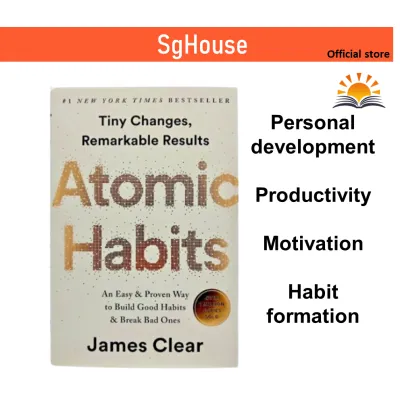
The fast-paced nature of Singapore’s working culture can easily lead to reactive work patterns, where your day is dictated by urgent emails and back-to-back meetings. Atomic Habits: An Easy & Proven Way to Build Good Habits & Break Bad Ones by James Clear offers practical strategies like habit-stacking and environment design to build highly productive daily routines. For instance, you can stack a learning habit onto your daily MRT commute or design your workspace to minimize smartphone distractions.
This book is exceptionally beneficial for knowledge workers, project managers, and creative professionals who must protect their focus to produce high-quality work. By focusing on systems rather than raw willpower, you can establish sustainable work habits that persist even during demanding project cycles.
Top Books for Financial Literacy and Wealth Building
Building a Resilient Money Mindset
Entering the workforce in Singapore often brings a sudden influx of disposable income, which can easily be swallowed by lifestyle inflation. The pressure to match the spending habits of peers—whether through upscale dining, high-end electronics, or luxury holidays—is intensified by social media. The Psychology of Money: Timeless Lessons on Wealth, Greed, and Happiness by Morgan Housel helps you decouple your self-worth from material displays of wealth, emphasizing that true financial freedom is the ability to control your time.
The behavioral principles discussed in the book—such as understanding the compounding effect of early savings, managing greed, and defining your own financial goals—are universal. They provide a solid psychological foundation that protects you from making impulsive financial decisions, regardless of your starting salary.
Practical Wealth and Investment Foundations
For practical wealth accumulation, The Simple Path to Wealth: Your Road Map to Financial Independence and a Rich, Free Life by JL Collins offers a straightforward philosophy centered on low-cost, broad-market index fund investing. The book demystifies complex financial products and advocates for a highly automated, hands-off approach to growing your wealth over time.
It is vital to recognize that The Simple Path to Wealth is written primarily for a US audience, focusing on financial instruments like 401(k) plans, Roth IRAs, and specific US mutual funds. As a professional in Singapore, you must translate these concepts to the local landscape. Your primary retirement safety net is the Central Provident Fund (CPF), specifically your Ordinary Account (OA) and Special Account (SA), alongside the Supplementary Retirement Scheme (SRS) for tax relief. Additionally, local investors typically utilize low-cost global brokerage accounts to invest in Irish-domiciled exchange-traded funds (ETFs) to optimize tax efficiency. Use this book to master the core philosophy of passive, long-term investing, but rely on local financial resources to select the specific brokerages and investment vehicles appropriate for Singapore’s regulatory environment.
Essential Reads for Mindset, Resilience, and Burnout Prevention
Cultivating a Growth Mindset
Singapore’s highly structured education system often rewards academic perfection, which can inadvertently foster a fixed mindset where failure is viewed as a definitive measure of intelligence. When you transition to the corporate world, you will inevitably face ambiguous tasks, project setbacks, and constructive criticism. Mindset: The New Psychology of Success by Carol S. Dweck teaches you to reframe these challenges as opportunities for skill development rather than personal failures, helping you build the resilience needed to bounce back from early-career mistakes.
Managing Stress and Setting Boundaries
In a high-performance market like Singapore, young professionals often fall into the trap of “presenteeism” or saying yes to every request in an effort to prove their worth. This approach quickly leads to burnout and mediocre performance across too many tasks. Essentialism: The Disciplined Pursuit of Less by Greg McKeown provides the framework to distinguish high-impact responsibilities from administrative noise, giving you the tools to negotiate priorities with your manager and establish clear boundaries between your professional and personal life.
Quick Comparison of Recommended Self-Improvement Books
| Book Title | Core Focus | Best For (Target Scenario) | Key Limitation / Adaptation Needed |
|---|---|---|---|
| Crucial Conversations | Interpersonal communication and conflict resolution | Navigating difficult discussions with managers and peers | Must adapt direct communication styles to fit Asian corporate hierarchies |
| Atomic Habits | Habit formation and daily systems | Building consistent routines and eliminating distractions | Requires self-discipline to maintain systems during intense work periods |
| The Psychology of Money | Behavioral finance and money psychology | Overcoming lifestyle inflation and peer pressure | Focuses on behavioral principles rather than step-by-step investment guides |
| The Simple Path to Wealth | Index fund investing and financial independence | Building a long-term, automated investment portfolio | US-centric tax and account advice; must map to Singapore's CPF and SRS |
| Mindset | Growth vs. fixed mindset | Overcoming fear of failure and accepting constructive feedback | Highly conceptual; requires conscious effort to translate into daily habits |
| Essentialism | Prioritization and workload management | Preventing burnout and setting professional boundaries | Can be difficult to apply in highly rigid or micromanaged work environments |
What to Verify Before Purchasing and Where to Buy
Before purchasing any self-improvement books, it is highly recommended to run through a quick pre-purchase checklist to ensure you get the most suitable version:
- Edition and Publication Date: Ensure you are purchasing the most recent edition, which often contains updated case studies or chapters addressing digital-age challenges.
- Format and Compatibility: Verify whether you prefer a physical paperback, an e-book (checking file formats like EPUB or proprietary formats for e-readers), or an audiobook. For digital formats, check regional compatibility, as some audiobook or e-book platforms restrict content based on your Singapore billing address or account region.
- Language and Translation: Ensure you are buying the original language edition or an authorized, high-quality translation.
You can purchase physical copies of these books from established local brick-and-mortar bookstores, such as Books Kinokuniya or Popular. For digital formats, official publisher storefronts and authorized global e-book platforms are reliable options. Alternatively, the National Library Board (NLB) Singapore offers an extensive digital catalog of e-books and audiobooks accessible via the Libby application, allowing you to borrow these titles for free.
Frequently Asked Questions (FAQ)
Are audiobooks as effective as physical books for career learning?
Audiobooks are highly effective for maximizing productivity during passive activities, such as your daily MRT commute or workouts. They allow you to absorb broad concepts and maintain a steady reading habit. However, for non-fiction books that contain complex frameworks, financial tables, or step-by-step exercises, physical books or e-books are generally superior. They allow you to easily highlight key passages, write notes in the margins, and quickly flip back to reference specific charts when implementing the advice in your daily work.
How many self-improvement books should I read at once?
It is highly recommended to focus on one self-improvement book at a time. Reading multiple books simultaneously often leads to information overload, making it difficult to retain and apply the strategies. The value of a self-help book lies entirely in its implementation, not just its consumption. Dedicate yourself to finishing one book, select two or three actionable takeaways to integrate into your professional life, and practice them for a few weeks before moving on to the next title.
Community discussion
Share your experience or ask a question. Comments are reviewed before publication.