
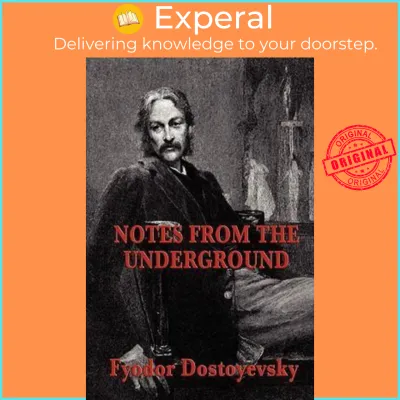
Fyodor Dostoevsky’s Notes from Underground, published in 1864, remains a towering monument of psychological realism and philosophical defiance. At its center is the unnamed narrator, the Underground Man, who lives in a self-imposed psychological and physical exile from St. Petersburg society. This character introduced a radical literary archetype: the hyper-conscious, deeply alienated individual who rejects the comfortable illusions of rationalism, progress, and societal conformity. For readers who have journeyed through this dense, claustrophobic masterpiece, the search for comparable literature leads to works that replicate its intense internal monologue, its ontological dread, and its refusal to offer easy moral resolutions. This literary lineage is not confined to 19th-century Europe; it extends across the globe and manifests in modern contexts, including the hyper-dense, highly structured urban landscape of contemporary Singapore. By examining both international classics and modern Singaporean fiction, readers can explore how different writers translate the agony of the fractured psyche into diverse cultural environments.
The Existential Blueprint: Selection Criteria for Psychological Depth
To identify novels that share the literary DNA of Notes from Underground, it is essential to define the specific narrative and philosophical elements that characterize Dostoevsky’s work. The first and most prominent trait is the hyper-conscious, highly unreliable narrator. The Underground Man is a figure paralyzed by his own intellect; his excessive self-reflection prevents him from taking meaningful action, leading to a state of perpetual inertia and spite. This narrator does not speak to guide the reader through a structured plot, but rather to wage an intellectual war against himself and his audience, constantly correcting, contradicting, and undermining his own assertions.
Another critical element is the profound alienation from society and the subsequent rejection of pure rationalism. In Dostoevsky’s era, this was symbolized by his critique of the ‘Crystal Palace’—a contemporary architectural marvel that represented scientific determinism, utilitarianism, and the belief that human behavior could be perfectly calculated and optimized. The Underground Man rejects this utopian vision, arguing that humans are inherently irrational and will actively sabotage their own well-being simply to assert their individual free will. Any novel matching this depth must feature a protagonist who stands in direct opposition to the prevailing socio-economic dogmas of their time, choosing self-destructive autonomy over compliant comfort.
Products mentioned in this guide






Prices are valid at publication and may change. Please refer to the product page for the latest price.
Consequently, the selection criteria for books in this category focus on high psychological intensity, philosophical questioning of societal norms, and a narrative structure dominated by internal monologue or a fractured psyche. These works are character-driven, introspective, and emotionally demanding. They are designed for readers who seek to confront the darker, more complex facets of human nature, prioritizing deep thematic exploration over rapid plot progression.
Global Voices: International Novels Matching Dostoevsky’s Intensity
The Absurdist and Nihilist Classics
The immediate philosophical successors to Dostoevsky’s masterpiece emerged in mid-20th century Europe, where writers grappled with the aftermath of global conflict and the apparent meaninglessness of existence. Albert Camus’ The Stranger (L’Étranger) offers a compelling counterpoint to the Underground Man’s hyper-emotional spite. Camus’ protagonist, Meursault, experiences a profound detachment from the world around him. Where the Underground Man is consumed by a feverish, obsessive need to analyze every social interaction, Meursault is characterized by a flat, passive indifference to societal expectations. Yet, both characters occupy the same existential territory: they refuse to perform the emotional rituals demanded by society. Meursault’s refusal to lie about his feelings or conform to conventional grief over his mother’s death ultimately leads to his condemnation by a court of law, mirroring the Underground Man’s insistence on his own painful truth over comfortable social lies.

Jean-Paul Sartre’s Nausea (La Nausée) moves even closer to the diary-like, confessional structure of Notes from Underground. The protagonist, Antoine Roquentin, is an isolated historian living in a dull French port town, who begins to experience a visceral, physical sickness—the ‘nausea’—whenever he confronts the raw, indifferent existence of physical objects and his own body. This sensation is the physical manifestation of ontological dread, the sudden and terrifying realization that existence precedes essence and that the universe is entirely devoid of inherent meaning. Roquentin’s intellectual paralysis and his obsessive recording of his daily thoughts in a journal directly echo the Underground Man’s desperate attempt to write his way through his isolation. Both novels explore the agonizing weight of absolute freedom and the psychological toll of recognizing the arbitrary nature of human institutions.
Modern Psychological and Fractured Narratives
In the late 20th and early 21st centuries, the themes of social invisibility and psychological withdrawal were updated to reflect modern systemic pressures. Ralph Ellison’s Invisible Man stands as a brilliant, direct response to Dostoevsky’s structural framework. Ellison’s unnamed African American protagonist begins his narrative from a literal underground coal cellar, illuminated by 1,369 light bulbs powered by electricity stolen from the municipal grid. This physical setting is a conscious homage to the Underground Man’s basement. However, Ellison reframes the source of this isolation: the protagonist is invisible not because of a personal psychological defect, but because the racially prejudiced society around him refuses to see him as a complete human being. The novel traces his journey through various social systems that attempt to define and exploit him, culminating in his retreat to the underground to process his experiences and prepare for future action.
For a contemporary exploration of extreme psychological withdrawal, Ottessa Moshfegh’s My Year of Rest and Relaxation translates the Underground Man’s spiteful inertia into pre-9/11 New York City. The unnamed narrator, a young, wealthy, and conventionally attractive woman, decides to spend an entire year asleep, using an escalating cocktail of prescription medications to induce a state of near-constant somnolence. Her self-imposed chemical exile is a radical, self-destructive rejection of contemporary consumer culture, superficial relationships, and the relentless societal demand for productivity and self-improvement. Moshfegh’s narrator possesses the same biting misanthropy and underlying grief that define Dostoevsky’s protagonist. Readers should note that both Invisible Man and My Year of Rest and Relaxation contain heavy psychological themes, depictions of systemic injustice, and deeply unlikable protagonists, making them challenging but profoundly rewarding reading experiences.
Singaporean Perspectives: Alienation and Identity in Local Fiction
In a highly organized, achievement-oriented city-state like Singapore, existential alienation takes on a unique and compelling form. The ‘underground’ here is rarely a literal basement or a dark, neglected alley; instead, it is a psychological space carved out within pristine, high-rise public housing estates and competitive corporate environments. Singaporean authors frequently explore the profound friction between the collective national narrative of rapid development, material success, and social harmony, and the silent, isolating reality of personal displacement. By examining characters who cannot or will not conform to these structured expectations, local literature provides a powerful parallel to Dostoevsky’s exploration of the marginalized individual.
Urban Isolation and the HDB Experience
The physical landscape of Singapore, dominated by high-rise Housing & Development Board (HDB) flats, serves as a rich backdrop for exploring the paradox of urban isolation. In his acclaimed short story collection Corridor, published by Ethos Books, Alfian Sa’at masterfully exposes the quiet desperation that can exist within these densely populated spaces. The HDB corridor, a shared public walkway that connects individual domestic lives, becomes a site of intense psychological tension.
The characters in Corridor navigate an environment where they are physically closer to their neighbors than ever before, yet existentially miles apart. A lonely housewife, a disillusioned student, or a marginalized youth—each character experiences a form of isolation that is amplified by the sheer density of their surroundings. The physical architecture of the high-rise estate, with its uniform blocks and shared spaces, creates an atmosphere where individuals feel constantly observed yet entirely misunderstood. This mirrors the Underground Man’s acute self-consciousness; he is hyper-aware of the eyes of St. Petersburg society, just as Alfian Sa’at’s characters are acutely aware of the unspoken social surveillance of the heartland community. The tragedy in these stories lies in the inability to bridge the gap between the private self and the public persona, highlighting the profound loneliness that can fester in a highly connected city.
Meritocracy, Pressure, and Inner Turmoil
Singapore’s highly competitive meritocratic system, while driving economic success, also generates significant psychological friction for those who fall outside its rigid definitions of achievement. Sebastian Sim’s novel Let’s Give It Up for Gimme Lao!, published by Epigram Books, utilizes dark, satirical humor to dissect the consequences of this intense societal pressure. The protagonist, Gimme Lao, is a hyper-conscious individual whose life is defined by a relentless pursuit of the ‘Singaporean Dream’—academic credentials, corporate status, and material wealth.
However, Gimme’s journey is marked by a deep-seated internal rebellion. His inner monologue reveals a cynical awareness of the performative nature of his achievements, creating a localized version of the ‘spite’ that drives the Underground Man. The friction between what is expected of him by his family and country, and his own chaotic, flawed desires, leads to a state of perpetual psychological turmoil. Sim uses this satirical lens to critique the systemic pressures of conformism, demonstrating how the relentless pursuit of external validation can hollow out an individual’s sense of self.
Similarly, Claire Tham’s The Inlet, published by Ethos Books, explores the fractured psyches of characters who exist on the margins of Singapore’s affluent society. Following the mysterious drowning of a young woman in a private swimming pool, the novel unpeels the layers of alienation, class division, and existential emptiness felt by those who are disillusioned by the nation’s rapid material progress. Tham’s characters grapple with a profound sense of displacement, unable to find meaning in a society that prioritizes economic utility above all else. This thematic focus directly aligns with Dostoevsky’s critique of utilitarianism, showing that when human lives are reduced to mere economic calculations, the individual spirit inevitably retreats into its own underground of despair and rebellion.
Choosing the Right Edition and Format for Your Reading Journey
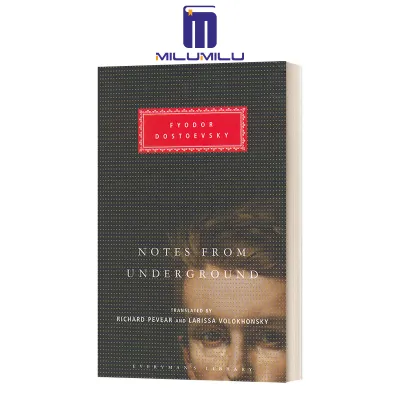
For readers seeking to fully engage with these complex existential narratives, careful consideration of translations, editions, and formats is essential. When approaching Notes from Underground itself, the choice of translation significantly shapes the reading experience. The translation by Richard Pevear and Larissa Volokhonsky is widely praised by literary scholars for preserving Dostoevsky’s erratic, abrasive, and highly nervous prose style. They capture the raw, unpolished energy of the original Russian text, allowing the Underground Man’s voice to sound as jagged and contradictory as Dostoevsky intended. In contrast, older translations, such as the classic public domain version by Constance Garnett, tend to smooth over these stylistic eccentricities, presenting a more conventional, Victorian literary style that can dilute the narrator’s psychological intensity. Michael R. Katz’s translation offers another excellent alternative, balancing modern readability with the frantic, conversational rhythm of the protagonist’s monologue.
Before purchasing any translated work, readers should verify the specific edition, translator, and format. It is highly recommended to check for content completeness and authorized publishing sources to ensure a high-quality reading experience. While digital formats like e-readers offer convenient portability and adjustable typography—ideal for carrying dense philosophical texts during daily commutes on the MRT—many readers find that physical paperbacks are superior for absorbing complex literature. A physical book allows for active reading practices, such as underlining key passages, writing annotations in the margins, and easily flipping back and forth to trace intricate philosophical arguments.
For those interested in exploring the Singaporean titles discussed, supporting the local literary ecosystem is highly beneficial. While major international classics are easily found in global distribution networks, local works published by independent houses like Ethos Books and Epigram Books are best sourced directly. Independent bookstores in Singapore, such as Grassroots Book Room, City Book Room, and Woods in the Books, offer carefully curated selections of local and regional literature. Purchasing books directly from these independent retailers or through the official websites of local publishers ensures that Singaporean authors and independent publishing initiatives continue to receive the support necessary to produce deeply introspective, culturally resonant fiction.
Frequently Asked Questions (FAQ)
Is Notes from Underground considered the first existential novel?
Literary historians and philosophers widely regard Fyodor Dostoevsky’s Notes from Underground as a foundational precursor to 20th-century existentialism. Published in 1864, decades before the philosophical movement was formally established, the novella introduced themes that would define existential thought: the radical freedom of the individual, the rejection of rational determinism, and the agonizing burden of self-consciousness. While later thinkers like Jean-Paul Sartre and Albert Camus developed these concepts into structured philosophical systems, Dostoevsky explored them through the raw, unfiltered psychology of a literary character, cementing the work as a crucial bridge between classical literature and modern existentialism.
Where can I find contemporary Singaporean literary fiction?
Contemporary Singaporean literary fiction can be discovered through several dedicated local channels. Visiting independent bookstores such as Grassroots Book Room, City Book Room, or Woods in the Books provides direct access to curated shelves of local writing. Readers can also browse the extensive catalogs of prominent local publishers like Ethos Books and Epigram Books on their official websites. Additionally, attending annual literary events like the Singapore Writers Festival offers opportunities to engage directly with local authors, attend panel discussions on existential themes in local writing, and discover newly launched titles within Singapore’s vibrant literary community.
Community discussion
Share your experience or ask a question. Comments are reviewed before publication.