
In the world of personal finance, few books have left as indelible a mark as John C. Bogle’s The Little Book of Common Sense Investing. Its core message—that long-term wealth is best built by holding a broadly diversified portfolio of low-cost index funds and ignoring the speculative noise of active trading—has transformed how millions of individuals approach their financial futures. However, once you finish reading Bogle’s masterpiece, maintaining that disciplined, passive mindset in a world dominated by sensationalized financial news can be a significant challenge. For investors in Singapore, finding ongoing publications that reinforce these principles requires a discerning eye, as mainstream financial media is often designed to encourage active, high-turnover trading rather than patient wealth accumulation.
While there are very few publications dedicated exclusively to index investing, several high-quality business and finance magazines available in Singapore provide outstanding coverage of long-term wealth strategies, asset allocation, and systemic fee analysis. By focusing on specific sections of global business publications like The Economist or Bloomberg Businessweek, utilizing retail personal finance journals like Kiplinger’s, and leveraging premium digital research platforms like Morningstar, you can construct a highly effective media diet. This curated approach allows you to stay informed about macroeconomic trends and structural shifts without falling prey to the speculative stock-picking and market-timing advice that Bogle warned against.
How to Evaluate Financial Media for Common Sense Investing
To build a reading list that aligns with the principles of The Little Book of Common Sense Investing, you must first establish a rigorous evaluation framework. Most financial media outlets operate on an advertising-driven model that thrives on volatility, urgency, and frequent transactions. Headlines shouting about “the next hot stock” or “imminent market crashes” are designed to capture attention and stimulate trading activity, which directly contradicts the calm, buy-and-hold philosophy of passive indexing. To separate valuable educational content from speculative noise, you need to evaluate publications based on how they address the core pillars of common sense investing.
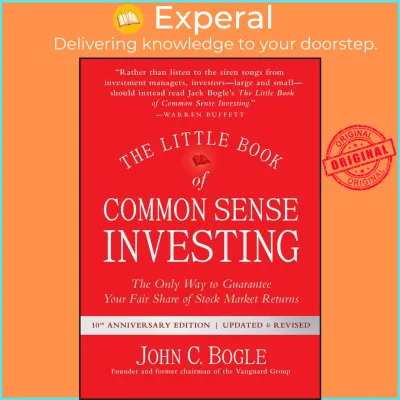
Products mentioned in this guide
![The Little Book of Common Sense Investing: The Only Way to Guarantee Your Fair Share of Stock Market Returns [Hardcover] by John C. Bogle by John C. Bogle](https://img.lazcdn.com/g/p/a8a4df7b5258806b1094f597920a7b3c.jpg_400x400q80.jpg_.webp)
![[eBook] John C. Bogle - The Little Book of Common Sense Investing (2007)](https://img.lazcdn.com/g/p/e6e589361ae0689704e0ee06a261c4cd.jpg_400x400q80.jpg_.webp)
Prices are valid at publication and may change. Please refer to the product page for the latest price.
A publication’s editorial stance can be assessed by analyzing its focus across three critical dimensions: asset allocation, behavioral discipline, and fee awareness. Rather than looking for a magazine that agrees with passive investing 100% of the time, your goal should be to find sources that provide high-quality data and analytical frameworks to help you make informed, long-term decisions.
The Common Sense Media Checklist
- Emphasis on Low-Cost Vehicles: Does the publication regularly highlight the impact of expense ratios, transaction costs, and management fees on long-term returns? A passive-friendly magazine will consistently remind readers that in investing, you get what you don't pay for.
- Focus on Asset Allocation Over Selection: Look for articles that discuss how to build a balanced portfolio based on risk tolerance and time horizon, rather than predicting which individual stock or sector will outperform next month.
- Behavioral Finance Integration: High-quality publications frequently feature insights from behavioral economics, helping readers understand the psychological traps of panic selling, FOMO (fear of missing out), and overtrading.
- Skeptical Stance on Active Management: Evaluate whether the editorial team critically analyzes the historical underperformance of active mutual funds relative to their benchmarks, reinforcing the mathematical reality of index investing.
- Long-Term Structural Analysis: Prioritize content that examines multi-decade demographic shifts, technological trends, and structural economic changes over daily, weekly, or quarterly market movements.
By applying these criteria, you will quickly realize that no single mainstream magazine is perfectly aligned with a pure passive strategy. Instead of searching for an elusive, purely passive publication, you must learn to actively filter the content you consume, extracting the foundational asset allocation and cost-efficiency insights while systematically discarding speculative stock tips.
Global Business Publications Available in Singapore
For investors seeking a macro-level understanding of the global economy to support their long-term indexing strategy, major international business publications are invaluable. While these outlets cover active markets, corporate mergers, and short-term geopolitical events, they also house dedicated sections focused on long-term wealth management, structural economic trends, and systemic risks. In Singapore, these publications are highly accessible through both digital subscriptions and print editions, offering a window into the global forces that drive index returns.

Extracting Passive Value from Macro Media
- The Economist: Renowned for its rigorous analysis and global perspective, this publication is highly aligned with a long-term investing mindset. Its weekly "Finance and Economics" section regularly features articles on the structural health of global markets, demographic trends, and the long-term implications of monetary policy. For a Boglehead, The Economist provides the essential macroeconomic context needed to understand the underlying drivers of global corporate earnings—the very earnings that your broad-market index funds capture. It avoids short-term stock tips, focusing instead on deep, data-driven analysis of global economic shifts.
- Financial Times (FT): While the Financial Times is a daily newspaper catering to active market participants, its weekend edition (FT Weekend) and its dedicated personal finance section (FT Money) are exceptional resources for long-term investors. The publication frequently runs deep dives into the exchange-traded fund (ETF) industry, analyzing trends in fee compression, tracking error, and the liquidity of broad-market indices. Reading the FT with a passive filter means skipping the daily trading desks and focusing on their long-term wealth columns, which often champion low-cost, diversified strategies.
- Bloomberg Businessweek: This publication offers a comprehensive look at global business, technology, and finance. While it covers active corporate stories, its personal finance and wealth sections frequently feature data-driven analyses of retirement planning, asset allocation, and the evolution of index-based products. It is particularly useful for tracking the structural shifts in the global financial services industry, such as the ongoing transition of capital from high-cost active mutual funds to low-cost passive ETFs.
When consuming global business publications in Singapore, the key is to filter out the daily market noise. A long-term index investor does not need to react to a sudden change in interest rates or a corporate earnings miss. Instead, use these publications to build a deep, structural understanding of how global capital flows, how industries evolve, and how global productivity growth supports the long-term upward trajectory of broad stock market indices. Digital subscriptions for these publications are easily managed via their respective mobile applications, allowing Singapore-based readers to customize their feeds to prioritize long-term wealth and economic analysis over daily trading updates.
Personal Finance Magazines and Wealth Management Journals
While global business publications provide the macroeconomic backdrop, retail-focused personal finance magazines and specialized wealth management journals offer more practical, hands-on guidance. These publications are designed specifically for individual investors looking to optimize their savings, manage taxes, plan for retirement, and build robust portfolios. However, because these magazines also cater to a broad audience, they often feature a mix of passive investing advice and active stock-picking strategies. Navigating them requires a critical, selective reading approach.
Navigating Retail Personal Finance Media
- Kiplinger's Personal Finance: Historically one of the most respected personal finance magazines, Kiplinger's offers a wealth of practical advice on retirement planning, tax optimization, and portfolio construction. While they do publish lists of recommended active mutual funds, they also provide extensive, high-quality coverage of low-cost ETFs and index-building strategies. For a passive investor, their articles on retirement withdrawal strategies (such as the safe withdrawal rate), tax-loss harvesting, and asset location (deciding which assets to hold in taxable vs. tax-advantaged accounts) are incredibly valuable.
- Money Magazine: Transitioning primarily to a digital-first format, Money continues to provide accessible personal finance advice. Its coverage of index investing has grown significantly over the years, reflecting the broader industry shift toward passive strategies. The platform is highly effective for beginners looking to understand the mechanics of dollar-cost averaging, the compounding power of reinvested dividends, and the basic steps of building a simple three-fund portfolio.
- CFA Institute Publications and Professional Journals: For advanced investors who want to dive deeper into the academic research supporting passive investing, professional journals offer unparalleled depth. Publications from the CFA Institute, though written primarily for financial professionals, are often accessible online and feature rigorous peer-reviewed studies on portfolio theory, market efficiency, and the persistent underperformance of active management. Reading these journals helps reinforce the scientific and mathematical foundations of the common sense investing philosophy.
The transition of many traditional personal finance magazines to digital-only or hybrid digital-print formats has fundamentally changed the subscription and reading experience. On one hand, digital platforms allow for interactive retirement calculators, real-time fee comparison tools, and personalized content feeds. On the other hand, the digital landscape is highly optimized for engagement, meaning you must actively resist the clickbait sidebars promoting “hot stocks” or “market timing” predictions. When reading these publications, focus strictly on the structural, mathematical, and behavioral articles, and treat the speculative stock recommendations as entertainment rather than actionable financial advice.
Digital-First Newsletters and Premium Research Platforms
In the modern financial media landscape, some of the most high-quality, rigorous content on passive investing has shifted away from traditional print magazines toward digital-first newsletters, premium research platforms, and independent financial writers. These platforms are often unconstrained by the editorial demands of traditional publishing, allowing them to provide deep, data-driven analyses of index funds, factor investing, and fee structures that align perfectly with the principles taught in The Little Book of Common Sense Investing.
Leveraging Modern Digital Platforms
- Morningstar Premium: While Morningstar is famous for its star ratings of active mutual funds, its premium research platform is an absolute goldmine for passive index investors. Morningstar’s editorial team includes some of the industry’s leading advocates for low-cost investing. Their research consistently highlights the devastating impact of high fees on long-term portfolio performance—a central theme of Bogle's work. Using their tools, Singaporean investors can analyze the underlying holdings, expense ratios, tracking errors, and tax efficiency of both local and international ETFs, ensuring that their portfolio remains truly diversified and cost-effective.
- Independent Financial Newsletters and Substack Writers: The rise of platforms like Substack has allowed academic researchers, financial planners, and dedicated Bogleheads to publish highly specialized, independent newsletters. Many of these writers focus exclusively on evidence-based investing, factor models, and behavioral finance. Because they do not rely on traditional corporate advertising, their incentives are often highly aligned with their readers. They provide deep-dive analyses of portfolio construction, historical market data, and the mechanics of passive indexing without the distraction of speculative stock tips.
The primary benefit of these niche, digital-first sources is their ability to deliver highly specific, expert-driven content that generalist media simply cannot match. For a serious long-term investor, a single data-driven article analyzing the historical tracking error of global index funds is infinitely more valuable than a dozen generic articles on “how to start saving.”
However, when navigating the world of independent digital publishers, verifying credibility is paramount. You should evaluate independent writers by checking their professional credentials, assessing whether their historical content consistently aligns with low-fee, evidence-based principles, and ensuring they provide transparent disclosures regarding any potential conflicts of interest or sponsored product placements. Avoid platforms that promise market-beating returns or promote complex, high-fee financial products under the guise of “advanced” passive strategies.
Red Flags: Media Content That Contradicts Passive Investing
To maintain the discipline required for a successful, multi-decade buy-and-hold strategy, what you don’t read is often just as important as what you do read. The financial media landscape is filled with narratives that are toxic to the passive investor’s mindset. Developing a strong mental filter to identify and actively avoid these red flags is essential for protecting your portfolio from behavioral mistakes and high-fee products.
Common Financial Media Red Flags
- Sensationalist Market Timing: Headlines that predict imminent market crashes or declare the start of a massive bull market should be immediately disregarded. No one can consistently predict short-term market movements, and attempting to time the market is one of the fastest ways to erode your long-term returns.
- Speculative Stock Picking: Articles that promote "the top stocks to buy right now" or highlight individual company "winners" encourage concentrated risk and active trading. This directly contradicts the core Boglehead principle of owning the entire market through broad index funds.
- Chasing Past Performance: Media coverage that hypes up the "best-performing fund of the past year" ignores the well-documented phenomenon of mean reversion. Yesterday's winners are rarely tomorrow's winners, and chasing past performance typically leads to buying high and selling low.
- Promotion of High-Fee, Complex Products: Be highly skeptical of articles or sponsored content promoting complex financial instruments like structured notes, active mutual funds with high sales loads, or niche thematic ETFs. These products are often designed to generate high fees for the issuer rather than wealth for the investor.
- Urgency and Panic-Inducing Language: Any content that uses emotionally charged language—such as "panic," "collapse," "skyrocket," or "last chance"—is designed to trigger emotional reactions rather than rational decision-making.
To safeguard your long-term strategy, conduct a regular audit of your financial media consumption. Review your subscriptions, bookmarks, and social media feeds, and systematically unsubscribe from any source that consistently displays these red flags. Replacing sensationalist, transaction-oriented media with calm, evidence-based, and structural analysis will dramatically improve your behavioral discipline. By curating a calm media diet, you reduce the psychological temptation to tinker with your portfolio, allowing the power of compounding and broad-market indexing to do its work over the long haul.
Frequently Asked Questions (FAQ)
Are there local Singaporean magazines dedicated solely to index investing?
No, there are currently no print or digital magazines in Singapore that are dedicated exclusively to index investing. Because the local publishing market is relatively small, business and personal finance magazines tend to cover a broad spectrum of financial topics—ranging from local real estate and insurance to active stock trading and corporate profiles—to appeal to a wider audience. However, Singapore has a highly active and sophisticated digital personal finance community. Rather than looking for a dedicated print magazine, local investors can find exceptional, Singapore-specific passive investing content on local personal finance blogs, independent digital platforms, and online community forums. These digital sources frequently discuss how to implement Boglehead principles using Singapore-accessible brokerages, comparing local index tracking options with global options (like Ireland-domiciled ETFs listed on the London Stock Exchange) to optimize for withholding tax efficiency.
How can I access international financial magazines at a discount in Singapore?
Accessing premium international financial publications does not have to be expensive. One of the most effective and entirely free methods is through the National Library Board (NLB) of Singapore. Through the NLB’s digital library services, Singapore residents can access digital copies of major global business magazines, personal finance journals, and international newspapers at no cost via partner reading apps. Additionally, if you are a student, alumnus, or a member of a professional association—such as the CFA Society Singapore or other corporate bodies—you should check for institutional subscription discounts. Many global publications offer highly discounted digital rates for regional readers or academic affiliates, allowing you to build a premium, evidence-based reading list while keeping your structural investment costs as low as possible.
Community discussion
Share your experience or ask a question. Comments are reviewed before publication.