
If you are drawn to the sweeping narrative of Alexandre Dumas’s The Three Musketeers, you likely crave stories defined by high-stakes political intrigue, fierce personal loyalties, and the thrilling clash of steel. While seventeenth-century France feels worlds away from Southeast Asia, the spirit of the swashbuckling adventure novel is alive and thriving within Singapore’s historical fiction scene. Local writers have long drawn inspiration from the region’s tumultuous past, crafting narratives that mirror the tension, camaraderie, and daring exploits of classic European adventure literature.
Finding your next great read from Singapore’s literary catalog requires looking beyond standard historical textbooks. The island’s history as a global maritime crossroads, a colonial outpost, and a melting pot of secret societies provides the perfect backdrop for tales of espionage, rebellion, and survival. By shifting your gaze from the courts of Paris to the bustling ports of the Straits Settlements, you will discover a rich world of local adventure novels that deliver the same pulse-pounding excitement as Dumas’s masterpiece.
Why Singapore Historical Fiction Resonates with Three Musketeers Fans
The core appeal of The Three Musketeers lies not just in the swordplay, but in the complex web of political maneuvering and the unbreakable bond between its central characters. Singapore historical fiction frequently mirrors these exact dynamics. Instead of Cardinal Richelieu’s guards and the King’s Musketeers, local narratives often pit rival secret societies, colonial administrators, and indigenous warriors against one another. The struggle for power in a rapidly changing port city creates a high-pressure environment where trust is a rare commodity and loyalty to one’s companions is the ultimate currency.
Products mentioned in this guide






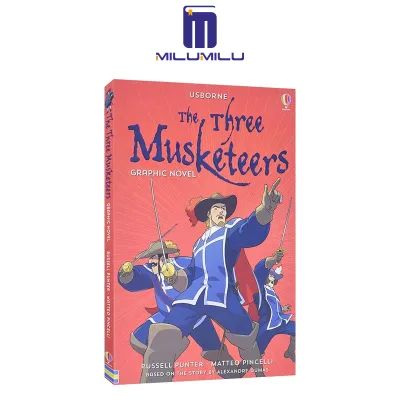

Prices are valid at publication and may change. Please refer to the product page for the latest price.
The setting itself offers a dramatic shift that enhances the sense of adventure. While Dumas utilized the grand châteaux and muddy roads of France, Singaporean authors utilize the vast, unpredictable maritime trade routes of Southeast Asia. The transition from European courts to the South China Sea replaces carriage chases with naval skirmishes and palace intrigue with colonial-era espionage. This geographic shift introduces readers to a diverse cast of characters, including Bugis seafarers, Chinese immigrants, British officials, and local merchants, all navigating the shifting tides of regional empires.
Furthermore, the historical transitions of the region provide a dramatic backdrop that rivals the religious and political wars of Dumas’s France. The shift from the Johor-Riau Empire to British colonial rule, and the subsequent social upheavals of the nineteenth and twentieth centuries, created a landscape ripe for rebellion and heroism. Characters in these novels are often caught between competing loyalties—to their cultural heritage, their families, their sworn brothers, or the colonial state—forcing them to make difficult moral choices that drive the narrative forward.
Finally, local writers excel at blending intense action sequences with meticulous cultural and historical research. The martial arts traditions of the region, such as Silat or Southern Chinese kung fu, provide a fresh and dynamic alternative to traditional European fencing. These combat styles are deeply integrated into the characters’ cultural identities, making every duel and skirmish feel purposeful and grounded. By anchoring high-stakes action in authentic historical contexts, Singaporean adventure novels offer a reading experience that is both intellectually stimulating and thoroughly entertaining.
Core Themes to Match Your Adventure Preferences
To find a Singaporean novel that matches your specific love for The Three Musketeers, it helps to break down your preferences into distinct thematic subgenres. If your favorite parts of Dumas’s work involve naval battles, daring escapes at sea, and the constant threat of betrayal, you should focus on maritime and trade route adventures. The waters surrounding Singapore have historically been some of the most heavily contested trade lanes in the world. Novels set in these environments focus on the lives of pirates, merchants, and naval officers who operated in the Malacca Straits, where a single storm or pirate raid could make or break a fortune. These stories often highlight the role of the sea people, whose deep knowledge of the local waters made them invaluable allies or formidable foes.

For readers who prefer the espionage, secret codes, and political conspiracies of Milady de Winter and Cardinal Richelieu, colonial-era intrigue is the ideal match. The nineteenth and early twentieth centuries in Singapore were defined by the covert operations of secret societies like the Ghee Hin and Hai San, alongside the watchful eyes of the British colonial police. Stories set during this era delve into the underworld of opium dens, hidden gambling halls, and underground resistance movements. The characters in these novels must navigate a treacherous landscape of shifting alliances, double agents, and colonial surveillance, where a single misstep could lead to execution or exile.
If you are drawn to the legendary status of the Musketeers and the chivalric codes they follow, regional and mythological epics will satisfy your craving. These stories often draw from the rich folklore of the Malay Archipelago, featuring legendary warriors, ancient kingdoms like Temasek, and mystical martial arts. The focus here is on honor, destiny, and the clash of ancient empires. Many of these epics are inspired by classical texts such as the Malay Annals, elevating the traditional adventure story into something grander and blending historical reality with local mythology to create a world where warriors fight not just for survival, but for the preservation of their way of life.
How to Discover and Select Local Adventure Authors
Finding high-quality Singaporean adventure and historical fiction requires a more targeted approach than simply browsing the bestseller shelves of major international retailers. One of the most reliable pathways is to follow the nominations and winners of local literary awards. The Singapore Literature Prize, held biennially, features dedicated categories for fiction in English, Malay, Chinese, and Tamil. Reviewing the shortlists for these awards will introduce you to critically acclaimed authors who excel at narrative depth and historical world-building. Additionally, the Epigram Books Fiction Prize is a prestigious annual award specifically designed to discover outstanding unpublished manuscripts, often highlighting thrilling contemporary and historical fiction from the region.
Another effective strategy is to explore the catalogs of independent local publishers who specialize in Singaporean heritage and creative writing. Publishers such as Epigram Books, Ethos Books, and Landmark Books have dedicated fiction lines that champion local voices. By visiting their official websites, you can browse curated collections of historical fiction, adventure stories, and regional anthologies that may not receive widespread international distribution. These publishers often provide detailed synopses, author biographies, and sample chapters, allowing you to assess whether a book’s tone and style align with your reading preferences before making a purchase.
Do not overlook the value of independent physical bookstores and local library networks when searching for your next read. Independent bookshops in Singapore often feature dedicated sections for local literature, curated by passionate staff who can offer personalized recommendations based on your interest in classic adventure novels. If you are located in Singapore, the National Library Board (NLB) offers extensive physical and digital collections of local fiction. Utilizing the library’s search portals and curated reading lists can help you discover out-of-print gems or lesser-known historical novels without any upfront financial commitment.
Furthermore, attending local literary events can connect you directly with the creators of these historical worlds. The annual Singapore Writers Festival is a premier event that hosts panel discussions, book launches, and workshops featuring local and regional authors. These gatherings provide an excellent opportunity to hear writers discuss their research processes, their historical inspirations, and the challenges of crafting action-packed narratives set in the region’s past. Engaging with the literary community in this way often leads to discovering unique, small-press adventure novels that are highly sought after by collectors.
Essential Checks Before Purchasing Your Next Read
Before finalizing your purchase of a Singaporean adventure novel, there are several practical checks you should perform to ensure the book meets your expectations. First, pay close attention to the language and translation details. While many contemporary Singaporean novels are written directly in English, some of the most compelling historical adventures are translated from Malay, Chinese, or Tamil. When considering a translated work, check the publisher’s notes for information on the translator’s credentials. A high-quality translation will preserve the cultural nuances, historical idioms, and regional dialects that give the story its authentic flavor, often accompanied by a glossary to help readers navigate unfamiliar terms.
Second, verify the availability of your preferred format and any potential regional shipping restrictions. Physical books published by independent Singaporean presses may have limited print runs, making them harder to source through global online marketplaces. Check if the publisher offers digital editions, such as e-books or audiobooks, which are instantly accessible regardless of your geographic location. If you prefer a physical copy, compare shipping rates and delivery times between the publisher’s direct store and local independent booksellers to find the most reliable and cost-effective option. Physical paperbacks typically range from S$18 to S$28, while digital editions offer a more immediate and budget-friendly alternative.
Third, look for supplementary materials within the book that can enhance your reading experience. Complex historical adventure novels often benefit from the inclusion of maps, character lists, and historical timelines. These tools are incredibly helpful for keeping track of regional geography, historical figures, and fictional characters as they navigate intricate political landscapes. Before purchasing, check the book’s table of contents or online preview to see if these resources are included, as they can significantly improve your understanding and enjoyment of the narrative.
Finally, review the book’s introductory material or author’s notes to understand the balance between historical accuracy and creative license. Some adventure novels prioritize fast-paced action and mythological elements over strict historical facts, while others are meticulously researched chronicles of real-world events. Knowing where a novel falls on this spectrum will help set your expectations. If you enjoy the way Dumas blended real historical figures like King Louis XIII with fictionalized exploits, look for local novels that explicitly state how they integrate historical archives with imaginative storytelling.
Frequently Asked Questions (FAQ)
Are there English translations for classic Singapore adventure novels?
Yes, many classic and contemporary Singaporean adventure novels originally written in Malay, Chinese, or Tamil are available in English translations. Local publishers have made significant efforts to translate heritage literature to ensure these stories remain accessible to a wider audience. When browsing, look for translation credits on the book’s cover or title page. Reputable editions will often include a translator’s introduction or detailed footnotes that explain the historical context of specific regional terms, cultural practices, and geographical landmarks, ensuring that the original narrative’s depth and excitement are fully preserved for English readers.
How can I support local Singapore authors directly?
The most direct way to support Singaporean authors is to purchase their books directly from their official websites or through their designated local publishers. Buying directly ensures that a larger portion of the sale price goes back to the creator and the independent press that supported them. Additionally, purchasing from local independent bookstores helps sustain the physical spaces that promote local literature. You can also support authors by requesting their books at your local library, leaving honest reviews on book-sharing platforms, and attending local literary festivals and book launches where signed copies are often available.
Community discussion
Share your experience or ask a question. Comments are reviewed before publication.