
Readers drawn to Joseph Conrad’s dense, atmospheric tales of maritime struggle and psychological isolation will find a rich, deeply resonant parallel in Singapore’s literary landscape. Joseph Conrad himself was intimately familiar with Singapore, having sailed into its harbor during the late nineteenth century as a merchant mariner. He stayed at the local Sailors’ Home and used the bustling port, along with the surrounding Malayan waters, as the backdrop for several of his well-known works, including Lord Jim, The Shadow-Line, and The End of the Tether. This historical connection is not merely coincidental; it establishes a geographic and thematic bridge between classic Western maritime literature and the modern literary output of the region.
Conrad’s core themes—moral ambiguity, the psychological toll of isolation, and the sea as both a physical barrier and a mirror for the human soul—translate powerfully into the Singaporean context. However, rather than simply replicating colonial-era tropes, local writers reframe these concepts from an internal perspective. They explore the psychological weight of rapid modernization, the lingering ghosts of colonial history, and the complex realities of life along one of the world’s busiest shipping lanes. By examining how local authors adapt these themes, readers can discover a body of literature that is both globally relevant and deeply rooted in the unique heritage of the region.
To find Singaporean fiction that echoes Conrad’s narrative style, readers must look beyond superficial setting matches. The goal is to identify works that treat the maritime environment as an active, transformative force and delve into the complex internal lives of characters facing profound ethical dilemmas. By establishing clear criteria—such as psychological depth, historical accuracy, and a focus on cultural friction—you can curate a reading list that captures the essence of Conrad’s literary focus through a distinctly local lens.
Products mentioned in this guide
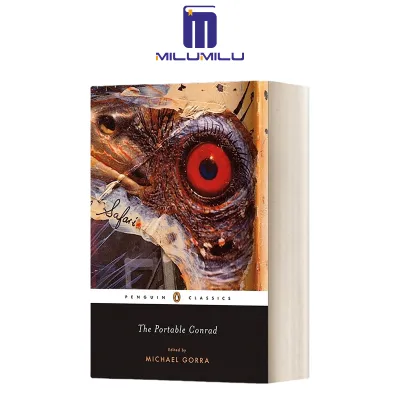

Prices are valid at publication and may change. Please refer to the product page for the latest price.
Thematic Pathways for Your Reading List
To build a reading list that captures the essence of Conradian themes in a local context, it helps to divide your search into three distinct thematic pathways. Each pathway highlights a different facet of Conrad’s literary legacy, mapped onto the unique historical and contemporary realities of Singapore.
Maritime Heritage and Port City Narratives
Conrad’s stories are inseparable from the sea, depicting ships as isolated societies where human character is tested under extreme pressure. In Singapore, the maritime narrative is woven into the very fabric of national identity, moving from the historical trade of the Singapore River to the massive, automated container terminals of the modern era. The sea has always been a source of livelihood, a gateway for migration, and a space of transition, making it a fertile ground for local writers exploring the human condition.
When searching for local literature in this category, look for works that focus on the lives of those bound to the water. This includes historical fiction detailing the lives of early harbor workers, traditional boat builders, and coastal communities, as well as contemporary stories centered on modern shipping and port operations. These narratives often explore the psychological toll of maritime labor, the isolation of long voyages, and the clash between traditional seafaring ways of life and modern industrialization.
Readers should expect these local stories to challenge the romanticized, exoticized Western view of the tropical port. Instead of serving as a mere backdrop for foreign adventure, the port in Singaporean literature is presented as a place of grueling work, complex economic survival, and deep personal history. The sea remains a powerful, unpredictable force that shapes human destinies, forces characters to confront their limitations, and serves as a literal and metaphorical boundary between the known and the unknown.
Psychological Realism and Moral Ambiguity
At the heart of Conrad’s writing is the psychological breakdown of the individual—characters who are haunted by past failures, moral compromises, and profound isolation. Singaporean literature offers a compelling parallel to this psychological depth, shifting the setting from isolated jungle outposts to the dense, vertical landscape of a global metropolis. The rapid transition from a traditional village society to a hyper-modern city-state has created a unique set of psychological pressures that local writers explore with great sensitivity.
To find works that capture this psychological intensity, focus your search on contemporary literary fiction that utilizes unreliable narrators, stream-of-consciousness techniques, and deep character studies. Look for stories that examine the internal conflicts of individuals who feel alienated within a highly structured, achievement-oriented society. These characters often grapple with the loss of heritage, the ethical compromises made in the pursuit of progress, and the difficulty of finding genuine connection in a crowded urban environment.
The reading experience here offers a fascinating contrast to Conrad’s work. While Conrad’s protagonists face isolation in the vast emptiness of the ocean or the wilderness, Singaporean characters often experience a claustrophobic, psychological isolation amidst crowded housing estates and bustling urban centers. This style of writing highlights the moral gray areas of modern life, where the pressure to conform and succeed forces individuals to confront their own internal shadows.
Cross-Cultural Encounters and Colonial Echoes
Conrad’s works frequently depict the friction of colonial encounters, the displacement of individuals across borders, and the moral decay of imperial enterprises. Because Singapore’s history is defined by waves of migration, colonial governance, and post-colonial rebuilding, local writers are uniquely positioned to explore these themes with nuance and critical depth. They offer a vital counter-narrative to the colonial perspective, giving voice to those who were often marginalized in Western literature.
Your search criteria for this pathway should target historical fiction, multi-generational family sagas, and post-colonial novels set during the nineteenth century, the Japanese Occupation, or the turbulent years leading up to independence. These works often feature diverse casts of characters—immigrants, colonial administrators, local merchants, and revolutionaries—whose lives intersect in unpredictable ways. They examine the complexities of cultural assimilation, the trauma of displacement, and the lingering effects of colonial structures on personal identity.
By reading these local perspectives, you will see a powerful reframing of Conrad’s themes. Where Conrad often viewed the region through the lens of an outsider looking in, local authors reclaim the narrative, offering a complex, insider look at how colonial history and cultural friction continue to shape the modern psyche. These stories do not shy away from the moral ambiguities of survival and collaboration during times of crisis, providing a rich, multi-layered reading experience.
How to Build and Curate Your Custom Reading List
Building a personalized reading list of Singaporean literature that mirrors Conrad’s themes requires a deliberate, systematic approach. Because local literature is incredibly diverse and published across various platforms, utilizing structured search methods will help you find high-quality works that match your specific thematic preferences. By combining digital research with local community resources, you can discover exceptional books that might otherwise escape your notice.

Start by leveraging the extensive resources of the National Library Board (NLB). The NLB’s digital catalogs and physical archives are valuable tools for tracking down local fiction. Use targeted search terms such as “Singapore historical fiction,” “maritime Singapore literature,” or “psychological fiction Singapore.” Additionally, pay close attention to the shortlists and winners of the Singapore Literature Prize (SLP). This biennial award highlights distinguished works of fiction, poetry, and creative nonfiction, serving as a reliable filter for books that possess the literary merit and psychological depth you are seeking.
Visiting local independent bookstores is another highly effective strategy. Staff at these establishments are often deeply knowledgeable about the local literary scene and can recommend lesser-known titles, self-published gems, or works from independent local publishers. When browsing, do not hesitate to ask for recommendations specifically focused on historical realism, maritime themes, or character-driven psychological dramas. These specialized bookstores often carry a curated selection of local titles that are not easily found in larger, chain retail outlets.
Before making a purchase, verify the thematic alignment of a book by reading publisher blurbs, independent literary reviews, and author interviews. Look for mentions of complex character development, atmospheric world-building, and moral or ethical conflicts. This step ensures that you are investing in books that offer the intellectual and emotional depth characteristic of Conrad’s writing, rather than superficial adventure stories. Online literary journals and book blogs dedicated to Southeast Asian literature are helpful sources for these reviews.
Finally, perform essential format and edition checks. Singapore’s literary landscape is multilingual, with rich traditions in English, Malay, Chinese, and Tamil. If you are exploring works originally written in Malay, Chinese, or Tamil, verify that an authorized, complete English translation is available. Check the publisher’s details to ensure the edition is unabridged and compatible with your preferred reading format, whether you prefer high-quality print editions, ebooks for your digital reader, or audiobooks for listening on the go.
Frequently Asked Questions (FAQ)
Are there direct English translations of classic local maritime fiction?
Yes, there is a growing body of translated works available for English-language readers. Singapore’s multilingual literary heritage means that some of the most profound maritime and historical narratives were originally written in Malay, Chinese, or Tamil. Local publishers and initiatives supported by the National Arts Council have made significant strides in translating these classics into English. To verify the availability and quality of these translations, consult the National Library Board’s catalog or check the websites of dedicated local publishers. Look for editions that include translator notes, as these often provide valuable cultural and historical context that enhances your reading experience.
Which local literary awards highlight psychological or historical fiction?
The premier accolade to watch is the Singapore Literature Prize (SLP), which features dedicated categories for fiction in English, Malay, Chinese, and Tamil. The SLP consistently highlights works that delve into complex psychological landscapes and historical narratives. Another excellent resource is the Epigram Books Fiction Prize shortlist, which showcases unpublished manuscripts of high literary quality, many of which explore deep historical and psychological themes before being published. Navigating the past shortlists and winner archives of these awards is one of the highly effective ways to discover critically acclaimed books that align with Conrad’s narrative style.
Community discussion
Share your experience or ask a question. Comments are reviewed before publication.