
The guitalele represents a unique and highly versatile middle ground in the world of acoustic stringed instruments. Combining the compact, portable body of a tenor or baritone ukulele with the six-string configuration of a classical guitar, it offers an appealing solution for musicians of all skill levels. For beginners in Singapore, where urban living spaces are compact and portable hobbies are highly valued, the guitalele serves as an excellent entry point into music. It allows you to learn standard guitar chord shapes and fingerpicking techniques without the physical strain or storage challenges associated with a full-sized acoustic guitar.
Choosing the right guitalele involves more than simply picking an appealing design or opting for the lowest price. Because these instruments are built with short scale lengths and high string tension, minor manufacturing defects can severely impact playability, tuning stability, and tone. This guide is designed to help beginners in Singapore understand the essential technical specifications of the guitalele, identify reputable manufacturing standards, perform physical quality checks in-store, and navigate local retail options. By focusing on verifiable quality indicators and practical decision-making steps, you can confidently select an instrument that will support your musical journey for years to come.
Core Specifications to Match Your Playing Style
Before stepping into a music store or browsing online listings, it is essential to understand the core physical specifications of the guitalele and how they influence both playability and sound. The most defining characteristic of a guitalele is its scale length—the distance between the nut and the bridge saddle. Typically measuring around 17 inches, this short scale requires the strings to be tuned higher than a standard guitar to maintain proper tension. This compact layout means the frets are spaced much closer together, which is highly advantageous for players with smaller hands or those who travel frequently, though it may require an adjustment period for those accustomed to the wider fret spacing of a standard guitar.
Products mentioned in this guide
![Yamaha GL1 Guitalele 6 Nylon Strings Ukulele 27 Inch Beginner Series [LIMITED STOCK]](https://img.lazcdn.com/g/p/275c60d8eff8d096d5a051d8909d23fd.jpg_400x400q80.jpg_.webp)
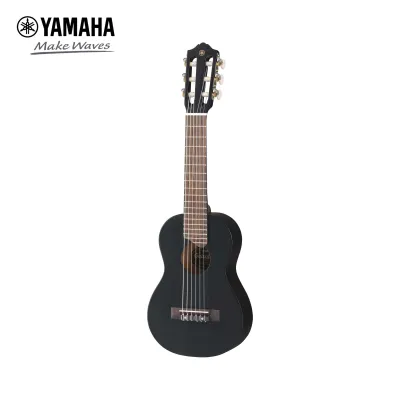
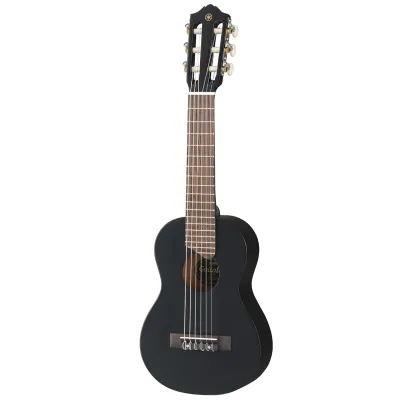
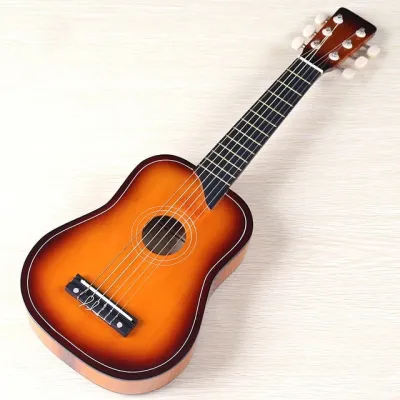
Prices are valid at publication and may change. Please refer to the product page for the latest price.
Alongside scale length, the width and profile of the fretboard play a critical role in comfort. Unlike a standard steel-string acoustic guitar, which often features a narrow, radiused fretboard, a guitalele typically has a wider, flat fretboard similar to a classical guitar. This extra width is necessary to accommodate six strings across a small neck without causing your fingers to crowd or accidentally mute adjacent strings. When evaluating different models, pay close attention to how the neck profile feels in your hand; a neck that is too thick can cause hand fatigue, while one that is too thin may make it difficult to execute clean chord shapes.
Another fundamental decision is choosing between laminate construction and solid tonewoods. Laminate instruments are constructed from multiple thin layers of wood pressed and glued together, often finished with an outer veneer of attractive wood. This manufacturing method makes laminate guitaleles exceptionally durable, cost-effective, and highly resistant to changes in temperature and humidity—a significant advantage in Singapore’s tropical climate. On the other hand, instruments featuring a solid wood top (such as solid spruce, cedar, or mahogany) offer superior acoustic resonance, greater dynamic range, and a tone that matures and improves over time. However, solid wood is far more sensitive to environmental fluctuations and requires diligent humidity management to prevent warping or cracking.
Finally, consider the body depth and overall shape of the instrument. Guitaleles generally feature a body shape resembling a miniature classical guitar or an oversized ukulele. A deeper body cavity provides more internal volume for sound waves to resonate, which helps project a warmer, fuller bass response that partially offsets the naturally bright, treble-focused voice of the short scale. When testing instruments, listen closely to the balance between the high and low strings; a well-designed body will project a balanced acoustic voice rather than a thin, tinny sound.
Identifying Reliable Brands and Avoiding Counterfeits
As the popularity of travel-sized instruments has grown, the market has been flooded with a wide array of options, ranging from premium instruments crafted by established luthiers to generic, unbranded products mass-produced with minimal quality control. For a beginner, distinguishing between a reliable instrument and a poorly made imitation is crucial to avoiding frustration. Established musical instrument manufacturers maintain consistent production standards, use properly seasoned woods, and offer reliable customer support, whereas generic “white-label” products often prioritize low production costs over playability and structural integrity.

To verify the authenticity and reliability of a guitalele brand, start by visiting the manufacturer’s official global website. Reputable brands maintain detailed product catalogs, list precise material specifications (such as the exact types of wood used for the top, back, and sides), and provide a directory of authorized local distributors and dealers. If a brand has no official web presence, lacks clear model numbers, or is only sold through anonymous storefronts on general online marketplaces, it is highly likely to be a low-quality generic product. Consistent model naming conventions (such as specific alphanumeric codes) are a strong indicator of a structured manufacturing process and reliable quality control.
Purchasing an unbranded or suspiciously cheap instrument from an unverified seller on a general ecommerce platform carries significant risks. These instruments are frequently constructed from unseasoned green wood that has not been dried properly. When exposed to different climates, this wood can warp rapidly, rendering the instrument unplayable. Furthermore, budget online listings often feature misleading descriptions, claiming solid wood construction when the instrument is actually made of low-grade laminate or even plastic. By sticking to established brands with a physical presence in the market, you ensure that the instrument has been built to withstand string tension and environmental stress.
Another key advantage of choosing an established brand is the availability of customer support, warranty coverage, and replacement parts. Reputable manufacturers stand behind their products with warranties that protect against factory defects, such as joint separation or neck warping. Authorized local dealers in Singapore can facilitate these warranty claims, saving you the hassle and expense of shipping an instrument overseas for repairs. Additionally, if you ever need to replace a specific component, such as a matching tuning machine or a bridge saddle, established brands make it much easier to source authentic parts that fit your instrument perfectly.
Inspecting Build Quality and Playability In-Store
While online research is valuable, nothing compares to physically holding and inspecting a guitalele before making a purchase. Visiting a physical music store allows you to assess the build quality, comfort, and acoustic character of individual instruments, as even identical models can exhibit slight variations. To ensure you select a defect-free guitalele that is comfortable to play, you should perform a systematic physical inspection using a few simple checks.
Begin by evaluating the neck relief and the action height. Hold the guitalele at eye level and look straight down the edge of the fretboard from the headstock to the body, much like sighting down a rifle barrel. The neck should be almost entirely straight, with a very slight, barely perceptible upward curve (known as relief) to allow the strings room to vibrate. Next, examine the action height, which is the gap between the strings and the frets. If the action is too high, pressing the strings down will require excessive finger strength, leading to rapid fatigue and poor intonation. If the action is too low, the strings will buzz against the frets when plucked. Play individual notes slowly up and down every string to ensure there are no dead spots or persistent buzzing.
Next, run your thumb and index finger gently along both sides of the neck to check the fret edges. In a well-finished instrument, the metal fret wires are filed smooth and sit flush with the edge of the fretboard. If you feel sharp, protruding metal edges, this is a sign of “fret sprout,” which occurs when the wooden fretboard shrinks due to dry conditions or improper seasoning. Sharp frets can make playing highly uncomfortable and can even scratch your hands. Additionally, test the tuning machines on the headstock. Turn each peg slowly to ensure they rotate smoothly with consistent resistance. If a peg feels loose, slips, or grinds, the gears may be stripped or poorly aligned, which will make keeping the instrument in tune an ongoing struggle.
Finally, conduct a thorough structural inspection of the body joints and finish. Pay close attention to the bridge, which is the wooden block glued to the top of the body that holds the strings. Under the high tension of six strings, a poorly glued bridge can begin to lift away from the body. Look closely at the back edge of the bridge; if you can slide a thin piece of paper under it, the bridge is lifting and will eventually detach, requiring an expensive repair. Inspect the neck joint where the neck meets the body for any visible gaps or glue residue, and examine the entire finish for cracks, uneven pooling, or bubbles. A clean, flawless finish is a strong indicator of careful craftsmanship and rigorous quality control at the factory.
Navigating Local Retailers and Online Marketplaces
When you are ready to buy a guitalele in Singapore, you must choose between purchasing from a specialized local music store or ordering through an online marketplace. Each channel offers distinct advantages and trade-offs, and understanding these can help you secure the best value while minimizing the risk of receiving a damaged or unplayable instrument.
Specialized local music stores are generally the safest and most rewarding option for beginners. These shops curate their inventory from reputable distributors, ensuring that the instruments on display are authentic and have been stored in climate-controlled environments. Shopping in person allows you to try multiple instruments side-by-side, feel the neck profiles, and hear the tonal differences between various wood combinations. Furthermore, staff at specialized stores can offer personalized advice, help you tune the instrument for the first time, and recommend essential accessories like gig bags, tuners, and humidifiers.
In contrast, general online marketplaces and ecommerce platforms often tempt buyers with lower prices and convenient home delivery. While these platforms can be useful for sourcing accessories, purchasing a delicate wooden instrument online carries inherent risks. Instruments shipped from overseas are often subjected to extreme temperature and humidity fluctuations in cargo holds and delivery vans, which can warp the wood or weaken glue joints before the package even arrives at your door. Additionally, online sellers rarely inspect or set up instruments before shipping, meaning you may receive a guitalele straight from the factory box with high action, uneven frets, or shipping damage.
Before finalizing your purchase, always clarify the retailer’s return and exchange policies. A reputable local store or authorized online dealer should provide a clear warranty period covering manufacturing defects, along with a straightforward return policy if the instrument develops structural issues shortly after purchase. Be sure to ask whether the store offers in-house repair services or setup adjustments, as having a local point of contact for maintenance is incredibly valuable for a beginner.
Finally, it is highly recommended to budget a portion of your funds for a professional setup. Many entry-level guitaleles are shipped from the factory with generic setups that prioritize preventing fret buzz over ease of play, resulting in high action at the nut and saddle. Taking your new instrument to a professional guitar technician or luthier in Singapore for a setup—which typically costs a modest amount in S$—can dramatically improve its playability. The technician can file down the nut slots, adjust the saddle height, and optimize the neck relief, making the strings much easier to press down. This simple adjustment can make a profound difference in your learning experience, preventing finger pain and helping you progress much faster.
Frequently Asked Questions (FAQ)
Do I need to tune a guitalele like a guitar or a ukulele?
A guitalele is designed to be tuned to standard ADGCEA tuning, which is exactly five semitones (a perfect fourth) higher than standard guitar tuning (EADGBE). This is equivalent to placing a capo on the fifth fret of a standard guitar. Because the interval relationships between the strings remain identical to a guitar, you can use the exact same chord shapes and scale patterns you would use on a guitar. For example, playing a standard open G-chord shape on a guitalele will produce a C chord. For ukulele players, the top four strings of the guitalele (GCEA) match standard ukulele tuning, meaning you can easily transition your ukulele chord shapes directly to the guitalele, with the added benefit of two extra bass strings (A and D) to create richer, more complex arrangements.
Can I use standard guitar strings on a guitalele?
You must never use standard steel strings designed for acoustic guitars on a guitalele. Guitaleles are constructed similarly to classical guitars, featuring lightweight internal bracing and bridges designed specifically for the lower tension of nylon strings. Installing steel strings will exert massive physical tension that the delicate wooden structure cannot support, leading to a warped neck, a buckled soundboard, or the bridge ripping completely off the body. Instead, you should only use nylon or fluorocarbon strings. While you can use standard classical guitar nylon strings, they may feel slightly loose or floppy due to the short scale length. For the best performance, look for specialized guitalele string sets or high-tension classical guitar strings, which provide the optimal tension and clarity for the shorter scale.
How does the climate in Singapore affect a solid-wood guitalele?
Singapore’s tropical climate is characterized by consistently high relative humidity, often hovering between 70% and 90% throughout the year. This high humidity poses a significant challenge for solid-wood musical instruments, as wood naturally absorbs moisture from the air, causing it to swell. Over time, excessive moisture absorption can lead to a swollen soundboard, lifting bridges, high action, and a dull, muffled acoustic tone. To protect your guitalele, store it inside a padded gig bag or a hard case when not in use, rather than leaving it exposed on a stand. Place silica gel packs or specialized two-way humidity control packets inside the case to absorb excess moisture. Additionally, avoid storing your instrument directly in the path of air-conditioning vents, as the rapid cycling between cold, dry air and warm, humid air can cause the wood to crack or warp.
Community discussion
Share your experience or ask a question. Comments are reviewed before publication.