
Starting your journey into Chinese painting is an exciting artistic endeavor, but transitioning from Western watercolor or sketching to traditional ink and brush requires a fundamental shift in technique. The key to a successful start lies in selecting an instructional book that does not merely showcase finished masterpieces, but actively teaches the mechanics of brushwork, ink control, and spatial composition. A truly beginner-friendly Chinese painting book must bridge the gap between theory and practice, offering clear visual breakdowns that allow you to replicate complex strokes at home. By focusing on books that align with your preferred style, language comfort, and physical studio setup, you can build a solid foundation without the frustration of vague instructions.
Key Criteria for Choosing a Beginner Chinese Painting Book
When evaluating an instructional book, the primary focus should be on how it introduces foundational physical mechanics. Traditional Chinese painting relies heavily on the relationship between your body, the brush, and the paper. Look for books that dedicate their opening chapters to the physical setup: the correct way to hold the brush, proper posture, and the mechanics of arm movement. Unlike Western painting, where the wrist often rests on the table, Chinese painting frequently requires the entire arm to move from the shoulder or elbow to achieve fluid, expressive lines. A book that skips these physical fundamentals will leave you struggling with shaky lines and inconsistent ink flow.
The progression of lessons is another critical indicator of a well-structured guide. The content should flow logically from isolated, basic strokes to complete, simple compositions. For instance, a beginner should first learn how to execute a single bone stroke or dot stroke before attempting to paint a full bamboo leaf, let alone an entire bamboo grove. A high-quality guide will break down a single subject into its constituent parts, teaching you how to master each element individually before showing you how to assemble them into a balanced composition. This step-by-step synthesis builds muscle memory and confidence.
Products mentioned in this guide
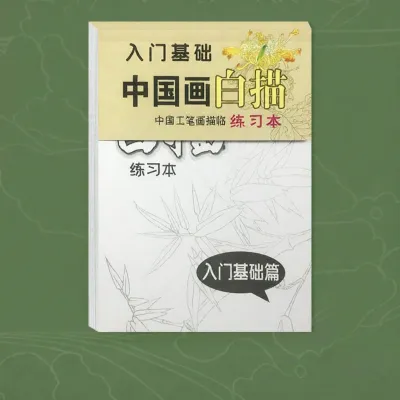
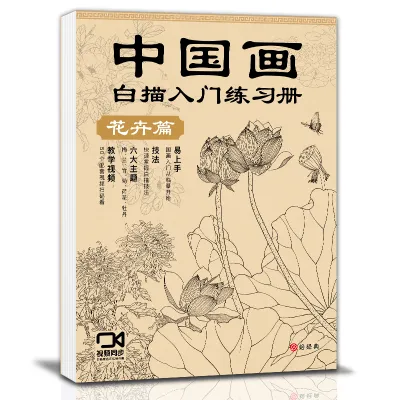
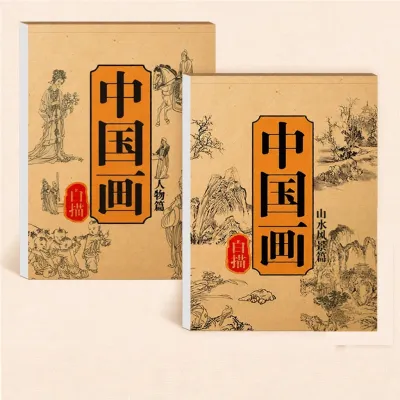
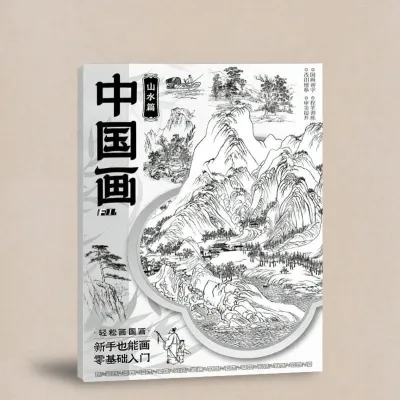
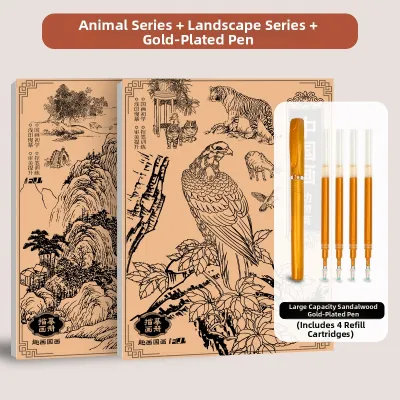
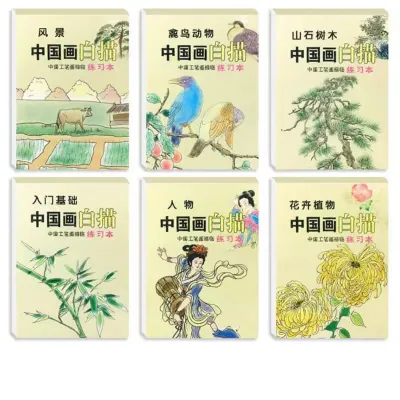
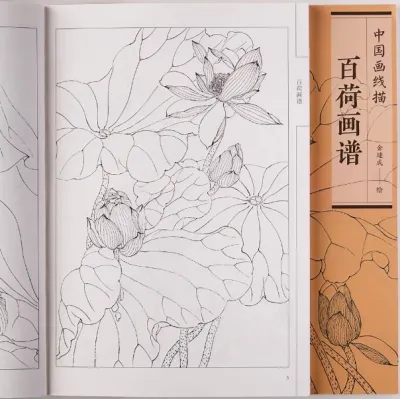
Prices are valid at publication and may change. Please refer to the product page for the latest price.
Finally, look for books that actively address common beginner mistakes and offer troubleshooting tips. When learning independently, you do not have an instructor to correct your brush angle or point out when your ink is too wet. A book that includes visual examples of common errors—such as bleeding caused by excess water, or scratchy lines caused by a dry brush—helps you self-diagnose your work. Practical practice exercises, complete with suggested repetition counts and specific goals for each session, turn passive reading into active, structured learning.
Understanding Chinese Painting Styles in Instructional Books
Before purchasing a book, you must decide which of the two primary styles of Chinese painting you wish to explore first, as they require entirely different techniques, tools, and mindsets. The first major style is Gongbi, which translates to a meticulous or court style. This approach is characterized by highly detailed, precise brushstrokes that form clean outlines, which are then filled with multiple delicate layers of color washes. Gongbi requires immense patience, fine-tip brushes, and sized paper that resists immediate ink absorption. Books focusing on Gongbi will guide you through a highly controlled, step-by-step process of tracing, outlining, and gradual color building, making it excellent for those who appreciate precision and structured execution.

In contrast, the Xieyi style, often referred to as the freehand or interpretive style, focuses on capturing the spirit or essence of a subject rather than its literal, detailed appearance. Xieyi utilizes bold, rapid brushstrokes, varying ink tones, and highly absorbent unsized paper. The learning curve here is highly dynamic; while the strokes look simple, they require precise control over water-to-ink ratios and brush pressure, as the absorbent paper leaves no room for hesitation or correction. Books teaching Xieyi emphasize spontaneity, the beauty of empty space, and the expressive power of a single stroke.
Your choice of book should also depend on whether you prefer a comprehensive overview or a single-subject focus. Comprehensive books introduce you to the traditional foundational subjects used to teach all basic brushstrokes, such as bamboo, orchids, plum blossoms, and chrysanthemums. These overviews are excellent for broad skill-building. However, if you find yourself particularly drawn to a single subject, a dedicated book focusing entirely on bamboo or landscapes can offer a much deeper dive into the specific stroke variations and historical contexts of that subject, allowing for highly focused mastery.
Evaluating Step-by-Step Guidance and Visual Demonstrations
Because Chinese painting is an intensely visual and physical medium, the quality of a book’s illustrations is far more important than the volume of its text. When browsing potential books, closely examine the step-by-step demonstrations. The best instructional guides do not simply show a three-step sequence of a flower appearing on the page; they provide detailed brushstroke breakdowns. Look for diagrams that feature directional arrows indicating the path of the brush, as well as pressure indicators showing where to press down to spread the bristles and where to lift up to create a fine point.
Color mixing and ink preparation are notoriously difficult for self-learners, making visual aids in these areas indispensable. A high-quality book should feature clear color mixing charts and, more importantly, visual examples of different water-to-ink ratios. You should be able to see the distinct differences between dry ink, wet ink, concentrated ink, and pale ink on the page. Furthermore, look for books that illustrate layering sequences. Since traditional ink cannot be easily painted over once wet, understanding which stroke to lay down first, and how long to wait before applying the next layer, is crucial for preventing muddy compositions.
The balance between instructional text and high-resolution reference imagery must be carefully struck. While descriptive text is necessary to explain the philosophy and subtle physical adjustments of the hand, the visual references must be sharp and clear. High-resolution images allow you to see the texture of the paper, the individual hairs of the brush stroke, and the subtle gradations of the ink wash. If a book’s images are blurry, low-contrast, or too small, you will struggle to replicate the delicate textures that define high-quality Chinese ink work.
Checking Editions, Languages, and Book Formats
When selecting your instructional material, verifying the language and edition details is a critical step that prevents frustration. Many of the most authoritative books on Chinese painting are published in Asia and may be written entirely in Chinese, or feature minimal bilingual translations. If you do not read Chinese, look specifically for books that are fully translated into English or designed as true bilingual editions. While highly visual books can sometimes be navigated through diagrams alone, missing out on the textual explanations of ink preparation, brush care, and historical context can severely limit your progress. Always check the publisher details and look inside the book to confirm that the language level matches your proficiency.
The physical format of the book also plays a major role in how easily you can use it in your workspace. Chinese painting requires a flat, clear desk space to accommodate your felt pad, paper, ink stone, water bowls, and brushes. A heavy hardcover book that constantly snaps shut is highly impractical for studio use. Look for books with lay-flat bindings, spiral bindings, or softcovers that can be easily propped open with a book stand. Alternatively, digital formats can be highly advantageous for modern self-learners. Reading an e-book on a tablet allows you to zoom in closely on high-resolution brushstroke details and keeps your physical workspace completely clear of bulky paper, though you must ensure your device is protected from accidental water splashes.
Additionally, consider the availability and regional distribution of the books you are researching. Some highly recommended classic instructional manuals may be out of print or subject to region-specific publishing restrictions. In Singapore, importing physical books from overseas publishers can sometimes incur high shipping fees or long wait times. When budgeting for your new hobby, expect to spend around S$20 to S$50 on a high-quality instructional book, and plan your art supply purchases accordingly. Before committing to a specific title, check its availability through local library networks, specialized art book importers, or reputable online marketplaces to ensure you can acquire a legitimate, high-quality print edition without unnecessary delays or inflated costs.
Matching Book Content with Required Art Supplies
A common pitfall for beginners is purchasing a book only to find that its lessons require highly specialized, expensive, or inaccessible art supplies. A practical beginner’s book should feature a dedicated materials section that aligns with accessible, entry-level tools. Review the book’s recommendations for brush types. Traditional Chinese brushes are categorized by their hair stiffness: goat hair for soft and highly absorbent washes, wolf or weasel hair for sharp lines and details, and combination brushes featuring a stiff core surrounded by soft outer hair. A good beginner book will typically design its initial lessons around a versatile combination brush or a medium wolf-hair brush, saving you from buying an entire set of specialized brushes before you know how to use them.
The book’s approach to ink and pigments should also match your budget and setup. Traditional Chinese painting utilizes solid ink sticks ground on a stone slate with water to create fresh ink. While this process is highly meditative, it requires time and practice to master the correct consistency. Many modern beginner books accommodate busy self-learners by recommending high-quality bottled liquid ink, which is ready to use and highly consistent. Ensure the book you choose provides instructions for both methods, or at least explains how to dilute bottled ink to achieve the various tonal values required for the lessons.
Finally, pay close attention to the paper recommendations. Traditional Xuan paper comes in various types, including raw paper which is highly absorbent and used for Xieyi, ripe or sized paper which is non-absorbent and used for Gongbi, and semi-sized paper. If a book’s lessons are designed entirely around raw Xuan paper, attempting them on standard watercolor paper or cheap sketch paper will yield frustrating results, as the ink will behave completely differently. A beginner-friendly book should not only explain these paper differences clearly but also suggest accessible local alternatives for daily practice—such as newsprint or calligraphy practice paper—which allow you to practice your brush strokes economically before moving on to premium handmade sheets.
Frequently Asked Questions (FAQ)
Do I need to know Chinese to use a traditional Chinese painting book?
You do not need to be fluent in Chinese to benefit from traditional painting books, but having a basic understanding of key terms can enhance your learning. Many classic manuals rely heavily on visual demonstrations, step-by-step illustrations, and directional arrows that are universally understood. For books with minimal English text, you can easily use modern translation applications on your smartphone to translate labels, material lists, and brief instructional notes. However, for a seamless learning experience, it is highly recommended to seek out modern bilingual editions or books specifically published by Western or international presses, which provide comprehensive explanations of the underlying philosophy and techniques in English.
Should I start with a general overview book or a subject-specific guide?
For absolute beginners, starting with a general overview book is usually the most effective path. A general guide introduces you to the fundamental mechanics of brush holding, ink dilution, and basic strokes through a variety of simple subjects, giving you a well-rounded foundation. Once you have mastered these core skills and identified which styles or subjects you enjoy most, you can transition to a subject-specific guide. Subject-specific books, such as those dedicated entirely to painting bamboo or landscapes, offer deep, exhaustive explorations of specialized strokes and compositions, which can be overwhelming if you have not yet learned how to control your brush and ink.
Community discussion
Share your experience or ask a question. Comments are reviewed before publication.