
Selecting your first ukulele involves balancing playability, durability, and tone to ensure your early practice sessions are encouraging rather than frustrating. For beginners exploring the Enya lineup, the ideal model is one that fits your physical hand size, matches your local climate conditions, and aligns with your budget. While traditional wooden instruments offer classic warmth, modern composite alternatives provide remarkable resilience against environmental changes. By understanding how different materials, body sizes, and accessory packages affect your learning journey, you can confidently select an instrument that supports your progress from your very first chord.
What to Look for in a Beginner-Friendly Enya Ukulele
When you first pick up a ukulele, the physical setup of the instrument directly impacts how easily you can press down on the strings. String action height—the gap between the strings and the fretboard—is a critical factor for uncalloused beginner fingers. If the action is too high, you will need to exert excessive pressure to fret notes clearly, leading to finger fatigue and buzzing sounds. A well-adjusted instrument features a low, consistent action that allows for clean chord transitions without requiring painful effort.
The shape and thickness of the neck profile also play a significant role in your comfort during long practice sessions. A neck that is too thick or wide can strain smaller hands, making it difficult to wrap your thumb around or reach the top strings. Many modern beginner ukuleles feature a slim, slightly curved neck profile designed to sit naturally in the palm of your hand. Checking these physical dimensions before purchasing ensures that your hand remains relaxed, reducing the risk of strain as you learn basic chord shapes.
Products mentioned in this guide
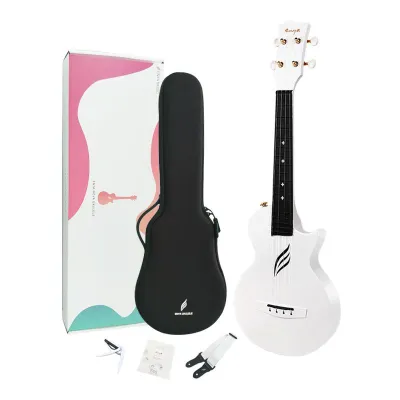
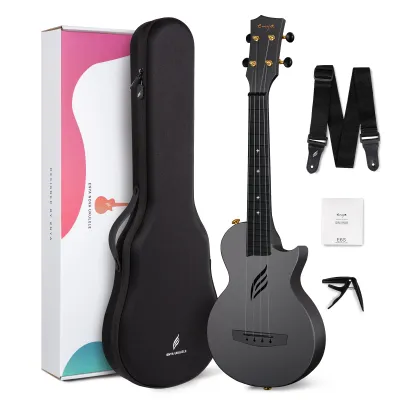
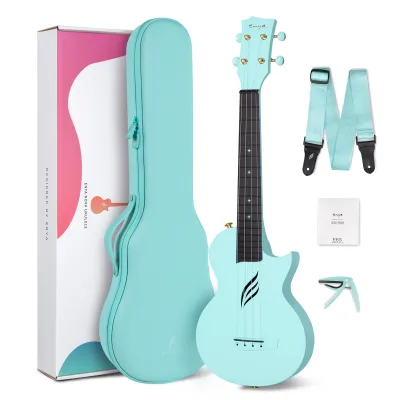
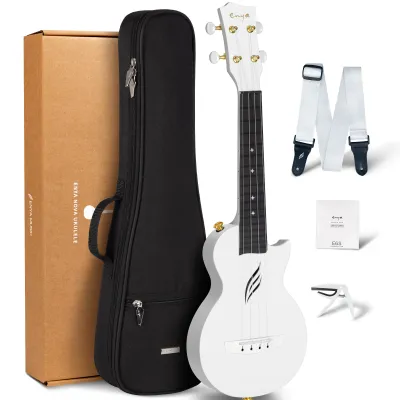
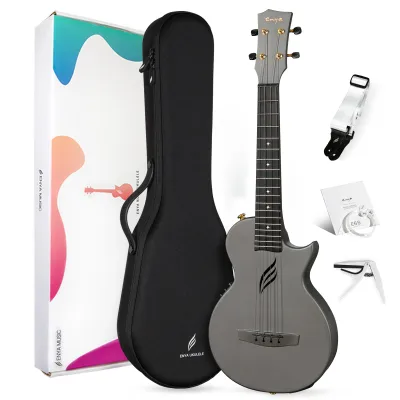
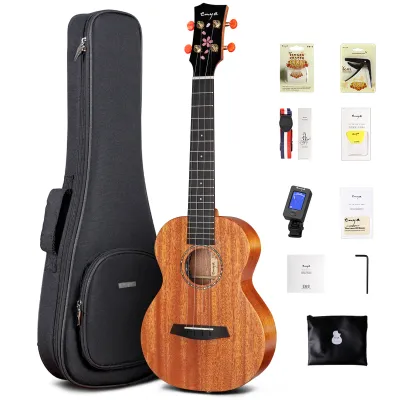
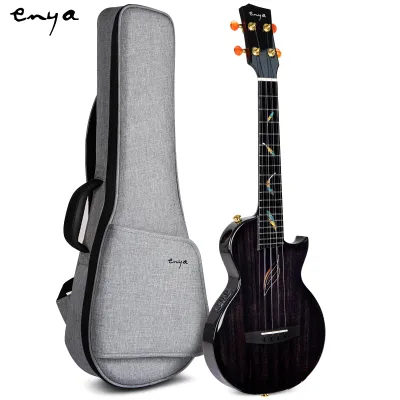
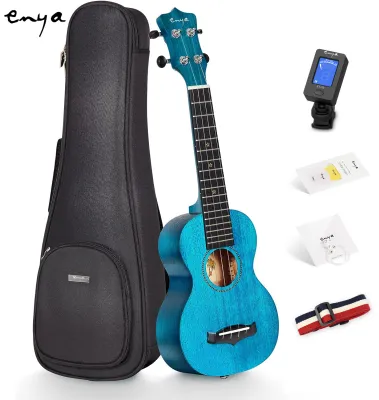
Prices are valid at publication and may change. Please refer to the product page for the latest price.
Durability and hardware stability are equally important when selecting an instrument that will be handled daily. Look for sturdy tuning machines, preferably enclosed geared tuners, which hold their tension and keep the instrument in tune for longer periods. Loose or low-quality tuners require constant adjustment, which can be highly discouraging for a beginner who cannot yet tune by ear. Additionally, inspect the fret wire installation; the metal frets should be seated flat against the fingerboard without any sharp edges protruding along the sides of the neck.
Aligning your initial budget with your level of commitment prevents overspending on features you may not yet need. While high-end models offer premium tonewoods and intricate cosmetic details, a beginner-friendly instrument should focus primarily on structural integrity and reliable intonation. Setting a practical budget, perhaps starting around S$80 to S$150, allows you to acquire a dependable instrument without paying a premium for professional-grade electronics or rare materials. This approach ensures you invest in a quality learning tool while keeping future upgrade options open as your skills develop.
Comparing Enya Materials: Carbon Fiber and Traditional Woods
Carbon fiber composite instruments have gained significant popularity due to their unique structural properties and modern aesthetic. These models are typically molded as a single piece, which eliminates the joint seams found in traditional wooden instruments. This unified construction results in a highly durable body that is exceptionally lightweight and resistant to physical impacts. Tonally, carbon fiber composites tend to produce a bright, clear, and highly projected sound with excellent sustain, making them ideal for players who prefer a modern, crisp acoustic voice.

Traditional wood options, such as mahogany, koa, or acacia, offer a classic look and a warmer, more organic acoustic character. Mahogany is widely appreciated for its balanced mid-range frequencies and soft, mellow tone, which many players associate with the traditional sound of the ukulele. Acacia and koa provide a brighter, more complex tonal profile with beautiful grain patterns that make each instrument visually unique. Wooden instruments also tend to “open up” and develop a richer sound over years of regular playing, a characteristic highly valued by traditionalists.
Environmental factors are a crucial consideration, particularly in regions with tropical climates like Singapore, where high humidity and temperature fluctuations are common. Traditional wooden ukuleles are highly sensitive to moisture; excessive humidity can cause the wood to swell, warp, or even lift at the bridge, while dry air-conditioned environments can lead to cracking. Carbon fiber composites, on the other hand, are virtually impervious to humidity and temperature changes. They do not warp, shrink, or crack when moved between humid outdoor air and dry, air-conditioned indoor spaces, making them incredibly low-maintenance.
Choosing between these materials ultimately comes down to how much time you want to spend on instrument maintenance. A wooden ukulele requires careful storage, often involving humidity-control packs inside a hard case, to preserve its structural integrity in tropical environments. If you prefer a grab-and-go instrument that you can leave on a stand in your living room without worrying about climate damage, a carbon fiber model offers unmatched convenience. Evaluate your living space and daily routine to decide whether the classic warmth of wood or the worry-free durability of composite materials fits your lifestyle better.
Choosing the Right Size and Scale for New Players
Ukuleles come in several standard sizes, with soprano, concert, and tenor being the most common for beginners. The soprano is the traditional size, featuring a short scale length and a compact body that produces a bright, plinky sound. However, the tight fret spacing on a soprano can feel cramped for players with larger fingers or those transitioning from the guitar. The concert size offers a slightly longer neck and a larger body, providing a comfortable middle ground with more room to maneuver your fingers across the fretboard.
The tenor size is larger still, offering an even longer scale length and a deeper, more resonant tone that approaches the sound of an acoustic guitar. The wider fret spacing on a tenor makes it easier to play complex chord shapes and fingerstyle arrangements, especially for adults. However, the larger body size may feel slightly unwieldy for younger players or those with smaller frames. Understanding these physical differences helps you select a size that feels balanced and secure against your body while you practice.
Beyond physical comfort, the size of the ukulele body directly influences its acoustic projection and tonal depth. Smaller soprano bodies have less internal air volume, resulting in a quieter sound with less bass response. As you move up to concert and tenor sizes, the larger soundboards vibrate more air, producing increased volume, longer sustain, and a fuller, more balanced frequency response. If you plan to sing along with your instrument or play in group settings, a larger body size will help your chords stand out more clearly.
Before finalizing your purchase, always verify the exact scale length and body dimensions on the product label or official store listing. Manufacturers sometimes offer non-standard hybrid models, such as a soprano-sized body with a concert-scale neck, which can surprise buyers who do not read the specifications carefully. Checking these details ensures you receive the exact physical configuration you expect, preventing the inconvenience of returning an instrument that does not fit your hands comfortably.
Deciding on Electronics and Beginner Bundles
Many modern ukuleles come equipped with built-in electronics, such as pickups, preamps, or even onboard effects like reverb and delay that function without an external amplifier. While these features are exciting and offer great versatility for performing or recording, they may not be necessary for a complete beginner. If your primary goal is to learn basic chords and strumming patterns at home, a purely acoustic instrument is more than sufficient. Opting for an acoustic-only model also allows more of your budget to go toward the physical quality of the wood or composite material rather than electronic components.
Beginner bundles are highly popular because they often include essential accessories like a gig bag, a strap, a clip-on tuner, and spare strings. Evaluating the quality of these included items is important, as some low-cost bundles may feature flimsy bags or unreliable tuners that you will need to replace quickly. A high-quality gig bag with adequate padding is essential for protecting your instrument during travel, while a precise clip-on tuner is indispensable for keeping your strings in perfect pitch. Look for bundles where the accessories are branded or clearly specified to ensure they offer genuine utility.
To determine the best financial path, calculate whether buying a standalone instrument and sourcing your accessories separately offers better long-term value. While a bundle is highly convenient, purchasing a standalone ukulele allows you to select a premium padded case and a highly accurate tuner of your own choosing. This approach might cost slightly more in S$ initially, but it prevents you from paying for items you may not use, such as plastic picks or low-quality straps. Compare the total cost of both options to decide if the convenience of an all-in-one package outweighs the customization of individual purchases.
How to Verify Authenticity and Check the Setup
To ensure you receive a genuine instrument backed by a valid manufacturer warranty, always purchase from authorized retailers or official brand stores. Online marketplaces and third-party sellers can sometimes list counterfeit products or gray-market imports that lack quality control and customer support. Buying from an established local music shop in Singapore or an officially recognized online distributor guarantees that your ukulele has been imported through proper channels and stored in appropriate conditions.
Once your ukulele arrives, conduct a thorough physical inspection to verify its setup and playability. Check that the strings sit at a reasonable height at both the nut (near the tuning pegs) and the saddle (on the bridge). Run your fingers gently along the edges of the fretboard to ensure there are no sharp fret ends that could scratch your hand while playing. Additionally, turn each tuning peg to confirm they rotate smoothly without slipping, sticking, or feeling excessively loose, as stable hardware is essential for maintaining proper pitch.
Finally, confirm the local warranty terms and return policies provided by the seller before making your purchase. A reliable warranty should cover structural defects, such as bridge separation or neck warping, which may not be immediately apparent upon unboxing. If you find that the string action is too high or the intonation is off, check if the retailer offers professional setup services to adjust the instrument to your liking. Having access to local customer support ensures that any initial setup issues can be resolved quickly and professionally, allowing you to focus entirely on your learning journey.
Frequently Asked Questions (FAQ)
Do carbon fiber Enya ukuleles require different strings than wooden ones?
Carbon fiber ukuleles do not strictly require specialized strings, but it is highly recommended to check the manufacturer’s specifications for your specific model before changing them. These composite instruments are designed to handle standard nylon or fluorocarbon ukulele strings, which provide the bright, clear tone that complements the material’s acoustic properties. However, you should avoid using high-tension steel strings or specialized classical guitar strings unless explicitly authorized by the manufacturer, as excessive tension can damage the bridge or neck. Always consult the included user manual or official support channels to verify the recommended string gauge and tension limits to keep your instrument in optimal playing condition.
How often should a beginner change the strings on a new Enya ukulele?
Rather than following a strict calendar schedule, beginners should learn to inspect their strings regularly for physical signs of wear and degradation. Over time, exposure to finger oils, sweat, and environmental humidity will cause nylon or fluorocarbon strings to lose their elasticity and tone. Look for visual cues such as discoloration, fraying near the bridge, or small indentations on the underside of the strings where they press against the metal frets. If you notice that your ukulele is struggling to stay in tune, or if the chords begin to sound dull and lifeless, it is likely time for a fresh set. For casual players practicing a few times a week, a routine inspection every three to six months is usually sufficient to determine when a string change is necessary.
Community discussion
Share your experience or ask a question. Comments are reviewed before publication.