
Amplifying an acoustic ukulele opens up new performance possibilities, but selecting the right pickup requires matching the technology to your specific instrument and playing environment. Rather than relying on generic recommendations, beginners must evaluate how different pickup designs interact with ukulele dimensions, bridge structures, and external amplification gear. This guide outlines the core decision-making criteria for choosing a compatible Fishman pickup system, ensuring you can verify fit and functionality before making a purchase.
When transitioning from a purely acoustic setting to an amplified stage, the physical characteristics of your ukulele play a significant role in how sound is captured. A pickup does not simply make the instrument louder; it translates physical vibrations into an electrical signal. Because the ukulele has a unique frequency range and a smaller body than an acoustic guitar, choosing a system designed to handle these specific acoustic properties is essential for achieving a balanced, natural tone.
Comparing Pickup Technologies for Acoustic Ukuleles
Undersaddle piezo elements are among the most common pickup designs used in acoustic-electric stringed instruments. These pickups consist of a thin strip of piezoelectric material that sits directly beneath the saddle in the bridge slot. When the strings vibrate, they exert physical pressure on the saddle, which transmits these vibrations directly to the piezo element. This direct contact makes undersaddle piezos highly efficient at capturing the immediate attack of the strings, resulting in a clear, focused sound with excellent note definition. Because they are shielded inside the bridge structure, they are highly resistant to feedback, making them the preferred choice for performing in loud environments or alongside other instruments.
Products mentioned in this guide
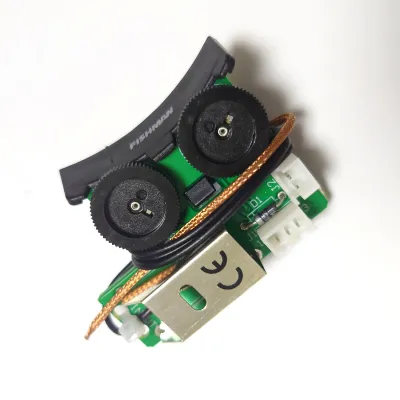
Prices are valid at publication and may change. Please refer to the product page for the latest price.
Soundboard transducers offer a different approach by capturing the physical vibrations of the ukulele’s wooden top rather than the direct movement of the strings. These pickups typically consist of small, lightweight discs that adhere to the underside of the soundboard inside the instrument body. By monitoring the movement of the wood itself, soundboard transducers capture the natural resonance, warmth, and acoustic character of the ukulele’s body. This results in a more open, microphone-like tone that faithfully reproduces the acoustic properties of the instrument. However, because the soundboard acts as a large diaphragm that can easily pick up external sound waves, these transducers are more susceptible to feedback at higher stage volumes.
Internal microphones represent the most natural-sounding amplification method, capturing the ambient air and complex acoustic reflections inside the ukulele’s body cavity. Systems that utilize an internal microphone provide an airy, three-dimensional sound that closely mirrors what you hear when playing unplugged. Despite their superior tonal realism, internal microphones have significant limitations in live performance settings. The hollow body of the ukulele can easily trap sound from stage monitors or amplifiers, causing the microphone to loop the signal and create harsh feedback. To mitigate this, many advanced systems combine an internal microphone with an undersaddle piezo, allowing players to blend the two signals for a balance of natural warmth and feedback resistance.
Matching the Pickup to Your Ukulele Size and Bridge
Ukuleles are built in four primary sizes, each with distinct physical dimensions that affect pickup compatibility. Soprano and concert ukuleles feature very narrow string spacing and short saddle lengths, which require a compact pickup element. Tenor and baritone models offer wider string spacing and longer saddles, allowing for larger pickup designs. If you install a pickup element that is too short for your bridge, the outer strings may not sit directly over the active sensing area, leading to an uneven volume balance where the outer strings sound significantly quieter than the inner ones.

Bridge design is another critical factor when selecting an undersaddle pickup. Traditional tie-bar bridges, pin bridges, and through-body stringing systems distribute downward pressure on the saddle in different ways. For an undersaddle piezo to function correctly, the bottom of the saddle slot must be perfectly flat, and the saddle itself must sit evenly on top of the pickup element. If your ukulele has a shallow saddle slot, adding a pickup underneath may cause the saddle to sit too high, altering the action and making the instrument difficult to play. In some cases, the slot must be professionally routed deeper to accommodate both the pickup and the saddle securely.
Internal structural bracing also dictates where you can place soundboard transducers. The underside of a ukulele’s top is reinforced with a pattern of wooden braces designed to support the tension of the strings. These braces limit the flat, open areas available for mounting adhesive transducers. Before choosing a soundboard transducer, you must inspect the interior of your instrument to ensure there is sufficient flat space directly beneath the bridge plate to mount the pickup discs. Placing a transducer too close to a brace or on an uneven surface can damp the soundboard’s natural vibration and result in a weak, distorted signal.
Active vs. Passive Systems: Managing Your Signal Chain
Passive pickup systems operate without any onboard battery power, sending the raw, unamplified signal from the piezo element or transducer directly to the output jack. Because they lack internal electronics, passive pickups are lightweight, highly reliable, and do not require structural modifications to accommodate a battery compartment. However, the signal generated by a passive piezo is weak and has high impedance. When this signal travels through a standard instrument cable, it quickly degrades, resulting in a loss of high-frequency clarity and an increased susceptibility to hum and interference. To maintain signal quality, passive pickups must be connected to an external preamp or a dedicated Direct Injection (DI) box located close to the performer.
Active pickup systems feature an integrated, battery-powered preamp built directly into the instrument. This preamp boosts the weak signal from the pickup element immediately, converting it to a low-impedance signal before it leaves the ukulele. This allows you to run long cables directly to an amplifier, mixing console, or audio interface without any loss of tone or signal strength. Active systems often include convenient onboard controls for volume and tone shaping, allowing you to make quick adjustments during a performance. The primary trade-offs of active systems are the added weight of the battery and preamp inside the small ukulele body, and the ongoing requirement to monitor and replace the battery to prevent signal loss or distortion.
Impedance matching is a crucial concept for beginners to understand when amplifying an acoustic instrument. Standard electric guitar amplifiers are designed to accept low-impedance signals from magnetic pickups. If you plug a high-impedance passive piezo pickup directly into a standard guitar amp, the mismatch in impedance will severely cut the low-end frequencies of your signal. This results in a thin, harsh, and excessively bright tone that lacks the warmth of your acoustic instrument. To avoid this, you must route your signal through an acoustic-specific preamp, a DI box with a high-impedance input, or plug directly into an amplifier designed specifically for acoustic instruments.
Evaluating Installation Requirements and Risks
For players who wish to avoid making permanent modifications to their instrument, non-invasive pickup options are highly practical. These systems typically utilize external soundboard transducers that attach to the top of the ukulele using temporary, instrument-safe adhesive putty or double-sided tape. Because they do not require drilling or routing, these pickups can be installed and removed in minutes without leaving residue or damaging the instrument’s finish. This makes them an excellent choice for high-value, vintage, or delicate instruments where preserving the original structural integrity is a priority.
Invasive modifications are required for most permanent, high-performance pickup systems. Installing an undersaddle piezo requires drilling a small hole through the bottom of the saddle slot to route the pickup wire into the body cavity. Additionally, the original endpin must be removed, and the hole must be enlarged to accommodate a 1/4-inch output jack. If you are installing an active system, you may also need to mount a battery bag or battery compartment inside the body. These permanent alterations require specialized tools and precise execution to ensure the instrument remains structurally sound and visually appealing.
Attempting invasive DIY installations carries significant physical risks for those without experience in instrument repair. The thin tonewoods used in ukulele construction can easily split or crack if drilled incorrectly. Using the wrong drill bit or applying too much pressure when enlarging the endpin hole can cause catastrophic damage to the tail block or soundboard. Furthermore, if the bottom of the saddle slot is not perfectly flat after drilling, the undersaddle pickup will experience uneven pressure, resulting in string-to-string volume imbalances. If you are uncomfortable performing these modifications, seeking the assistance of a professional luthier is highly recommended to ensure a safe and successful installation.
Verifying Fit and Compatibility Before Purchase
Before purchasing any pickup system, it is essential to verify its physical compatibility with your specific ukulele model. Start by consulting the manufacturer’s official product documentation to check the exact dimensions of the pickup element. Pay close attention to the recommended instrument sizes, saddle widths, and string spacing configurations. Many manufacturers provide detailed technical drawings or specification sheets online that outline the physical limits of their pickup designs, allowing you to compare these measurements directly with your instrument.
To ensure an accurate fit, you should measure your ukulele using a digital caliper rather than a standard ruler. Measure the exact width and depth of your saddle slot, as well as the overall string spread from the G string to the A string at the bridge. The saddle slot must be deep enough to hold at least half of the saddle’s height securely after the pickup element is placed underneath; if the slot is too shallow, the saddle may lean forward under string tension, damaging the bridge and ruining the intonation. Additionally, measure the internal clearance of the body cavity to confirm there is enough space to mount a battery pack or preamp chassis without interfering with the internal bracing.
Finally, always review the return and exchange policies of the retailer before finalizing your purchase. Because pickup kits contain delicate electronic components and are often subject to physical modification during installation, many sellers have strict policies regarding returns. Once a pickup wire has been bent, soldered, or installed, or if the adhesive backing on a transducer has been peeled, the item is typically no longer eligible for a refund. Confirming that you can return an uninstalled, unopened pickup if you discover a physical mismatch will protect your investment and ensure you find the right system for your instrument.
Frequently Asked Questions (FAQ)
Can I use a standard acoustic guitar pickup on my ukulele?
Using a standard acoustic guitar pickup on a ukulele is generally not recommended due to significant physical and acoustic mismatches. Guitar pickups are designed for much wider string spacings and longer saddles, meaning the active sensing element will extend far beyond the edges of a ukulele bridge. This physical mismatch often results in highly uneven volume levels across the four ukulele strings, as the outer strings may not align with the pickup’s active zones. Additionally, guitar pickups are voiced to capture the lower frequency ranges of a guitar, which can make a ukulele sound muddy or fail to reproduce its bright, characteristic high-frequency overtones.
Will adding a pickup affect the unplugged acoustic sound?
Adding a pickup can have a subtle impact on the unplugged acoustic sound of your ukulele, depending on the type of system you choose. An undersaddle piezo element adds a physical layer between the saddle and the bridge, which can slightly alter the transfer of string vibration to the soundboard if the saddle is not fitted perfectly. This can sometimes result in a very slight reduction in acoustic volume or sustain. Similarly, attaching heavy adhesive soundboard transducers or mounting internal preamps and batteries adds mass to the soundboard and body, which can damp the natural resonance of smaller soprano or concert ukuleles. On larger tenor and baritone models, however, these acoustic changes are usually negligible.
Do I need a special amplifier for an amplified ukulele?
To achieve a natural and pleasing tone, it is highly recommended to use an amplifier designed specifically for acoustic instruments rather than a standard electric guitar amplifier. Acoustic amplifiers feature full-range speakers and dedicated high-frequency tweeters that are designed to reproduce the rapid transients and bright high-end frequencies of acoustic instruments accurately. They also provide a flat frequency response that preserves the natural character of your ukulele. In contrast, electric guitar amplifiers are voiced to color the sound, emphasizing mid-range frequencies and rolling off the highs, which will make an amplified ukulele sound harsh, boxy, and unnatural.
Community discussion
Share your experience or ask a question. Comments are reviewed before publication.