
Finding the right song sheet stand is essential for creating a comfortable, productive, and ergonomic practice environment. The ideal choice depends on several factors, including the instrument you play, your physical practice space, and how often you need to transport your gear. While a heavy-duty floor stand offers unmatched stability for thick music books, a compact desk clip or a highly portable folder might be the perfect solution if you are dealing with limited floor space or a busy travel schedule. By evaluating your specific playing habits and physical setup, you can select a stand that supports your musical journey without causing physical strain or cluttering your home.
Assess Your Instrument and Playing Posture
Your physical relationship with your instrument is the first and most critical factor when choosing a song sheet stand. Different instruments demand vastly different playing postures, which directly dictates the height and angle adjustments your stand must accommodate. For instance, wind and brass players, as well as vocalists, typically practice while standing to maximize lung capacity and support proper breathing. This requires a stand that can extend comfortably to eye level, allowing you to maintain an upright posture without tilting your head downward. Conversely, pianists, cellists, and classical guitarists practice almost exclusively while seated, requiring a stand that can adjust to a much lower height range while still maintaining a clear line of sight.
Beyond height, the physical format of your sheet music plays a major role in determining the structural strength you need from a stand. If you primarily practice from heavy, bound anthologies, thick binders, or large tablets, a lightweight wire stand will likely bend or tip over under the weight. These heavier materials require a solid-plate metal tray with a deep lip to keep the pages secure and prevent the stand from wobbling. On the other hand, if you mostly use single loose sheets, thin pamphlets, or lightweight digital devices, a lighter, more flexible tray design will suffice, provided it has page holders or clips to keep the sheets from sliding off.
Products mentioned in this guide
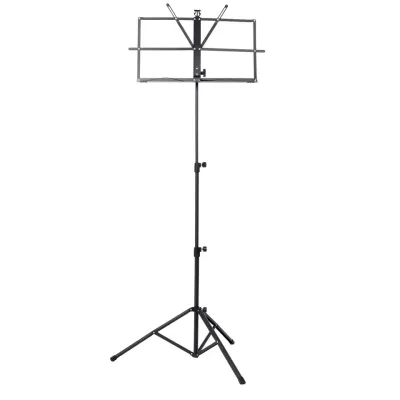
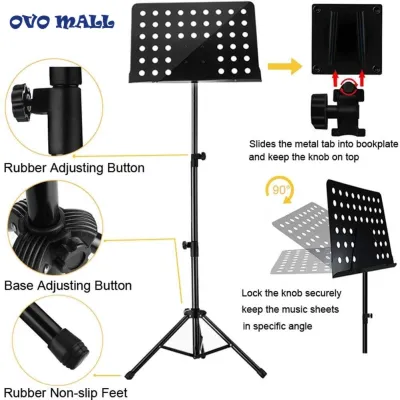
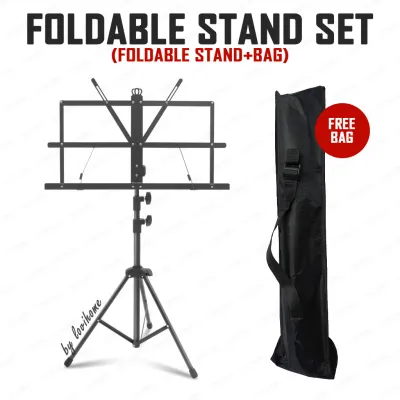
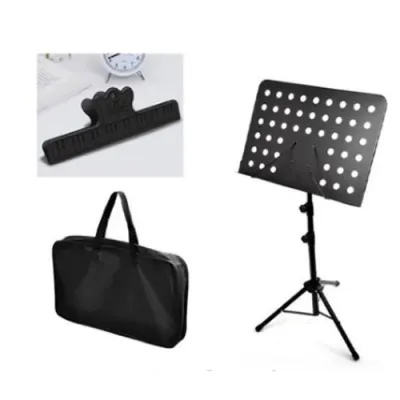
Prices are valid at publication and may change. Please refer to the product page for the latest price.
Ergonomics should never be overlooked during long practice sessions, as poor sightlines can quickly lead to chronic neck, shoulder, and back strain. The stand should be positioned so that you can easily read the music while keeping your instrument in the correct playing position. Your eyes should drift naturally between the sheet music and your instrument’s keys, strings, or fingerboard without requiring dramatic head movements. Adjusting both the height and the tilt angle of the tray ensures that you can read the notation clearly under your room’s lighting, minimizing glare and preventing eye strain.
Evaluate Your Practice Space and Storage Limits
The physical environment where you practice dictates the footprint and storage style of the stand you should choose. If you are fortunate enough to have a dedicated music room or a permanent studio space, you can opt for a larger, more robust floor stand that remains fully assembled at all times. These permanent fixtures offer the highest level of stability and convenience, as they are always ready for your next practice session. However, many musicians practice in multi-use shared spaces, such as compact apartments or HDB flats in Singapore, where a large, permanent stand would create unwanted clutter or block foot traffic.

In smaller or shared rooms, the base design of the stand becomes a crucial safety and space consideration. Traditional tripod bases are highly stable and widely available, but their splayed legs require a significant amount of floor space, which can easily become a tripping hazard in tight quarters. If floor space is at a premium, a stand with a flat, weighted solid base might be a better option. While these bases are heavier to lift, they have a much smaller physical footprint and can be tucked closer to walls or furniture, making them ideal for compact practice corners.
For those who must pack up their equipment after every session, foldability and storage options are paramount. Many modern stands are designed to collapse down into a highly compact form factor, allowing them to be stored in a closet, under a bed, or behind a door when not in use. When evaluating folding stands, pay close attention to the locking mechanisms and joints. High-quality joints should operate smoothly and lock securely without requiring excessive force, ensuring that the stand remains stable during use but remains easy to disassemble and store away at a moment’s notice.
Determine Your Mobility and Gig Requirements
If your musical routine extends beyond the walls of your home, portability and durability must be balanced against your need for stability. Musicians who regularly travel to private lessons, school rehearsals, community ensemble practices, or live gigs need a stand that can withstand the rigors of transit without adding unnecessary weight to their gear. Carrying a heavy, solid-plate steel stand on public transport or loading it into a car trunk alongside an instrument can quickly become exhausting and impractical.
When prioritizing mobility, the choice of materials is critical. Aluminum stands offer an excellent balance of lightweight portability and structural strength, making them a popular choice for traveling musicians. However, ultra-lightweight plastic or thin wire stands, while incredibly easy to carry, often sacrifice durability and wind resistance. If you frequently perform outdoors or in drafty venues, a stand that is too light can easily be blown over by a gust of wind, potentially damaging your sheet music or digital tablet.
For maximum portability, secondary options like desk clips or specialized portable folders can be incredibly useful. Desk clips allow you to attach sheet music directly to existing structures, such as the music rest of a digital piano or the edge of a table, eliminating the need to carry a floor stand altogether. Portable folders with built-in rigid backings and strap systems can also serve as self-supporting music rests when placed on a flat surface. These compact accessories are excellent additions to a traveling musician’s toolkit, providing flexible solutions when space or weight limits are tight.
Match the Stand Type to Your Diagnostic Results
To select the perfect song sheet stand, synthesize your assessment of posture, space, and mobility to match your needs with one of the three primary categories. Floor stands are the most versatile and robust option, making them the gold standard for dedicated practice spaces. If you use heavy music books, switch between standing and seated playing, or have a permanent corner for your instrument, a high-quality floor stand with a solid plate or a heavy-duty folding frame will provide the stability and height range you require.
Desk clips and clamp-on stands are the ideal choice for musicians working with limited floor space or integrated digital setups. If you practice on a digital piano, synthesizer, or at a computer desk, these compact mounts attach directly to your instrument or furniture. They keep your sheet music or tablet at the perfect reading height without taking up any floor space, making them highly efficient for small bedrooms, home studios, or multi-use workspaces where a traditional tripod stand would get in the way.
Portable folders and ultra-light folding stands are designed specifically for the musician on the move. If your primary concern is minimizing weight and setup time during travel, these highly collapsible options are the best fit. While they may not offer the same heavy-duty stability as a solid-plate floor stand, they excel at holding loose sheets or light booklets while fitting easily into a backpack or gig bag. Choosing this style ensures that you always have a reliable reading surface wherever your music takes you, without the burden of carrying heavy equipment.
Frequently Asked Questions (FAQ)
Can I use a standard floor stand for heavy bound music books?
Yes, but you must choose a floor stand specifically designed to handle heavier loads. Standard lightweight wire folding stands often lack the structural integrity and tray depth required to support thick anthologies or heavy binders, which can cause the stand to tip over or the tray to sag. For heavy bound books, look for a solid-plate metal stand with a tray lip depth of at least five centimeters and a robust locking collar on the vertical shaft. Always check the manufacturer’s specified weight capacity to ensure the stand can safely support your heaviest music collections.
Do desk clips damage the surface of my keyboard or desk?
Desk clips and clamp-on stands are generally safe to use, provided they are designed with protective padding and used correctly. High-quality clamps feature rubber, silicone, or felt padding on the contact surfaces to prevent scratches, scuffs, or pressure marks on your furniture or instrument. To avoid damage, always verify that the clamp’s maximum opening thickness matches your desk or keyboard stand, and avoid over-tightening the clamp mechanism. Regularly inspecting the padding for wear and tear will ensure your surfaces remain pristine over long-term use.
Community discussion
Share your experience or ask a question. Comments are reviewed before publication.