
Choosing how to protect your first electric guitar is one of the most important decisions you will make after purchasing the instrument itself. The choice between a soft gig bag and a rigid hard case is not about finding a single “best” option, but rather about identifying which style fits your daily routine, transport habits, and storage space. A quality guitar bag electric offers exceptional, lightweight portability with backpack-style straps, making it the ideal choice for musicians who walk, cycle, or use public transport. On the other hand, a hard case provides unmatched physical security, crush resistance, and environmental insulation, making it indispensable for air travel, crowded vehicle trunks, or high-value instruments. By evaluating your lifestyle and how you plan to handle your guitar, you can easily select the option that keeps your instrument safe without creating unnecessary hassle.
Protection Level: Impact Resistance and Climate Control
When evaluating protection, you must consider both immediate physical impacts and the slower, more insidious damage caused by environmental changes. A hard case acts as a rigid exoskeleton for your electric guitar. Typically constructed from heavy-duty materials such as molded ABS plastic, cross-laminated plywood wrapped in Tolex, or lightweight fiberglass, these cases are designed to absorb and deflect severe external forces. If a heavy amplifier tipped over onto a hard case, or if the case fell flat on concrete, the rigid outer shell would prevent the force from reaching the instrument. Crucially, hard cases feature a molded interior nest lined with plush fabric that supports the guitar’s neck and headstock. This structural support is vital for guitars with angled headstocks, which are highly susceptible to snapping at the neck joint under sudden impact.
In contrast, a standard guitar bag electric relies on layers of soft padding to cushion the instrument. These bags are usually made from durable woven polyester or nylon fabrics—often rated by denier count (such as 600D or 1680D) to indicate tear resistance—and lined with open-cell or closed-cell foam. While a gig bag with 15mm to 30mm of high-density foam padding provides excellent protection against minor bumps, scratches, dust, and light drops, it offers virtually no crush resistance. If a heavy object is placed on top of a soft gig bag, the bag will compress, transferring the entire weight directly to the guitar’s wood, neck, and hardware.
Products mentioned in this guide
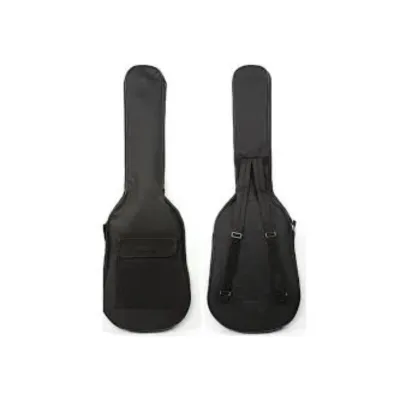


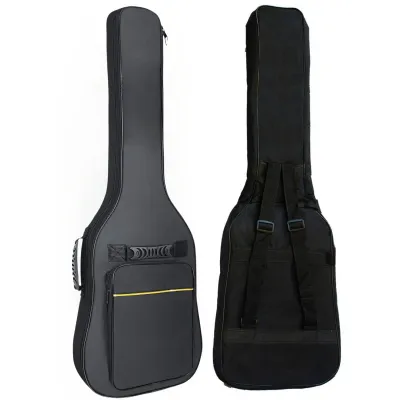
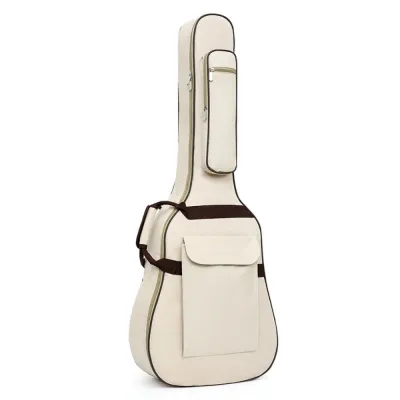
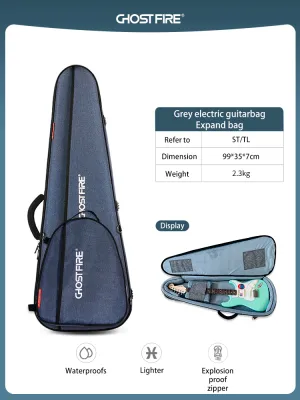
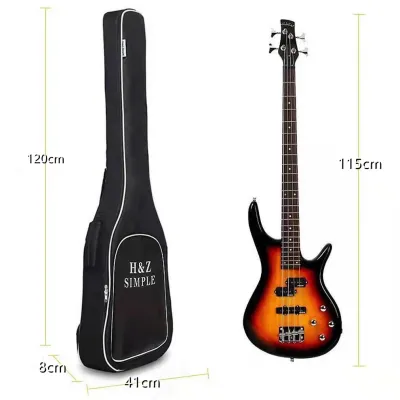
Prices are valid at publication and may change. Please refer to the product page for the latest price.
Environmental protection is another critical factor, particularly in tropical regions like Singapore. The local climate is characterized by high relative humidity, often hovering between 70% and 90% year-round. Moving your electric guitar from a hot, humid outdoor environment into a cool, dry, air-conditioned room creates rapid thermal and moisture shifts. Wood is a hygroscopic material, meaning it constantly absorbs and releases moisture, causing it to expand and contract. These rapid fluctuations can lead to finish checking (fine cracks in the lacquer), fret sprout (where the metal frets protrude past the edge of a shrinking fretboard), or neck warping.
A hard case provides a far superior defense against these climate swings. Because a hard case seals tightly—often utilizing tongue-in-groove aluminum valances or rubber gaskets—it creates a semi-sealed microclimate inside. This significantly slows down the rate of humidity exchange, allowing the wood of your guitar to acclimate slowly to temperature changes. A gig bag, being made of breathable fabric and closed with standard zippers, offers almost no barrier to humidity, exposing your guitar to immediate environmental fluctuations.
Before choosing, perform an actionable verification of your guitar’s specific build. If your guitar features a delicate nitrocellulose lacquer finish (common on vintage or high-end models), it is highly sensitive to rapid temperature shifts and can even react chemically with the cheap plastics or adhesives used in low-end gig bags. Conversely, modern polyurethane or polyester finishes are incredibly tough and chemically inert, making them much more forgiving of environmental exposure. Additionally, solid-body electric guitars are physically robust and can tolerate the minor bumps of a gig bag, whereas semi-hollow or hollow-body electric guitars have thin, fragile wooden plates that demand the rigid protection of a hard case.
Portability and Transport: Commuting with Your Guitar
The physical effort required to move your guitar from your home to a lesson, rehearsal space, or gig is a major factor that directly impacts how often you will actually use the instrument. Carrying a heavy, awkward case can quickly turn a fun practice session into a physically exhausting chore. This is where the weight and ergonomic differences between gig bags and hard cases become most apparent.

An empty wooden or ABS hard case typically weighs between 4 kg and 6 kg. Once you place a standard solid-body electric guitar inside, the total weight can easily reach 7 kg to 10 kg. Because hard cases are carried almost exclusively by a single side handle, this weight is distributed unevenly across one side of your body. Carrying this heavy load over long distances puts continuous strain on your fingers, wrist, forearm, and shoulder, which can lead to fatigue before you even plug in your guitar.
A guitar bag electric is vastly superior in terms of ergonomics and weight distribution. Weighing only 1 kg to 2.5 kg empty, a gig bag keeps the overall carrying weight remarkably low. More importantly, almost all modern gig bags feature dual, adjustable, padded backpack-style shoulder straps. This allows you to wear the guitar on your back, distributing the weight evenly across both shoulders and your spine. Wearing your guitar as a backpack keeps both of your hands completely free, allowing you to easily navigate your surroundings.
If you commute using public transport, such as Singapore’s MRT or public buses, navigating crowded spaces with a hard case can be incredibly challenging. The wide, rigid profile of a hard case takes up significant floor space, making it easy to accidentally bump into other commuters or get caught in transit turnstiles. Keeping a heavy case upright on a moving train requires constant physical effort. A gig bag allows you to keep the guitar vertically aligned with your body, minimizing your physical footprint in tight spaces. However, you must remain mindful of the headstock height when boarding buses or walking through low doorways.
Weather protection during foot commutes is another practical consideration. When caught in a sudden tropical downpour, a hard case’s solid outer shell naturally sheds water, though moisture can still seep through non-sealed seams or latches over time. Many premium gig bags feature water-resistant outer fabrics and water-repellent zippers, but standard budget gig bags can quickly absorb water, allowing moisture to penetrate the padding and reach the guitar’s electronics. If you anticipate walking in the rain, look for a gig bag that includes an integrated, pull-out rain cover.
For those who travel primarily by car, the advantages shift back toward the hard case. When loading a car trunk or the back of a van, gear is frequently stacked to maximize space. A hard case can easily support the weight of other cases, amplifiers, or luggage piled on top of it without risking damage to the guitar inside. Placing a soft gig bag in a crowded trunk is highly risky, as shifting gear can easily crush the neck or put excessive pressure on the guitar’s control knobs and tuning pegs. If you must use a gig bag in a car, it should always be placed carefully on the back seat or laid flat on top of all other luggage.
Storage, Accessories, and Everyday Convenience
Beyond physical protection and transport, your choice of case will affect your daily routine, how you organize your gear, and how much space your hobby takes up at home. Beginners often underestimate the sheer volume of accessories required to play electric guitar, as well as the spatial constraints of storing gear in smaller residential spaces.
One of the greatest practical advantages of a guitar bag electric is its storage capacity. Gig bags are designed with multiple exterior pockets of varying sizes. The main pocket is typically large enough to hold A4-sized music books, chord charts, or a tablet. Smaller pockets are perfect for organizing instrument cables, clip-on tuners, spare strings, guitar straps, capos, and a pouch of picks. This integrated storage means you can carry your entire playing rig on your back in a single package.
Hard cases offer incredibly limited storage by comparison. Because the interior of a hard case is custom-molded to fit the exact contours of the guitar, there is no room for external pockets. Instead, hard cases feature a small, lidded compartment located directly beneath the neck support cradle. This space is barely large enough to hold a folded strap, a small cable, and a few picks. If you need to carry music books, a music stand, or an effects pedal, you will be forced to carry a separate backpack or shoulder bag alongside the heavy hard case.
At home, spatial efficiency is a major consideration, particularly in compact urban apartments. A hard case has a rigid, non-negotiable footprint. Whether empty or full, it takes up the exact same amount of physical space. It cannot be folded or compressed, meaning you must dedicate permanent floor or closet space to store it. A soft gig bag is highly flexible; when your guitar is out on a stand, the empty gig bag can be folded, rolled up, or compressed flat. You can easily slide it under a bed, hang it from a closet rod, or tuck it away on a high shelf out of sight.
Security is another area where these two options diverge. If you plan to leave your guitar in shared rehearsal spaces, school music rooms, or community centers, you may need to leave your instrument unattended for short periods. Hard cases are typically equipped with metal latches, and at least one of these latches usually features a key lock or a padlock loop. While these locks are relatively simple and will not stop a motivated thief from stealing the entire case, they provide an important layer of deterrence against curious peers, children, or accidental opening. Gig bags rely on standard zippers, which offer no physical security and can be opened silently in seconds by anyone.
The Decision Framework: Choose Based on Your Lifestyle
To make the final decision, you should weigh your personal transport habits, your home environment, and the specific physical characteristics of your instrument. Use the following structured guidelines to identify which category best aligns with your needs.
Choose a Gig Bag if:
- You commute on foot or public transit: You need a lightweight, ergonomic backpack-style option that keeps your hands free for transit cards, umbrellas, or phones.
- You have limited home storage: You live in a compact apartment and need a case that can be folded, compressed, or hung up out of sight when not in use.
- You need to carry multiple accessories: You want to keep your cables, tuners, straps, sheet music, and personal items organized in a single bag.
- You own a durable solid-body guitar: Your instrument features a robust polyurethane or polyester finish that can easily withstand minor temperature changes and light impacts.
- You primarily play indoors: Your transit is limited to short, controlled commutes between air-conditioned homes, schools, or studios.
Choose a Hard Case if:
- You travel by car or van with other gear: You frequently stack your instrument alongside heavy amplifiers, drum hardware, or luggage in a vehicle trunk.
- You travel by air: You plan to fly with your instrument, which requires a heavy-duty, flight-certified hard case to survive baggage handling systems.
- You own a delicate or high-end guitar: Your instrument has a fragile nitrocellulose finish, a semi-hollow body, or an angled headstock that requires maximum structural support.
- You face extreme climate shifts: You need to buffer your guitar against rapid transitions between intense tropical heat and cold, dry air-conditioned rooms.
- You require basic physical security: You need lockable latches to prevent unauthorized access in shared spaces.
The Hybrid Alternative If you find that neither option perfectly fits your lifestyle, you may want to research hybrid cases, often referred to as semi-rigid or polyfoam cases. These cases feature a tough, weather-resistant nylon or canvas exterior with backpack straps and accessory pockets, mimicking the convenience of a gig bag. However, the interior is constructed from thick, rigid, high-density expanded polystyrene (EPS) foam that is custom-molded to cradle the guitar’s body and neck. This design offers almost the same level of drop and crush protection as a traditional hard case while remaining incredibly lightweight and easy to carry on your back.
Pre-Purchase Verification Checklist Before purchasing any guitar bag electric or hard case from an online marketplace, you must perform a thorough physical verification of your instrument’s dimensions. Electric guitars do not follow a single universal size standard. A case designed for a standard double-cutaway guitar will not fit a single-cutaway model, an offset body, or radical shapes like Flying V or Explorer designs. Always verify the following dimensions before committing to a purchase:
- Measure the overall length: From the bottom strap button to the very tip of the headstock.
- Measure the body width: Check the widest points of both the upper bout and the lower bout.
- Measure the body depth: Ensure the case is deep enough so the lid does not press down violently on the bridge or control knobs.
- Verify headstock angle and neck support: Ensure the neck cradle supports the neck without forcing the headstock to press against the bottom of the case.
A loose fit inside a hard case can cause just as much damage as no case at all, as the guitar will slide around and collide with the rigid interior walls during transport. Conversely, a gig bag that is too tight will put constant, dangerous pressure on the tuning keys, potentially knocking the instrument out of tune or bending the pegs.
Frequently Asked Questions (FAQ)
Can I use an acoustic guitar case for an electric guitar?
You should avoid using an acoustic guitar case for an electric guitar. Acoustic guitars are significantly deeper and wider than electric guitars, which are comparatively slim and compact. Placing an electric guitar into an acoustic case leaves a massive amount of empty space, allowing the instrument to slide around violently during transport. Furthermore, the neck support cradle in an acoustic case is positioned at a height and angle designed for thick acoustic bodies, meaning it will not properly support the neck of a flat electric guitar. This lack of support can lead to neck warping or a snapped headstock if the case is dropped or bumped. Always purchase a case specifically designed with the correct internal dimensions and neck support for an electric guitar.
Do I need a humidifier inside my electric guitar case?
For standard solid-body electric guitars, a case humidifier is rarely necessary, particularly in naturally humid tropical environments like Singapore. In fact, adding a humidifier in a highly humid climate can trap excess moisture inside the case, promoting the growth of mold and accelerating the corrosion of your guitar’s metal frets, pickups, and bridge. However, if you own a semi-hollow or hollow-body electric guitar, or if you store your instrument constantly in a heavily air-conditioned room where the relative humidity drops significantly, the wood can dry out, leading to cracks or fretboard shrinkage. In these specific cases, monitor the room’s humidity with a hygrometer and consult the guitar manufacturer’s care guidelines before using any humidification packs.
Are expensive premium gig bags as protective as cheap hard cases?
Premium gig bags constructed with high-density, closed-cell foam cores and reinforced internal plastic panels offer exceptional shock absorption that can equal or even surpass cheap, thin-walled plastic hard cases during a drop. The thick foam in a premium bag absorbs and dissipates the kinetic energy of a fall, whereas a cheap, brittle plastic case might crack and transfer the shock directly to the guitar. However, even the most expensive premium gig bag cannot match a cheap hard case when it comes to absolute crush resistance. If a heavy object falls directly onto the face of a gig bag, the soft materials will compress, whereas a hard case’s rigid shell will structurally resist the weight. If your primary risk is dropping the guitar while walking, a premium gig bag is an excellent choice; if your primary risk is stacking heavy gear on top of the instrument, a hard case is far safer.
Community discussion
Share your experience or ask a question. Comments are reviewed before publication.