
For a beginner, choosing the right ukulele bag case depends on where you play, how you travel, and your instrument’s construction. If you are a casual player practicing at home or taking your ukulele to nearby, low-risk gatherings, a padded gig bag offers a practical balance of lightweight comfort and basic scratch protection. However, if you own a solid-wood instrument, commute on crowded public transit, or plan to travel frequently, a hard case is a necessary investment to safeguard your ukulele from crushing forces and rapid environmental changes.
Understanding the differences between these two primary storage options will help you protect your investment without overspending. Let’s break down how gig bags and hard cases compare in construction, protection, portability, and cost, so you can make an informed decision for your musical journey.
Understanding the Build: Gig Bags vs. Hard Cases
A gig bag is a soft-sided, flexible case typically constructed from woven synthetic fabrics like nylon or polyester canvas. The exterior fabric is chosen for its resistance to abrasions, light rain, and dust, while the interior features a layer of foam padding lined with soft fabric to prevent scratches. The thickness of this padding varies significantly, ranging from thin, unpadded dust covers to heavily padded bags with 10mm to 20mm of high-density foam. These soft cases conform slightly to the shape of the instrument, offering a snug but flexible fit that keeps the ukulele lightweight and easy to carry.
Products mentioned in this guide
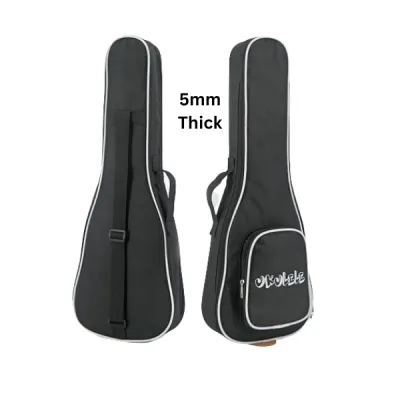
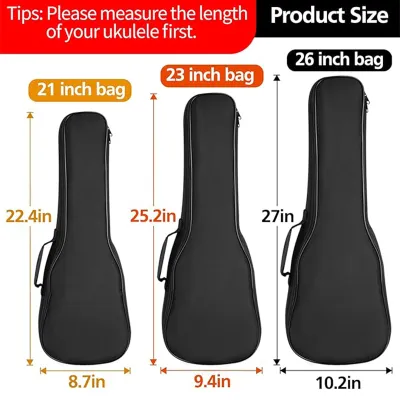
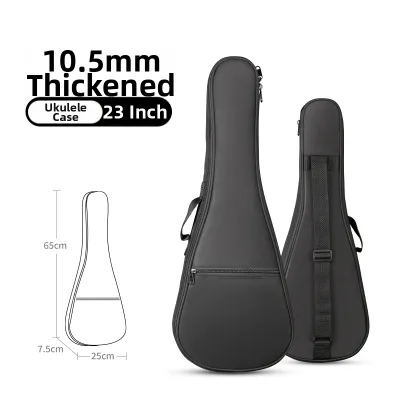
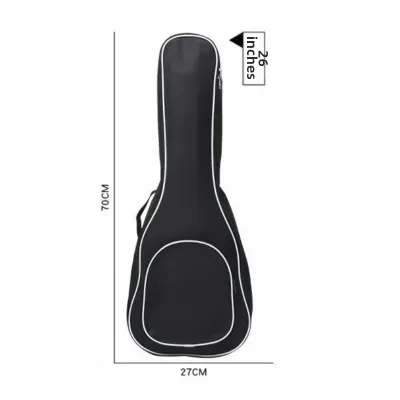
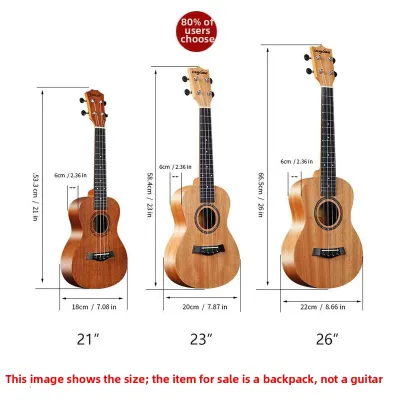
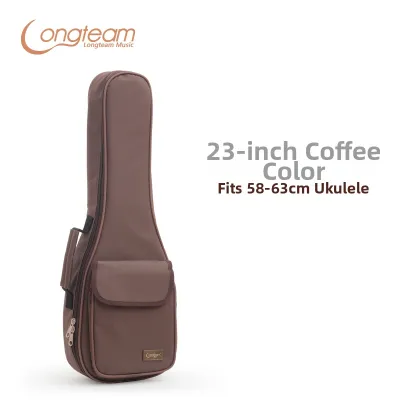
Prices are valid at publication and may change. Please refer to the product page for the latest price.
In contrast, a hard case features a rigid, non-yielding outer shell designed to withstand significant external pressure. These shells are commonly constructed from materials such as molded ABS plastic, polycarbonate, fiberglass, or traditional plywood wrapped in vinyl or leatherette. Inside, a hard case features a custom-molded foam or wooden interior lined with plush fabric, which holds the ukulele securely in place and prevents it from shifting during transit. This rigid structure ensures that any external impact or crushing force is absorbed by the outer shell rather than being transferred to the delicate wood of the instrument.
The structural differences also affect how much gear you can carry alongside your instrument. Gig bags almost always feature generous exterior zippered pockets, allowing you to store accessories like clip-on tuners, spare strings, straps, chord charts, and picks in one convenient package. Hard cases, due to their rigid design, have limited exterior storage; instead, they usually feature a small, lidded accessory compartment directly beneath the neck support inside the case. This internal compartment is highly secure but offers significantly less space, meaning you may need to carry larger items like music books or folding stands in a separate bag.
Weight and profile are another major point of divergence between the two styles. A gig bag is incredibly light, often adding negligible weight to the ukulele itself, and its soft edges make it comfortable to sling over your shoulder or squeeze into tight spaces. A hard case is inherently heavier and bulkier, maintaining its exact dimensions regardless of where you try to store it. While the added weight of a hard case is manageable for a small instrument like a ukulele, it represents a noticeable physical presence that requires more deliberate handling during your daily commute.
Assessing Protection: Impact, Crush, and Climate
When evaluating protection, you must consider the specific hazards your ukulele is likely to encounter. A padded gig bag is highly effective at preventing minor cosmetic damage, such as surface scratches, small dings from accidental bumps against furniture, and dust accumulation when the instrument is stored at home. However, because the sides are flexible, a gig bag offers virtually no protection against crushing forces. If someone accidentally steps on a soft bag, or if heavy luggage shifts against it in a car trunk, the pressure will be transmitted directly to the ukulele, potentially cracking the soundboard or snapping the neck.

A hard case excels in high-risk environments where crushing forces are a constant threat. The rigid shell acts as a protective shield, allowing the case to support significant weight without bending or compressing. This makes a hard case indispensable if you frequently travel on crowded buses or trains, where other commuters might bump into you, or if you need to pack your instrument alongside heavy gear in a vehicle. The molded interior also provides excellent neck support, keeping the joint between the neck and body stable during sudden jolts or drops.
Environmental protection is another critical factor, particularly for instruments made of wood. Wood is highly sensitive to changes in relative humidity and temperature, which can cause it to expand, contract, warp, or crack. A hard case provides a much tighter seal than a zippered gig bag, creating a buffered microclimate that slows down the rate of temperature and moisture exchange with the outside air. This slow transition is vital when moving between air-conditioned indoor spaces and humid outdoor environments, giving the wood time to adjust gradually.
The construction of your ukulele should guide your environmental protection needs. Many entry-level ukuleles are made from laminate wood, which consists of thin layers of wood glued together. Laminate instruments are highly durable and relatively resistant to temperature and humidity fluctuations, making them well-suited for the simpler protection of a gig bag. However, if you have invested in a solid-wood ukulele, the instrument is far more vulnerable to cracking and warping. For solid-wood models, a hard case is highly recommended to maintain a stable environment and prevent costly structural damage.
Matching Portability to Your Daily Routine
Your daily routine and how you plan to transport your ukulele should heavily influence your choice of case. Gig bags are designed with active, on-the-go lifestyles in mind, almost always featuring adjustable backpack-style shoulder straps. This allows you to carry your ukulele hands-free, which is incredibly convenient if you are walking, cycling, riding public transit, or carrying other bags. The lightweight nature of a soft bag means you can wear it for extended periods without experiencing shoulder strain or fatigue.
Hard cases, on the other hand, typically rely on a single, heavy-duty carrying handle, requiring you to carry the instrument like a small suitcase. While some modern fiberglass or ABS cases include D-rings for an optional shoulder strap, they rarely offer the comfortable, dual-strap backpack configuration found on gig bags. This means one of your hands will always be occupied while carrying a hard case, which can be inconvenient during a busy daily commute or when navigating crowded spaces.
Storage space at home is another practical consideration. When your ukulele is out of its case and on a stand, an empty gig bag can be easily folded, rolled up, or tucked away in a drawer or closet, taking up minimal space. A hard case retains its full, rigid shape even when empty, requiring a dedicated spot under your bed, in a closet, or on a shelf. If you live in a compact apartment where storage space is at a premium, the collapsible nature of a gig bag can be a significant advantage.
Finally, consider your travel scenarios. For a casual walk to a local music lesson, a community jam session, or a friend’s house, a gig bag is often the most practical and comfortable choice. However, if you plan to travel by air, a hard case is non-negotiable. Even if you intend to bring your ukulele as carry-on luggage, overhead bins can fill up quickly, and flight crew may require you to gate-check the instrument. A hard case ensures that your ukulele survives the rough handling of airport baggage systems, whereas a gig bag would leave it highly vulnerable to destruction.
Balancing Budget and Instrument Value
For many beginners, budget is a primary deciding factor when purchasing accessories. Padded gig bags are highly affordable, with basic models starting around S$15 to S$30, while premium, heavily padded options generally range from S$40 to S$70. This low entry cost makes gig bags highly attractive to new players who have already spent a significant portion of their budget on the instrument itself and want to keep additional expenses to a minimum.
Standard hard cases represent a larger financial commitment, typically starting around S$60 and ranging up to S$150 or more for advanced fiberglass or carbon-fiber models. While this cost is higher, it is helpful to apply the proportional investment rule: your protection should match the value and replacement cost of your instrument. If you purchased an entry-level laminate ukulele for S$80, spending S$100 on a hard case may not make financial sense, as a high-quality padded gig bag will provide more than enough protection for a fraction of the price.
Conversely, if you have invested in a mid-range or high-end solid-wood ukulele costing S$300 or more, a hard case is a highly sensible investment. Spending S$80 to S$120 to protect a S$300 instrument represents a reasonable insurance policy against accidental drops, cracks, and environmental damage that could render the ukulele unplayable. Protecting a valuable instrument with a cheap, unpadded bag increases the risk of structural damage that could cost more to repair than the price of a proper hard case.
If you are still unsure of your long-term commitment to the instrument, starting with a decent padded gig bag is a practical compromise. A good gig bag will serve you well during your first few months of learning at home. As your skills progress, your collection grows, or you begin traveling to more distant gigs and rehearsals, you can upgrade to a hard case. This approach allows you to spread out your expenses while you determine your specific playing and travel habits.
Decision Framework: Which Case Fits Your Needs?
To help you finalize your purchase, you can use a simple, condition-based framework to determine which case type aligns with your current situation.
You should choose a gig bag if:
- You primarily play and store your ukulele at home, with only occasional trips to low-risk environments like a teacher's studio or a friend's living room.
- You travel on foot, by bicycle, or use public transit and require hands-free backpack straps to keep your hands free.
- Your ukulele is made of durable laminate wood, which is less sensitive to minor impacts and environmental changes.
- You are working with a tight budget and prefer to allocate more funds toward lessons, sheet music, or the instrument itself.
You should choose a hard case if:
- You frequently commute on crowded public transit, where your instrument is at risk of being bumped, squeezed, or stepped on.
- You plan to travel by air, road-trip with a packed car trunk, or transport your instrument alongside heavy gear.
- Your ukulele is constructed from solid wood, making it highly susceptible to warping, cracking, and humidity shifts.
- You want the peace of mind that comes with robust crush resistance and a highly stable internal microclimate.
Before making your final choice, verify if your ukulele has any non-standard features. If you are buying a vintage instrument, an acoustic-electric model with external preamps, or a ukulele with an unusual body shape (such as a pineapple or cutaway design), a standard case may not fit properly. In these cases, you should measure the instrument carefully and check the manufacturer’s specifications to ensure the interior dimensions will accommodate your specific model without putting pressure on delicate components.
Final Checks: Sizing, Fit, and Hardware
Before you proceed to checkout, it is essential to verify that the case you select matches the exact size of your ukulele. Ukuleles come in four primary sizes: soprano, concert, tenor, and baritone. These sizes are not interchangeable; a concert ukulele will not fit into a soprano case, and a tenor ukulele will slide around loosely in a baritone case, which can lead to damage during transit. Always check the product specifications to ensure the case is explicitly designed for your instrument’s size.
In addition to the overall length, pay close attention to the interior fit of the case. A well-designed case should provide a snug fit around the body of the ukulele, preventing it from shifting side-to-side or up-and-down. There should be dedicated neck support—usually a raised block or a padded cradle—that suspends the neck and keeps the headstock from touching the bottom of the case. Ensure that the lid or top of the case does not press down hard on the bridge or the tuning pegs when closed, as constant pressure on these areas can cause tuning instability or structural strain.
Finally, inspect the quality of the hardware, as this is often the first point of failure on any instrument case. For gig bags, look for heavy-duty, smooth-gliding zippers with large metal pulls, as cheap zippers are prone to splitting or catching on the fabric. For hard cases, examine the latches and hinges; they should align correctly and close securely with a reassuring click. If you choose a hard case, look for models with at least one lockable latch to prevent accidental opening during transport and to provide a basic level of security.
Frequently Asked Questions (FAQ)
Can I use a generic padded bag or a small guitar case for my ukulele?
Using a generic bag or a small guitar case is highly discouraged because it does not provide the proper fit or suspension required to keep a ukulele safe. If a case is too large, the ukulele will slide around inside, causing the delicate headstock and neck to repeatedly strike the interior walls during transit, which can lead to structural cracks or snapped joints. Furthermore, generic bags often lack the dedicated neck support and body contouring necessary to prevent external pressure from pressing directly against the bridge and soundboard, increasing the risk of costly damage.
Do I need to put a humidifier inside my ukulele case?
Whether you need a humidifier depends on your local climate and the construction of your ukulele. If you own a solid-wood ukulele and live in an environment with low humidity (or frequently use air conditioning or heating, which dries out the air), using a small instrument humidifier inside a hard case is highly recommended to prevent the wood from shrinking and cracking. However, if your ukulele is made of laminate wood, it is much more stable and generally does not require humidification. If you do use a humidifier, ensure it is designed specifically for ukuleles and placed securely so it does not make direct contact with the wood.
Community discussion
Share your experience or ask a question. Comments are reviewed before publication.