
Choosing your first ukulele case is just as important as selecting the instrument itself. The right choice depends entirely on how you plan to transport and store your ukulele, as well as the climate you live in.
If you are a beginner who primarily walks or cycles to local lessons, has limited storage space at home, and wants to keep costs low, a padded gig bag is your best option. It provides lightweight, flexible protection that is easy to carry on your back.
On the other hand, if you regularly commute via crowded public transit like the MRT, plan to travel by air, or need to protect a solid-wood ukulele from the dramatic humidity fluctuations of air-conditioned rooms, a hard case is essential. It provides the rigid structural defense required to prevent cracks and impact damage.
Products mentioned in this guide
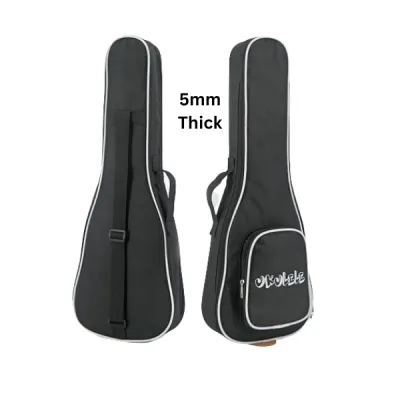
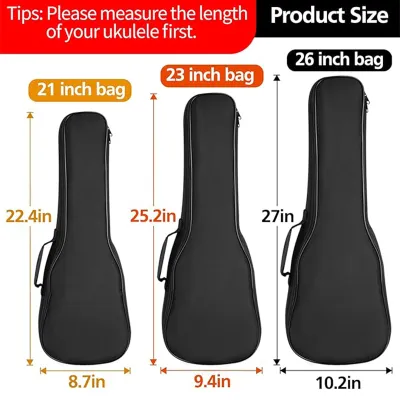
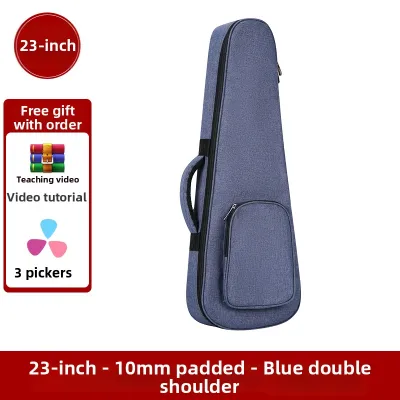
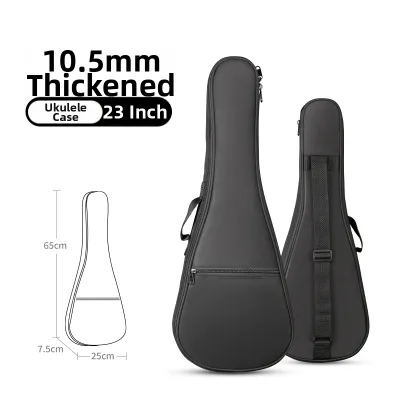
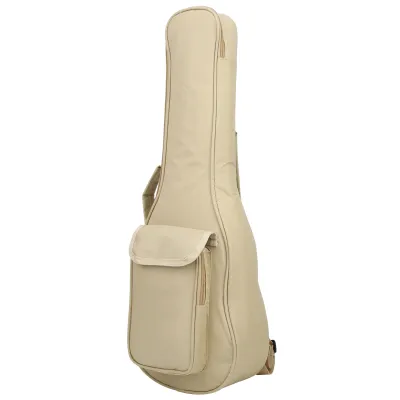
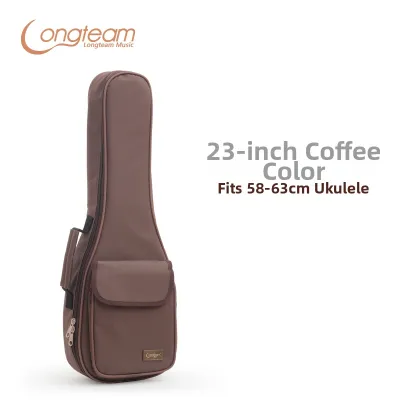
Prices are valid at publication and may change. Please refer to the product page for the latest price.
It is important to note that the thin, unpadded gig bags often included free with cheap starter kits are merely dust covers. They do not provide adequate protection for regular transport and should not be relied upon to keep your instrument safe outside the house.
Gig Bag vs Hard Case: Comparing Ukulele Case Protection, Weight, and Utility
To make an informed decision, you need to understand how soft and rigid cases compare across key performance categories. Each type is designed with a specific set of trade-offs in mind.
Impact Resistance and Crush Protection
When evaluating a ukulele case, physical protection is the primary concern. Hard cases, typically constructed from robust materials like ABS plastic, fiberglass, or traditional wood wrapped in vinyl, offer superior defense against structural damage. These rigid outer shells are designed to absorb and distribute the force of heavy impacts. If your hard case is accidentally stepped on, dropped from a height, or buried under heavy luggage in a car boot, the structural integrity of the case prevents the physical pressure from reaching the delicate wooden body of your ukulele.
In contrast, a padded gig bag relies on layers of high-density foam sewn between a durable nylon or polyester exterior and a soft interior lining. While this foam is highly effective at absorbing minor shocks, preventing scratches, and shielding the instrument from dust or light rain, it lacks structural rigidity. If a gig bag is subjected to crushing forces—such as someone sitting on it or heavy gear sliding against it in a tight space—the foam will compress, transferring the force directly to the ukulele. This can easily lead to cracked soundboards, snapped necks, or broken tuning pegs.
For beginners, understanding this difference is crucial. An unpadded dust cover offers zero impact resistance and only protects against surface dirt. If you plan to take your instrument out of the house, relying on anything less than a high-density padded bag or a solid hard case risks permanent damage to your new instrument.
Portability, Weight, and Carrying Comfort
The ease with which you can transport your instrument plays a major role in how often you will actually take it out to play. Padded gig bags excel in portability and carrying comfort. Because they are constructed from lightweight fabrics and foam, they add very little extra weight to your setup. Most high-quality gig bags come equipped with adjustable, padded backpack straps. This allows you to carry your ukulele hands-free, making it incredibly convenient if you commute on foot, ride a bicycle, or need to hold onto handrails on a moving bus or train.
Hard cases, while offering maximum protection, are significantly heavier and bulkier. A wooden or heavy-duty ABS plastic case can easily weigh two to three times more than the ukulele itself. Furthermore, traditional hard cases rarely feature backpack straps; instead, they rely on a single, molded plastic or leather-wrapped side handle. Carrying a heavy, rigid case by hand over long distances can quickly become tiring, especially if you are already carrying a school bag, laptop, or groceries.
For a beginner navigating a busy daily routine, the physical bulk of a hard case can sometimes feel like a barrier to practicing on the go. If your daily commute involves long walks or navigating tight, crowded spaces, the lightweight flexibility of a padded gig bag offers a level of convenience that a rigid case simply cannot match.
Accessory Storage and Daily Utility
A ukulele player rarely travels with just the instrument. You will often need to carry essential accessories such as a digital clip-on tuner, a capo, spare nylon strings, cleaning cloths, and instructional sheet music or chord charts. The design of your ukulele case directly impacts how easily you can organize and transport these extra items.
Gig bags are highly practical in this regard, as they almost always feature one or more spacious external zippered pockets. These pockets are sewn onto the front of the bag and can easily accommodate flat items like music books, tablets, and notebooks, alongside bulkier accessories like tuners and straps. This design allows you to keep all your musical gear in one self-contained package, eliminating the need to carry an extra backpack or tote bag to your lessons.
Hard cases offer a very different utility profile. Because of their rigid, form-fitting construction, they do not have external pockets. Instead, they typically feature a small, lidded internal compartment located directly beneath the neck support cradle inside the case. This compartment is highly secure but extremely limited in space—usually only large enough to hold a few picks, a capo, and perhaps a small tuner. If you need to carry sheet music, a music stand, or a tablet, you will have to carry them separately, which adds to the overall bulk of your commute.
Cost, Budget, and Long-Term Value
For many beginners, budget is a deciding factor when purchasing accessories. Padded gig bags are generally highly cost-effective, making them an attractive, low-risk investment. If you are still testing the waters to see if the ukulele is an instrument you will stick with long-term, spending a modest amount on a well-padded gig bag ensures your instrument remains safe without requiring a massive financial commitment upfront.
Hard cases represent a more significant financial investment. They cost substantially more than standard gig bags due to the raw materials and manufacturing complexity involved in producing rigid, latched enclosures. However, this higher upfront cost translates into exceptional long-term value and durability. A well-made hard case can last for decades, outliving multiple instruments and protecting your ukulele from catastrophic damage that would otherwise force you to buy a replacement instrument.
Additionally, if you eventually decide to upgrade to a higher-end ukulele, keeping your original instrument in pristine condition inside a hard case helps preserve its structural integrity and cosmetic appearance. This significantly maintains its resale value on local secondary marketplaces. If you have invested in a mid-range or solid-wood ukulele, pairing it with a hard case is a financially sound decision that protects your primary investment.
Which Case Fits Your Routine? A Scenario-Based Decision Guide
To make the right choice, you must evaluate how your daily routine, commuting habits, and home environment align with the strengths and weaknesses of each case type. Here is a practical framework to help you decide.

Choose a Padded Gig Bag if:
- You commute primarily on foot or bicycle: The lightweight build and dual backpack straps allow you to travel comfortably without straining your shoulders or throwing off your balance.
- You have limited storage space at home: Unlike rigid cases, empty gig bags can be easily folded, compressed, or hung in a closet when not in use, making them ideal for compact living environments like HDB flats.
- You are on a tight beginner budget: You prefer to allocate more of your initial budget toward a better-quality ukulele rather than expensive carrying gear.
- You only travel locally in low-risk environments: Your transit involves quiet car rides or short walks where the risk of your instrument being stepped on or crushed is minimal.
Choose a Hard Case if:
- You travel on crowded public transit: If you regularly board packed MRT trains or buses during peak hours, a hard case ensures your ukulele will not be crushed when squeezed against other commuters or heavy bags.
- You plan to travel by air: If you intend to fly with your instrument, a hard case is non-negotiable. Even if you manage to bring it into the cabin, a rigid shell protects it from shifting luggage in the overhead compartments.
- You stack your gear with other instruments: If you play in a group or need to pack your ukulele into a car trunk alongside heavy amplifiers, speaker stands, or luggage, a hard case prevents structural damage from shifting loads.
- You own a solid-wood instrument: Solid-wood ukuleles are highly sensitive to environmental changes. A hard case creates a sealed environment that helps maintain a stable internal microclimate.
Consider a Hybrid Case if: If you find yourself torn between the extreme portability of a gig bag and the heavy-duty protection of a hard case, a hybrid case (often called a semi-rigid or polyfoam case) offers an excellent middle ground. These cases feature a lightweight, shock-absorbing expanded polystyrene (EPS) or ethylene-vinyl acetate (EVA) foam core wrapped in a durable, weather-resistant nylon fabric exterior. They provide excellent crush resistance and thermal protection close to that of a traditional hard case, yet they remain incredibly lightweight and often feature backpack straps for easy carrying.
Verify First if: Before making any purchase, check the physical shape of your ukulele. While standard soprano, concert, and tenor cases fit the traditional figure-eight body shape, they will not accommodate unusually shaped instruments. If you own a pineapple-shaped ukulele, a cutaway model, or an acoustic-electric ukulele with protruding pre-amp knobs, standard rectangular or contoured cases may not fit correctly. Always verify the inner dimensions of the case against the widest points of your specific instrument before buying.
Crucial Specs to Verify Before Buying Any Ukulele Case
Once you have decided on the general style of your ukulele case, you must evaluate specific technical features to ensure the case performs reliably and fits your instrument perfectly. A poorly fitting or cheaply constructed case can cause as much damage as having no protection at all.
Exact Sizing and Internal Dimensions: Ukuleles come in four primary sizes: soprano, concert, tenor, and baritone. Each size has distinct body lengths, depths, and neck scales. You must choose a case designed specifically for your instrument’s size class. A case that is too loose allows the ukulele to slide around inside, causing the headstock to repeatedly knock against the interior walls during transport, which can knock the instrument out of tune or damage the neck joint. Conversely, a case that is too tight will put constant, warping pressure on the neck and bridge, potentially damaging the wood over time. Always measure your ukulele’s total length, upper bout, lower bout, and body depth, and compare them directly with the manufacturer’s specified internal case dimensions.
Interior Padding and Neck Support: Open the case and inspect the interior layout. A high-quality case should feature thick, plush lining that prevents the finish of your instrument from getting scratched. More importantly, look for dedicated neck support. The case should have a raised padded cradle or foam block that supports the neck just below the headstock. This keeps the neck stable and prevents the tuning pegs from resting directly against the bottom of the case. Many premium cases also include a Velcro strap to secure the neck firmly into the cradle, ensuring the instrument remains completely immobile during transit.
Hardware Durability and Construction: The hardware is often the first point of failure on any musical instrument case. For gig bags, pay close attention to the zippers. Look for heavy-duty, self-repairing metal zippers with large, smooth-sliding teeth. Double-stitched seams and reinforced fabric at high-stress areas—like where the backpack straps attach to the bag—are essential to prevent tearing. For hard cases, inspect the metal latches and hinges. The latches should close firmly with clear tension and remain securely locked without popping open under pressure. Check that the hinges are aligned properly and do not wobble, as loose hinges can cause the lid to close unevenly, damaging the edge of your instrument.
Humidity Control Compatibility: In tropical climates like Singapore, managing humidity is a critical aspect of instrument care. If you own a solid-wood ukulele, moving between the hot, humid outdoors and dry, air-conditioned indoor spaces can cause the wood to rapidly expand and contract, leading to warping, cracking, or glue failure. Hard cases excel in this environment because their tight-fitting lids and rubber gaskets create a highly sealed internal environment. This allows you to easily use two-way humidity control packs or small case humidifiers to maintain a stable relative humidity of 45% to 55%. Soft gig bags, being made of porous fabrics, are highly breathable and cannot trap moisture effectively, forcing you to rely on room-level humidifiers or dehumidifiers to keep your instrument safe.
Frequently Asked Questions (FAQ)
Can I take a ukulele gig bag as carry-on luggage on a flight?
Yes, most airlines allow ukuleles as carry-on luggage because of their compact size, and a padded gig bag is highly likely to fit easily in the overhead bin or even under the seat in front of you. However, airline carry-on policies vary significantly, and overhead bin space is never guaranteed on crowded flights. If flight attendants force you to gate-check your instrument because the cabin is full, a standard soft gig bag will not protect your ukulele from the rough handling of baggage systems. If you plan to fly frequently, investing in a specialized, heavy-duty hard case or a flight-certified case is highly recommended to prevent catastrophic structural damage. Always check your specific airline’s musical instrument policy and maximum carry-on dimensions before heading to the airport.
Do I need a humidifier for my ukulele case?
Whether you need a case humidifier depends entirely on the materials of your ukulele and your local climate. If your ukulele is made of solid wood, it is highly sensitive to humidity fluctuations; in tropical regions like Singapore, transitioning between humid outdoor air and dry, air-conditioned rooms can dry out the wood, leading to cracks or joint separation. In this scenario, using a two-way humidity control pack inside a sealed hard case is highly recommended to maintain a stable 45% to 55% relative humidity. However, if your ukulele is made of laminate wood or composite plastic, it is highly resistant to environmental changes and does not require a case humidifier. Note that soft gig bags are too breathable to maintain a controlled microclimate, so a hard case is essential if you need to manage humidity actively.
What is the difference between a gig bag and a dust cover?
The primary difference lies in the thickness of the padding and the level of protection provided. A dust cover is a very thin, unpadded fabric sleeve, often made of single-layer nylon, designed solely to keep dust, pet hair, and light dirt off your ukulele while it sits on an instrument stand or shelf at home. It offers absolutely no protection against drops, bumps, or crushing forces. A gig bag, by contrast, is designed specifically for travel and features high-density foam padding (usually ranging from 10mm to 25mm in thickness) sandwiched between a rugged, weather-resistant outer shell and a soft interior lining. Never use a simple dust cover to transport your ukulele outside the house, as even minor bumps can cause permanent structural damage to the instrument.
Community discussion
Share your experience or ask a question. Comments are reviewed before publication.