
Engaging in mental exercises through an adult puzzle book is an accessible and rewarding way to stimulate cognitive functions, sharpen focus, and support memory retention. In busy, high-stress environments, dedicating time to structured puzzle-solving offers a screen-free sanctuary for the mind, allowing you to unwind while keeping your brain active.
To find the right puzzle book, you must look beyond attractive cover designs and focus on progressive difficulty, diverse mechanics, and high-quality print layouts. This guide outlines how to evaluate these books, match specific puzzle types to your personal cognitive goals, and perform essential pre-purchase checks to ensure a satisfying and beneficial experience.
Choosing the right book is a highly personal journey that depends on your current skill level and cognitive goals. Whether you want to improve your vocabulary, sharpen your logical reasoning, or simply enjoy a relaxing evening activity, selecting a book with the right structural design is key to maintaining a consistent habit.
Products mentioned in this guide
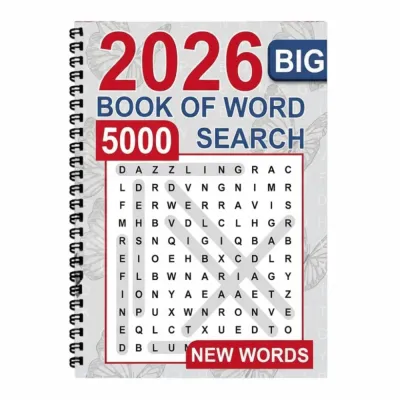
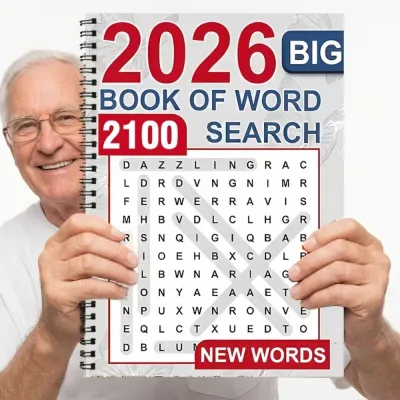
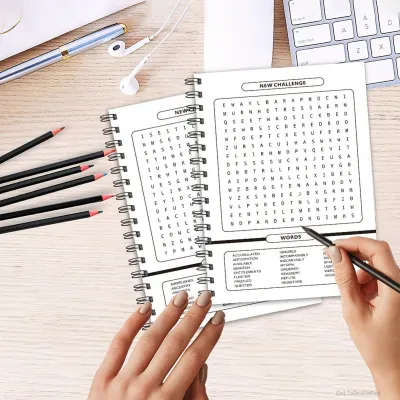
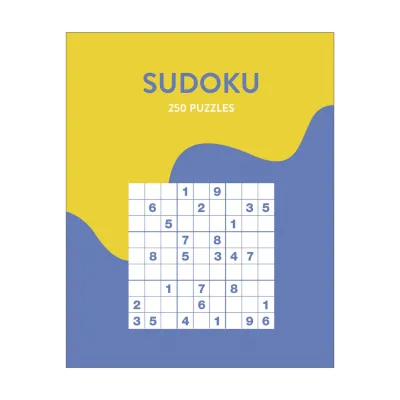
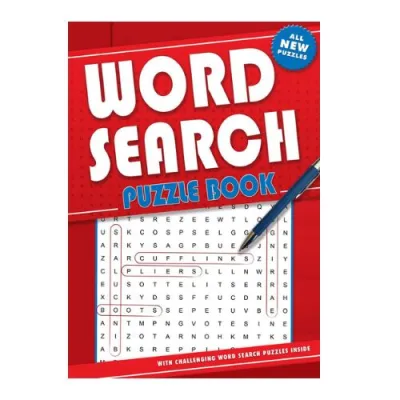
Prices are valid at publication and may change. Please refer to the product page for the latest price.
Setting Realistic Expectations for Cognitive Benefits
Using an adult puzzle book is an excellent way to keep your mind active, but it is important to understand what cognitive training can and cannot do. Engaging with puzzles provides general mental stimulation, which helps maintain cognitive reserve—the brain’s resilience and ability to improvise and find alternate ways of getting a job done.
When you solve a puzzle, you actively practice specific cognitive skills such as working memory, pattern recognition, and processing speed. For instance, keeping track of numbers in a grid or recalling vocabulary words exercises the neural pathways associated with short-term memory and linguistic retrieval.
However, it is crucial to establish clear boundaries regarding these benefits. While regular mental exercise supports overall mental agility and can make you more efficient at specific tasks, puzzle books do not cure, reverse, or guarantee the prevention of neurological conditions or progressive memory loss. They are tools for lifestyle-based cognitive engagement, much like physical exercise is for bodily health, rather than medical treatments.
Key Criteria for Evaluating Adult Puzzle Books
Selecting the right adult puzzle book requires looking at structural elements that directly influence your long-term engagement and satisfaction. A poorly designed book can lead to early frustration or boredom, defeating the purpose of a consistent mental workout.

First, evaluate the difficulty progression within the book. The most effective puzzle books do not maintain a flat difficulty level; instead, they scale gradually from beginner-friendly challenges to highly advanced scenarios. This progression allows your brain to adapt to the rules before introducing complex layers, preventing the cognitive fatigue that occurs when a puzzle is too difficult too soon.
Second, look for a wide variety of mechanics. Books that rely solely on a single repetitive task, such as hundreds of identical Sudoku grids, can quickly lead to a plateau where your brain automates the process rather than learning. A diverse mix of logic, word, and spatial puzzles ensures that different regions of your brain are stimulated, keeping the experience fresh and challenging.
Third, pay close attention to the layout and physical readability of the book. Because puzzle-solving requires sustained visual focus, the font size must be clear, and the grid spacing should be generous enough to allow for comfortable writing and erasing. High-quality, thick paper is essential, especially if you prefer using pencils and need to erase mistakes frequently without tearing the page.
Fourth, consider the physical binding of the book. Lay-flat bindings, spiral bindings, or perforated pages are highly desirable features for puzzle books, as they allow the book to remain open on a table or lap without requiring you to constantly hold down the spine while writing.
Finally, think about the physical size of the book. A compact, pocket-sized book is ideal for commuting on public transit or carrying in a small bag, whereas a larger, letter-sized book is better suited for comfortable home use at a desk or on a coffee table.
Matching Puzzle Categories to Your Mental Goals
Different types of puzzles stimulate distinct cognitive domains, meaning your choice of book should align with the specific mental skills you wish to exercise. By understanding how various puzzle categories target different brain functions, you can curate a balanced mental workout.
Logic, Number, and Pattern Puzzles
Analytical puzzles, such as Sudoku, Kakuro, and nonograms, are designed to target working memory, deductive reasoning, and executive function. These challenges require you to hold multiple variables in your mind simultaneously while applying strict rules to reach a single logical conclusion.
When evaluating logic and number books, check for clear rule explanations and a structured grid complexity. High-quality books will explain the underlying logic of the puzzle type rather than just presenting the grid, helping you build the necessary strategies to tackle advanced levels.
Look for puzzles that rely entirely on logical deduction rather than trial-and-error guessing. A well-constructed logic puzzle will always have a single, verifiable solution that can be reached through step-by-step reasoning, which is key to training your analytical thinking.
Word, Language, and Trivia Puzzles
Verbal puzzles, including crosswords, cryptograms, and advanced word searches, primarily support vocabulary retention, semantic memory, and linguistic agility. These exercises require you to retrieve words from your long-term memory based on contextual clues, synonyms, or wordplay.
Before purchasing a word-based puzzle book, it is essential to check for regional language variations and dictionary standards. Books published in different regions may use localized spelling, distinct cultural references, or regional slang that can make the clues confusing or unsolvable for readers accustomed to British or American English standards.
Verify that the difficulty of the clues matches your current vocabulary level. High-quality word books offer a mix of straightforward definitions and clever wordplay, encouraging you to think laterally about language without requiring obscure, archaic knowledge that feels inaccessible.
Visual, Spatial, and Lateral Thinking Puzzles
Visual and unconventional puzzles, such as complex mazes, spot-the-difference challenges, and lateral thinking riddles, engage your spatial reasoning and creative problem-solving skills. These tasks require you to manipulate shapes mentally, recognize subtle visual patterns, and approach problems from non-traditional angles.
When choosing books in this category, print quality and image clarity are paramount. Low-resolution printing or muddy grayscale images can make visual puzzles incredibly frustrating, as you may struggle to distinguish key details required to solve the challenge.
Look for a balanced design where the difficulty stems from logical deduction and spatial complexity rather than artificial visual obscurity. A good spatial puzzle challenges your mind’s eye to rotate, align, or trace paths, providing a distinct cognitive workout that complements verbal and numerical exercises.
Essential Pre-Purchase Checks for Puzzle Books
To avoid frustrating purchases, it is important to perform several practical checks before buying an adult puzzle book, ensuring the content and format align with your preferences.
First, verify the exact edition and language of the book. Book covers can sometimes be misleading, featuring English titles while containing content optimized for other regional markets or featuring localized cultural references that do not translate well. Checking the publisher details and reading sample pages, if available, can help confirm the language standard used.
Second, weigh the trade-offs between physical books and digital formats. Physical puzzle books offer a tactile, screen-free experience that promotes deep focus and reduces eye strain, making them ideal for winding down before bed or during a quiet afternoon. On the other hand, digital puzzle apps offer convenience, automatic error-checking, and adaptive difficulty, though they come with the downside of screen fatigue and potential digital distractions.
Third, confirm the completeness of the content, particularly the inclusion of comprehensive answer keys and hints. A high-quality puzzle book should provide detailed solutions at the back, ideally explaining the steps or logic behind the answers for complex puzzles, rather than just listing the final grid or word. This allows you to learn from your mistakes and understand the solving process.
Finally, purchase your books from reputable publishers and authorized local bookstores or established online marketplaces. This ensures that you receive genuine copies with accurate printing, clear grids, and complete pages, avoiding poorly printed bootlegs that may have missing sections or misaligned puzzle grids.
Building a Sustainable Brain Training Routine
Integrating puzzle books into your daily life requires a structured approach to maintain consistency and prevent cognitive burnout. Like any form of training, consistency is far more beneficial than occasional, exhausting sessions.
Start by setting realistic daily time limits, such as fifteen to thirty minutes of puzzle-solving. This keeps the activity enjoyable and prevents frustration fatigue, which occurs when you spend hours staring at a single unsolved puzzle, leading to stress rather than relaxation.
To prevent task-specific mastery plateaus, alternate the types of puzzles you solve throughout the week. If you focus solely on Sudoku, your brain will eventually become highly efficient at that specific grid format, reducing the overall cognitive effort required; alternating with crosswords or spatial mazes ensures you continue to challenge different cognitive domains.
When you encounter a particularly difficult puzzle, avoid the temptation to look at the answers immediately. Instead, step away from the book for a few hours or a day; returning with fresh eyes often allows your brain to process the patterns in the background, leading to a breakthrough.
Keep track of your progress by noting the date you complete puzzles or timing yourself on standard grids. As your skills improve, gradually transition to books with higher difficulty ratings or more complex mechanics to keep your brain actively engaged and continuously learning.
Frequently Asked Questions (FAQ)
Do puzzle books actually prevent memory loss?
Puzzle books do not prevent or cure medical conditions like dementia or Alzheimer’s disease. However, they do contribute to cognitive engagement and help build cognitive reserve, which supports overall mental agility and keeps your brain active as you age.
Are digital puzzle apps better than physical books for brain training?
Neither format is universally superior, as they serve different preferences. Physical books offer a tactile, screen-free experience that aids focus and relaxation, while digital apps provide convenience, instant feedback, and dynamic difficulty scaling at the cost of increased screen time.
Community discussion
Share your experience or ask a question. Comments are reviewed before publication.