
Quick Answer: Which Pickup Matches Your Sound?
Choosing the right guitar pickup depends on the balance of clarity, warmth, and noise tolerance you need for your music. Single-coil pickups offer a bright, clear, and articulate sound that is ideal for funk, country, and clean pop, though they are prone to background hum. Humbuckers use two coils to cancel this noise, delivering a thick, warm, and high-output tone perfect for rock, metal, and jazz. P90 pickups occupy the middle ground, offering a gritty, midrange-heavy, and raw tone that suits classic rock, blues, and punk.
By understanding how these three designs function, you can easily identify which pickup type will deliver your desired tone.
Single-Coil Pickups: Bright, Clear, and Articulate
Single-coil pickups are the original electric guitar pickup design. Their construction is straightforward, consisting of a single coil of fine copper wire wrapped around magnetic pole pieces. When the guitar strings vibrate within the magnetic field, they create a small electrical current that travels to your amplifier. This simple design excels at capturing the natural, high-frequency nuances of your playing.
Products mentioned in this guide
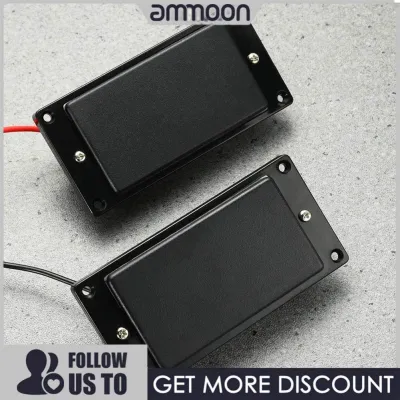

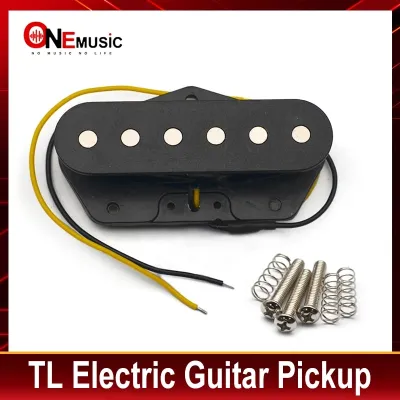
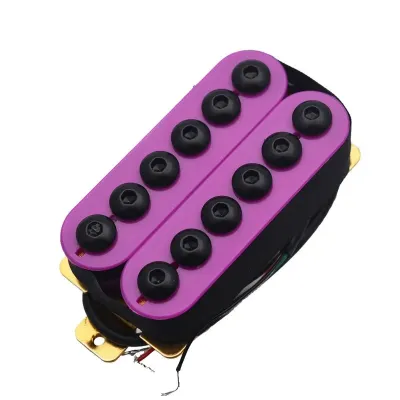
Prices are valid at publication and may change. Please refer to the product page for the latest price.

Sonically, single-coils are famous for their bright, glassy, and highly articulate character. They offer excellent note definition, meaning that even complex chords sound clean and separated rather than muddy. The bass response is typically tight and snappy, while the treble frequencies have a distinct chime that cuts through a band mix with ease.
However, the single-coil design has one notable physical limitation. Because it uses only one coil of wire, it acts like an antenna for electromagnetic interference. This results in an audible background buzz known as 60-cycle hum, which becomes louder when you play near computer screens, fluorescent lights, or when using high-gain distortion pedals.
Despite the hum, single-coils remain the go-to choice for genres that demand clean, expressive dynamics. They are heavily utilized in funk for snappy rhythm playing, in country for bright twang, and in indie rock for jangly, atmospheric textures.
Humbucker Pickups: Thick, Warm, and Noise-Free
To solve the interference issues of single-coils, the humbucker pickup was introduced. This design uses two coils placed side-by-side. The coils are wound in opposite directions and feature opposing magnetic polarities. When external electromagnetic interference hits the pickup, the noise signals in the two coils cancel each other out, effectively “bucking the hum” and leaving a quiet signal.
This dual-coil construction fundamentally alters the tone. Because the two coils sense the vibrating string at two slightly different points, some of the high-frequency harmonics cancel out. This results in a much thicker, warmer, and darker sound compared to a single-coil. Humbuckers also produce a stronger electrical signal, which naturally drives amplifiers into overdrive more quickly.
The main trade-off with humbuckers is a reduction in high-end sparkle and note separation. Clean tones can sometimes sound compressed or dark, particularly on guitars with heavy mahogany bodies. For players who rely on pristine, acoustic-like clarity, a humbucker may feel too dense.
Because they handle high gain without producing excessive background noise, humbuckers are the industry standard for hard rock, heavy metal, and punk. They are also highly favored by jazz guitarists, who value the warm, round, and smooth low-end response for clean, mellow melodies.
P90 Pickups: The Gritty Middle Ground
P90 pickups are technically single-coils, but their physical construction gives them a completely unique sonic identity. Instead of the tall, narrow coil found in a standard single-coil, a P90 features a short, wide, and flat coil wrapped around bar magnets placed underneath the bobbin. This wider coil senses a longer portion of the vibrating guitar string.
This physical difference produces a tone that is fat, gritty, and heavily focused on the midrange frequencies. P90s offer more output and warmth than a standard single-coil, giving them a punchy, aggressive edge when played through an overdriven amplifier. At the same time, they retain much of the top-end clarity and touch sensitivity that humbuckers tend to lose.
In terms of noise, P90s are still single-coils and will produce background hum. In fact, because of their larger coil size, they can sometimes be noisier than standard single-coils when exposed to electromagnetic interference. Players must balance this physical characteristic against the pickup’s desirable raw tonal character.
P90s are highly celebrated in classic rock, blues, and early punk music. They offer an organic, unrefined crunch that makes them excellent for raw rhythm playing and biting, expressive guitar solos.
How to Choose the Right Pickup for Your Playing Style
Selecting the right pickup requires looking at your entire musical setup and physical instrument. Your amplifier and pedalboard play a massive role in how a pickup behaves. If you primarily use high-gain distortion or fuzz pedals, humbuckers are highly practical to keep your signal quiet. If you play through clean, high-headroom tube amplifiers, single-coils or P90s will allow you to maximize your dynamic range.
Consider your primary playing techniques. If you rely on subtle fingerpicking, light strumming, or fast, articulate lead lines, the high-frequency response of a single-coil will capture those details beautifully. If you prefer heavy, chugging riffs, sustained solos, or warm jazz comping, the compressed dynamics and thick output of a humbucker are better suited to your needs.
Physical compatibility is another critical factor when upgrading. Standard single-coils, humbuckers, and P90s all have different physical dimensions. Swapping a single-coil for a humbucker typically requires modifying your guitar’s pickguard or physically routing the wood cavity inside the guitar body. Always measure your guitar’s existing pickup routes before purchasing replacements.
If you want the best of both worlds, consider a mixed pickup configuration. Many modern guitars feature an HSS layout, which places a humbucker at the bridge for heavy rhythm playing and single-coils in the middle and neck positions for clear, glassy clean tones. This setup provides excellent versatility without requiring you to switch instruments mid-performance.
Frequently Asked Questions (FAQ)
Can I mix single-coil and humbucker pickups on the same guitar?
Yes, mixing single-coils and humbuckers is a highly common way to achieve tonal versatility. However, you must consider the guitar’s internal electronics. Humbuckers typically perform best with 500k ohm potentiometers to keep their tone bright, while single-coils usually require 250k ohm potentiometers to prevent them from sounding overly harsh. When mixing them, guitar technicians often use specialized wiring schemes or resistors to ensure both pickup types receive their optimal electrical load. You will also need to verify that your guitar body has the correct physical routing to accommodate different pickup sizes.
Do active pickups sound different from passive ones?
Yes, active pickups sound noticeably different due to their internal design. Unlike traditional passive pickups, active systems use fewer coil windings to produce a low-noise, low-output signal, which is then boosted by an onboard, battery-powered preamp. This design delivers a highly consistent, high-output signal with compressed dynamics and an extremely quiet performance, even under extreme high-gain settings. The primary trade-off is maintenance, as active pickups require a 9V battery installed inside the guitar that must be replaced periodically to prevent the signal from distorting or cutting out.
Community discussion
Share your experience or ask a question. Comments are reviewed before publication.