
Finding a hard case that perfectly fits a beginner acoustic guitar requires more than just matching the brand name. Entry-level instruments, such as popular models from Yamaha and Fender, are built in a variety of body shapes and sizes. A case that is too loose allows the instrument to shift during transport, risking structural damage, while a case that is too tight can put dangerous pressure on the bridge, neck, and tuning pegs. Selecting the right protection involves understanding your instrument’s specific geometry and verifying physical dimensions rather than relying on generic marketing labels.
While a basic gig bag might offer light scratch protection, investing S$100 to S$250 in a high-quality hard case protects your instrument from impact, temperature fluctuations, and humidity. By taking precise measurements and comparing them against manufacturer specifications, you can secure a case that provides a snug, factory-grade fit. This guide outlines the exact steps, dimensions, and structural features you need to evaluate to find the ideal hard case for your beginner acoustic guitar.
Identifying Your Guitar's Body Shape for Accurate Case Sizing
Before looking at hard cases, you must identify the exact body shape of your beginner acoustic guitar. Entry-level lines from major brands are not uniform; they are divided into distinct body styles designed for different playing preferences and physical comfort. The most common shapes found in beginner lineups are Dreadnought, Concert, and Auditorium, each featuring unique proportions that dictate case compatibility.
Products mentioned in this guide
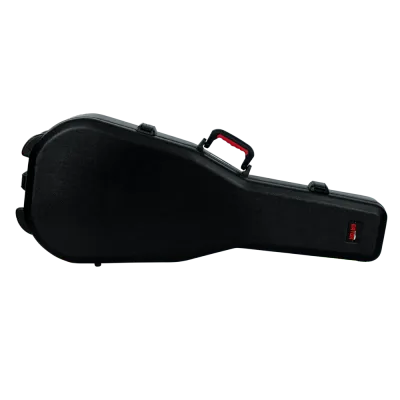


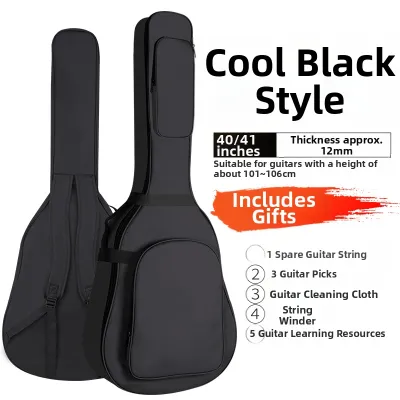
Prices are valid at publication and may change. Please refer to the product page for the latest price.
An entry-level Dreadnought guitar, such as the Yamaha F310 or Fender CD-60, features a large, deep body with a wide waist and broad shoulders. This shape requires a dedicated dreadnought hard case with a deep lower bout compartment and a wide upper bout profile. Attempting to place a dreadnought into a case designed for smaller body styles will simply not work, as the lid will not close and the body will not fit within the internal foam mold.
Conversely, Concert and Auditorium models, like the Yamaha FS800 or Fender CC-60S, feature a much narrower waist, a shallower body depth, and a smaller overall footprint. If you place one of these smaller guitars into a generic dreadnought case, the instrument will slide around inside the compartment. This movement defeats the purpose of a hard case, as any external impact will cause the guitar to knock against the hard internal frame, potentially cracking the wood or knocking the tuning pegs out of alignment.
Generic “standard acoustic” hard cases are often designed to accommodate the largest possible standard guitar shape, which is typically a dreadnought. Consequently, these universal cases fail to provide a snug fit for smaller-bodied beginner guitars. To achieve optimal impact absorption, the internal plush lining and foam padding of the case must make continuous contact with the widest points of the guitar’s lower bout and support the full depth of the body without leaving empty space.
Evaluating Official Yamaha and Fender Cases Against Third-Party Options
When shopping for a hard case, you will generally choose between official manufacturer-branded cases and third-party universal options. Official cases, such as those branded directly by Yamaha or Fender, are engineered specifically for the dimensions of their respective entry-level acoustic lines. These cases utilize the exact factory specifications of the instruments, ensuring that the neck support, accessory compartment, and body padding align perfectly with the guitar’s geometry.

Choosing an official case eliminates the guesswork associated with measuring and testing. The manufacturer guarantees that a dreadnought case from their accessory line will fit their dreadnought guitars perfectly. However, official cases can sometimes carry a price premium, and their local availability in Singapore music stores may vary depending on shipment cycles and stock levels.
Third-party hard cases, manufactured by specialized instrument case brands, offer a broader range of materials, aesthetic designs, and price points. These options frequently feature advanced materials such as molded ABS plastic, lightweight fiberglass, or traditional heavy-duty plywood wrapped in Tolex. Some third-party cases also offer enhanced security features, such as TSA-approved locking latches, which are highly beneficial if you plan to travel internationally with your instrument.
To verify third-party case compatibility, you must look past generic marketing descriptions like “fits most acoustic guitars.” Instead, locate the case manufacturer’s detailed internal dimension chart and cross-reference it directly with your guitar’s official specification sheet. While third-party cases offer excellent value and specialized protection features, they require meticulous manual verification to ensure you do not end up with an incompatible fit.
Essential Dimensions and Protection Features to Cross-Reference
To ensure a secure fit and robust protection, you must cross-reference several critical internal measurements of the hard case against your guitar. The most vital dimension is the overall internal length, which must accommodate the entire guitar from the bottom strap button to the very tip of the headstock. A case that is too short will put pressure on the headstock, which can lead to neck fractures if the case is dropped on its end.
Next, evaluate the width of the lower bout, the upper bout, and the waist. The lower bout measurement is particularly critical, as this is the widest part of the guitar body and must fit snugly against the padded sides of the case. Additionally, check the maximum internal body depth of the case. The case must be deep enough to allow the lid to close completely without forcing or compressing the guitar’s top soundboard, yet shallow enough that the guitar does not bounce vertically inside the case.
Beyond basic body dimensions, pay close attention to the neck support design and headstock clearance. A high-quality hard case features a dedicated neck cradle, which is often integrated into the lid of the internal accessory compartment. This cradle must support the neck securely without putting upward pressure on the fingerboard. There must also be sufficient headstock clearance; the headstock should float freely within the upper compartment without touching the bottom, sides, or lid of the case, preventing tension damage during transit.
Finally, establish a baseline for structural protection features before making your purchase. Look for cases with at least three to four heavy-duty metal latches, with at least one latch featuring a reliable locking mechanism. The hinges must be securely riveted to the frame and show no signs of lateral wobble. The interior padding should consist of dense, high-density foam at least 15mm thick, covered in a soft, non-abrasive plush fabric that will not react chemically with your guitar’s finish.
Step-by-Step Guide to Measuring Your Guitar for a Custom Fit
If you cannot find official dimension sheets for your beginner guitar, or if you are considering a third-party case, you must measure your instrument manually. To do this safely, place your guitar flat on a clean, carpeted floor or a padded table to prevent scratches. Use a flexible sewing tape measure rather than a stiff metal tape measure, as metal edges can easily nick the wood or scratch the gloss finish.
Start by measuring the overall length of the guitar. Run the tape measure from the very bottom of the body—making sure to include the protruding strap button—all the way to the tip of the headstock. Next, measure the body length by running the tape from the bottom of the body to the joint where the neck meets the body heel. These two measurements ensure the guitar will sit correctly within the case’s main body cavity and neck rest.
Measure the width of the body at three distinct points: the upper bout (the widest part of the upper body), the waist (the narrowest middle section), and the lower bout (the widest part of the lower body). Write these numbers down carefully. After measuring the widths, measure the body depth by placing the tape measure flat against the side of the guitar, measuring from the back board to the top soundboard. If your guitar has a curved back, measure at the deepest point near the bottom bout.
When recording these measurements, always account for any aftermarket additions or physical modifications. If you have installed oversized tuning pegs, a thick leather strap, or a permanent strap lock system, these components will add to the overall dimensions and may require a slightly larger case compartment. If your manual measurements fall directly between standard case sizes, or if you are unsure about headstock angle clearance, halt the purchase process. In such cases, it is best to consult the manufacturer directly or bring your guitar to a local music store to test the physical fit in person.
Frequently Asked Questions (FAQ)
Can I use a classical guitar hard case for a steel-string beginner acoustic?
No, you should not use a classical guitar hard case for a steel-string beginner acoustic. Classical guitars have significantly different body proportions, featuring shorter neck lengths, wider fingerboards, and smaller, shallower bodies compared to standard steel-string acoustics. A steel-string beginner guitar, such as a dreadnought or concert model, will not fit inside a classical case. Attempting to force a steel-string acoustic into a classical case can cause severe structural damage to the bridge, neck joint, and top soundboard.
Do I need to loosen the strings before putting my guitar in a hard case?
For regular storage and local transport, you do not need to loosen the strings before placing your guitar in a hard case. Acoustic guitars are structurally designed to withstand the constant tension of tuned steel strings, and keeping them at standard pitch maintains the correct neck relief. You should only loosen the strings by a half-step or whole-step if you are shipping the guitar via air freight or cargo transport, where extreme temperature drops and atmospheric pressure changes can cause sudden wood contraction.
How should I store my guitar inside the hard case in Singapore's humid climate?
Singapore’s tropical climate features high relative humidity, which can cause acoustic guitar wood to swell, joints to weaken, and metal hardware to rust. To protect your instrument, store it inside a closed hard case with specialized two-way humidity control packs or silica gel packets placed inside the accessory compartment. Keep the hard case stored in a cool, dry room away from direct sunlight, exterior walls, and direct drafts from air conditioning units, and monitor the interior conditions using a small digital hygrometer.

Community discussion
Share your experience or ask a question. Comments are reviewed before publication.