
Choosing between a hard case and a gig bag for your ukulele comes down to how you plan to travel with your instrument and where you intend to store it. If you frequently navigate crowded public transport, travel long distances, or store your instrument in shared spaces, a hard case provides the rigid defense needed to prevent structural damage. Conversely, if your primary goal is a lightweight, hands-free commute to local lessons or casual gatherings, a padded gig bag offers unmatched convenience and portability.
While budget is always a factor for beginners, the decision should ultimately align with the physical risks your instrument will encounter. A cheap gig bag might save money upfront, but it offers little protection against a heavy impact. On the other hand, an expensive hard case might be overkill if your ukulele never leaves your bedroom. By evaluating your daily routine and storage environment, you can select the option that keeps your instrument safe without adding unnecessary bulk to your commute.
Assessing Your Protection and Transport Needs
Before looking at specific case models, take a close look at your daily routine and how you plan to transport your ukulele. If you rely on public transit like buses and trains, your instrument will inevitably face crowded spaces, sudden stops, and the occasional accidental bump from fellow commuters. In these high-traffic environments, a soft, unpadded bag offers virtually no protection against sharp elbows or heavy backpacks pressing against your instrument.
Products mentioned in this guide
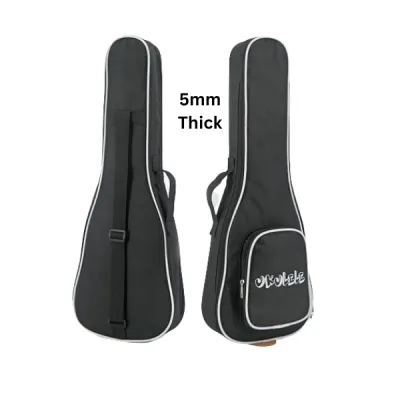
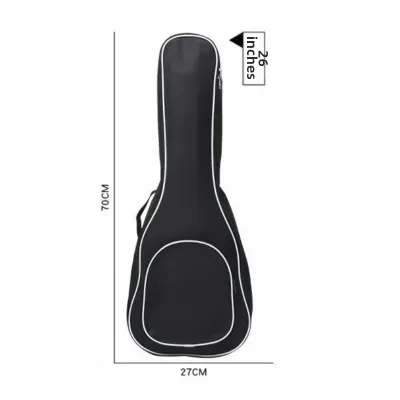
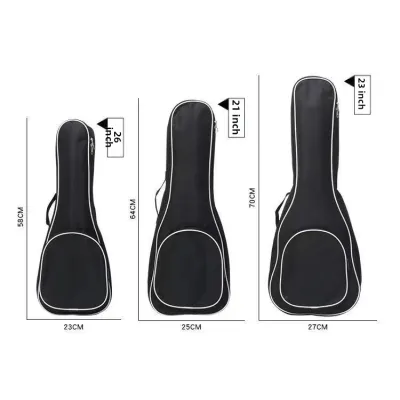
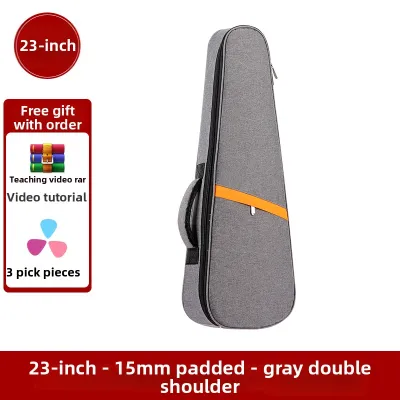
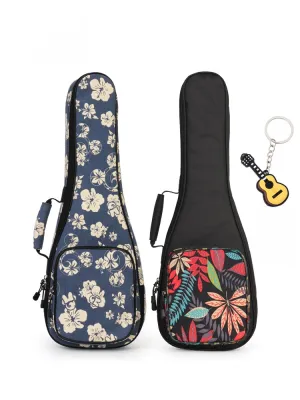
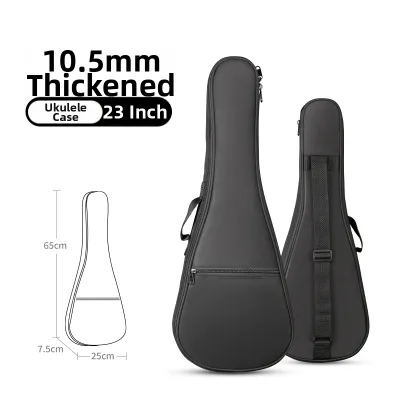
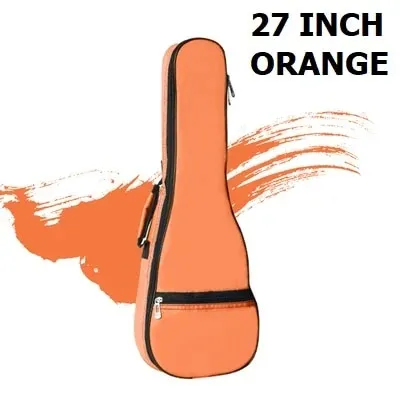
Prices are valid at publication and may change. Please refer to the product page for the latest price.
Weather exposure is another critical factor, especially in tropical climates prone to sudden, heavy downpours. A standard canvas gig bag can quickly absorb water, allowing moisture to reach the wooden body of your ukulele, which can cause warping or glue failure. If you walk long distances outdoors, you will need to consider either a highly water-resistant gig bag or a hard case with a tight rubber seal.
Storage conditions at home or school also play a major role in your decision. If you live in a compact apartment where storage space is limited, your ukulele might end up stacked under other items or tucked away in a crowded wardrobe. In these scenarios, the structural integrity of a hard case prevents the instrument from being crushed under weight. Additionally, if you frequently move between air-conditioned rooms and humid outdoor environments, rapid fluctuations in temperature and humidity can stress the wood, making a sealed case highly beneficial.
Hard Cases vs. Gig Bags: Key Differences
Understanding the fundamental structural differences between hard shell cases and gig bags is essential for making an informed choice. These two options are designed with entirely different philosophies regarding material selection, structural support, and impact resistance.

Hard shell cases are built with a rigid exterior made from materials such as wood, fiberglass, ABS plastic, or carbon fiber. The interior is lined with dense foam and covered in a soft, plush fabric like velvet or faux fur, custom-molded to cradle the specific shape of the ukulele. This design ensures that the instrument remains completely stationary and isolated from external forces.
Gig bags, on the other hand, are constructed from flexible fabrics such as nylon, polyester, or canvas. They rely on varying thicknesses of foam padding sewn between the outer shell and the inner lining to absorb shocks. Because they lack a rigid frame, gig bags can be folded or compressed when empty, making them highly adaptable but structurally vulnerable.
Protection and Durability
When it comes to safeguarding your instrument from severe damage, hard cases are the clear winner. The rigid outer shell is designed to disperse the energy of a direct impact across the entire surface of the case, preventing the force from reaching the ukulele. If a hard case is dropped from a height or has a heavy object fall directly onto it, the structural frame bears the brunt of the force, keeping the delicate wooden soundboard and neck intact.
Gig bags offer limited protection against crushing forces and sharp impacts. While a thick foam layer (typically 15mm to 25mm) can easily absorb minor bumps and prevent surface scratches, it cannot stop the bag from compressing under heavy weight. If someone accidentally steps on a gig bag or places a heavy suitcase on top of it, the pressure is transferred directly to the ukulele, which can easily crack the body or snap the headstock.
Both types of cases perform well at protecting your instrument from minor daily wear, such as dust accumulation, light scuffs, and superficial scratches. However, if you own a solid-wood ukulele, which is far more fragile and sensitive to physical impact than a laminate model, a hard case is highly recommended to preserve its structural integrity over time.
Weight, Portability, and Storage
While hard cases offer superior protection, they come with a significant weight penalty. A wooden or plastic hard case can weigh several times more than a gig bag, which can quickly become tiring during long walks or commutes. Furthermore, hard cases almost always feature a single, rigid carrying handle, meaning you must dedicate one hand to carrying your instrument at all times.
Gig bags excel in portability and convenience, making them the preferred choice for active musicians who are always on the move. Most gig bags feature adjustable, padded backpack straps, allowing you to carry your ukulele comfortably on your back while keeping your hands completely free to hold an umbrella, navigate your phone, or carry other bags. This hands-free design is incredibly convenient for students walking to school or commuters navigating busy transit interchanges.
Another major advantage of gig bags is their external storage capacity. Most models feature large, zippered exterior pockets that can easily accommodate essential accessories such as clip-on tuners, spare strings, capos, cleaning cloths, and even small music books or chord charts. Hard cases, by contrast, usually have very limited internal storage compartments that can only hold small items like picks or a spare set of strings, forcing you to carry your other accessories in a separate bag.
Side-by-Side Feature Comparison
To help you quickly weigh your options, the table below summarizes the key differences between standard hard cases and gig bags.
| Feature | Hard Shell Case | Padded Gig Bag |
|---|---|---|
| Protection Level | High (Crush-resistant, high impact) | Moderate (Scratches, minor bumps) |
| Weight | Heavy (Typically 1.5kg to 3kg) | Lightweight (Typically 0.5kg to 1kg) |
| Portability | Single handle, requires one hand | Backpack straps, hands-free carrying |
| Accessory Storage | Minimal (Small internal compartment) | Generous (Large external zippered pockets) |
| Typical Price Tier | S$60 to S$150+ | S$15 to S$50 |
| Best Suited For | Air travel, long transit, solid-wood instruments | Local commutes, walking, laminate instruments |
Note: Features, weight, and water resistance can vary significantly by manufacturer. Always verify the specific product specifications and dimensions before making a purchase.
Making the Final Decision: Which Case Fits Your Situation?
To make the right choice, you must balance your budget against the realistic environment your ukulele will inhabit. Use the following guidelines to determine which option aligns with your needs.
Choose a Hard Case if:
- You own a high-end, solid-wood ukulele that is highly sensitive to physical impacts and environmental changes.
- You plan to travel by air, where your instrument may need to be checked as baggage or stored in tightly packed overhead compartments.
- You frequently travel by car with a trunk full of heavy gear, where other equipment could easily slide and crush a soft bag.
- You store your instrument in a household with active pets, young children, or limited storage space where items are stacked on top of one another.
Choose a Gig Bag if:
- You commute primarily on foot, by bicycle, or via public transit, and you highly value hands-free, backpack-style carrying.
- You own an entry-level laminate ukulele, which is naturally more durable and less susceptible to minor impacts and humidity changes.
- You are on a tight budget and prefer to allocate more of your funds toward a better instrument rather than expensive housing.
- You only transport your ukulele occasionally for local lessons, rehearsals, or casual gatherings with friends.
Verify First if:
- You are buying online; always measure your ukulele's exact dimensions, including the total length, body depth, and headstock width, to ensure a snug fit.
- You plan to fly; check the specific airline's carry-on size limits and musical instrument policies, as some airlines have strict dimensional cutoffs.
- You choose a gig bag; verify the thickness of the foam padding, aiming for at least 10mm to 15mm of high-density foam for basic protection.
Neither may fit if:
- You own a highly unusual custom-shaped ukulele, such as a pineapple shape or an extended cutaway, which may require a specialized hybrid case or a custom-molded gig bag.
- You are embarking on professional, heavy-duty touring, which may require a heavy-duty flight case with reinforced metal corners and pressure-release valves.
Essential Checks Before Purchasing
Once you have decided on the type of case, you must ensure the specific model you choose is compatible with your instrument. Ukuleles come in four primary sizes: soprano, concert, tenor, and baritone. However, even within these standard categories, dimensions can vary significantly between different brands. A concert ukulele from one manufacturer might have a slightly wider lower bout or a longer headstock than a concert model from another brand.
To avoid the hassle of returns, use a measuring tape to record your ukulele’s total length, the width of the upper and lower bouts, and the overall body depth. Compare these measurements directly against the internal dimensions listed by the case manufacturer. If your ukulele has an unusual body shape, such as a pineapple design or a cutaway, standard molded hard cases may not fit properly, and you may need to opt for a more forgiving, flexible gig bag or a case specifically designed for that shape.
Pay close attention to the level of neck and headstock support provided by the case. A high-quality case should feature a dedicated neck cradle or a velcro strap that secures the neck in place. This prevents the headstock from touching the back or sides of the case, which is crucial because the joint where the neck meets the headstock is the most fragile part of the instrument and the most likely to snap during a fall.
Finally, inspect the quality of the hardware on the case. For gig bags, look for heavy-duty, oversized nylon or metal zippers, as cheap zippers are often the first component to fail, rendering the entire bag useless. For hard cases, inspect the latches and hinges to ensure they align perfectly and snap shut securely. If you are purchasing from an online marketplace, always check the seller’s return policy to ensure you can exchange the case if the fit is not as snug as expected.
Frequently Asked Questions (FAQ)
Can I take a hard ukulele case as a carry-on on flights?
Yes, you can generally bring a hard ukulele case as a carry-on item, but this is entirely subject to the specific airline’s size and weight restrictions. Because ukuleles are relatively small, they often fit easily into overhead compartments or even under the seat in front of you. However, some budget airlines have highly restrictive cabin baggage policies that may require you to pay an extra fee or gate-check the instrument if the flight is full. Always check your airline’s official musical instrument policy before arriving at the airport, and carry a copy of the policy with you if possible.
Do I need a humidifier inside my ukulele case?
Whether you need a humidifier depends largely on the materials of your ukulele and your local climate. Solid-wood ukuleles are highly sensitive to humidity levels; if the air is too dry, the wood can shrink and crack, while excessive humidity can cause the wood to swell and warp. Laminate wood ukuleles are far more resilient and rarely require humidification. If you own a solid-wood instrument and live in a region with extreme seasonal dry spells or constantly run air conditioning, using a small case humidifier can help maintain a stable environment. Hard cases are much better suited for this, as their tight seals help maintain a consistent microclimate far better than porous fabric gig bags.
Community discussion
Share your experience or ask a question. Comments are reviewed before publication.