
Choosing between a hard case and a soft gig bag for your 4/4 violin depends on balancing physical protection against carrying comfort. A hard case provides rigid, structural defense against crushing forces, sudden impacts, and environmental shifts, making it the standard choice for crowded commutes, public transit, and long-term storage. Conversely, a soft gig bag prioritizes lightweight mobility, offering backpack straps and flexible storage pockets that suit short, controlled journeys where you maintain constant physical custody of your instrument. Selecting the right option requires evaluating your daily travel habits, local climate conditions, and how you handle your instrument on the move.
Assessing Your Daily Transport and Environment
To determine the level of protection your 4/4 violin requires, start by analyzing your daily commute and transport methods. If you regularly navigate crowded public buses, trains, or busy pedestrian walkways, your instrument is highly vulnerable to accidental bumps, drops, and compression from other commuters. In these unpredictable environments, a soft bag offers very little defense against a sudden squeeze or a sharp impact. On the other hand, if you primarily travel by private car or taxi, where the instrument can sit securely on a seat without external pressure, a lightweight soft bag may provide sufficient protection.
Environmental exposure is another critical factor to consider, especially in regions with high humidity, sudden tropical downpours, or extreme temperature fluctuations. A violin is constructed from organic tone woods and held together by water-soluble hide glue, making it highly sensitive to rapid changes in moisture and heat. Storage in unclimate-controlled areas, such as a hot car trunk or a drafty hallway, can cause the wood to warp or seam joints to open. You must evaluate whether your daily routine exposes the instrument to these climate risks or if it remains in stable, air-conditioned indoor spaces.
Products mentioned in this guide

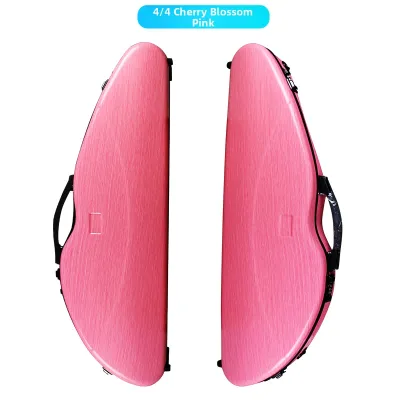
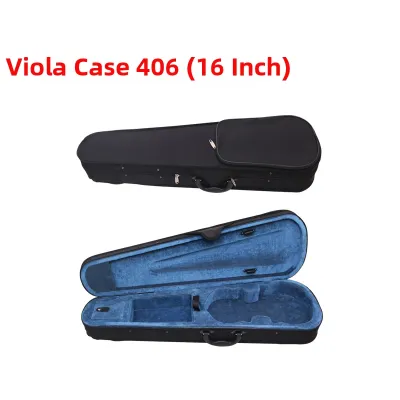
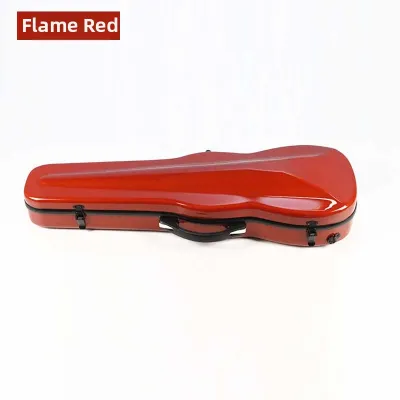
![[Flourishroly5] 4/4 Violin Case Hard Shell Handbag Practical Musical Supplies Storage Container Portable Violin Storage Hard Box for BeginnerFast shipping](https://img.lazcdn.com/g/p/a770fa9aeb351f954b736e07dec9e044.jpg_400x400q80.jpg_.webp)

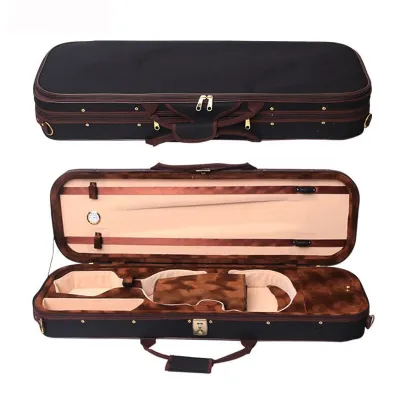
Prices are valid at publication and may change. Please refer to the product page for the latest price.
Finally, consider your own physical strength, carrying habits, and the distances you walk with the instrument. Carrying a heavy case over long distances can lead to physical fatigue, which increases the likelihood of accidentally dropping the case or bumping it against doorways. If you frequently walk or cycle to rehearsals, a lightweight option with ergonomic backpack straps becomes highly desirable. However, you must weigh this convenience against the physical risks of the journey, ensuring that your desire for comfort does not compromise the safety of your violin.
Hard Cases: Rigid Defense for Unpredictable Conditions
Hard cases are engineered to provide a rigid outer shell that deflects direct impacts and resists crushing forces. These shells are typically constructed from materials such as fiberglass, carbon fiber, plywood, or high-density thermoplastic. When a hard case is subjected to external pressure—such as being stacked under luggage or squeezed in a crowded train—the rigid exterior absorbs and distributes the force, preventing it from reaching the delicate wooden body of the violin. This structural integrity is essential for protecting the bridge, soundpost, and neck from catastrophic fractures.

However, this high level of security comes with a noticeable trade-off in weight and bulkiness. Hard cases are inherently heavier than soft bags, and their rigid shapes do not deform or compress to fit into tight spaces. Carrying a heavy hard case on a long walking commute can cause shoulder strain and physical fatigue, making the journey more taxing. Additionally, the lack of external flexibility means you cannot squeeze the case into an overstuffed overhead compartment or a cramped storage locker, requiring more physical space wherever you go.
When evaluating hard cases, you should not assume that all models offer identical levels of durability or environmental sealing. It is crucial to check the manufacturer’s specifications for the quality of the latches, hinges, and perimeter seals. High-quality latches should snap shut securely without popping open under pressure, and the hinges must prevent the lid from twisting or aligning poorly. A well-designed hard case often features a rubber gasket or overlapping lip along the closure seam to block out dust and moisture, but you must verify these details on the product label rather than assuming universal robustness.
Soft Gig Bags: Lightweight Mobility for Controlled Settings
Soft gig bags are designed with a focus on portability, offering a lightweight alternative that minimizes physical strain during transport. These bags are typically constructed from durable nylon or polyester fabrics and padded with varying thicknesses of foam. The primary advantage of a soft bag is its ergonomic design, which frequently includes padded backpack-style straps that distribute weight evenly across both shoulders. This makes them highly popular among students, hobbyists, and musicians who must walk short distances or navigate low-risk environments with multiple items in hand.
In addition to being lightweight, soft gig bags often feature generous external storage pockets that can accommodate sheet music, music stands, shoulder rests, and other accessories. This eliminates the need to carry a separate gear bag, streamlining your travel setup. The flexible fabric exterior also allows the bag to conform slightly to tight spaces, making it easier to store in a crowded closet or place on a car floorboard. For musicians who prioritize convenience and quick access, these practical features offer significant daily utility.
Despite these benefits, soft gig bags lack structural crush resistance, which introduces a high risk of impact damage. If a soft bag is dropped, stepped on, or placed under heavy items, the internal foam padding can only absorb a fraction of the force, leaving the violin vulnerable to cracks, broken bridges, or a snapped neck. Therefore, the ideal use case for a soft gig bag is strictly limited to controlled settings where you maintain direct, uninterrupted physical control of the instrument. If you cannot guarantee that your violin will remain free from external pressure or accidental drops, a soft bag is not a suitable primary enclosure.
Key Specifications to Compare Before Buying
To make an informed decision, you should compare specific case models using a structured set of criteria based on verifiable product details. Rather than relying on general marketing claims, look closely at the technical specifications provided by the manufacturer. Key dimensions to verify include the exact weight of the empty case, the thickness and type of the outer material, and the specific design of the internal support system. Checking these details ensures you select a case that matches both your physical capabilities and your protection requirements.
The following comparison table outlines the key specifications you should verify on the product label or official manufacturer documentation before purchasing a 4/4 violin case:
| Specification Category | Hard Case Details to Verify | Soft Gig Bag Details to Verify | Best Suited For |
|---|---|---|---|
| Outer Shell Material | Fiberglass, carbon fiber, thermoplastic, or wood laminate | High-denier nylon or polyester (e.g., 600D or higher) | Hard: High-impact environments; Soft: Low-risk travel |
| Crush Resistance | High; rigid shell prevents compression under heavy loads | Low to none; relies entirely on foam padding thickness | Hard: Public transit, storage; Soft: Private car transport |
| Weight Range | Typically 2.0 kg to 3.5 kg or more, depending on material | Typically 1.0 kg to 1.8 kg, offering lightweight carry | Hard: Shorter walks; Soft: Long walking commutes |
| Weather Resistance | Look for rubber gaskets, airtight seals, and water-resistant shells | Look for water-repellent fabric coatings and covered zippers | Hard: Heavy rain, humidity; Soft: Light drizzle, dry weather |
| Accessory Storage | Often limited to small internal compartments; may require external pocket | Large external pockets for sheet music and shoulder rests | Hard: Minimal gear; Soft: Students carrying music books |
When reviewing these specifications, remember that exact weights and weather-resistance ratings can vary significantly between brands. For example, a carbon fiber hard case may offer excellent crush resistance at a weight comparable to some padded gig bags, but it may carry a higher price point. Always verify the actual measurements and material descriptions on the product packaging or the manufacturer’s official website to ensure the specifications align with your daily transport needs.
Verifying Internal Fit and Suspension for a 4/4 Violin
Regardless of whether you choose a hard shell or a soft bag, the internal design of the case is what directly safeguards your 4/4 violin from shifting and impact. A high-quality case should feature an internal suspension system, which consists of padded cushions that suspend the violin’s back and sides away from the outer walls. This design ensures that if the case suffers an external blow, the shock is absorbed by the suspension pads rather than being transmitted directly to the delicate wood of the instrument. When inspecting a case, verify that the violin’s back does not make direct contact with the hard bottom or sides of the enclosure.
In addition to suspension, proper neck support and secure fastening are critical to preventing internal movement. The case should feature a dedicated neck cradle with a secure hook-and-loop strap or tie to hold the neck firmly in place. This prevents the violin from sliding forward or shifting laterally during transit, which could cause the tuning pegs to turn or the bridge to collide with the lid. You should also check that there is adequate clearance above the bridge and fingerboard when the lid is closed, ensuring no downward pressure is applied to these sensitive areas.
Before finalizing your purchase or accepting a delivery, it is highly recommended to test the physical fit with your specific 4/4 violin. Ensure that your instrument fits snugly into the body cutout without forcing or compressing the padding. If you use a specific model of shoulder rest, check whether the case has a dedicated compartment or enough internal clearance to store it safely without pressing against the violin’s top plate. If the fit is too loose, the instrument will slide around and sustain damage; if it is too tight, the constant pressure can warp the wood over time.
Making Your Final Decision
Your final choice should align with your primary transport scenarios, storage conditions, and handling habits. Choose a hard case if you frequently travel on public transit, navigate crowded school hallways, plan to travel by air, or store your instrument in shared spaces where others might handle or move it. The rigid defense of a hard shell is indispensable for protecting your investment against unpredictable physical hazards and environmental shifts.
Choose a soft gig bag if you primarily travel by private vehicle, walk short distances in controlled environments, and require a lightweight, highly portable option that reduces physical fatigue. A soft bag is also highly suitable for students who must carry sheet music and accessories in a single, convenient package and can guarantee direct physical custody of the instrument at all times. Before purchasing, always verify the retailer’s return policy so you can test the internal fit with your specific 4/4 violin and return or exchange the case if the dimensions do not match your expectations.
Frequently Asked Questions (FAQ)
Is a hard case completely waterproof?
While many hard cases offer excellent weather resistance, they are rarely completely waterproof or submersible. A hard shell will easily deflect heavy rain, but water can still seep through the seams, zipper tracks, or latch closures during prolonged exposure. If you frequently walk in wet weather, look for cases that feature a continuous rubber gasket seal along the rim or a water-resistant zipper cover. If the manufacturer does not specify a high waterproof rating, it is advisable to use a dedicated, water-resistant rain cover over the case to protect your instrument from moisture ingress.
Can I use a soft gig bag for air travel?
You should not use a soft gig bag for air travel if there is any chance the instrument will be checked into the cargo hold. Baggage handling systems and cargo compartments subject luggage to extreme pressure, stacking, and rough handling that a soft bag cannot withstand. If you plan to fly, a high-quality hard case is essential. Even if you intend to carry the violin into the cabin, airline cabin space is highly competitive, and flight crew may require you to gate-check the instrument if overhead bins are full. Always check your specific airline’s musical instrument carry-on policy before traveling.
Community discussion
Share your experience or ask a question. Comments are reviewed before publication.