
Selecting the right 4/4 violin case is one of the most critical decisions you will make to preserve the longevity, structural integrity, and tonal quality of your instrument. The choice fundamentally comes down to a trade-off between maximum physical protection and lightweight portability. While a heavy-duty hard case offers a rigid shield against crushing impacts and environmental shifts, a soft case or hybrid gig bag prioritizes mobility, ergonomic carrying options, and ease of transport.
Neither option is universally superior; the correct choice depends entirely on your daily routine, transportation habits, and how you handle your instrument. If you frequently navigate crowded public transit, stack your gear in shared vehicles, or own a high-value instrument that demands maximum crush resistance, a hard case is highly recommended. Conversely, if you walk or cycle long distances, prioritize minimal weight, and always keep your instrument close at hand, a high-quality soft or hybrid case may suit your lifestyle better.
To make an informed choice, you must evaluate how each case type performs across several key areas, including physical impact resistance, weight distribution, climate control, storage capacity, and overall build quality. Balancing these factors ensures your instrument remains secure whether you are commuting to a local rehearsal or storing your violin at home.
Products mentioned in this guide
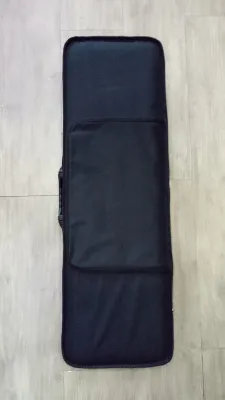
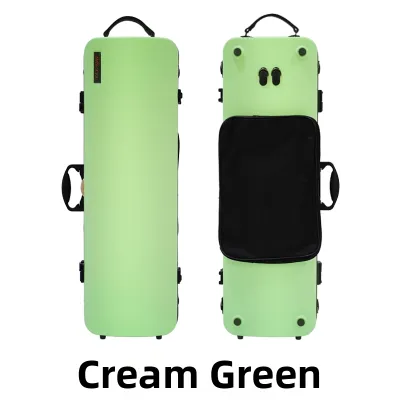
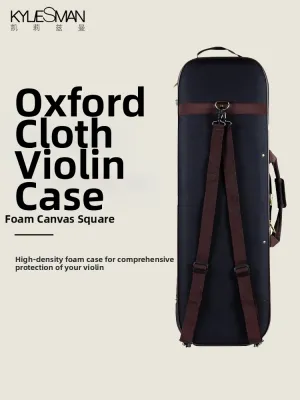
![[Flourishroly5] 4/4 Violin Case Hard Shell Handbag Practical Musical Supplies Storage Container Portable Violin Storage Hard Box for BeginnerFast shipping](https://img.lazcdn.com/g/p/1ea28b8e18ad16db52d3a7d9a5406ef5.jpg_400x400q80.jpg_.webp)
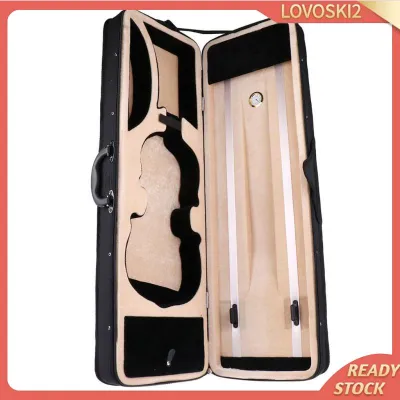
Prices are valid at publication and may change. Please refer to the product page for the latest price.
Protection and Impact Resistance of a 4/4 Violin Case
When evaluating physical security, the construction materials of your case play a decisive role in absorbing shocks and preventing structural damage to your violin. Hard cases utilize rigid outer shells made from materials such as plywood, fiberglass, carbon fiber, or ABS plastic. Traditional plywood cases are exceptionally rigid and offer excellent thermal insulation, though they are relatively heavy. Fiberglass cases provide a sleek, modern aesthetic and high impact resistance, while carbon fiber cases offer an unparalleled strength-to-weight ratio, though they can be highly resonant and conduct external temperatures quickly. ABS plastic and polycarbonate shells are highly durable, impact-resistant, and cost-effective options that flex slightly under pressure to absorb shocks without cracking.
Within a high-quality hard case, the interior design is just as important as the outer shell. Look for cases featuring a true suspension system. A suspension system uses injected-foam cushions strategically placed at the upper and lower bouts to suspend the violin inside the shell. This design ensures that if the case is dropped or struck, the impact energy is absorbed by the outer shell and the foam padding, preventing the delicate scroll, neck, and back of the violin from directly impacting the hard outer walls.
Soft cases and hybrid foam cases rely on high-density foam padding, such as expanded polystyrene (EPS), wrapped in heavy-duty outer fabrics like high-denier nylon or polyester. While these cases are highly effective at absorbing minor bumps, scrapes, and light impacts, they offer minimal resistance against crushing forces. If a soft case is stepped on, dropped from a significant height, or packed under heavy luggage, the outer fabric and foam can compress, transferring the force directly to the violin’s top plate, bridge, and soundpost.
To ensure your instrument is properly protected, you should physically inspect any case before finalizing your purchase. First, check the neck support block to ensure it features a secure Velcro or tie strap that holds the neck firmly in place. Second, verify the bridge clearance by placing your violin inside and ensuring the lid does not press down on the bridge when closed. Finally, perform a gentle shake test: with the violin secured and the case closed, gently move the case from side to side. You should not feel or hear the instrument shifting inside; any movement indicates that the interior padding is too loose, which can lead to varnish wear or structural damage over time.
Weight, Portability, and Daily Commute
The physical burden of carrying your instrument daily can significantly affect your comfort and posture. Before purchasing, always check the manufacturer’s product specifications for the exact weight of the case, as rigid shells and padded fabrics differ considerably. A traditional plywood case can easily weigh between 3.5 and 5 kilograms empty, which can become exhausting to carry over long distances. Modern carbon fiber or fiberglass cases often reduce this weight to between 1.8 and 2.5 kilograms, while soft gig bags and hybrid foam cases are typically the lightest options, often weighing between 1.2 and 1.8 kilograms.

How you carry this weight is just as important as the weight itself. Most soft cases and modern hard cases feature dual backpack straps, which distribute the weight evenly across both shoulders. This ergonomic setup is crucial for preventing shoulder and back strain, especially for younger students or musicians who walk long distances. Single shoulder straps, while convenient for quick transfers, place the entire load on one side of your body, which can lead to muscle fatigue and poor playing posture over time. Look for padded, heavy-duty straps with secure metal carabiners or locking mechanisms to prevent accidental detaching.
Your daily commute should directly influence your choice of case design. If you regularly commute on crowded public buses or trains, a rigid hard case is invaluable. In tight spaces, other commuters may accidentally bump into you, or your case may be squeezed against handrails and doors; a hard shell prevents these external pressures from reaching your instrument.
For those who cycle or walk long distances, a lightweight hybrid or soft case with high-quality, padded backpack straps is often the most practical choice. The reduced weight minimizes physical fatigue, and the softer exterior is more comfortable against your back. However, you must remain highly vigilant about your surroundings, as a fall from a bicycle or a collision with a pedestrian can easily damage an instrument housed in a soft gig bag.
Climate and Weather Resistance
Environmental factors, particularly humidity and temperature fluctuations, pose a significant threat to wooden stringed instruments. Wood is a hygroscopic material, meaning it absorbs and releases moisture in response to the surrounding air. In highly humid environments, such as Singapore’s tropical climate where relative humidity regularly exceeds 80 percent, wood can swell, causing the pegs to stick, the fingerboard projection to drop, and the seams to open. Conversely, rapid dry spells can cause the wood to shrink and crack.
Hard cases generally offer superior sealing against weather elements compared to soft cases. High-quality hard cases often feature a continuous rubber gasket or neoprene seal along the valance where the lid meets the shell. When latched tightly, this seal creates a highly effective barrier against sudden tropical downpours and dust, helping to maintain a stable microclimate inside the case. Many professional hard cases also include built-in analog or digital hygrometers, allowing you to monitor the internal humidity levels at a glance.
Soft cases, on the other hand, rely on water-resistant fabrics such as polyurethane-coated nylon or polyester. While these materials can easily repel a light drizzle, they are rarely completely waterproof. The primary vulnerability of soft cases lies in the zippers and seams; during a heavy downpours, water can seep through the zipper teeth and saturate the internal padding, exposing your violin to direct moisture. If you choose a soft case, look for models that feature water-resistant zipper guards or include a dedicated rain cover.
It is vital to understand that no standard case is a substitute for active climate control. You must always refer to your violin manufacturer’s care instructions for specific environmental guidelines. To maintain your instrument, wipe down the body and strings with a dry microfiber cloth before placing it in the case to remove sweat and rosin dust. Depending on your local environment, utilize specialized humidity control packets or case humidifiers to keep the internal relative humidity within the recommended 45 to 55 percent range. Never store your violin case near air conditioning vents, in direct sunlight, or inside a parked vehicle, as extreme temperature shifts can ruin the varnish and split the wood.
Storage, Accessories, and 4/4 Fit
A practical violin case must accommodate not only the instrument itself but also the essential accessories required for daily playing. Hard cases typically feature dedicated, rigid internal compartments with lids to store your rosin, extra strings, cleaning cloths, and mute. They also utilize rigid bow holders—usually spinner-style clasps—that hold the bows securely against the lid, preventing the bow hair from touching the case lining or pressing against the violin. Most oblong hard cases can hold up to four bows, while contoured hard cases are usually limited to two.
Soft cases often provide more flexible and spacious external storage options. Large zippered pockets on the exterior of a soft case can easily accommodate full-sized sheet music folders, method books, and larger shoulder rests that might not fit inside a compact, contoured hard case. However, because these pockets are flexible, accessories stored inside them can press inward against the instrument if the case is squeezed or packed tightly. Care must be taken not to overstuff external pockets with heavy or bulky items.
Verifying a perfect 4/4 fit is critical to preventing structural damage. A standard full-size (4/4) violin typically has a body length of approximately 35.6 centimeters (14 inches) and a total length of around 59 centimeters, but dimensions can vary slightly depending on the instrument’s model (such as Stradivari or Guarneri patterns). Before purchasing any case, measure your violin’s maximum upper bout width, lower bout width, and total length, and compare these measurements against the case’s internal specifications.
An ill-fitting case poses serious risks. If the interior is too tight, the case lid can exert dangerous downward pressure on the bridge and top plate, which can crack the soundpost area or warp the top wood. If the interior is too loose, the violin will slide back and forth, causing the scroll to hit the end wall or the pegs to turn and slip. Ensure the bow holders are long enough for your specific bows as well; a bow that is forced into a short holder can suffer tip damage or warp over time.
Price, Value, and Longevity
Violin cases span a wide range of pricing tiers, and understanding what drives these costs will help you evaluate the long-term value of your investment. In both hard and soft categories, pricing is primarily driven by material quality, hardware durability, and manufacturing precision.
- Entry-Level Cases: Typically consist of lightweight, compressed foam or basic plywood shells covered in standard nylon fabric. While highly affordable, they often feature lower-grade plastic hardware, lightweight zippers, and basic interior linings that may wear out quickly with daily use.
- Mid-Range Cases: Often feature durable fiberglass shells, heavy-duty polycarbonate, or high-density foam with reinforced plywood frames. These cases utilize reliable metal latches, YKK zippers, and better interior suspension systems, offering an excellent balance of durability and cost.
- Premium Cases: Constructed from advanced materials like pure carbon fiber, high-grade thermo-formed plastics, or premium multi-ply wood laminates. They feature luxurious velvet or silk linings, advanced digital climate monitoring tools, highly secure locking latches, and extended manufacturer warranties.
When evaluating longevity, pay close attention to common failure points. For hard cases, inspect the quality of the hinges, metal latches, and D-rings used for strap attachments. Cheap metal hardware can rust, bend, or snap under tension, while poorly glued interior plush lining can peel away and expose the raw structural foam underneath. For soft cases, the primary failure points are zipper teeth splitting, seams tearing under the weight of accessories, and the fabric wearing thin at high-friction points like the bottom corners.
To determine which premium features justify a higher investment, evaluate your usage frequency and the value of your instrument. If you own a high-value or historical violin, investing in a premium hard case with advanced suspension and superior weather sealing is a highly cost-effective insurance policy. If you are a casual hobbyist who rarely takes the instrument out of the house, a well-padded mid-range hybrid or soft case will provide excellent value and easily last for years with proper care.
Final Decision Framework
To finalize your decision, match your specific playing lifestyle and commute patterns to the most suitable case type. Choosing the wrong case can lead to physical discomfort or avoidable damage to your instrument.
Choose a Hard Case if you:
- Regularly travel on public buses, trains, or school transport where gear is prone to being bumped or stacked.
- Own a high-value, delicate, or professional-grade instrument.
- Live in an area with highly volatile weather or extreme humidity levels.
- Require storage for multiple bows and prefer dedicated, rigid internal compartments.
Choose a Soft or Hybrid Case if you:
- Walk, cycle, or travel long distances on foot and need to minimize physical fatigue.
- Prioritize highly ergonomic, comfortable backpack straps and lightweight construction.
- Need to carry large sheet music folders and bulky shoulder rests in a single bag.
- Primarily play at home or only transport your violin occasionally in a private vehicle.
Before making your final purchase, always verify the retailer’s return policy. If possible, bring your violin, shoulder rest, and bows to a local shop to physically test the fit. Ensure the instrument rests snugly on the suspension cushions, the scroll does not touch the case wall, the bows fit without bending, and the loaded case feels balanced and comfortable when carried on your shoulders.
Frequently Asked Questions (FAQ)
Can I use a soft gig bag as airplane carry-on luggage?
While soft gig bags are lightweight and easy to carry, using them for air travel carries significant risks. Most commercial airlines have specific policies regarding musical instruments, generally allowing them in the cabin as carry-on items only if they fit in the overhead bin or under the seat in front of you on a first-come, first-served basis. If a flight is fully booked and overhead space is unavailable, flight attendants may require you to gate-check your instrument.
If your violin is housed in a soft gig bag, gate-checking it is highly dangerous. Soft cases cannot withstand the heavy stacking, shifting, and rough handling associated with aircraft cargo holds, which can easily result in a crushed instrument. If you travel by air frequently, it is highly recommended to use a compact, flight-approved hard case with a rigid shell and a secure suspension system. Always check your specific airline’s musical instrument policy and baggage dimensions before arriving at the airport.
Community discussion
Share your experience or ask a question. Comments are reviewed before publication.