
Quick Answer: Which Erhu Case Should You Choose?
Choosing the right erhu case is a critical decision for protecting your instrument’s structural integrity and acoustic quality. The choice between a hard case and a soft case (gig bag) depends on how you travel, where you store the instrument, and the climate conditions of your environment.
For musicians who travel frequently, ship their instruments, or need to manage high humidity, a hard case is the superior choice. Its rigid exterior protects the delicate python skin and slender neck from crushing forces, dropping accidents, and environmental shifts. Conversely, for daily commuters navigating public transport systems, a padded soft case offers unmatched lightweight convenience and hands-free carrying, provided you can keep the instrument close and safe from external pressure.
Your final decision should depend on your transport habits, storage space, and environmental conditions. Evaluating these factors carefully will ensure your instrument remains safe, stable, and ready to play.
Products mentioned in this guide
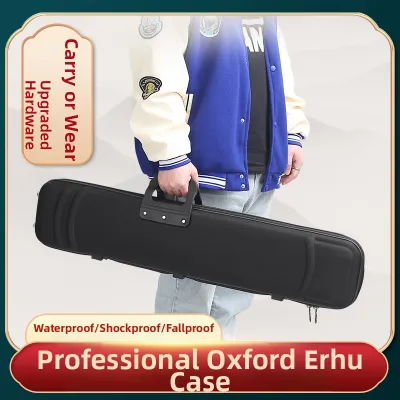


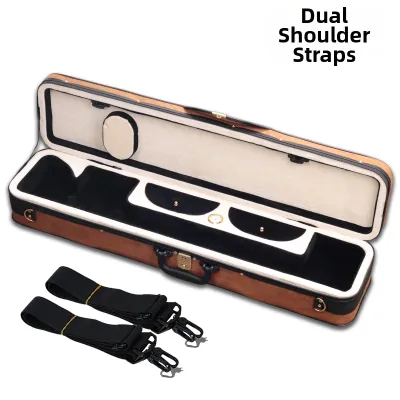
Prices are valid at publication and may change. Please refer to the product page for the latest price.
Hard Erhu Cases: Maximum Protection for Fragile Instruments
Hard erhu cases are engineered to provide an uncompromising protective shell around your instrument. The exterior of a hard case is typically constructed from rigid materials such as wood, fiberglass, ABS plastic, or advanced carbon fiber composites. Inside, these cases feature custom-molded recesses lined with dense foam and plush velvet or microfiber. This structural design ensures that the erhu remains completely stationary, absorbing and redistributing external forces before they can reach the delicate wood and skin.

The primary benefit of a hard case is its ability to shield the erhu’s most vulnerable components. Unlike Western string instruments, the erhu lacks a fingerboard to reinforce its long, thin neck, making the neck highly susceptible to snapping under lateral pressure. Furthermore, the tuning pegs protrude significantly, creating natural catch points, while the soundbox is covered by a thin, highly sensitive python skin soundboard. A rigid shell prevents these parts from being crushed, punctured, or subjected to bending forces, even if the case is dropped or heavy luggage is stacked on top of it.
However, these protective benefits come with specific trade-offs. Hard cases are inherently heavier and bulkier than their soft counterparts. A typical fiberglass or wooden hard case can weigh between 2.5 and 4.5 kilograms when empty, which can cause physical fatigue during long walks. Their rigid, non-yielding dimensions also make them less flexible to store, and they rarely feature large external pockets, forcing players to carry sheet music and larger accessories in a separate bag. Professional-grade hard cases are also a significant financial investment, with prices in Singapore generally ranging from S$120 to over S$300.
Despite these drawbacks, a hard case is indispensable for specific scenarios. If you frequently travel by air, ship your instrument, or store your erhu in busy environments where it might be bumped by children or pets, the physical security of a hard shell is essential. It is also the preferred option for collectors and owners of high-value instruments made of rare hardwoods, where any structural damage would result in a devastating loss of value.
Soft Erhu Cases (Gig Bags): Lightweight Convenience for Daily Commutes
Soft erhu cases, commonly referred to as gig bags, prioritize mobility, comfort, and daily convenience. These cases are constructed from heavy-duty woven fabrics, such as 600-denier or 1200-denier polyester, nylon, or rugged canvas. To provide protection against minor impacts, the fabric exterior is paired with an internal layer of protective foam padding, which typically ranges from 5mm to 20mm in thickness. The interior is lined with smooth nylon or soft brushed fabric to prevent scratches to the instrument’s polished wood surface.
The standout advantage of a soft erhu case is its exceptional portability. Most gig bags are equipped with dual, adjustable backpack straps, allowing you to carry the instrument comfortably on your back. This hands-free carrying style is incredibly beneficial for students, hobbyists, and ensemble players who regularly navigate crowded urban spaces, bus interchanges, and MRT stations. By distributing the weight evenly across both shoulders, a soft case minimizes physical strain during long commutes. Additionally, soft cases feature generous external zippered pockets, providing ample space for sheet music, tuning devices, spare strings, rosin, and personal items.
Nevertheless, soft cases have clear structural limitations that users must respect. Because they lack a rigid frame, gig bags offer virtually no resistance to crushing forces. If a heavy object is placed on top of a soft case, or if the bag is squeezed tightly into a packed car boot, the pressure is transmitted directly to the instrument inside. The foam padding is designed solely to absorb minor bumps and scrapes, not to withstand heavy impacts or sharp punctures. Over time, the zippers, seams, and strap attachment points can also wear out, representing potential failure points if the bag is overloaded.
This makes the soft case ideal for responsible players who maintain direct, continuous control over their instrument. If you are commuting locally to weekly lessons, attending rehearsals where you carry your own gear, and storing your erhu in a safe, dedicated space at home, a well-padded gig bag provides excellent practical value. It offers a lightweight, flexible, and cost-effective solution, with quality padded models typically priced between S$40 and S$90.
Key Comparison Dimensions: Hard vs Soft Erhu Cases
To determine which case type fits your musical lifestyle, it is essential to evaluate how they perform across several practical dimensions. Your choice will directly affect the longevity of your erhu, your physical comfort during travel, and how easily you can maintain the instrument’s setup.
Impact and Crush Protection
When evaluating physical protection, hard and soft cases operate on entirely different mechanical principles. A hard case acts as an external exoskeleton. When subjected to an impact, the rigid shell deflects the force across its entire surface, while the interior foam suspension cradles the instrument to prevent internal movement. This structural rigidity is vital for protecting the erhu’s python skin soundboard, which can easily puncture or tear if subjected to localized pressure from sharp objects.
In contrast, a soft gig bag relies entirely on foam compression to absorb shocks. While a thick layer of high-density foam can cushion the instrument against minor bumps, such as brushing against a doorway, it cannot prevent structural bending. If a soft case is dropped from a height or stepped on, the neck of the erhu can easily snap at its weakest points. For players who must transport their instrument in unpredictable environments where they cannot guarantee it will remain upright and unburdened, the superior crush resistance of a hard case is a necessity.
Portability and Weight
Portability is the primary arena where soft cases outperform hard cases. A soft gig bag is lightweight, often weighing under 1.5 kilograms, and its flexible fabric conforms slightly to the wearer’s body. The inclusion of padded backpack straps allows for hands-free transport, making it easy to walk long distances, climb stairs, or hold onto handrails on public transport. This ease of movement is a major factor in reducing physical fatigue during daily travel.
Hard cases, by comparison, are significantly heavier and more awkward to carry. Many traditional hard cases feature only a single plastic handle, requiring you to carry the instrument like a suitcase. While some modern fiberglass cases include a single shoulder strap, they still tend to swing and shift while walking, which can strain your shoulder and back. If your daily routine involves extensive walking, the weight and rigid bulk of a hard case can become a physically demanding chore.
Climate and Humidity Control
The soundboard of an erhu is made of natural python skin, a material that is highly sensitive to moisture and temperature fluctuations. In tropical climates like Singapore, where the ambient relative humidity often exceeds 80%, managing moisture is crucial. High humidity causes the python skin to absorb water, making it flaccid and dampening the instrument’s tone. Conversely, moving the instrument rapidly between hot, humid outdoor air and dry, cold air-conditioned rooms can cause the wood to warp and the skin to split.
Hard cases are vastly superior at managing this risk. Many high-quality hard cases feature tight-fitting tongue-and-groove closures, rubber gaskets, or airtight seals that isolate the interior environment. When paired with silica gel packets or specialized two-way humidity control packs, a hard case can maintain a stable, dry microclimate. Soft cases, being made of woven fabrics and standard zippers, are highly breathable and offer virtually no barrier against moisture. Within minutes of stepping outdoors, the humidity inside a soft case will match the ambient air, exposing the python skin to constant moisture cycles.
Storage and Space Efficiency
Storage requirements at home or in the studio are another practical consideration. Soft cases are highly space-efficient when not in use. Because they lack a rigid frame, empty gig bags can be folded, rolled, or compressed, allowing them to be tucked away in drawers, on top of wardrobes, or under beds. This flexibility is particularly useful in smaller living spaces where storage room is limited.
Hard cases maintain their fixed, elongated shape regardless of whether the instrument is inside. They cannot be compressed and require a dedicated, flat shelf or a secure vertical corner where they will not be knocked over. If you own multiple instruments, storing several hard cases can quickly consume valuable floor space. However, hard cases do offer the advantage of being safely stackable, provided they are placed horizontally on a flat, stable surface.
Hard vs Soft Erhu Case Comparison Table
The following table summarizes the primary differences between hard and soft erhu cases to help you quickly identify which type aligns with your daily routine and protection needs.
| Comparison Dimension | Hard Erhu Cases | Soft Erhu Cases (Gig Bags) |
|---|---|---|
| Crush Protection Level | High (Rigid exterior shell resists heavy loads) | Low (Foam padding only absorbs minor bumps) |
| Average Weight | Moderate to Heavy (Typically 2.5kg to 4.5kg) | Light (Typically 0.8kg to 1.5kg) |
| Carrying Style | Hand grip or single shoulder strap | Dual backpack straps and hand grip |
| Humidity Retention | High (Better seal, limits moisture exchange) | Low (Breathable fabric allows humidity transfer) |
| Best Use Case | Air travel, shipping, long-term storage | Daily transit, local lessons, walking commutes |
| Air Travel Suitability | Highly Suitable (Essential for checked baggage) | Unsuitable for cargo (Carry-on only if permitted) |
| Average Price Band | Mid to High (S$120 to S$300+) | Budget to Mid (S$40 to S$90) |
How to Choose the Right Erhu Case for Your Needs
Selecting the perfect case involves matching your instrument’s value and your personal lifestyle with the specific strengths of each case type. Use the following conditional decision framework to guide your purchase:
- Choose a Hard Case if:
- You travel frequently by air or need to ship your instrument, where baggage handlers or cargo environments present extreme crush risks.
- You store your erhu in a busy household with children, pets, or heavy equipment where accidental tip-overs or impacts are likely.
- You want to maintain a strict, dehumidified microclimate to protect the python skin from tropical humidity and rapid temperature changes.
- Your instrument is a high-value collector's piece or made of dense, fragile hardwoods that require absolute physical security.
- Choose a Soft Case if:
- Your primary transit involves walking, taking the MRT, or riding buses, where hands-free backpack carrying and lightweight mobility are essential.
- You always keep the instrument in your direct physical possession and can guarantee that no heavy items will be stacked on top of it.
- You have limited storage space at home and need a case that can be easily folded and tucked away when empty.
- You already store your erhu in a safe, climate-controlled room (such as a room with a dedicated dehumidifier running) at home.
- Verify First if:
- You are purchasing a specialized or shaped case. Erhu dimensions can vary significantly between makers, especially the length of the neck, the shape of the pegbox (such as decorative dragon heads versus standard wave designs), and the diameter of the soundbox (hexagonal versus octagonal). Always measure your instrument's total length, pegbox width, and soundbox diameter to confirm compatibility with the case's interior dimensions before finalizing your purchase.
Essential Features to Check Before Buying
Regardless of whether you decide on a hard or soft case, several secondary features are critical to ensuring the safety of your erhu and the longevity of the case itself. Always verify these details on the product specification sheet or during an in-person inspection:
- Neck and Pegbox Support: A high-quality case must feature a dedicated neck cradle, preferably with a secure Velcro strap. This prevents the erhu from shifting longitudinally inside the case. Without proper neck support, the instrument can slide, causing the protruding tuning pegs to strike the interior walls, which can detune the strings or snap the pegs entirely. There should also be adequate clearance around the pegbox so that the pegs do not bear any direct weight.
- Secure Bow Holders: The erhu bow is long, flexible, and delicate. Look for a case that features dedicated clips, straps, or sleeves to hold the bow securely against the lid or side wall. If the bow is allowed to float freely inside the case, the horsehair can rub against the python skin soundboard, transferring oils, rosin, or dirt, which can degrade the skin over time.
- Accessory Compartments: Ensure the case has a separate, closed compartment for your essential accessories, such as rosin, spare strings, fine tuners, cleaning cloths, and bridge blocks. These items must be kept isolated from the main chamber; loose accessories sliding around inside the case can easily scratch the polished wood finish of your erhu.
- Interior Padding Quality and Fit: The interior lining should be made of a soft, non-abrasive material like velvet, plush, or microfiber to prevent surface scratches. Press the padding to ensure it is dense enough to cushion the soundbox edges. Remember that a case is only as good as its fit; if the erhu has too much room to slide around, it can still suffer internal impact damage during transit. Consider adding small foam inserts to fill any gaps if the fit is slightly loose.
- Hardware and Closure Quality: For hard cases, inspect the latches and hinges to ensure they are heavy-duty and operate smoothly. For soft cases, check the quality of the zippers, as cheap zippers are the most common point of failure. Look for thick, self-repairing nylon coil zippers and reinforced stitching at the strap attachment points.
Frequently Asked Questions (FAQ)
Managing and transporting a traditional Chinese string instrument comes with unique challenges. Below are answers to common questions regarding erhu protection and care.
Can I use a soft erhu case for air travel?
It is strongly advised not to check a soft erhu case into the cargo hold of an aircraft. Cargo compartments subject luggage to immense pressure, stacking, and rough handling, which a soft gig bag cannot withstand. If you must travel with a soft case, verify with your airline beforehand whether the instrument can be carried on as cabin baggage. However, even for cabin travel, a hard case or a specialized flight case is highly recommended to protect the instrument from shifting overhead bin contents and accidental impacts during boarding.
How do I protect my erhu skin from humidity inside the case?
To protect the python skin soundboard from high humidity, place silica gel packets or specialized two-way humidity control packs inside the accessory compartment of your case. Do not allow these chemical packets to make direct contact with the python skin or the wooden finish, as they can cause localized drying or finish damage. If you are using a hard case, ensure the rubber seals are intact to prevent moisture from seeping in. Regularly check the condition of your desiccants and replace or reactivate them once they become saturated to maintain a stable interior environment.
Community discussion
Share your experience or ask a question. Comments are reviewed before publication.