
Hard cases provide maximum physical impact protection and structural rigidity, making them ideal for frequent travel, flights, and unpredictable environments. Soft cases, often called gig bags, offer lightweight portability and basic scratch protection, suited for short, controlled commutes. The right choice depends on balancing your specific transit risks, carrying comfort, and budget rather than seeking a single universal winner.
Selecting the wrong type of protection can lead to costly repairs, such as cracked tops, broken necks, or warped wood. By understanding how different designs handle physical stress and environmental changes, you can select a case that keeps your instrument secure without adding unnecessary bulk to your daily commute.
Core Protection Differences: Hard Cases vs. Soft Cases
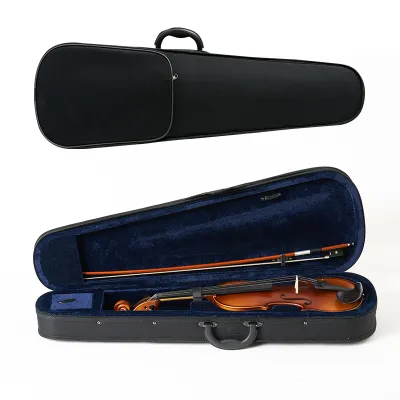
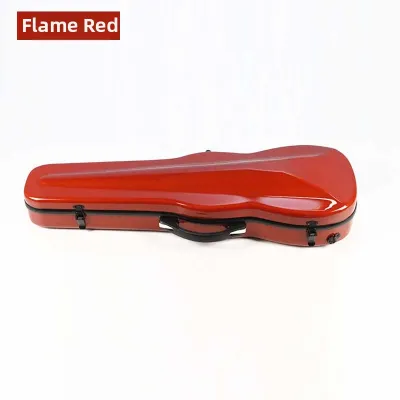
The primary difference between hard and soft violin cases lies in their structural defense against external forces. Hard cases utilize rigid outer shells made from materials such as plywood, fiberglass, carbon fiber, or molded thermoplastics. These materials are designed to resist crushing forces, ensuring that if heavy luggage falls onto the case or if it is stepped on in a crowded space, the shell absorbs the impact rather than transferring it to the delicate spruce top of the violin.
Products mentioned in this guide
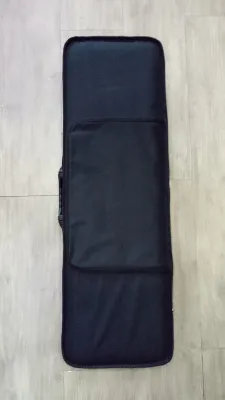
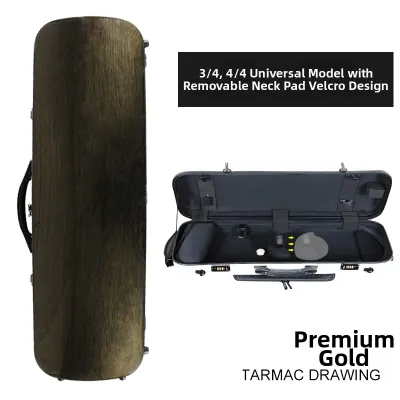
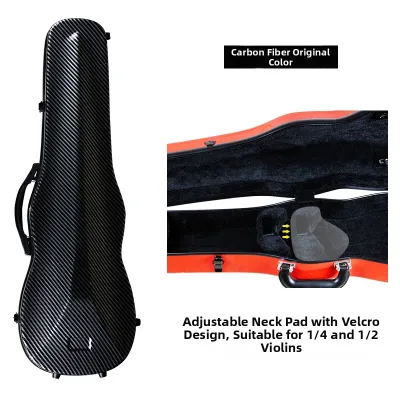
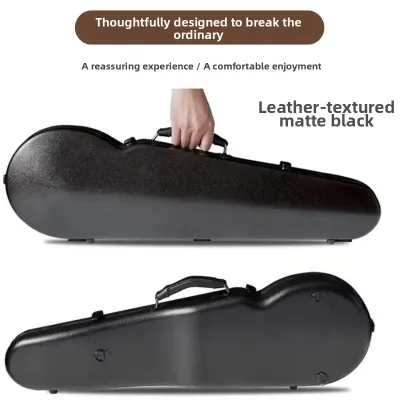
![[SG LAUNCH] ART® Candy Professional Violin Case | Ultra-Lightweight (1.5kg - 1.85kg) | Fits 1/10 to 4/4 | SG Ready Stock](https://img.lazcdn.com/g/p/23581ae238e3897a67803515cada0ef7.png_400x400q80.png_.webp)
Prices are valid at publication and may change. Please refer to the product page for the latest price.
In contrast, soft cases are constructed from woven fabrics like heavy-duty nylon or canvas. While these fabrics are excellent at preventing surface scratches, minor abrasions, and dust accumulation, they offer virtually no resistance to crushing. If a soft case is subjected to heavy pressure, the fabric simply compresses, which can easily crack the violin’s bridge, soundpost, or faceplate.
Interior design also plays a critical role in shock absorption. High-quality hard cases often feature an interior suspension system. This design uses foam cushions to suspend the violin’s body inside the shell, preventing the back and scroll from directly touching the outer walls. If the case is dropped, the suspension system absorbs the kinetic energy. Soft cases generally rely on simple foam padding of varying density. While thicker padding helps cushion minor bumps, it lacks the structural suspension needed to protect the instrument during a significant fall.
Weatherproofing and temperature insulation are additional areas of divergence. No standard case is entirely airtight, but hard cases equipped with rubber gaskets or tight-fitting valances slow down the transfer of moisture and heat much more effectively than zippered fabric cases. Fabric soft cases can absorb ambient moisture in high-humidity environments, which can gradually affect the glue joints and wood tension of your instrument.
Matching the Case to Your Transit and Storage Environment
Your daily routine and local environment should dictate the level of protection your violin requires. Commuting on crowded public buses or trains exposes your instrument to constant physical hazards. In tight spaces, other passengers may bump into you, or heavy bags might press against your gear. A rigid hard case is highly recommended for these environments to prevent accidental crushing during sudden stops or crowded transfers.

For those who travel primarily by private car, the risks shift to how the case is secured. Placing a violin in a car trunk alongside groceries, luggage, or sports equipment poses a risk if items shift during transit. A hard case ensures that even if a heavy object slides into your instrument, the violin remains undamaged. If you use a soft case in a car, it must be placed securely on a seat or floorwell where nothing can fall on top of it.
Local climate conditions are a major factor for instrument longevity, particularly in tropical regions like Singapore where high humidity and rapid temperature transitions are common. Moving from a hot, humid outdoor environment into a highly air-conditioned room causes rapid wood expansion and contraction. While a hard case cannot stop these changes indefinitely, its sealed structure slows the transition, giving the wood time to adjust. Fabric soft cases offer minimal thermal insulation, exposing the violin to rapid climate shifts almost immediately.
Active commutes, such as walking or cycling, require a balance of weight and safety. If you walk long distances, a heavy wooden hard case can cause physical fatigue. However, cycling with a soft case on your back is highly risky; a minor fall could completely destroy the instrument. For active commutes, a lightweight synthetic hard case offers the necessary impact protection while keeping the physical burden manageable.
Weight, Portability, and Accessory Storage
The physical weight of your case directly impacts your daily comfort and long-term carrying fatigue. Traditional multi-ply wood hard cases are exceptionally protective but can weigh anywhere from 3 to 5 kilograms. Modern synthetic materials like carbon fiber or high-density styrofoam cores significantly reduce this weight, sometimes bringing it down to under 2 kilograms, though these advanced materials often come at a premium price. Soft cases remain the lightest option available, typically weighing under 1.5 kilograms, making them a popular choice for young students or musicians who must carry sheet music and stands simultaneously.
Carrying options and ergonomics vary across designs. Most modern cases feature D-rings for attaching shoulder or backpack straps. When selecting a hard case, verify that the D-rings are securely riveted to the shell rather than just stitched to an outer fabric cover. Soft cases often feature integrated, heavily padded backpack straps that distribute weight evenly across your shoulders. For navigating tight spaces, look for a case with a “subway handle” on the upper end, allowing you to hold the case vertically next to your leg.
Storage capacity for accessories is another practical consideration. Because soft cases are flexible, they often feature large exterior zippered pockets that can easily accommodate full-sized sheet music, method books, and even tablet devices. Hard cases, especially shaped or contoured models, have very limited interior space. They typically feature a small internal compartment for rosin, a mute, and a cleaning cloth. If you use a shaped hard case, you will likely need a separate bag for your music books, whereas oblong hard cases often include an exterior music pocket attached to the outer fabric cover.
Feature Comparison Matrix
| Feature | Hard Case (Rigid Shell) | Soft Case (Gig Bag) |
|---|---|---|
| Impact & Crush Resistance | High (Protects against drops and heavy pressure) | Low (Protects only against scratches and minor bumps) |
| Interior Suspension | Common in mid-to-high-end models | Rare (Relies on basic foam padding) |
| Weight Profile | Moderate to Heavy (1.8kg to 5kg+) | Very Lightweight (Under 1.5kg) |
| Accessory Capacity | Limited (Shaped) to Moderate (Oblong) | High (Flexible exterior pockets for sheet music) |
| Climate Insulation | Moderate to High (Slower humidity/temp transfer) | Low (Rapid exposure to ambient air shifts) |
| Ideal Use Scenario | Public transit, air travel, high-value instruments | Short walks, private car travel, budget-conscious students |
Decision Framework: Choosing the Right Violin Case
To determine which case type fits your needs, evaluate your specific usage patterns, instrument value, and daily transit risks.
When to Choose a Hard Case
- Frequent Travel: If you regularly commute via public transit, travel by air, or store your instrument in shared luggage spaces.
- High-Value Instruments: If your violin is a professional-grade instrument or has high sentimental value, the cost of a hard case is a minor investment compared to potential repair bills.
- Humid Climates: If you live in a region with high humidity fluctuations and rely on in-case humidity control accessories.
When to Choose a Soft Case
- Short, Controlled Commutes: If you only transport your violin from your home to a private car, and directly into a nearby classroom or studio.
- Strict Weight Limits: If physical limitations or long walking distances make carrying a heavier hard case impractical.
- Secondary Storage: If the case is primarily used to keep dust off the instrument while it sits safely on a shelf at home.
Critical Verification Steps Before Buying
Before finalizing your purchase, always verify the physical compatibility of your instrument with the case specifications. Do not rely solely on generic size labels like “4/4” or “3/4,” as individual violin patterns can vary.
- Measure the Violin: Use a flexible measuring tape to find the total length (from the scroll to the endpin) and the maximum width of the upper and lower bouts. Compare these to the manufacturer's interior case dimensions.
- Check Bridge Clearance: Ensure there is adequate vertical clearance inside the case so that when the lid is closed, it does not press down on the bridge. Pressure on the bridge can crack the top table or dislodge the internal soundpost.
- Verify Bow Fit: Measure your bow from the tip to the end of the screw. Ensure the bow spinners inside the case are positioned to hold the bow securely without putting bending tension on the stick.
Frequently Asked Questions (FAQ)
Can I take a soft violin case as carry-on luggage on a flight?
While most airlines allow violins as carry-on baggage under specific musical instrument policies, using a soft case for air travel is highly risky. Overhead bins are shared spaces where other passengers may shove heavy suitcases against your instrument. Furthermore, if a flight is fully booked, gate agents may require you to gate-check your instrument into the cargo hold. A soft case cannot survive the physical impact of baggage handling systems or the weight of stacked luggage. For air travel, always use a rigid hard case.
Do hard cases protect against humidity and temperature changes?
Hard cases slow down the rate of temperature and humidity changes, but they do not stop them entirely. In tropical climates, moisture will eventually penetrate the case seals. To maintain a stable environment, you should place specialized humidity control packets or a small dehumidifier/humidifier system inside the case, alongside a digital hygrometer to monitor conditions. Never leave any violin case—hard or soft—in direct sunlight or inside a parked car, as temperatures can quickly reach levels that melt the instrument’s varnish and soften the wood glue.
How do I measure my violin and bow for a new case?
To ensure a proper fit, measure the total length of your violin from the top of the scroll to the bottom edge of the body (excluding the endpin button). Next, measure the body length alone, from the neck joint to the bottom edge. Finally, measure the widest parts of the upper and lower bouts. For the bow, measure the total length from the tip to the end of the adjusting screw. Compare these measurements against the case manufacturer’s detailed interior specifications to ensure the instrument will sit snugly without shifting or being compressed.
Community discussion
Share your experience or ask a question. Comments are reviewed before publication.