
Choosing between the Hercules GS533B and GS548B music stands depends entirely on your specific practice environment, the physical demands of your sheet music, and how often you need to move or store your equipment. While both models offer reliable support for musicians, they are engineered with different structural priorities. Selecting the wrong stand can lead to frustrating practice sessions, whether from a tray that cannot support your heavy binders or a base that takes up too much floor space in a tight room. This guide breaks down the critical dimensions, stability factors, and spatial requirements to help you match the right stand to your daily practice routine.
When setting up a dedicated practice space, the music stand is often an afterthought compared to the instrument itself. However, a poorly matched stand can actively hinder your progress. If you constantly worry about your stand tipping over or find it difficult to adjust to the correct ergonomic height, your focus shifts away from your music. By comparing the structural designs, weight capacities, and spatial footprints of the GS533B and GS548B, you can make an informed decision that enhances your comfort and protects your valuable sheet music, tablets, and accessories.
Structural Design and Portability Differences
To determine which model fits your transport needs, you must first understand the fundamental structural and mobility differences between the GS533B and the GS548B. Music stands generally fall into two categories: highly portable folding designs and heavy-duty stationary designs. When evaluating these two Hercules models, pay close attention to their folding mechanisms, locking pins, and overall setup time. A stand that requires multiple steps to collapse may become a chore if you need to pack it up after every rehearsal, whereas a quick-release system can save valuable minutes during a fast transition.
Products mentioned in this guide
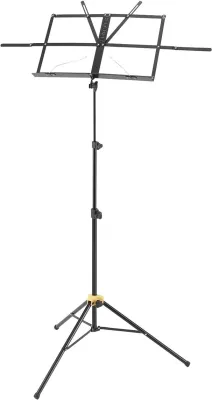
Prices are valid at publication and may change. Please refer to the product page for the latest price.
Before making a purchase, verify the manufacturer’s listed total weight and collapsed dimensions for both the GS533B and GS548B. If you frequently travel to rehearsals, community gigs, or music lessons, every extra kilogram matters. A heavier stand provides excellent stability but can quickly become a burden when carried alongside an instrument case. Look for specifications detailing the folded length to ensure the stand can fit comfortably inside a standard gig bag, a car boot, or even a backpack.
The ease of carrying each model also depends on the design of the joint collars and adjustment clutches. Some stands feature integrated carrying handles or dedicated travel bags, while others require a separate purchase. If you plan to move the stand primarily between different rooms in your home, a slightly heavier model with a robust locking pin system may be perfectly acceptable. However, if your routine involves navigating public transport or walking long distances with your gear, prioritizing a lightweight, rapidly folding mechanism is essential for preventing physical fatigue. When comparing options in the S$50 to S$100 range, verifying these structural details ensures you get the best value for your investment.
Tray Dimensions and Load Capacity for Your Instruments
The tray is the core functional element of any music stand, and its suitability depends heavily on the specific instruments you play and the format of your music. Whether you read from loose-sheet paper, thick hardcover songbooks, heavy three-ring binders, or digital tablets, the tray must accommodate your materials without flexing or tipping. Instruct yourself to verify the physical tray dimensions and lip designs of both the GS533B and GS548B before deciding. A shallow lip may fail to hold a thick anthology book open, while an excessively wide tray might block your view or crowd your practice space.

Load capacity is another critical factor that varies significantly between stand designs. Guide your decision by checking the manufacturer’s maximum weight capacity limits for both models. Heavy binders filled with hundreds of pages of orchestral scores can weigh several kilograms, putting immense stress on the tray’s tilt mechanism and the vertical shaft’s locking clutch. If the stand’s weight limit is too low, the tray may gradually tilt downward during a performance, or the shaft may slowly slide down, disrupting your concentration.
Additionally, consider how each tray design accommodates modern performance accessories. Many musicians now use clip-on LED lights, pencil holders, tuners, or secondary tablet mounts. Verify whether the physical structure of the GS533B and GS548B trays allows for secure attachment of these add-ons. A solid, non-perforated tray provides a stable surface for writing notes directly onto your sheet music, but it may offer fewer attachment points for clip-on accessories compared to a perforated or wire-frame design. Ensure the lip of the tray is deep enough to support both your music and any resting accessories simultaneously.
Stability and Ergonomic Height Adjustments
Physical stability and ergonomic height range are vital for maintaining proper posture during long practice sessions, whether you prefer sitting or standing. A stand that wobbles every time you turn a page or adjust a tuner is not only distracting but also poses a risk to your instruments. When comparing the GS533B and GS548B, evaluate the base footprint and leg design. A wider tripod base distributes weight more effectively and offers superior tipping resistance, especially on carpeted floors or uneven outdoor surfaces.
To prevent neck and back strain, guide your choice by checking the minimum and maximum height adjustment ranges of both models against your own eye level. If you play a tall instrument like the double bass or practice while standing, you will need a stand that extends high enough to keep your music at eye level without requiring you to slouch. Conversely, classical guitarists or cellists who practice in low chairs need a stand that can adjust downward sufficiently to maintain a natural line of sight.
It is also important to consider how the center of gravity shifts when the stand is fully extended or heavily loaded. As you raise the tray to its maximum height, any weight placed on it exerts greater leverage on the base. If the base footprint is too narrow, even a minor bump can cause the entire setup to tip over. Check the locking mechanisms—such as friction clutches, quick-release levers, or threaded knobs—to ensure they can hold the extended shaft securely under load without slipping over time.
Footprint, Storage, and Space Management
For musicians working with limited practice space or living in shared environments, managing the physical footprint of your equipment is a daily challenge. When fully deployed, a music stand’s base can occupy a surprising amount of floor space. Compare the floor space occupied by the base of the GS533B versus the GS548B, particularly if you plan to position the stand in a tight corner, a narrow hallway, or a shared bedroom. For musicians practicing in compact urban apartments, such as those common in Singapore, a compact base design is easier to position close to your chair or instrument stand without compromising overall stability.
Storage when the stand is not in use is another practical consideration. Assess how each model stores when collapsed. If your living space does not allow for a permanent music corner, you will need a stand that can easily slide under a bed, fit into a shallow closet, or stand upright in a corner without falling. Some stands fold completely flat, making them highly convenient for tight storage spaces, while others retain a bulkier profile even when fully collapsed.
Weigh the practical trade-offs between leaving your stand permanently set up versus packing it away after every practice session. A heavy-duty, highly stable stand is ideal if you have a dedicated music room where it can remain assembled indefinitely. However, if your practice area doubles as a living room or home office, a model that can be quickly collapsed and tucked away will help maintain a clutter-free environment. Choosing a stand that aligns with your daily space management habits ensures that setting up for practice never feels like an obstacle.
Final Verdict: Choosing the Right Hercules Stand
Making the final choice between these two Hercules models requires a clear understanding of your primary practice habits and environmental constraints.
Choose the GS533B if you prioritize maximum structural stability, plan to use the stand primarily in a permanent or semi-permanent home studio, and frequently work with heavy physical music books or binders. This model is ideal for musicians who do not need to transport their gear daily but require a rock-solid platform that can support substantial weight without wobbling or slipping during intense practice sessions.
Choose the GS548B if portability, rapid setup, and space-saving storage are your top priorities. This model is highly suited for gigging musicians, students who travel between home and school, or anyone with limited living space who needs to pack their practice setup away after every session. Its design emphasizes quick folding mechanisms and a compact collapsed profile, making it easy to transport in a gig bag or store in tight spaces.
Verify first if your specific setup involves edge cases that might challenge either model. For instance, if you practice on highly uneven floors, outdoors where wind is a factor, or if you use exceptionally heavy orchestral scores, you must verify the exact base diameter and weight specifications of both models before purchasing. Additionally, if you rely heavily on specialized mounting accessories, double-check the pole diameters and tray lip dimensions to ensure complete compatibility with your existing gear.
Frequently Asked Questions (FAQ)
Can I attach third-party tablet or phone holders to both stands?
Yes, you can generally attach third-party tablet or phone holders to both the GS533B and GS548B, but you must verify the compatibility of the mounting clamps first. Measure the diameter of the stand’s vertical poles and the thickness of the tray lip to ensure the clamp can grip securely without slipping or scratching the finish. Always check the accessory manufacturer’s specifications and weight limits before purchasing, as overloading the upper shaft of either stand can compromise its overall stability and cause it to tip.
How should I maintain the joints and folding mechanisms?
To ensure the longevity of your Hercules stand, perform regular visual inspections of all moving parts, including the folding joints, tension knobs, and locking pins. Check for loose screws or accumulated debris that could grind against the metal joints during setup. If a joint becomes stiff or noisy, consult the official Hercules user manual for specific maintenance instructions. Avoid using harsh household lubricants or oils that could degrade the plastic components or damage the protective metal finish; instead, follow the manufacturer’s recommended care guidelines.
Community discussion
Share your experience or ask a question. Comments are reviewed before publication.