
Choosing between a Hluru handpan and a tongue drum comes down to your musical goals, budget, and how much time you want to spend mastering playing techniques. Both instruments belong to the steel percussion family and produce beautiful, meditative sounds, but they offer vastly different playing experiences. While one provides an accessible, mallet-driven entry point to melodic percussion, the other offers a highly expressive, hands-on performance dynamic that requires dedicated physical practice.
To make an informed decision, you must evaluate how each instrument produces sound, the physical demands of playing them, and the practicalities of maintaining steel instruments in Singapore’s humid climate. Understanding these differences ensures you select an instrument that aligns with your lifestyle, space constraints, and creative aspirations.
Sound Profiles and Playing Techniques
The acoustic characteristics of handpans and tongue drums differ significantly due to their design and manufacturing methods. A handpan features a large, hollow steel shell with tuned fields hammered into the surface. When struck, it produces a rich, resonant sound characterized by complex overtones and a distinct, airy projection. The sound is highly dynamic, allowing players to create intricate layers of melody, rhythm, and harmonics simultaneously.
Products mentioned in this guide
Prices are valid at publication and may change. Please refer to the product page for the latest price.
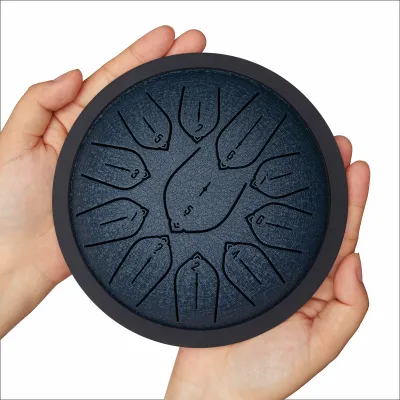
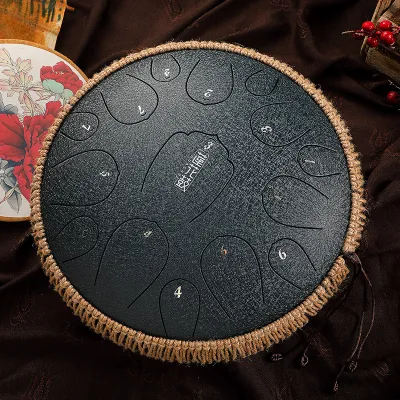
In contrast, a steel tongue drum features cut-out tongues on its surface, which vibrate when struck. This design produces a pure, focused, and highly sustained tone with fewer complex overtones. The sound of a tongue drum is often described as bell-like and deeply meditative, making it a popular choice for sound therapy, yoga sessions, and personal relaxation.
The physical layout also affects how you interact with each instrument. A handpan typically features a central dome, often called the “Ding,” surrounded by a circle of note fields. This layout requires spatial awareness and a light touch to navigate. A tongue drum organizes its cut-out tongues in a circular pattern, which are often numbered to help beginners follow sheet music or instructional guides easily.
Playing techniques set these two instruments apart. Playing a handpan requires using your hands, fingers, and palms. You must develop a precise, quick-release striking technique to make the notes ring out without dampening the vibrations. This requires physical coordination and muscle memory, as the player must learn to strike different areas of the note fields to isolate specific harmonics.
Tongue drums offer more versatility in how they are played. While you can play them with your fingers, they are most commonly and easily played using rubber-headed mallets. Mallets produce a clear, consistent volume and tone with minimal physical effort, making the instrument immediately accessible to anyone. Playing with fingers is possible but requires a specific flicking motion that takes time to develop, though it offers a softer, more intimate sound.
Your choice between the two will largely depend on your preferred musical genres and performance goals. If you want to play fast, rhythmic, and highly expressive compositions, the handpan’s responsive surface is ideal. If you prefer slow, ambient, and sustained melodies for personal mindfulness, the tongue drum’s long decay and pure tones may better suit your needs.
Learning Curve and Skill Requirements
The learning curve for these instruments varies greatly, influencing how quickly you can begin playing satisfying melodies. Tongue drums are exceptionally beginner-friendly. Because they are typically tuned to a specific pentatonic or diatonic scale, there are no dissonant or “wrong” notes. You can strike the tongues in almost any order, and the resulting sequence will sound harmonious. This intuitive nature allows players with zero musical background to enjoy the instrument immediately.

A handpan, however, presents a steeper learning curve. Even producing a clean, resonant note requires practice. Beginners often struggle with the “slap and pull” technique needed to excite the steel without muting it with their fingers. Additionally, controlling your dynamics—the volume and intensity of each strike—takes consistent practice to prevent some notes from overpowering others.
Achieving basic proficiency on a tongue drum can happen within a few hours of practice, especially when using mallets. You can quickly learn simple song arrangements or create pleasing improvisational patterns. This makes it an excellent option for casual hobbyists or those who want a low-pressure musical outlet.
Mastering a handpan requires a more structured practice commitment. You will need to spend time developing finger independence, hand-to-hand coordination, and muting techniques to control the instrument’s long sustain. For many players, achieving a level of comfort where they can play fluidly and expressively takes several weeks or months of regular practice.
Maintenance and Climate Care in Singapore
Owning steel percussion instruments requires a commitment to regular maintenance, particularly when living in Singapore. The country’s high relative humidity and tropical climate present constant challenges for steel instruments, as moisture can quickly lead to rust and degrade the sound quality.
The material composition of your instrument dictates its care routine. Handpans and tongue drums are commonly made from nitrided steel, stainless steel, or high-carbon steel. Nitrided steel offers a ceramic-like rust-resistant layer and a shorter, controlled sustain, but it still requires regular oiling. Stainless steel is highly resistant to rust and offers a much longer sustain, making it popular in humid environments, though it still needs basic care. High-carbon steel is the most susceptible to rust and requires strict environmental controls.
To prevent rust in Singapore’s climate, you must establish a consistent cleaning routine. After every playing session, wipe down the instrument with a dry microfiber cloth to remove sweat and oils from your hands. Periodically apply a specialized instrument wax or protective oil designed for steel drums, ensuring you coat the entire surface, including the seams and underside.
Storage is equally critical. Avoid storing your instrument in damp areas or directly on tiled floors, which can collect condensation. If you use air conditioning, be mindful of rapid temperature changes, which can cause moisture to condense on the metal surface. Keeping a silica gel packet or a small dehumidifier card inside your instrument’s protective case can help absorb excess moisture.
Portability and physical protection are also key considerations. Handpans are large, relatively delicate instruments that require a high-quality, padded hard-shell case for safe transport. Their tuned fields can be knocked out of alignment by physical impacts, making careful handling essential. Tongue drums are smaller, heavier for their size, and generally more robust. While they still require a padded bag to prevent scratches and dents, they are much easier to transport and store in compact Singaporean apartments.
Budget Tiers and Value Verification
The price difference between handpans and tongue drums is substantial, driven primarily by the complexity of their manufacturing and tuning processes. Understanding these budget tiers will help you set realistic expectations before making a purchase.
Tongue drums are highly accessible, with prices typically ranging from under S$100 for small, mass-produced models to several hundred dollars for larger, multi-note, artisan-crafted instruments. Because the tongues are cut mechanically or via laser, the tuning process is relatively straightforward, keeping production costs lower.
Handpans, on the other hand, are premium instruments. A quality handpan typically starts around S$1,000 and can exceed S$3,000 or more for professional-grade models. This high cost is due to the intensive labor involved; each note field must be meticulously hammered by hand to tune the fundamental note, its octave, and its compound fifth. This delicate acoustic balancing requires immense skill and time from a master tuner.
When verifying the value of an instrument, look closely at the specifications rather than relying solely on brand names. Check the number of notes (usually 8 to 11 for standard models), the material used, and the included accessories. A complete package should include a high-quality padded bag, and for tongue drums, a set of mallets and finger picks.
To protect your investment, always verify that you are purchasing from an authorized retailer or an official brand store. Avoid buying from unverified third-party sellers on online marketplaces, as counterfeit or poorly tuned instruments are common. Purchasing from an authorized source ensures you receive a genuine product, valid warranty coverage, and access to customer support if your instrument requires servicing.
Final Decision: Which Instrument Fits Your Goals?
Choosing the right steel percussion instrument depends on your personal goals, budget, and lifestyle constraints. By evaluating your priorities, you can select the option that will bring you the most long-term satisfaction.
You should choose a Hluru handpan if you are looking for a highly expressive, dynamic instrument and are willing to invest the time to master hand-striking techniques. It is ideal for musicians, performers, and dedicated hobbyists who have the budget for a premium instrument and want to explore complex, fast-paced rhythms and rich harmonic layers.
You should choose a tongue drum if you want a relaxing, beginner-friendly instrument for meditation, yoga, or casual play. It is perfect for those with a limited budget, limited storage space, or those who want an intuitive instrument that sounds beautiful from the very first day without a steep learning curve.
Neither instrument may fit your needs if you require an ultra-lightweight, highly portable instrument for rugged outdoor travel. While tongue drums are compact, they are relatively heavy due to their thick steel construction, and handpans are too bulky and delicate to carry on long hikes or outdoor adventures without risking damage.
Before finalizing your purchase, verify the exact scale, key, and tuning compatibility of the instrument. If you plan to play alongside other musicians, practice with backing tracks, or use the instrument in a specific musical ensemble, ensuring your drum is tuned to standard concert pitch (usually A=440Hz) and matches the key of your other instruments is essential for a harmonious performance.
Frequently Asked Questions (FAQ)
Can I play a Hluru handpan and a tongue drum together?
Yes, you can play them together, provided they are tuned to the same scale and key. Their distinct timbres complement each other beautifully; the sharp, resonant attack of the handpan pairs well with the long, warm sustain of the tongue drum. This combination is highly effective for creating rich, multi-layered ambient or meditative music in ensemble settings.
Do I need to tune a Hluru handpan or tongue drum?
Tongue drums generally do not require tuning by the user, as their cut-steel design holds pitch exceptionally well over time. Handpans, however, may require professional retuning after several years of regular use. Factors such as hard striking, physical impacts, and extreme temperature fluctuations can cause the hand-hammered note fields to drift out of tune, requiring a specialist to restore their pitch.
Community discussion
Share your experience or ask a question. Comments are reviewed before publication.