
The ideal English translation for personal study depends on where you fall on the spectrum between word-for-word literalness and thought-for-thought readability. While the King James Version (KJV) and English Standard Version (ESV) offer deep textual precision for rigorous study, the New International Version (NIV) and New Living Translation (NLT) prioritize reading comfort and immediate comprehension. Choosing the right translation is not about finding a single absolute standard, but rather about aligning the text’s linguistic style with your personal study depth, vocabulary comfort, and learning goals.
When selecting a Bible for personal study, readers often face a trade-off between historical accuracy to the original manuscripts and modern linguistic accessibility. A translation that is highly literal may preserve the exact sentence structure of ancient Greek, Hebrew, or Aramaic, but it can result in stiff, awkward English that hinders smooth reading. Conversely, a translation that prioritizes natural flow might convey the overall meaning beautifully but obscure the specific word choices and grammatical nuances that are crucial for deep theological analysis.
Understanding how these translations differ allows you to approach your study time with realistic expectations. Whether you are preparing a detailed lesson, engaging in quiet morning devotions, or attempting to read through the entire text in a year, the translation you hold shapes how you interact with the message. By examining the underlying philosophies and practical features of the KJV, ESV, NIV, and NLT, you can build a personalized study routine that is both intellectually satisfying and deeply engaging.
Products mentioned in this guide
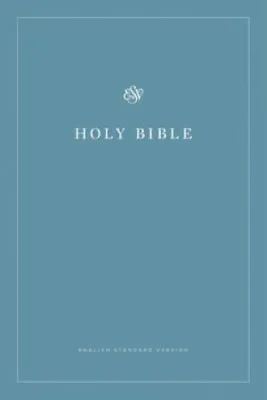




Prices are valid at publication and may change. Please refer to the product page for the latest price.
Understanding Bible Translation Philosophies
To navigate the vast landscape of English Bibles, it is essential to understand the three primary philosophies that guide translators: formal equivalence, dynamic equivalence, and optimal equivalence. These methodologies represent different points on a spectrum, balancing the tension between the original ancient languages and modern English grammar.
Formal equivalence, often referred to as word-for-word translation, prioritizes preserving the formal structure of the original text as closely as possible. Translators using this method attempt to match each word, phrase, and grammatical construction of the source language with an English equivalent. This approach is highly valued for detailed study because it keeps the reader close to the original sentence structure, idioms, and word repetitions, though it often requires more effort to read due to its less natural English flow.
Dynamic equivalence, commonly known as thought-for-thought translation, focuses on conveying the meaning and impact of the original text in contemporary language. Instead of translating word-for-word, these translators analyze entire sentences or paragraphs to capture the author’s original intent and express it in natural, idiomatic English. This method prioritizes immediate comprehension and emotional resonance, making it exceptionally accessible for daily reading, though some precise word-level details may be smoothed over.
Optimal equivalence represents a middle-ground approach that seeks to balance both methods. Translators employing this philosophy aim for a word-for-word translation wherever possible, but they will transition to a thought-for-thought approach when a literal rendering becomes confusing, archaic, or grammatically awkward in modern English. This hybrid strategy delivers a text that is both highly accurate for serious study and sufficiently smooth for comfortable public reading and personal devotion.
Comparing Readability and Study Depth Across Major Translations
Each of the four major translations—KJV, ESV, NIV, and NLT—occupies a distinct position on the translation spectrum. Evaluating their specific characteristics reveals how they handle ancient idioms, sentence structures, and vocabulary, which directly impacts their suitability for different types of personal study.

King James Version (KJV) and English Standard Version (ESV)
The King James Version, first published in 1611, remains a highly influential literary work in the English language. It is a classic example of formal equivalence, crafted during a period when English prose was characterized by majestic rhythm and poetic cadence. For modern readers, the KJV offers a distinct sense of historical continuity and literary beauty, making it a favorite for memorization and traditional liturgical use.
However, the KJV presents significant readability challenges for contemporary personal study. Its reliance on archaic vocabulary, such as “thee,” “thou,” and “wherefore,” along with obsolete verb endings and shifted word meanings, can create a barrier to immediate comprehension. Words that meant one thing in the seventeenth century may mean something entirely different today, requiring readers to constantly consult dictionaries or commentaries to ensure they are not misinterpreting the text.
The English Standard Version, published in 2001, serves as a modern successor to the formal equivalence tradition. It was specifically designed to provide a highly literal, word-for-word translation that retains the literary beauty and structure of classic translations while updating the language for modern readers. The ESV avoids the archaic pronouns of the KJV, making it far more accessible while maintaining a high degree of grammatical precision.
For serious theological study, the ESV is very strong because it preserves the original sentence structures and word repetitions across passages. This consistency allows readers to trace specific theological themes and perform detailed word studies with confidence. The trade-off is that the ESV can occasionally feel stiff or overly academic, particularly in complex epistles where the original Greek sentences were long and convoluted, requiring a slower, more deliberate reading pace.
New International Version (NIV) and New Living Translation (NLT)
The New International Version is one of the most widely read modern English translations, employing an optimal equivalence philosophy. First published in 1978 and updated periodically, the NIV was translated by an international, trans-denominational team of scholars who sought to create a text that was both highly accurate and exceptionally clear. It occupies a comfortable middle ground, making it a versatile choice for a broad range of readers.
In practice, the NIV excels at translating complex ancient concepts into clear, natural English without completely sacrificing the underlying structure. It is smooth enough for rapid reading and public speaking, yet precise enough to support structured personal study and group discussions. This balance makes the NIV a versatile “all-purpose” Bible, especially for those who want a single translation that can transition seamlessly from a morning devotional to a deeper study session.
The New Living Translation, published in 1996, sits firmly on the dynamic equivalence side of the spectrum. It was created to be read aloud and to be understood immediately by readers of all ages and backgrounds. The translators focused on rendering the thoughts behind the ancient texts into warm, contemporary English, often replacing ancient cultural idioms with modern equivalents to ensure the emotional and practical impact of the message is preserved.
The primary strength of the NLT is its high readability and narrative flow. When reading historical narratives or poetic passages, the NLT allows the story to move quickly and engagingly, making it ideal for cover-to-cover reading plans or for grasping the overarching themes of a book. However, because it prioritizes thought-for-thought clarity, it may not be the best tool for detailed, word-by-word theological analysis, as some of the specific grammatical structures of the original languages are simplified for readability.
Key Dimensions for Choosing Your Translation
When deciding which translation to adopt for your personal study, it is helpful to evaluate them across several practical dimensions. These criteria will help you match a translation’s linguistic style with your daily reading habits and study objectives.
First, consider the reading level and vocabulary complexity of each translation. Bibles are often rated by grade-level readability, which reflects the complexity of the sentence structures and the sophistication of the vocabulary used. The KJV, with its archaic syntax, typically requires a higher level of literary concentration, whereas the NLT is written at a level that is easily accessible to younger readers and those new to the text. Checking a few sample passages—such as a psalm, a historical narrative, and a theological letter—can quickly reveal which vocabulary level feels most natural to you.
Second, pay attention to sentence structure and formatting. Some translations preserve the long, nested clauses of ancient languages, which can make it difficult to follow the main point of a sentence without careful diagramming. Others break these long sentences into shorter, punchier modern statements. Additionally, look at how the publisher formats the text; some editions present the Bible in a single-column, paragraph-style layout that reads like a modern novel, while others use traditional double-column layouts with verse-by-verse breaks, which can affect your reading speed and comprehension.
Finally, align the translation with your specific study application. If your primary goal is memorization, the poetic rhythm of the KJV or the balanced phrasing of the ESV and NIV can make verses easier to recall. For deep exegetical study, where you want to compare cross-references and analyze original word meanings, a formal equivalence translation like the ESV is highly advantageous. For daily devotional reading, journaling, or reading large portions of scripture at once, the smooth narrative flow of the NLT or NIV will likely provide a more engaging and less fatiguing experience.
Decision Framework: Which Translation Fits Your Study Goals?
To help you make an informed choice, consider how your specific study goals and preferences align with the characteristics of each translation. This framework provides clear, conditional scenarios to guide your selection.
Choose the King James Version (KJV) if you have a deep appreciation for historical English literature, value the majestic cadence of traditional language, and are comfortable navigating archaic vocabulary and sentence structures. It is also an excellent choice if your study group or church community primarily uses this version, as it ensures consistency during shared readings.
Choose the English Standard Version (ESV) if your primary focus is rigorous, word-for-word theological study. The ESV is ideal for those who want to understand the precise structure of the original texts, perform detailed word studies, and trace complex theological arguments without needing to learn ancient Greek or Hebrew.
Choose the New International Version (NIV) if you are looking for a highly versatile, balanced translation. The NIV is well-suited for readers who want a reliable middle ground that is accurate enough for serious study and smooth enough for daily devotional reading, making it an excellent primary Bible for everyday use.
Choose the New Living Translation (NLT) if your main priority is reading comfort, rapid comprehension, and emotional engagement. The NLT is highly recommended for cover-to-cover reading plans, personal devotions, and for anyone who finds the academic language of other translations to be a barrier to regular reading.
Before making a final purchase, always verify if you are switching from a version you have used for many years. If you are accustomed to a specific translation, a sudden switch can affect your ability to recall familiar passages, so it is wise to compare a few of your favorite chapters in the new translation first. Additionally, ensure that your chosen translation aligns with the study materials, commentaries, or curriculum used by your local church or study group to facilitate smooth participation.
Frequently Asked Questions (FAQ)
Is it beneficial to use more than one translation for personal study?
Yes, using multiple translations is one of the most effective ways to deepen your personal study. By comparing a formal equivalence translation (like the ESV) with a dynamic equivalence translation (like the NLT), you can capture both the literal structure of the original text and a clear explanation of its meaning. This practice, often called parallel reading, helps highlight nuances that a single translation might miss and prevents you from getting stuck on a single, potentially confusing phrasing. Many digital Bible apps and study websites allow you to view multiple translations side-by-side, making this comparative approach incredibly easy to integrate into your daily routine.
Do I need a specific study Bible edition, or is the base translation enough?
While the base translation is entirely sufficient for regular reading, a dedicated study Bible can significantly enhance your understanding of the historical and cultural context. Study Bibles include additional features such as explanatory footnotes, maps, book introductions, and concordances that provide immediate context for difficult passages. If you are engaging in deep personal study, investing in a study edition of your preferred translation (such as an ESV Study Bible or an NIV Study Bible) is highly beneficial. However, if your goal is simply consistent daily reading or devotional reflection, a clean, text-only reader’s edition may offer a more focused and distraction-free experience.
Community discussion
Share your experience or ask a question. Comments are reviewed before publication.