
Integrating Stephen Covey’s framework into your daily life requires shifting from reactive patterns to intentional, value-driven actions. Rather than treating these principles as a simple checklist, successful integration involves adopting them as a sequential path for personal and interpersonal growth. By starting with small, daily adjustments to how you manage your focus, time, and relationships, you can build a sustainable routine that aligns with your long-term goals.
If you plan to purchase the book to support your journey, ensure you verify the edition, language, and format to match your learning preferences. The key to success is focusing on consistent, incremental changes. This guide provides a practical roadmap to help you navigate the transition from understanding the theory to living the habits every day.
Understanding the Core Framework of the 7 Habits
Before diving into individual habits, it is essential to understand the foundational structure that Stephen Covey established. The framework is built on the “maturity continuum,” which maps human growth from dependence to independence, and ultimately to interdependence. Dependence is the paradigm of relying on others or blaming external circumstances for your situation. Independence is the paradigm of achieving self-mastery and taking full responsibility for your own life. Interdependence is the paradigm of recognizing that cooperative efforts yield far greater results than working alone.
Products mentioned in this guide
![[eBook] The 7 Habits of Highly Effective People by Stephen Covey | Nonfiction | Self Help](https://img.lazcdn.com/g/p/f967aead6496682936dc4819eacf4a1d.jpg_400x400q80.jpg_.webp)
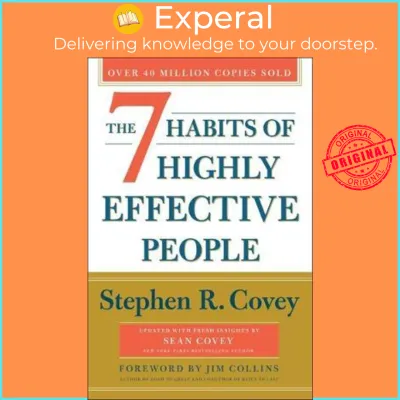
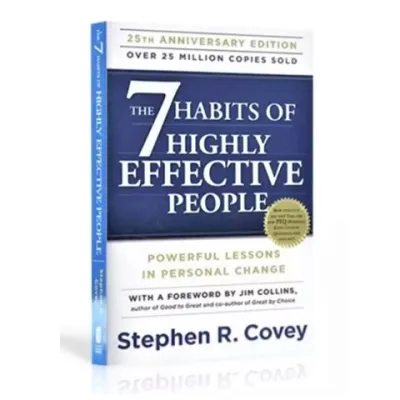
Prices are valid at publication and may change. Please refer to the product page for the latest price.
At the heart of this progression is the distinction between the character ethic and the personality ethic. Covey argues that modern self-help often focuses on the personality ethic, which emphasizes quick-fix techniques, public image, and social skills. While these traits are useful, they are superficial without a foundation of character ethic, which focuses on deep-seated principles like integrity, humility, and courage. Lasting change only occurs when you align your basic character with these enduring principles.
The habits are designed to be sequential, meaning you cannot skip steps without undermining your progress. The first three habits focus on self-mastery, leading to what Covey calls the “Private Victory.” Once you have established independence, you can progress to the next three habits, which focus on collaboration and relationship building, leading to the “Public Victory.” The final habit surrounds the entire framework, ensuring continuous renewal and sustainability.
Habits 1 to 3: Building Personal Independence
The first phase of the framework focuses on building personal independence through self-mastery and internal alignment. These “Private Victory” habits help you transition from relying on others or blaming external factors to taking full ownership of your choices, values, and daily schedule.

Mastering yourself is a prerequisite for leading or collaborating with others. Without a strong foundation of self-discipline and clear personal values, attempts to build deep, trusting relationships will often falter under pressure. By focusing on these three foundational habits, you establish the internal stability required for long-term success.
Be Proactive
Being proactive is more than just taking initiative; it means recognizing that you are responsible for your own life and choices. Covey introduces the concept of the Circle of Concern and the Circle of Influence to help clarify where to direct your energy. Your Circle of Concern includes everything you care about but have little control over, such as global events or other people’s behavior. Your Circle of Influence consists of things you can actually change, such as your attitude, your reactions, and your daily habits.
To apply this habit daily, practice pausing before you react to external stimuli. When faced with a challenging situation, take a breath and consciously choose a response based on your values rather than reacting impulsively. Focus your time and energy on expanding your Circle of Influence by working on things you can control, which gradually reduces your stress and increases your effectiveness.
Begin with the End in Mind
This habit is based on the principle that all things are created twice: first as a mental creation, and second as a physical creation. To apply this daily, you must define your personal vision and align your actions with your long-term goals. A practical way to start is by drafting a personal mission statement, which acts as a decision-making compass for your life, outlining who you want to be and what you want to contribute.
In your daily routine, practice visualizing desired outcomes before starting any project, meeting, or conversation. Ask yourself what success looks like before you begin, and use that mental image to guide your actions. This ensures that your daily efforts are not just busywork, but meaningful steps toward your ultimate objectives.
Put First Things First
This habit represents the physical creation of your goals and focuses on time management and prioritization. Covey organizes activities into a four-quadrant matrix based on urgency and importance. Quadrant I contains urgent and important tasks (crises), Quadrant II contains important but not urgent tasks (planning, relationship building, prevention), Quadrant III contains urgent but unimportant tasks (some emails and interruptions), and Quadrant IV contains unimportant and non-urgent tasks (time-wasters).
To implement this habit, focus on scheduling Quadrant II activities, which are critical for long-term growth but easily neglected because they lack immediate deadlines. Dedicate time each week to plan your schedule, blocking out specific slots for high-priority personal and professional goals before your calendar fills up with urgent distractions.
Habits 4 to 6: Fostering Interdependence
Once you have established personal independence, you can transition into the “Public Victory” habits, which focus on fostering interdependence. These habits are designed to improve your relationships, communication, and collaborative problem-solving skills in both personal and professional settings.
True interdependence is built on mutual trust and what Covey calls the “Emotional Bank Account.” Just like a financial account, you make deposits into this account through kindness, honesty, keeping commitments, and showing empathy, while withdrawals occur through discourtesy, breaking promises, or ignoring feedback. A solid foundation of personal independence is necessary to make consistent deposits and maintain healthy, trusting relationships.
Think Win-Win and Seek First to Understand
Thinking win-win is a frame of mind and heart that constantly seeks mutually beneficial agreements in all human interactions. It requires a balance of high consideration for others and high courage to express your own needs. When negotiating or resolving conflicts, focus on finding solutions that satisfy both parties rather than settling for a win-lose or lose-win outcome.
To support this mindset, you must practice the habit of seeking first to understand, then to be understood. This involves moving past superficial listening to practice empathetic listening—listening with the intent to deeply understand the other person’s perspective, feelings, and needs before presenting your own point of view. This builds trust and opens the door to creative, collaborative solutions.
Synergize
Synergy is the concept that the whole is greater than the sum of its parts, meaning that creative cooperation can produce solutions that no individual could achieve alone. This habit requires valuing differences in other people’s mental, emotional, and psychological perspectives, viewing those differences as strengths rather than obstacles.
In your daily routine, apply synergy by actively seeking out diverse viewpoints during brainstorming sessions or problem-solving discussions. Instead of defending your position or settling for a simple compromise where both parties give up something, work together to co-create entirely new alternatives that address the core needs of everyone involved.
Habit 7: Sharpen the Saw for Continuous Renewal
The final habit is about preserving and enhancing your greatest asset: yourself. It involves establishing a regular routine of self-care and renewal across four key dimensions: physical, spiritual, mental, and social/emotional. Neglecting any of these areas can lead to burnout and diminish your overall effectiveness.
To maintain balance, integrate daily or weekly micro-habits for each dimension. For physical renewal, focus on regular exercise, balanced nutrition, and sufficient rest. For spiritual renewal, engage in activities that align with your core values, such as meditation, reading, or spending time in nature. Mental renewal can involve continuous learning, writing, or solving complex problems, while social/emotional renewal is achieved by spending quality time with loved ones and building meaningful connections.
It is crucial to establish clear stopping conditions to recognize when you need to pause and recharge. If you experience persistent signs of chronic fatigue, irritability, or a decline in your ability to focus, treat these as indicators that you must prioritize renewal. Taking time to “sharpen the saw” is not a distraction from your work; it is the very activity that makes your work sustainable.
Practical Steps to Integrate the Framework into Your Daily Routine
Integrating all seven habits into your daily life can feel overwhelming if attempted all at once. To avoid cognitive overload and ensure deep behavioral change, start by focusing on just one habit at a time. Spend a few weeks practicing the principles of that specific habit until it becomes a natural part of your daily routine before moving on to the next.
Use practical tools to monitor your progress and identify areas of friction. Keeping a daily journal or using a simple habit tracker can help you stay accountable and reflect on how you handle challenges. A weekly review is also highly effective for assessing your alignment with your personal mission statement and planning your Quadrant II activities for the upcoming week.
Be prepared to adjust your routine when facing unexpected life changes, schedule disruptions, or setbacks. The goal is not rigid perfection, but consistent alignment with your core values. When disruptions occur, use your proactive mindset to assess the situation, adjust your weekly plan, and refocus on your Circle of Influence.
Frequently Asked Questions (FAQ)
How long does it take to master the 7 habits?
Mastering the habits is a lifelong journey rather than a quick task with a fixed completion date. Shifting deep-seated mental models and behavioral patterns requires consistent effort over months and years. Instead of looking for immediate results, measure your progress by observing gradual changes in how you respond to stress, manage your time, and handle interpersonal conflicts over time.
Can I practice the habits out of order?
While you can practice individual techniques, attempting the interdependent habits (Habits 4 to 6) without a solid foundation of personal independence (Habits 1 to 3) often leads to frustration. Without self-mastery and clear personal values, it is difficult to maintain the trust and courage required for true collaboration. If you struggle with relationship-focused habits, assess whether you need to refocus on building your personal independence first.
Is the framework applicable to team and organizational settings?
Yes, the principles scale effectively from individuals to teams and entire organizations. Shared mission statements, win-win agreements, and empathetic communication can significantly improve workplace collaboration and alignment. However, for organizational adoption to be successful, leaders must first model these habits consistently to build trust and establish a supportive culture.
Community discussion
Share your experience or ask a question. Comments are reviewed before publication.